
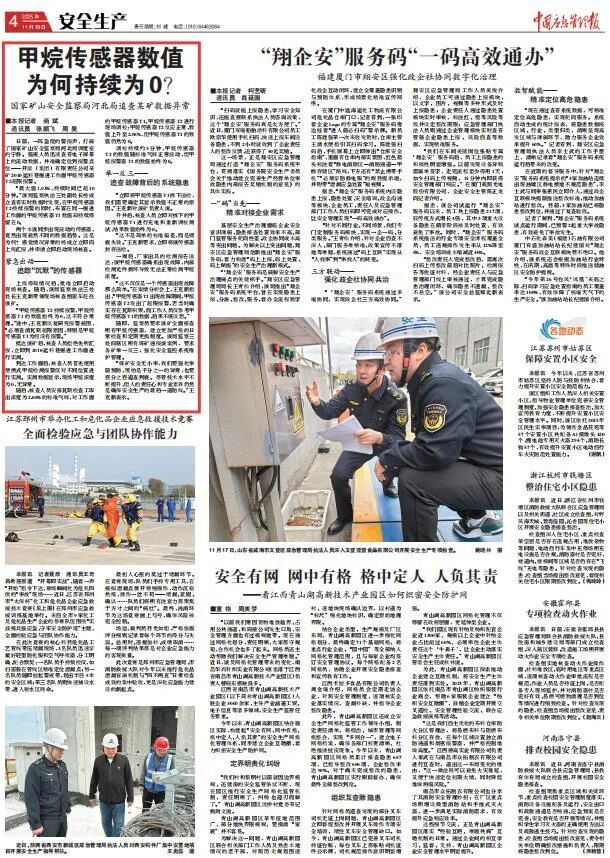
Recently, a series of urgent alarm sounds broke the tranquility of the dispatch room of the Hebei Bureau of the National Mine Safety Supervision Administration. The duty personnel quickly checked the flowing data on the electronic screen and accurately located the alarm point—methane sensor T2 at the 2010 material transport tunnel working face of Kailuan (Group) Co., Ltd. exceeded the limit.
“The maximum value is 1.93%, and the duration has exceeded 10 minutes.” The Deputy Director of the Third Supervision and Law Enforcement Office, Yang Chengli, discovered while checking the real-time data,that while methane sensor T2 was continuously alarming, the methane sensor T1 located in the same working face remained at 0.
The two sensors, which should have fluctuated synchronously, showed completely different data trends.Why is this? Sensing the abnormal situation, Yang Chengli immediately reported to his superiors and requested an immediate on-site inspection.
Emergency Deployment—
Tracking the “Silent” Sensor
Upon learning of the situation, the superiors approved an immediate on-site inspection. Subsequently, Wang Kexin, the director of the Third Supervision and Law Enforcement Office, led the inspection team to the mine.
“Methane sensor T2 is continuously alarming, while methane sensor T1’s value remains at 0, which is illogical.”On the way, Wang Kexin repeatedly studied the alarm screenshots, “We must clarify the reason for the gas exceeding the limit, especially why methane sensor T1 did not alarm.”
Upon arriving at the mine, the inspection personnel refused to listen to the report first and immediately went to the 2010 material transport tunnel working face for actual measurement.
After reaching the working face, the inspection personnel first used a portable methane detection alarm to measure different locations. The actual measurement data showed that the methane concentration on-site was 0, with no abnormalities.
Subsequently, the inspection personnel arranged for the gas inspection worker to take out a standard gas sample with a concentration of 2.08% and conducted on-site calibration tests on methane sensors T1 and T2: methane sensor T2 responded normally, with the value rising to 2.08%, but methane sensor T1’s value remained at 0.
The calibration lasted about 3 minutes,with methane sensor T2’s value fluctuating normally with the standard gas sample, but the methane alarm T1’s value remained at 0.
Learning from the Situation—
Investigating the Systemic Risks Behind the Failure
“Immediately remove methane sensor T1 for inspection; we need to determine the reason for its abnormal display value,” Wang Kexin told the mine’s responsible person.
After ascending the shaft, the inspection personnel immediately charged and recalibrated the removed methane sensor T1, but the result remained at 0.
“This is not a simple calibration deviation, but a complete failure.”Wang Kexin ordered that the sensor be sealed and sent for inspection immediately.
A week later, the inspection report from the manufacturer arrived:The methane sensor indeed malfunctioned, with internal detection components damaged, leading to an inability to detect methane concentration normally.
“This is not just a simple sensor failure.” At the case analysis meeting, Wang Kexin pointed out, “During the period when methane sensor T1 failed, methane sensor T2 issued an exceeding limit alarm,and if there had indeed been gas accumulation at that time, and the staff only referred to the data from methane sensor T1, the consequences would have been unimaginable.“
Subsequently, the inspectors required the mine to conduct a comprehensive inspection of all methane sensors and establish a stricter daily inspection and regular replacement system. The Third Supervision Office reported this case to all coal mines in the jurisdiction, requiring each mine to learn from the situation and strengthen the maintenance management of safety monitoring systems.
“Safety in coal mines is no small matter; we must strengthen preventive measures. Even if there is a one in a thousand anomaly, we must pursue it to the end with a hundred percent effort. Despite continuous technological advancements, human responsibility and professional quality remain the last line of defense for ensuring safe production,”Wang Kexin stated.

 Source: China Emergency Management News