
Source: Content from Liu Yishou on Finance, thank you!
The global technology war has already begun, with every country striving to excel. The US Secretary of Commerce has revealed that the US has developed two strategic responses to competition from China in the chip sector: one is an offensive strategy, and the other is a defensive strategy, and the US will continue to adhere to this approach.
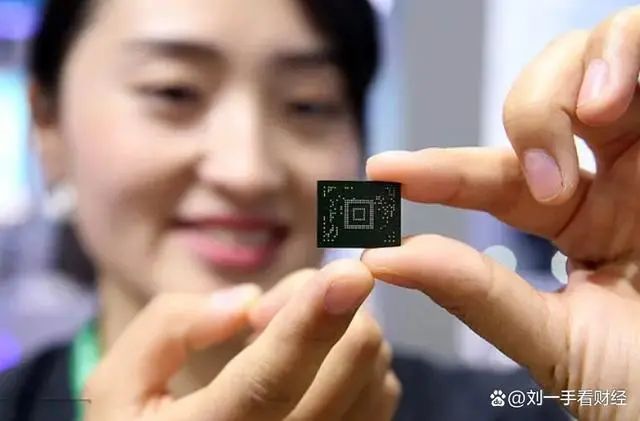 Currently, the US sanctions on our chips are evident. Some people are worried: If all our military chips are only 14nm and the US military chips are 5nm, where will the gap manifest in warfare? Is there a difference between military chips and commercial chips? Is the key point of chips in the manufacturing process?1. Phenomenon: The Actual Situation Is Likely That US Fighter Jets Use 90nm Chips While China Uses 45nmSome people jokingly compare missiles to mobile phones, saying if all of China’s chips are toothpaste (14nm) and all of America’s chips are massage parlors (5nm), then being crushed is inevitable.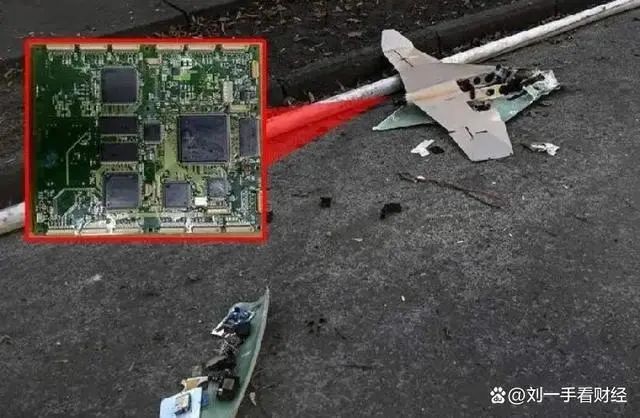
In fact, as of now (by 2022), the reality is contrary to what they think. In many military sectors, the chips in China’s active military equipment are actually more advanced than those in the US. The actual situation is likely that US fighter jets use 90nm chips while China uses 45nm.
Currently, China’s military chips are indeed not 14nm, and many are even 130nm. It should be noted that a 28nm chip is already very unsafe for military use, let alone 5nm. Do you know why upgrading aircraft systems is so difficult?Because aircraft systems have a large number of ASIC, FPGA, and ASSP specialized chips, while general-purpose chips like CPU (MPU), GPU, and DSP are very few. ASIC, FPGA, and ASSP chips are hardware programmed, meaning that their logic is fixed during chip design, and different arrangements on the circuit board can accomplish different tasks.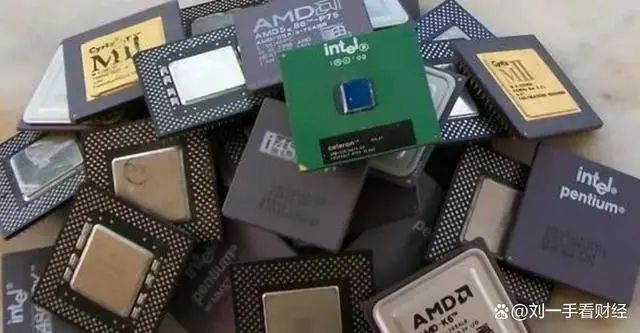 These chips are dedicated chips, focusing on specialized efficiency and fixed tasks. Such chips are not complex, and using 300nm for chips in extremely harsh working environments is quite common. Military chips do not run AAA games, so why pursue 14nm?Moreover, the satellites, spacecraft, and space stations launched by various countries often use chips that are several generations behind. If there are scientific research tasks, astronauts generally bring a laptop with them because the onboard computers of the spacecraft or space station are too outdated and unreliable.In fact, apart from devices like mobile phones that need to be thin, light, and multifunctional, and fragile enough not to be easily dropped, the only way to compete is through chip manufacturing processes. If 5nm isn’t enough, they will push for 3nm, and if they go lower, they will run out.However, for aircraft, tanks, and missiles, there is plenty of space, and there is no need to pursue chip miniaturization. Even the chips in ordinary civilian vehicles are sufficient at several tens of nanometers.2. Analysis: There Are Several Significant Differences Between Military Chips and Commercial ChipsI have a friend who is in a Ph.D. program and has collaborated with the Singapore Ministry of Defense. He knows a thing or two about the requirements for military chips. According to his summary, there are several significant differences between military chips and commercial chips:
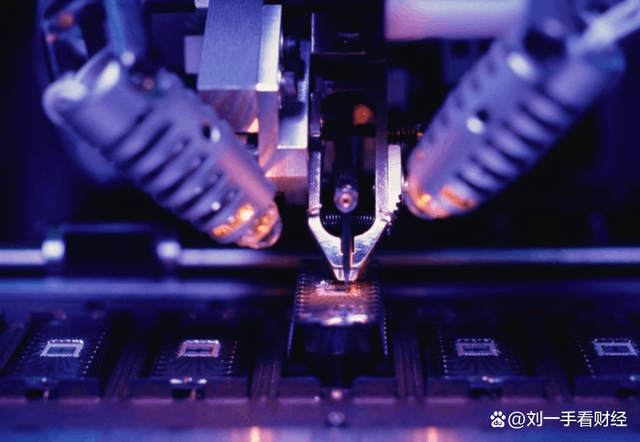 1. Cost Is Not Considered. The ultimate goal of commercial chips is profit, so cost-effectiveness must be considered. In this industry, even if technical resources and talent are indeed in the hands of a few giants, it hasn’t reached a complete monopoly stage, and there is still price competition. If something is too expensive, no one will want to buy it; this should be easy to understand, right?But military chips, on the other hand, are independently developed by each country and kept strictly confidential, only requiring that the products meet performance standards. There is no competitive relationship between countries regarding chips, and there is no need to consider cost. No one would be foolish enough to use inferior products just to save money when it comes to national defense.2. No Strict Requirements on Size. No strict requirements do not mean no requirements. If it can be made smaller, it should be made smaller. However, if it cannot be made smaller, as long as it does not affect its efficacy, it is acceptable. In plain language: your phone’s chip cannot be made too large because the phone is so small that it cannot fit, but for a rocket carrying a nuclear warhead that needs to hit a target 10,000 km away, whether the chip is 10mm x 20mm or 20mm x 40mm doesn’t matter much.It can be seen that in terms of manufacturing processes, there is no need to pursue 14nm, 10nm, or 7nm. Even if i-line and g-line lithography machines are used, as long as the chip can be manufactured and is functional, it will work just fine. From this perspective, the design, production, and manufacturing of military chips do not require ASML’s EUV and may not even require immersion + DUV.
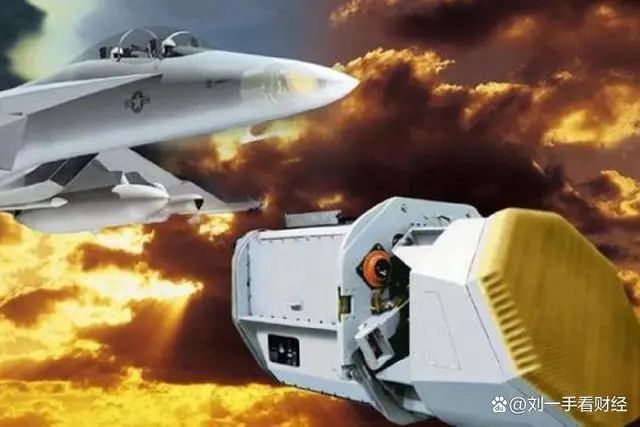 3. Consider Whether Chips Can Operate Under Extreme Conditions. What are extreme conditions? Extreme heat, extreme cold, extreme dryness, humidity, electromagnetic radiation, high-energy particle radiation, etc.Normal commercial chips generally do not need to consider extreme conditions. If you buy a laptop and use it next to a hole in the ice in Antarctica, that would be an extreme case, and there is no need to impose new performance requirements on the chip.
However, war can occur in any environment, which is not the same as using a computer in an air-conditioned office. In a tropical rainforest, if the climate is too humid, what happens if the chip pins short-circuit? If a missile enters the stratosphere and the atmospheric protection weakens, what happens if it is affected by cosmic high-energy particle radiation and the chip fails? These factors all need to be considered.
Therefore, in addition to introducing semiconductor materials that can better adapt to extreme conditions, such as GaN, GaAs, and SiC, redundant chip systems are often designed. If the main control chip fails, it switches immediately to a backup to ensure that commands can be accurately executed in a wartime scenario.
It can be said that China’s military chips are fine. No matter how much they are choked, they cannot be choked in the military field. Whether or not there is an ASML lithography machine does not matter.
3. Essence: It Must Be Made Clear That Process Is Not The Only Criterion For Measuring Chip Value.
There is no doubt that you should understand what benefits advanced processes can bring: better performance can be achieved under the same power consumption and size; it can also be said that under the premise of ensuring equal performance, the chip’s power consumption can be smaller and the size can be smaller.
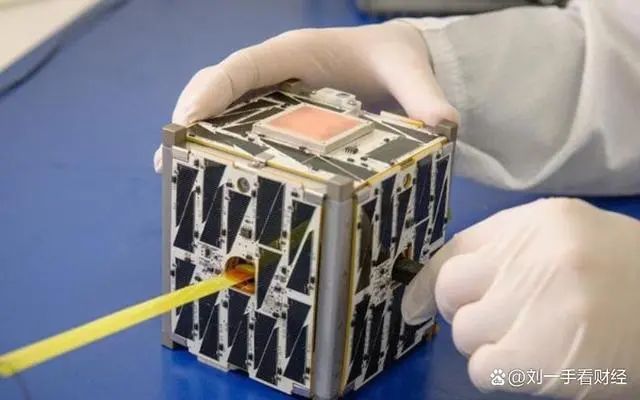 Of course, chips are generally divided into civilian grade, industrial grade, and military grade. Their grading standards are not based on specific functional indicators, such as frequency, speed, precision, resolution, signal-to-noise ratio, etc., but on their reliability, such as the normal operating temperature range:
Civilian Grade: 0℃~70℃;Industrial Grade: -40℃~85℃;Military Grade: -55℃~125℃;
The reliability testing of military-grade chips includes high and low-temperature tests, aging tests, ESD tests, and will also include very strict shock resistance, airtightness, and anti-interference tests. If they are aerospace-grade, they will also add radiation resistance tests.
In other words, the improvement of the process is not aimed at enhancing the reliability aspects that military chips value. On the contrary, as the process improves, the manufacturing difficulty increases geometrically, which may also reduce reliability. The most significant impact is that the temperature range for normal operation will be further compressed.
From the perspective of design and manufacturing difficulty, military chips > industrial chips (including automotive chips) > civilian chips, mainly due to the high quality acceptance standards, making it difficult for general commercial foundries to meet these manufacturing requirements. Industrial and military chips are generally completed by IDM manufacturers through the entire process of design – manufacturing – packaging.
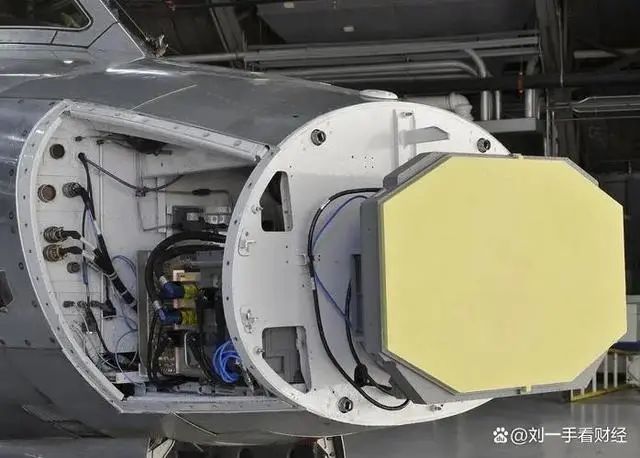
For example, renowned industrial chip manufacturers such as Texas Instruments, ADI, ON Semiconductor, Maxim, STMicroelectronics, and Infineon are all like this, so the costs are actually very high, and their price rankings match this, but because of the high technical threshold, they have a very high pricing power and gross profit margin.For instance, our country imported $312.1 billion worth of chips in 2018. According to some previous data from expert Wei Shaojun: the domestic retention rate is over 50%, with another part exported after being integrated into whole machines. Our own production accounts for less than 7% of the global market share. After deducting this, the degree of external dependence is also very high, with the vast majority being industrial-grade chips or higher.
Military chips are banned from being exported by the West, so the cost of purchasing them through unofficial channels will be even higher. My friend has previously participated in some chip projects for the national nuclear high-tech program, and in fact, our level in this area is not as high as one might imagine.
For military chip applications, the demand for advancement mainly comes from avionics, especially the requirements of naval and air force avionics: navigation support, surveillance, guidance, fire control, flight control, inertial navigation, etc., with the core being radar systems, such as multi-task mobile radars. The demand in this field also prioritizes reliability, followed by efficiency, including power density, etc.
In summary, the process of military-grade chips has never been the primary consideration; reliability is the priority. If you launch a missile to a certain height and cosmic rays damage your processor, that would be disastrous. Therefore, it is necessary to sacrifice the process and performance to ensure redundancy and reliability. As a result, being behind in process technology is not a disaster; a 65nm military standard can still work well.Final words: What do you think is the nm size of the chips used by NASA? As far as I know, NASA was using 65nm chips two years ago. Why doesn’t NASA use 14nm but instead opts for 65nm? Because NASA’s chips are really expensive, a 40nm chip wafer costs $2000, and to maintain confidentiality, NASA has one company make half and another company make the other half, paying $8000 per wafer. This is equivalent to eight times the price of a regular 40nm wafer. A large part of this eightfold price is for reliability.In summary, the most important aspect of military equipment is reliability. A missile being off by 1-2m or even 10m does not affect its power, but if the chip is frozen or burned out at high altitudes, it is wasted. However, in a military context, reliability must always come first. A 5nm chip may have strong computing power, but it cannot be more reliable than a 14nm, 40nm, or even 130nm chip; facts speak louder than words.
Scan the code for free trial and consultation on IC courses!


E Course Network (www.eecourse.com) is a professional integrated circuit education platform under Moore Elite, dedicated to cultivating high-quality integrated circuit professionals in the semiconductor industry. The platform is oriented towards the job demands of integrated circuit companies, providing a practical training platform that fits the corporate environment. Through online and offline training methods, it quickly cultivates students to meet corporate needs.
E Course Network has a mature training platform, a complete course system, and strong teaching resources, planning 168 high-quality courses for China’s semiconductor industry, covering the entire integrated circuit industry chain, and has four offline training bases. So far, it has deeply trained a total of 15,367 people, directly supplying 4,476 professional talents to the industry. It has established deep cooperative relationships with 143 universities and has held 240 special IC training sessions for enterprises.