Click the blue text above to follow.
Understand science, love life!


Many electronic products cannot do without this BM area
Between our phone screens and their frames, there is always a “black edge”. Have you noticed it? This area is called the “BM area”. All electronic products with screens, including phones, computer monitors, and televisions, have this black edge area between the screen and the frame.
Various misconceptions about the black edge area
Many consumers have a misconception that white-bodied phones have black edges, while black-bodied phones do not have black edges. However, in reality, this black area exists regardless of the color of the body. The white body has a white frame that contrasts with the black edge of the screen, making it very obvious. In contrast, the black body has a black frame that blends with the black edge, often leading people to mistakenly believe the black edge has disappeared.
Another misconception is that many people think only phones display this black edge, while other electronic products do not. In fact, all electronic products with screens, including phones, computer monitors, and televisions, have this black edge area between the screen and the frame. So the question arises: what exactly is this strange black edge?
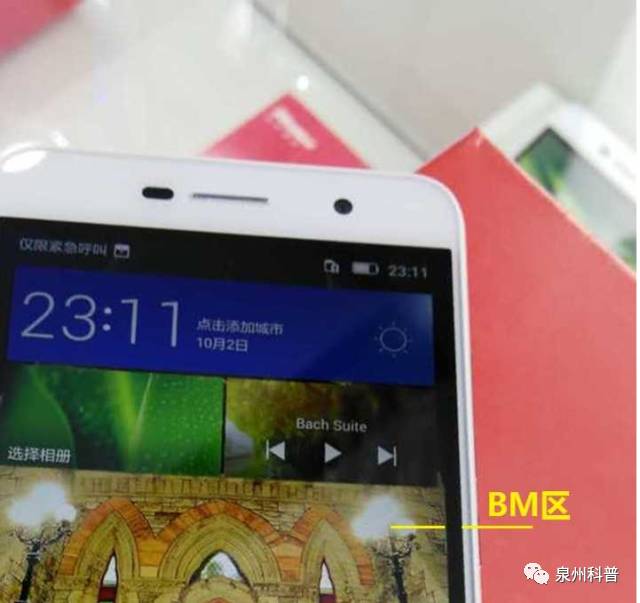
The black edge area is called the BM area
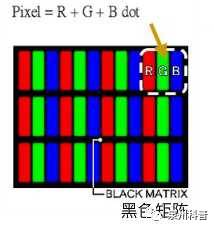
There is a saying: “Existence is reasonable.” Therefore, this strange black edge does not exist without reason; its existence must serve a purpose. This black edge is scientifically named the BM area, which is set from a design perspective. First, we need to understand the composition of an LCD panel (screen). In simple terms, an LCD can be divided into three areas: VA area (Visual Area), AA area (Active Area), and BM area (Black Matrix). The VA area is all visible parts of the LCD panel, while the AA area is the part that can be programmed to display, with VA > AA. The BM area is located at the outermost edge of the VA area, which is the black edge of the screen mentioned earlier. BM stands for Black Matrix. For LCD panels, color comes from red, green, and blue color filters (RGB CF). To control each individual display unit (like an R, called a sub-pixel), there are control signal lines between sub-pixels and in the edge area. To prevent these lines from affecting the display effect, areas other than the pixel (the three sub-pixels collectively referred to as a pixel) are made into a black matrix area.
The small black edge has a big role
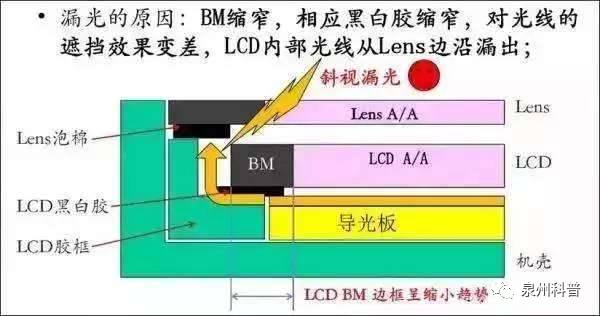
The primary function of the BM area is to prevent light leakage from the screen. When the LCD panel is powered on, we can see a clear image because the internal backlight is shining, and the BM area plays a role in preventing light from leaking out from the edges of the LCD panel. If the BM area is too narrow, light leakage may occur at the edges during pure black screens, and severe cases may show obvious halos. If a screen lacks this BM area, obvious halos will be seen at the edges. Because each phone has slight assembly errors, it is impossible to achieve perfect alignment. If the visible edge of the screen aligns with the BM area, a colorful glare may appear at the edge of the frame; white-framed phones may reflect the screen light, creating bright edges around the screen. Some phones currently exhibit significant light leakage due to larger assembly errors, causing the BM area to fail to effectively block it.
Another reason for the black edge is the distance between the internal and external screens of the phone. Many products have not only a layer of black edge on the screen frame but also a narrow black border inside the black edge. This is because the phone screen is generally divided into two layers: the inner layer is the display layer, and the outer layer is the protective glass touch layer. There is a certain distance between the inner display screen and the protective glass, which naturally creates a dark shadow. This is a normal situation.
The BM area is a wiring board
The BM area also functions as a wiring board for data signals and scanning signals. Besides its auxiliary role in blocking light, it also wraps many of the “lines” inside the LCD panel. The LCD panel displays content by powering the liquid crystal particles, which requires supporting “lines” for power. All these “lines” need to be collected outside the LCD panel. To keep these lines organized and tidy, manufacturers will store these lines at the edges of the LCD panel and then control the LCD panel’s on/off and what colors to display at what time through surrounding integrated circuits. The pixel channels we commonly understand also need to be “conducted” to each pixel point by the IC integrated circuit, and the larger the channel value, the more and wider the “conducting” channels are needed.
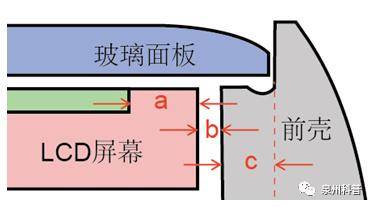
The width of the black frame is influenced by three factors: the width of the LCD screen’s own frame, the gap between the LCD screen and the front shell, and the width of the glue between the panel and the front shell. Many phones now use ultra-narrow frame designs, and the BM area of these phone screens is also getting narrower. Some manufacturers have even made the black edge nearly touch the frame, which reflects the improvement in phone manufacturing technology. In the near future, there may be truly borderless screens.