When choosing a smartphone, the visual experience provided by the phone’s screen greatly influences the first impression of the device. Some phones appear clear and vibrant, while others look blurry with color discrepancies…
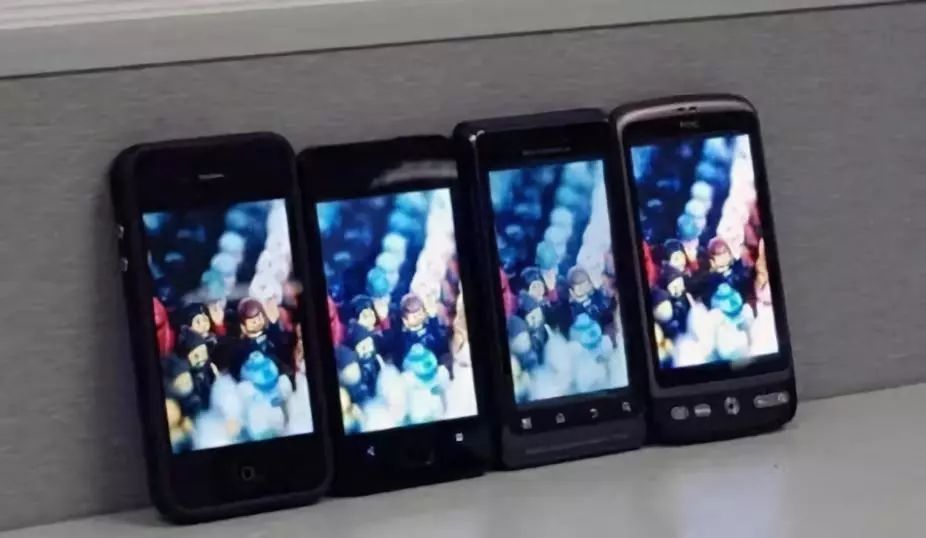
The reason for this is well-known: it is the difference in screen resolution. However, when selecting a phone, what do the resolutions 720p, 1080p, and 2K actually mean? Many people might be confused about this.
I suspect this question may trouble many. Therefore, I have specially come to clarify it for everyone~
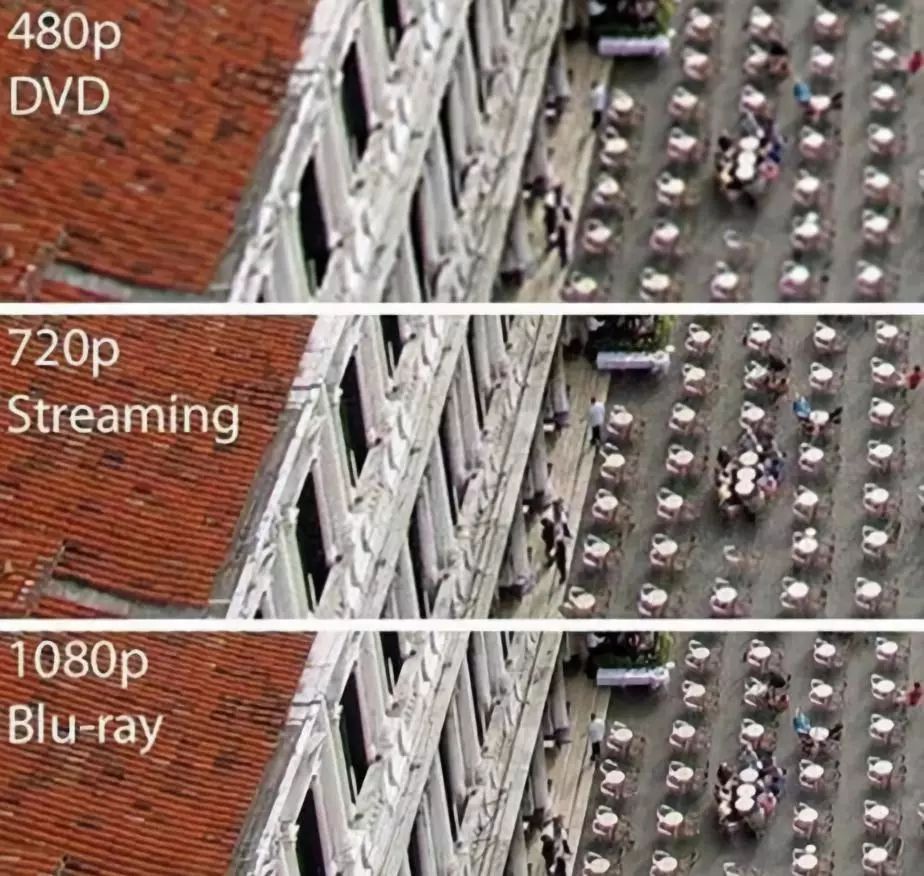
The screens we currently use on smartphones are LCD screens, where the number of pixels and the screen size determine the clarity of the display. Taking 720p, 1080p, and 2K as examples:
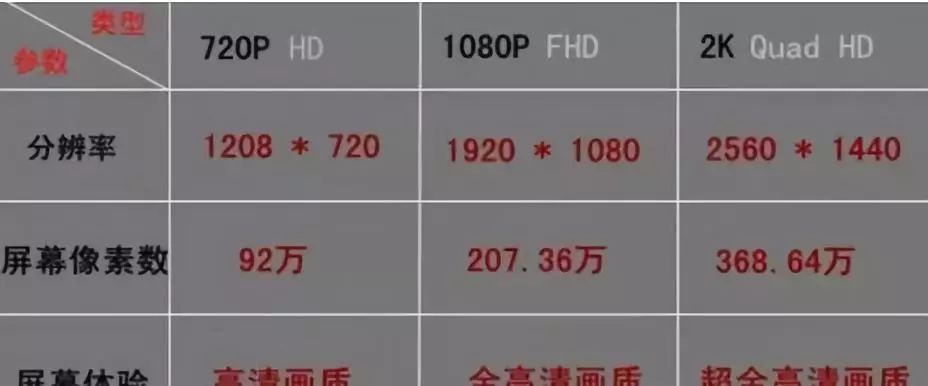
720p refers to a resolution of 1280*720
1080p refers to a resolution of 1920*1080
2K refers to a resolution of 2560*1440
(It should be noted here that the number before the “*” indicates the number of pixels in the screen length, while the number after the “*” indicates the number of pixels in the screen width.)
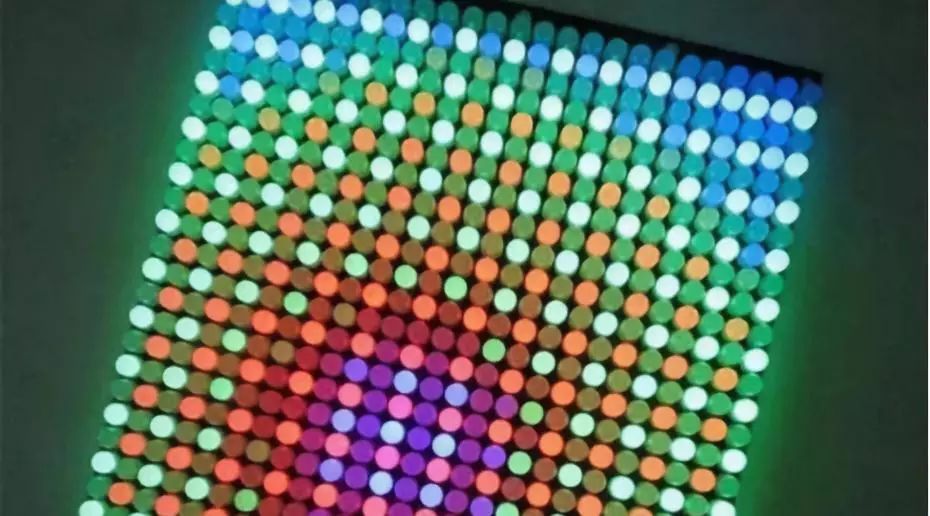
Generally speaking, when the screen size remains unchanged, the more pixels there are, the clearer the display becomes. But does this mean that if the number of pixels increases indefinitely, the clarity will also improve indefinitely?
Not so simple. Next, we need to introduce a new concept, which is ppi (Pixels Per Inch), representing the number of pixels per inch, which is the pixel density value of the smartphone screen.
There is also a specific calculation formula: ppi=√(X^2+Y^2)/Z (X: number of length pixels; Y: number of width pixels; Z: screen size). This means that the square of the length pixels plus the square of the width pixels is square-rooted and divided by the screen size to get the ppi parameter. The academically inclined can calculate their phone’s pixel density in their spare time.
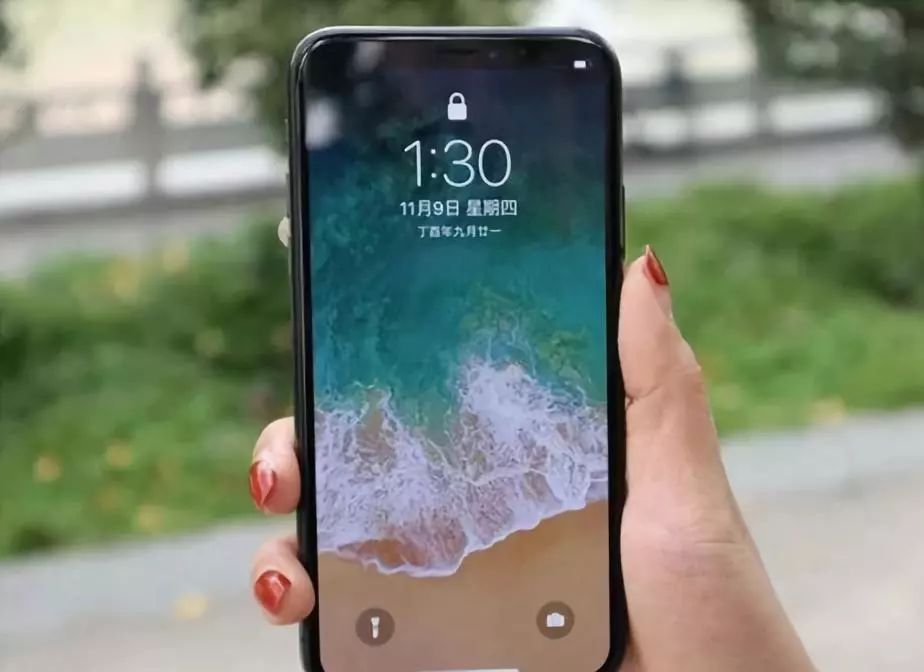
In most cases, the larger the ppi, the clearer the screen. In 2010, Apple CEO Steve Jobs introduced the concept of Retina display, claiming that when the pixel density of an object reaches over 300 ppi, the human eye cannot distinguish the pixel points from a distance of more than 25 centimeters.
Therefore, the iPhone 4, with its 326 ppi, had excellent display capabilities without any graininess.
However, today’s smartphones have long surpassed this level. For full-screen phones, a resolution of 1440*720 requires the screen size to be below 5.3 inches to achieve 300 ppi. Given the current trend towards larger screens, manufacturers are unlikely to release such small full-screen phones, so the ppi value needs to change with the screen size and resolution. Let’s take a look at the pixel densities of popular phones:
iPhone X: 5.8 inches, 458 ppi
vivo NEX: 6.59 inches, 387 ppi
OPPO Find X: 6.42 inches, 401 ppi
Xiaomi MIX 2S: 5.99 inches, 403 ppi
Huawei P20: 5.8 inches, 428 ppi
According to Apple’s limit of 300 ppi for human eye recognition, it is clear that the current mainstream smartphones have far exceeded this, making the differences in screen appearance almost negligible.
However, it must be said that the screen material is also a factor: a standard LCD screen typically has an RGB arrangement and performs well even at low resolutions, while Samsung’s AMOLED uses a PenTile arrangement, which can be more vibrant, but if the pixel count is too low, the graininess becomes quite noticeable. Visible color differences and the screen material, contrast, saturation, etc., are also related.
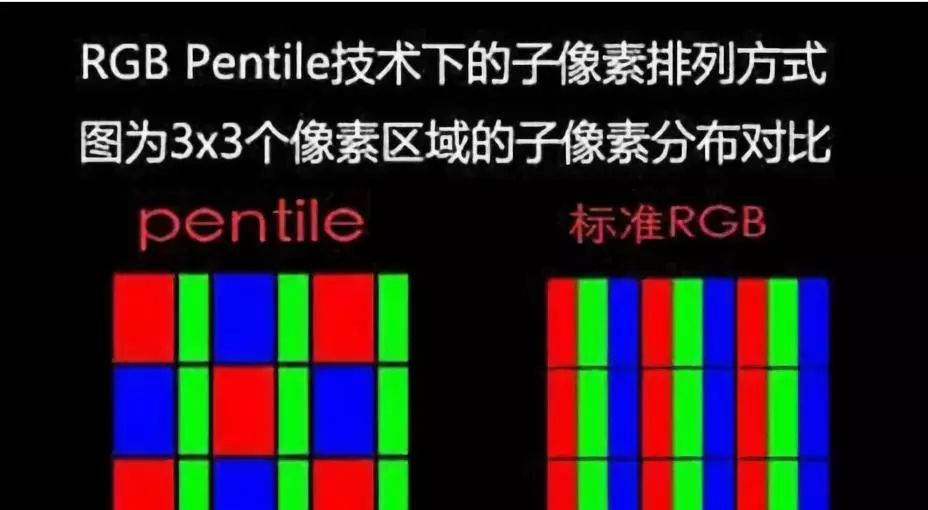
Here we roughly understand why flagship devices use larger AMOLED screens.
Conclusion
The screen size and resolution of smartphones have been continuously improving: in recent years, it may rise to 2K (Quad HD or 1440P). From a parameter perspective, higher resolution will bring more delicate and clear visual effects, but the human eye has a limit to resolution recognition at a certain viewing distance, so essentially above 300 ppi, the viewing experience will not differ significantly.
However, increasing resolution to achieve the same visual effect inevitably raises the requirements for the screen, thus increasing costs and demanding higher performance from the phone’s hardware, such as needing a larger battery capacity to maintain long-lasting battery life.
Therefore, one should not blindly pursue resolution; it is essential to consider the phone’s optimization capabilities based on the appropriate screen size matching the resolution, to avoid high specifications with low performance, which is the correct choice.
Do you have anything to add regarding screen resolution knowledge?
Compiled by Phone Professor and others
Editor: Zhu Yayun
Statement:【We respect originality! This article’s copyright belongs to the original author and source. We share this article for educational sharing and to disseminate more information, with no commercial use. The text and image materials are the copyright of the original author. Some articles may not have been contacted with the original author for various reasons, if it involves content, copyright, or other issues, please contact the original author for immediate resolution. This public account has the final interpretation right of this statement】.