Imagine an automated factory: conveyor belts operating precisely, robotic arms moving freely, production lines running 24/7…
Who is giving the orders behind this orderly operation? Is it a group of engineers frantically operating computers in the background?
No! The real conductor is a metal box called PLC. It is the “strongest brain” in the field of industrial automation.
1. PLC: The Birth of the ‘Brain’
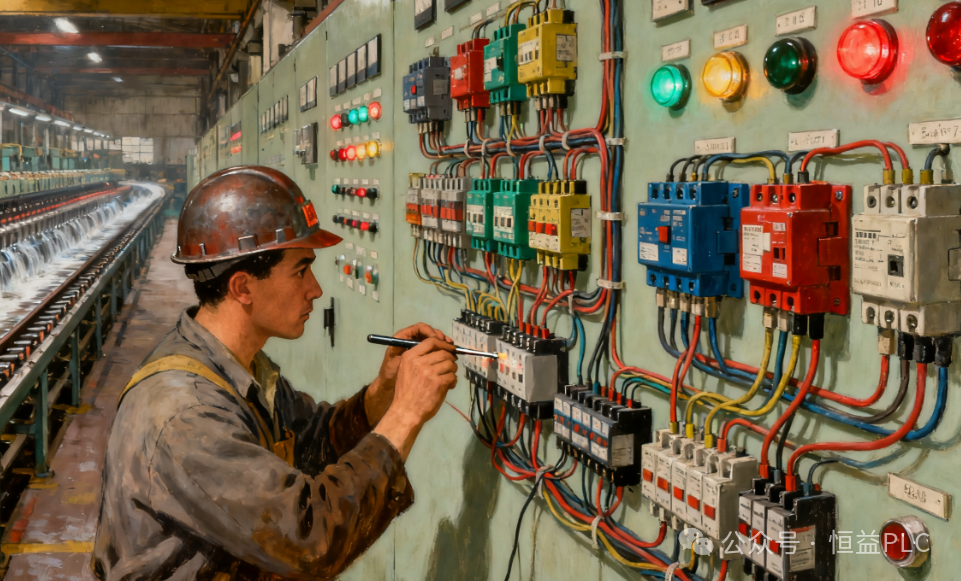
Before the advent of PLCs, factory automation control relied onrelay control systems.
What does this mean? You can think of it as an old-fashioned telephone switchboard: it requires thousands of wires, hundreds of relays and contactors, and usesphysical wiring to achieve logical control.
The drawbacks are obvious:
-
Extremely bulky: A control cabinet the size of a wall can only achieve very simple functions.
-
Debugging nightmare: Want to modify a logic? For example, changing “press A then press B to start” to “press A or press B to start” requires the engineer to carry a toolbox,climb up and down to rewire, taking up most of the day.
-
Poor reliability: Relays are mechanical components with a limited lifespan and a high failure rate.
Thus, in 1969, General Motors (GM) proposed the idea of a “programmable” controller to adapt to frequently changing production lines: could we use computer technology to replace complexphysical wiring throughsoftware programming?
The answer is yes! PLC was born.
2. How does the ‘Brain’ work?
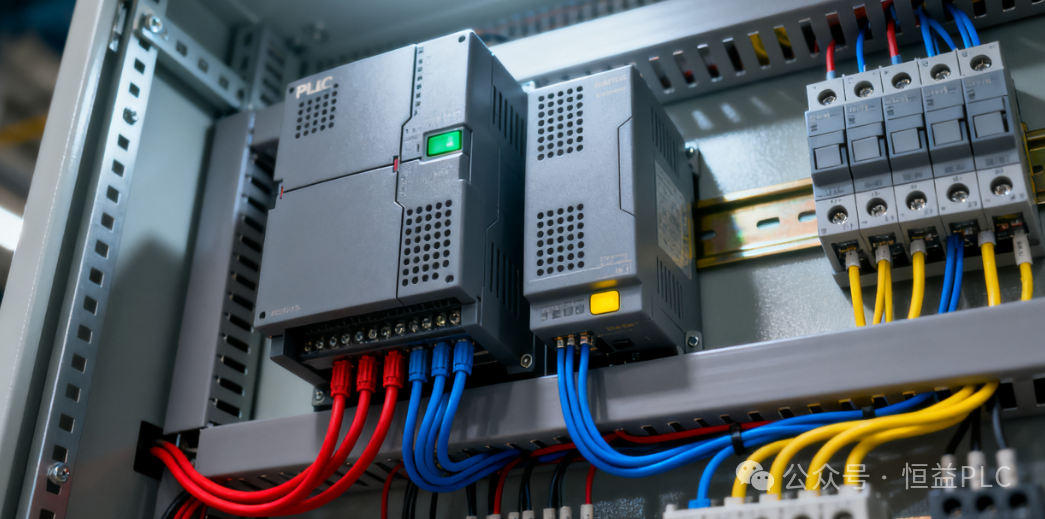
The workflow of a PLC is very similar to the human “reflex arc“, very simple and clear:
Step 1: Perception (Input)
-
The “eyes” and “ears” of the PLC are varioussensors andswitches.
-
For example: a button is pressed (switch signal), a sensor detects an object in place (photoelectric signal), temperature is too high (temperature signal).
-
These signals are continuously sent to the PLC’s brain (CPU).
Step 2: Thinking (Process)
-
The PLC’s “brain” (CPU) will think and judge based on the pre-writtenprogram.
-
The program contains logical instructions, such as: “If button A is pressed, and sensor B detects an object, then execute the next step.”
Step 3: Execution (Output)
-
After the PLC has thought, it will use its “hands” and “feet“—output points—to control various execution devices.
-
For example: to make amotor rotate, to make aindicator light turn on, to command asolenoid valve to open (cylinder action).
Then, this “perception-thinking-execution” process will cycle at an extremely fast speed (in milliseconds), never tiring!
3. Why is it the Undisputed ‘Brain’?
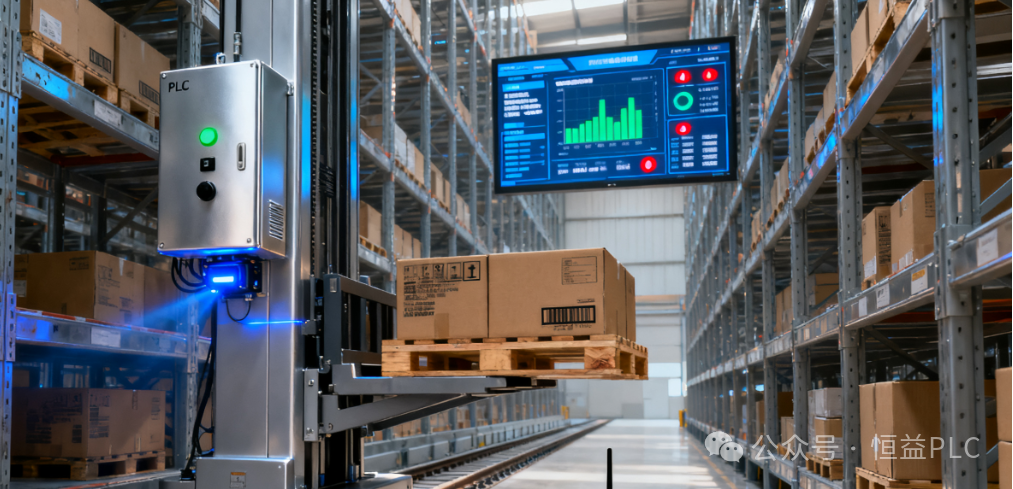
Compared to traditional relay control, where does the PLC ‘brain’ excel?
-
Super flexible: Want to change the control logic? No need to carry a screwdriver to change the wiring! Engineers just need tomodify the program on the computer and download it to the PLC. It can be done in minutes, and the production line immediately adapts to the new task.
-
Super reliable: PLCs are designed forharsh industrial environments, resistant to interference, dust, and vibration, much more reliable than delicate computers, capable of running stably 24/7.
-
Powerful functionality: Not only can it handle simple switch logic, but it can also perform mathematical operations, timing control, counting, process analog signals (such as temperature and pressure), and even connect to form a large control system.
-
Easy to maintain: With PLCs, the size of control cabinets is greatly reduced. Moreover, it has built-in diagnostic functions, allowing for quick fault location when issues arise.
4. This ‘Brain’ is Right Next to Us
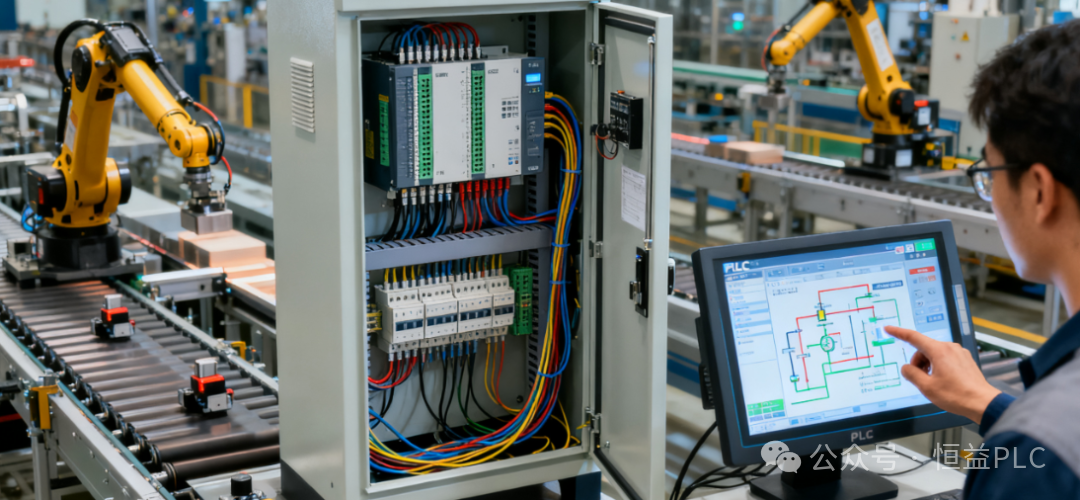
Don’t think that PLCs are far from you; they have already infiltrated every aspect of modern life:
-
Elevators: When you press the floor button, the PLC controls the elevator to run smoothly and stop accurately.
-
Traffic lights: The automatic switching of traffic lights at intersections is often managed by PLCs.
-
Automobile manufacturing: Welding, painting, and assembly robots on the production line are all coordinated and controlled by PLCs.
-
Water treatment plants: Water level control, pump start/stop, and filter cleaning are all automatically completed by PLCs.

In summary:
PLC is a computer that uses software programs to replace hardware wiring, specifically designed to control machinery in industrial environments.
It liberates engineers from the tedious physical tasks of climbing ladders, tightening screws, and rewiring, allowing them to engage more inprogram design and optimization intellectual work.
It is thisreliable, flexible, and powerful ‘brain’ that makes modern automated production possible.
What else do you think PLC resembles? Or where else have you seen its presence in life? Feel free to share your discoveries in the comments!