In today’s wave of intelligent transformation in manufacturing, visual recognition technology has become a key tool for enhancing production efficiency and ensuring product quality. For small and medium-sized enterprises (SMEs), 2D visual recognition stands out as the preferred solution for automation upgrades due to its high cost-effectiveness, ease of deployment, and stable reliability. This article will delve into how 2D visual recognition technology helps SMEs solve practical production issues and showcase its wide range of application scenarios through real case studies.
Basics and Advantages of 2D Visual Recognition Technology
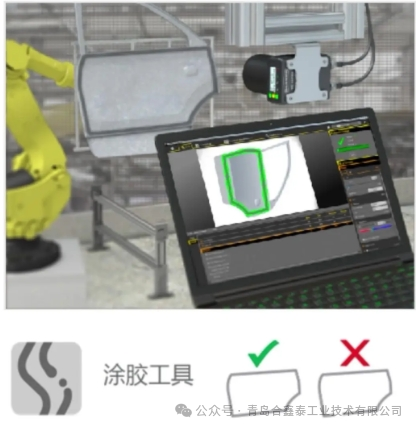
The 2D visual recognition system is based on digital image processing technology, capturing images of object surfaces through industrial cameras, and then analyzing and processing them with specialized algorithms to achieve detection, recognition, positioning, and measurement of target objects. Compared to manual inspection, 2D visual systems offer significant advantages such as objective consistency, 24/7 operation, high precision, and high speed.
Core components include industrial cameras, lenses, light sources, and image processing software. The system operates by first illuminating the target features with appropriate light sources, then capturing high-quality images with the camera, and finally using algorithms such as edge detection, template matching, and OCR (Optical Character Recognition) to complete the analysis tasks..
Compared to 3D visual systems, 2D solutions have the following unique advantages:
-
High cost-effectiveness: Equipment investment is about 1/3 to 1/2 that of 3D systems, making it more suitable for budget-constrained SMEs.
-
Easy deployment: No complex calibration is required, with a short debugging cycle, typically ready for use in 1-2 days.
-
Fast processing speed: Suitable for high-speed production lines, with detection frequencies reaching thousands of times per minute.
-
Mature technology: Algorithms have been validated over many years, offering high stability and low maintenance costs.
Typical Application Scenarios and SME Cases
1. Product Quality Defect Detection
In electronic product assembly lines, traditional manual inspection is not only inefficient (about 20-30 items per minute) but also heavily influenced by personnel conditions, with a defect detection rate often exceeding 5%. After adopting a 2D visual system, the detection speed increased to over 200 items per minute, with an accuracy rate of up to 99.8%. The system can accurately identify defects such as misplaced, missing, and reversed components, as well as surface flaws like poor solder joints and scratches.
A certain electronic connector manufacturing company reduced its defective product outflow rate from 3% to 0.2% after implementing visual inspection, saving over one million yuan in quality costs annually. The system was specially designed with a multi-angle lighting solution to effectively address the challenges of detecting reflective components..
2. Barcode/Character Recognition and Traceability Management
In logistics sorting and product traceability, 2D visual systems demonstrate powerful capabilities.A certain medium-sized logistics company deployed a “Rapid Item Information Reading System” using high-resolution industrial cameras, capable of simultaneously recognizing various information such as barcodes, text, and patterns on boxes, achieving three-dimensional spatial mapping with a processing capacity of 3000 boxes per hour and an accuracy rate of over 99.5%.
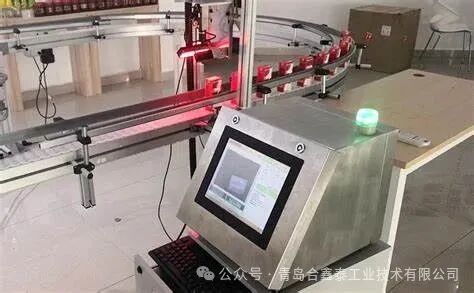
The system’s innovations include:
-
Multi-camera collaboration for complete coverage without blind spots.
-
Adaptive algorithms to cope with varying lighting conditions.
-
Seamless integration with MES systems for full-process traceability.
3. Dimension Measurement and Positioning Guidance
In automotive parts manufacturing, traditional caliper measurements are inefficient and prone to human error. The 2D visual measurement system can achieve non-contact, high-precision dimension detection, with repeatability precision reaching ±0.02mm.A certain automotive lighting supplier used the visual system to check the assembly position of connectors, requiring only 1 second per detection cycle, with angle measurement precision of 0.05°, helping the company increase its product yield to 99.8%.
The system’s advantages include:
-
Drag-and-drop programming interface, allowing debugging to be completed within 2 hours.
-
Supports various measurement modes such as point-to-point distance and point-to-line distance.
-
Automatic data recording for quality analysis.
4. Standard Operating Procedure (SOP) Monitoring
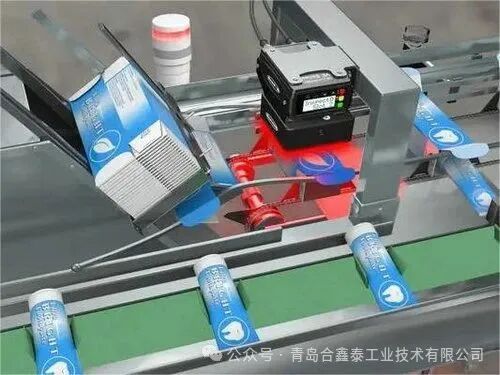
In human-machine interaction production processes, ensuring that operators follow standard procedures is crucial. The 2D visual-based “AI Event Camera” can monitor operator action rhythms in real-time, determining compliance with SOP requirements and issuing timely alerts. This solution reduces costs by 60% compared to traditional sensor solutions and shortens deployment time by 80%.
A certain new energy battery pack workshop saw a 75% reduction in erroneous operations and a 50% reduction in training cycles after deployment. System features include:
-
Plug-and-play, with single-site deployment taking only half a day.
-
Supports multi-camera networking for extensive workstation coverage.
-
Video recording functionality for issue traceability.
Technical Selection and Implementation Recommendations
For SMEs, we recommend planning and implementing 2D visual projects in the following steps:
1. Requirement Analysis Phase
-
Clarify detection targets (defect types, precision requirements, etc.).
-
Assess production line environment (lighting, vibration, space constraints).
-
Determine rhythm requirements and system integration methods.
2. Solution Design Phase
-
Select industrial cameras with appropriate resolutions (typically 500,000 to 5 million pixels).
-
Design dedicated lighting solutions (front light, backlight, coaxial light, etc.).
-
Determine image processing algorithm flow.
3. Implementation and Debugging Phase
-
Hardware installation and calibration (1-2 days).
-
Algorithm parameter optimization (1-3 days).
-
System integration and acceptance testing.
4. Operation and Maintenance Optimization Phase
-
Regular calibration and maintenance.
-
Data statistical analysis.
-
Continuous algorithm optimization.
For budget-constrained enterprises, consider phased implementation: first address the most pressing quality pain points, then gradually expand the application scope. Alternatively, choose modular visual systems for easier future functionality expansion.
Future Development Trends
With technological advancements, 2D visual systems are evolving towards smarter and more user-friendly solutions:
-
AI Algorithm Integration: Deep learning technologies enable systems to handle more complex defect detection tasks, such as texture analysis and irregular object recognition.
-
Cloud Collaboration: Some enterprises are beginning to adopt a “cloud training + edge detection” model, lowering technical barriers and sharing algorithm resources.
-
Standardized Solutions: Standardized visual modules for common application scenarios are emerging, significantly shortening deployment cycles.
-
Multi-dimensional Perception Fusion: Some high-end applications are starting to combine 2D vision with other sensing methods such as force and touch, enhancing system adaptability.
Conclusion
2D visual recognition technology provides SMEs with a low-barrier, high-return path for automation upgrades. From quality inspection to process monitoring, from character recognition to dimension measurement, its application scenarios cover almost all aspects of manufacturing. As technology continues to advance and costs decrease, 2D visual systems are becoming indispensable tools for SMEs to enhance their competitiveness.
For enterprises considering the introduction of visual technology, it is recommended to start from specific pain points and choose experienced solution providers to ensure rapid project implementation and effectiveness. In the wave of digital transformation, companies that adopt visual technology early will gain a competitive edge in the fierce market.