
Introduction: The Industrial Internet of Things (IIoT) is not just a new technology; it is a key force driving transformation in the logistics and construction sectors…
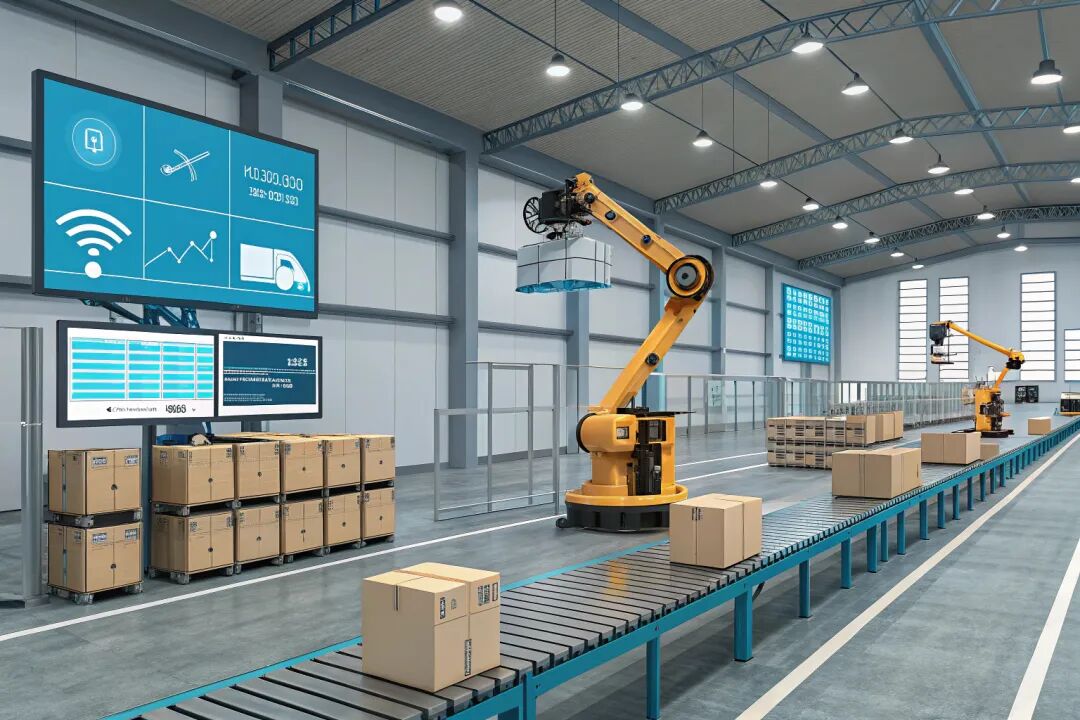
Innovative Trends: Smarter Buildings and Logistics
With the rapid development of the Industrial Internet of Things (IIoT), buildings are becoming smarter, and logistics systems are undergoing profound transformations. It has been proven that when buildings become smarter, businesses also become smarter. The Internet of Things (IoT) itself is not a new concept, but recent technological advancements and ongoing investments in innovative infrastructure are unlocking broader value than ever before. The IIoT not only makes buildings safer, more efficient, and sustainable but is also reshaping logistics operational models.
Why IIoT is a Game Changer in Logistics
In a fast-paced world, sometimes it is the seemingly “static” objects that drive change. Commercial buildings are no longer just single concrete shells; they are gradually becoming intelligent ecosystems.
In the context of increasingly complex supply chains and the necessity for sustainability, buildings are no longer just containers for operations; they must possess the capability to enhance operations. The IIoT is the core force driving this transformation.
Although IoT technology has existed for many years, its role in building infrastructure is undergoing a qualitative change—from isolated applications to fully integrated building-level systems. The IIoT makes facilities smarter, and this intelligence helps businesses operate more efficiently, safely, and sustainably.
For example, DHL has been actively exploring and applying these technologies across its global network to enhance operational resilience and advance sustainability goals. From predictive maintenance to energy consumption balancing, IIoT applications are helping improve efficiency, enhance safety, and reduce greenhouse gas emissions. Industry observers believe this trend is leading logistics facilities towards becoming “smart buildings.”
The Practical Potential of IIoT in Logistics
- Enhanced Safety:Research shows that IIoT can reduce workplace accidents by up to 40% in commercial settings.
- Energy Savings:Smart energy management infrastructure can achieve energy savings of 20%–30%.
- Inventory Accuracy:IoT-based inventory management systems can improve inventory accuracy to over 95%.
- Market Growth Potential:It is expected that the global IIoT market will maintain strong growth with a compound annual growth rate of over 13% from 2025 to 2029.
How IIoT Works
The core of IIoT lies in robust technological support—a complex network that allows intelligent infrastructure within buildings to operate efficiently as a complete ecosystem.This network begins with the deployment of IoT devices, including sensors, actuators, and controllers, to monitor various aspects from equipment performance to environmental conditions.
It is noteworthy that companies do not need to build a large, complex system from the outset. Many IIoT applications often start with a small number of devices connected via Wi-Fi. Even at this initial stage, businesses can begin collecting valuable data, gaining new insights, and enhancing operational transparency without extensive infrastructure overhauls.
As systems evolve, the importance of dedicated IoT gateways becomes increasingly prominent. These devices act as a bridge between operational technology (OT) and IT systems, capable of handling different data formats, translating industrial protocols, and ensuring seamless communication between devices and cloud platforms. Gateways that support edge computing can also bring additional intelligence to devices in the network, enabling real-time processing and decision-making at the source. This not only reduces latency and bandwidth requirements but also supports time-sensitive applications, marking the beginning of “Artificial Intelligence of Things (AIoT)” or “Physical Artificial Intelligence.”
However, for IIoT to truly work, the entire network must possess reliability, security, and scalability. Only then can buildings like logistics facilities transform from passive structures into proactive, operationally intelligent responsive hubs.
The Three Major Values of IIoT for Logistics
1. Real-time Efficiency Improvement
In the logistics industry, even minor inefficiencies can lead to significant cost and time losses. Therefore, IIoT has become a powerful tool for enhancing operational performance. By deploying sensors and smart tracking devices in warehouses, hubs, and sorting centers, logistics companies can gain real-time visibility into inventory, assets, and equipment. These systems can automatically streamline a range of tasks—from pallet locating to bottleneck identification, and even detecting equipment wear before failures occur—all without human intervention.
Additionally, IoT-based indoor navigation and positioning systems add new precision, helping optimize workflows and reduce unnecessary movement. Workers can be guided along the most efficient routes, saving time and enhancing productivity. This technology also supports smarter resource planning and equipment scheduling, aligning asset allocation more closely with actual demand.
Inventory management also benefits from IoT empowerment. Relevant data shows that IoT-based inventory management systems can achieve accuracy rates exceeding 95%, significantly reducing inventory discrepancies and related costs.For example,acoustic sensors deployed near conveyor belts or sorting systems can detect abnormal vibrations or noises to identify potential failures and trigger maintenance before damage occurs.
2. Enhanced Health, Safety, and Security
With frequent interactions among people, machines, and goods within logistics and industrial buildings, safety management is particularly important. IIoT builds a more integrated digital security system by networking previously isolated security and monitoring devices.
For example, cameras are not just monitoring tools; they become visual sensors that support remote access control, continuous monitoring, and even analyze video streams using artificial intelligence to identify unsafe behaviors and automatically trigger alarms. Previously isolated security devices are now integrated into a unified proactive security network.
Research indicates that IIoT applications can reduce workplace accidents by up to 40%. Meanwhile, environmental sensors that monitor temperature, humidity, air quality, and noise levels contribute to creating a healthier and compliant work environment.
For instance, proactive safety management based on AI video analysis employs anonymized computer vision technology (compliant with GDPR standards) to detect unsafe operations or potential hazards in real-time and automatically alert relevant personnel. This not only allows for immediate intervention but also provides data support for safety training.
3. Intelligent Energy Management
In the context of rapidly growing energy demand, the value of IIoT in energy consumption management is becoming increasingly prominent. Especially in the logistics sector, the acceleration of electrification has led to a surge in energy demand. It is expected that by 2030, the increase in building energy consumption will be limited, but overall electricity usage may grow by over 250%, with significant energy consumption from heavy electric trucks.
IIoT enables real-time energy consumption monitoring at the device level through smart meters and IoT gateways. Adaptive lighting and automated HVAC systems can dynamically adjust based on occupancy and usage patterns, avoiding energy waste while maintaining comfort and performance. It is estimated that smart energy management systems can reduce energy consumption by 20%–30%, directly lowering operational costs and supporting carbon reduction goals.
However, merely optimizing energy consumption is not enough to meet future challenges. The future of smart logistics facilities relies on intelligent coordination of production, storage, and usage. This includes utilizing IIoT for demand forecasting, optimizing the use of local renewable energy (such as photovoltaics), and implementing load management in electric vehicle charging networks to ensure grid stability and cost efficiency.
For example, at DHL’s Health Logistics Park in Florstadt, Germany, an IoT-based smart lighting system has been deployed. This system automatically adjusts lighting brightness through sensors, combining natural light and personnel activity, effectively reducing energy consumption while creating a safer and more adaptable work environment.
As Axel Wiebracht, Vice President of the IoT Excellence Center at DHL Group, pointed out: “The accelerated development of automation and electrification brings a new dimension to the real-time control capabilities of IoT. This capability will play a core role in future smart buildings and logistics systems.”
Future Trends: The Evolution of IIoT in Logistics
Despite the uncertainties of the future, industry experts are closely monitoring the following emerging trends:
-
AI + IoT Intelligent Forecasting: The combination of artificial intelligence and the Internet of Things enables predictive analytics, allowing facilities to optimize energy consumption, schedule maintenance, and improve processes in advance.
-
Dedicated 5G Networks: Faster and more secure than Wi-Fi, capable of supporting low-latency applications such as robotics, navigation, and security systems.
-
Edge Computing: Achieving ultra-fast responses through local data processing at the network edge, particularly suitable for critical scenarios such as redirecting the flow of goods or equipment maintenance.
Conclusion
The Industrial Internet of Things is not just a new technology; it is a key force driving transformation in the logistics and construction sectors. It transforms buildings from mere operational spaces into intelligent operational hubs. By enhancing real-time efficiency, strengthening safety guarantees, and optimizing energy management, IIoT is driving logistics facilities to become proactive participants rather than passive containers. For companies looking to remain competitive under the pressures of complex supply chains and sustainability, IIoT has become an indispensable strategic choice.
Source: DHL