AI
Robots
In 2025, breakthroughs in robotics technology are penetrating various industries at an unprecedented speed—from the dancing robot by Yushu Technology featured in the Spring Festival Gala at the beginning of the year, to the explosive popularity of the first World Humanoid Robot Games in August, and the heated discussions surrounding the Xiaopeng IRON humanoid robot in November due to its “incredibly realistic gait”. The world has entered a new phase of accelerated iteration in robotics technology.

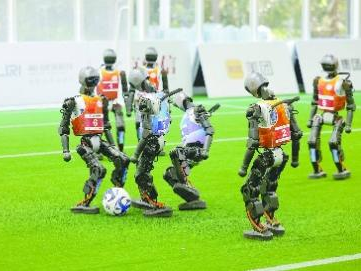

Yushu Technology Robot
Robot Football Match
Xiaopeng Humanoid Robot
In the water industry, the value of robots has long surpassed the concept of humanoid forms: from unmanned cleaning boats gliding across the water surface, to inspection robots delving into pipelines, and efficient dredging equipment, the new generation of intelligent robots is breaking free from the traditional single-tool positioning. Leveraging AI vision, IoT perception, and digital twin technology, they are becoming the perceptual organs and intelligent nodes of water management systems, driving a comprehensive transformation of water management from “experience-driven” to “intelligence-driven”.
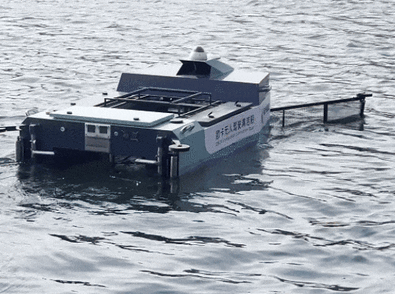
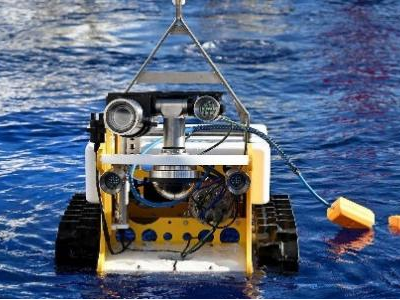
Unmanned Cleaning Boat
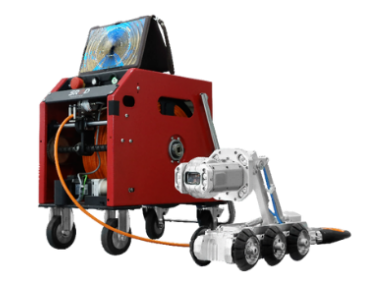
Pipeline Inspection Robot
Dredging Robot
1
From replacing human labor | to surpassing human labor
AI empowerment enables precise operations around the clock

Traditional water service robots can replace humans for high-risk tasks (such as pipeline inspection and high-altitude patrols), but they are highly dependent on human control, have limited functions, and low fault tolerance. The new generation of intelligent robots has undergone a transformation from “tools” to “intelligent partners” by integrating multiple technologies. They can operate continuously 24 hours a day and autonomously optimize solutions based on data, achieving precision and efficiency far exceeding that of humans.
At the Yaojiang Water Plant of Ningbo Industrial Water Supply Co., a self-inspecting robot is utilizing AI vision technology to read voltage, current, and temperature values from a 6 kV distribution cabinet, conducting uninterrupted monitoring 24 hours a day. The sludge level detection robot and the intelligent sludge discharge control in the sedimentation tank interact with each other to achieve precise sludge discharge. The AI smart model built into this system combines parameters such as inflow rate and water quality to automatically calculate the optimal solution.(“People’s Daily”, November 17, 2025, Page 19)
2
From single functionality | to system intelligence
Modular design breaks scene limitations

In the past, water service robots were often specialized—dredging robots could only handle sludge, and inspection robots could only identify defects. In complex water service scenarios, multiple devices were often required to cooperate, limiting efficiency. The new generation of intelligent robots achieves multi-functionality and scene adaptability through modular design and multi-functional integration.
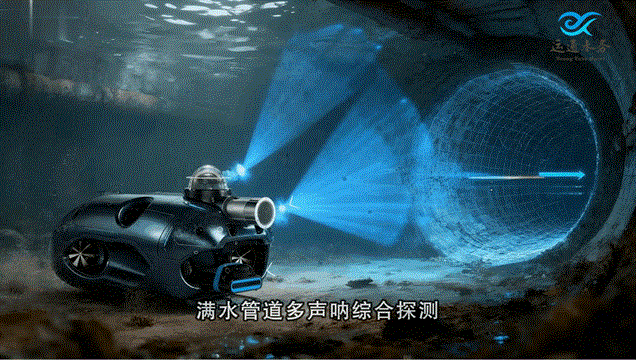
Shenzhen Qianhai Yuntong Water Co., in collaboration with Shenzhen Huan Shui Group Guangming District Environmental Water Company, launched the “Deep Water Spirit Eye” (Turbid Water Detector No. 1), equipped with high-definition PTZ cameras, dual cameras, and cross-section sonar, forward-looking sonar, creating a complete underwater perception system. This device can accurately identify 12 types of pipeline defects in turbid water environments, breaking through the limitations of “traditional vision cannot see, traditional sonar cannot clarify”. Additionally, it can switch detection modes and device postures with one click: it can operate like an underwater “submarine” equipped with sonar, or transform into an above-water “speedboat” working with cameras, significantly enhancing detection efficiency and environmental adaptability.(Official WeChat account “Baoan Daily”, November 15, 2025)
3
From single-machine operation | to collaborative clusters
Building an integrated smart network across air, land, and water

The new generation of intelligent water service robots no longer operate in isolation; instead, they form an organic whole through intelligent scheduling systems that allow robots with different functions to share data and collaborate on tasks, unleashing the collective intelligence value of “1+1>2”.
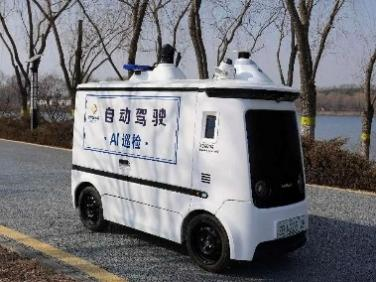
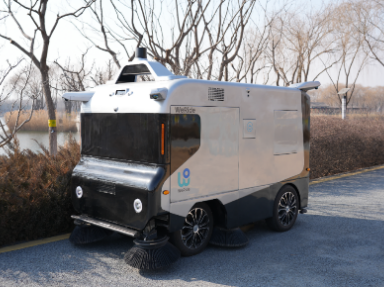
Unmanned Inspection Vehicle
Unmanned Sweeping Vehicle
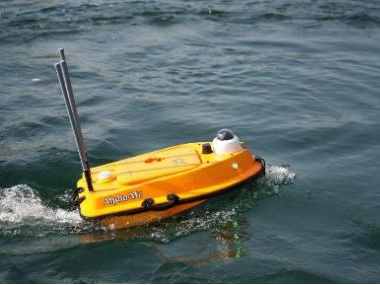
Unmanned Measurement Boat
(1) Three-dimensional monitoring network: Combining drones and underwater robots to build an integrated inspection system of “air-land-water”. For example, drones conduct macro scans of rivers, robotic dogs delve into culverts for inspections, and underwater robots explore pipeline wall corrosion, with data fusion enhancing the precision of hazard location. In Beijing, relevant attempts have been initiated, with Beijing Digital Infrastructure Investment Development Co. signing a “Robot + Water Service” innovation application cooperation agreement with the Beijing Water Conservancy Center to create a “Waterway Coordination” solution, achieving intelligent water management across the entire chain, collaborating with relevant water service units to develop autonomous inspection vehicles, unmanned cleaning boats, unmanned rescue boats, unmanned measurement boats, and inspection robotic dogs, among various AI intelligent entities.(Beijing Economic and Technological Development Zone Management Committee, March 13, 2025)
(2) Collective intelligent decision-making: Through distributed AI algorithms, robotic dogs can autonomously assign tasks (e.g., Robot A handles leaks, Robot B takes samples), reducing reliance on central control. For instance, when an inspection robot detects an anomaly in the pipeline network, it can automatically dispatch an inspection robot for detailed investigation, then send a dredging robot to perform maintenance tasks, all without human intervention.
4
From experience dependence | to data-driven
Farewell to the old operation and maintenance model dominated by experience

Traditional water service operation and maintenance often falls into the experience trap—judging pipeline faults based on the sounds heard by experienced workers, timing sludge discharge based on color observation. Once personnel changes occur, the experience is difficult to pass on. The new generation of intelligent robots collects data throughout the entire process, building a database covering water management, mining patterns from vast amounts of data, ultimately forming the optimal operational plan.
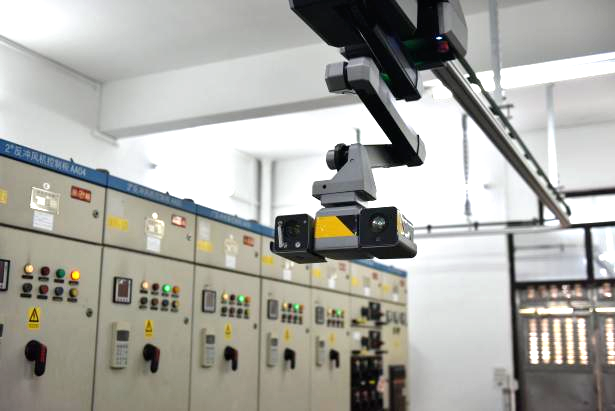
Guangzhou Water Investment’s practice is quite representative, as it deployed a rail-type inspection robot in the transformer room, equipped with high-definition visible light cameras and environmental sensors, achieving inspection data collection and analysis, anomaly alerts, and report output. The system’s early warning can achieve minute-level response. After being put into use, the original 12 daily manual inspections were changed to a combination of 12 robot inspections and 6 manual inspections per day, increasing inspection frequency, improving work efficiency, and reducing safety risks, effectively ensuring the safety of the water plant’s power system.(Official WeChat account “Guangzhou State-owned Assets”)

From executing preset programs as tools to becoming interactive and adaptive intelligent agents, the evolution of water service robots reflects an upgrade in the management thinking of the entire industry. When unmanned boats can autonomously plan inspection routes, robotic dogs can collaboratively handle hazards, and AI models can optimize sludge discharge plans, smart water management is no longer just a pile of automated devices, but a data-driven, collaborative, efficient, and reliable governance ecosystem.
This transformation is not just a technological iteration, but a profound upgrade in the thinking and concepts of water management. It is foreseeable that in the future, intelligent robots will continue to inject new momentum into the water industry, pushing urban water governance towards a more efficient, precise, and sustainable new stage.