The 2025 World Robot Conference concluded in Beijing, showcasing mining robots that highlight the changes technology brings to the high-quality development of the mining industry. In July, at the 2025 World Artificial Intelligence Conference held in Shanghai, a company unveiled unmanned excavators and loaders applicable in open-pit mining and various other scenarios, becoming the most “down-to-earth” exhibit of the conference. In June, during the first World Smart Mining Conference held in Qingdao, Shandong Province, intelligent mining equipment and robots were one of the professional forums, reaching the “Qingdao Consensus” to promote the development of smart mines…
The topic of robotic mining has gradually become a hot topic in recent years, attracting increasing attention from various sectors. The reason for this is both the mining industry’s pursuit of high-quality development and the need for high-level safety in the mining sector.
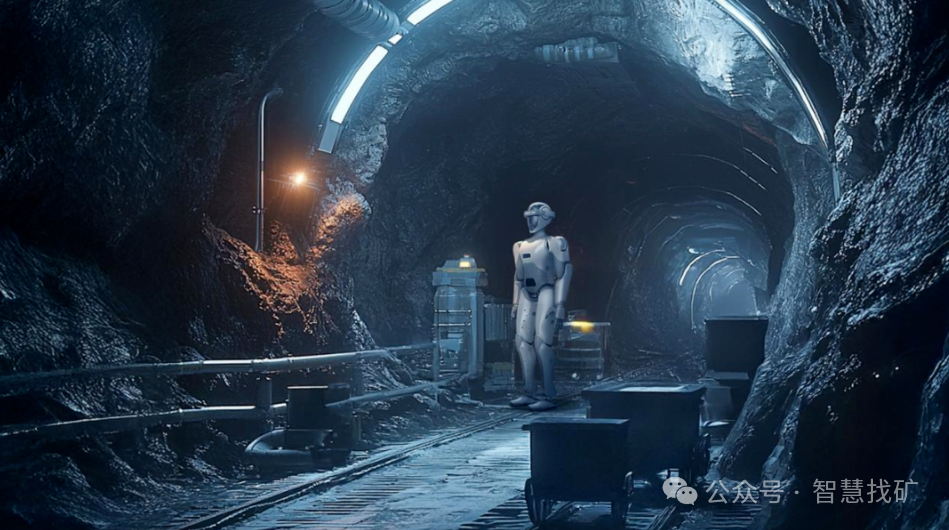
Image provided by Zhongke Huiling
Since 2015, China has begun to prioritize robots as a key development area at the national level. It wasn’t until 2021 that fifteen departments issued the “14th Five-Year Plan for Robot Industry Development,” which explicitly proposed the implementation of the “Robot+” application action. This plan aims to develop robotic products and solutions in initial application and potential demand areas such as mining, combining specific scenarios, conducting pilot demonstrations, and expanding application space.
One of the main responsibilities of the mining industry is to ensure the security of national energy resources based on domestic needs. “Advancing into the depths of the Earth” relies heavily on high-end equipment such as mining robots. This represents both a potential and a real demand in the mining sector.
In August 2022, the General Office of the Ministry of Industry and Information Technology and the Comprehensive Department of the National Mine Safety Administration published a list of typical application scenarios for robots in the mining field, aiming to implement the “14th Five-Year Plan for Robot Industry Development” and accelerate the promotion of robot applications in mining. In January 2023, the “Implementation Plan for the Robot+ Application Action” issued by the Ministry of Industry and Information Technology and seventeen other departments clearly proposed to promote applications in mining scenarios such as intelligent excavation, disaster prevention, inspection and monitoring, underground rescue, intelligent cleaning, unmanned transportation, geological exploration, and hazardous operations.
According to the reporter’s analysis, the core application scenarios of robots in the mining industry can be roughly categorized into four types:
First, underground operation robots replace humans in hazardous environments, used for gas detection, tunnel inspection, collapse rescue, and other high-risk scenarios.
For example, inspection robots equipped with sensors can monitor methane concentration, temperature, and more in real-time, avoiding direct exposure of miners to dangerous environments. Shandong Energy Group and China Energy Group have already piloted the use of explosion-proof inspection robots to reduce the number of personnel underground.
Second, utilizing automated excavation machinery to achieve unmanned excavation operations.
For instance, unmanned mining trucks and remotely controlled tunneling machines have been promoted in some large mining areas (such as Inner Mongolia and Shanxi). Some companies have developed unmanned mining trucks capable of continuous operation for 24 hours, significantly improving production efficiency. Additionally, through low-latency networks, operators can remotely control underground equipment from ground control centers, enhancing safety.
Third, mining area inspection and security.
Ground patrol robots equipped with infrared thermal imaging and AI recognition capabilities can monitor the safety and equipment status of mining areas. Drones can be used for slope monitoring, resource estimation, and environmental inspections in open-pit mines, replacing traditional manual surveying.
Fourth, intelligent sorting and transportation.
AI ore sorting robots utilize visual recognition and robotic arms to sort ores, improving grade and reducing waste transportation. Some leading companies have developed unmanned transportation systems that have achieved commercial operation.
According to the goals set by the China Coal Industry Association, by the end of the 14th Five-Year Plan, large coal mines and those with severe hazards in China will basically achieve intelligence, with robots operating in key underground positions and open-pit coal mines achieving intelligent continuous operations and unmanned transportation. It can be said that the application of mining robots in China has gradually transitioned from pilot projects to large-scale implementation, especially showing significant results in open-pit and large underground mines.
Currently, China strongly supports the healthy and orderly development of artificial intelligence. However, specific policies may involve fiscal taxation, intellectual property, etc., requiring comprehensive measures to reduce costs for promotion in small and medium-sized mining enterprises. At the same time, continuous technological breakthroughs may still be needed. Technologies such as 5G and AI vision enhance the adaptability of robots to environments, but navigation and durability under complex geological conditions remain challenges that require collaborative innovation. Unified industry safety standards and data interoperability protocols are also essential. Furthermore, there is a need to strengthen talent cultivation.
In the future, utilizing robots and high-end intelligent equipment, combined with digital twins and edge computing, is expected to achieve autonomous collaborative operations across the entire mining area. We believe that with the combined effects of policy promotion, industry efforts, and market demand, the application of mining robots will become increasingly widespread and better meet the diverse needs of the mining sector, assisting the Chinese mining industry in achieving intelligent upgrades.
Source: China Mining News
Disclaimer: The content reproduced by this public account is for learning and communication purposes only, with no commercial intent. If there are any copyright issues, please contact us promptly for resolution.