Abstract
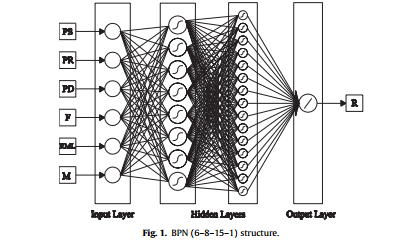
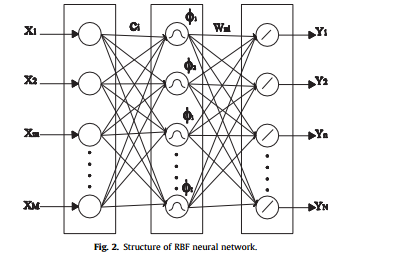
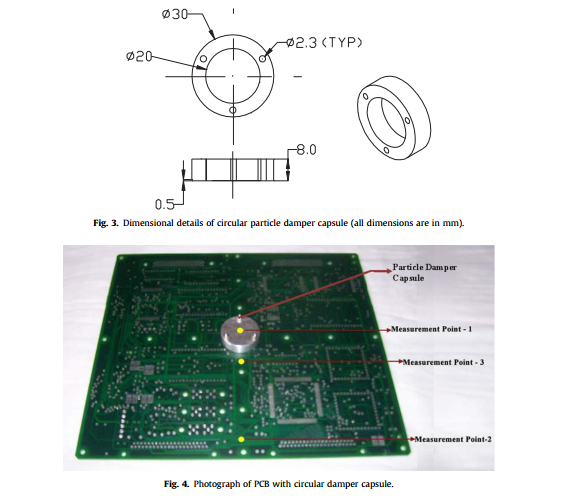
Particle damping is an effective passive vibration control method and has been a research hotspot in recent years. This paper introduces the new application of particle damping capsules on printed circuit boards (PCBs) and the development of radial basis function neural networks to accurately predict acceleration responses. The study compares this neural network’s predictions of particle damping with those of backpropagation neural networks. Extensive experiments were conducted on different combinations of particle damper parameters (such as particle size, particle density, filling ratio, and input force under the main vibration mode) on PCBs, and the results were used for training and testing the neural networks. Based on the predictions from a well-trained network, design guidelines for particle dampers suitable for PCBs were derived. Furthermore, the effectiveness of particle dampers in suppressing vibrations of PCBs in random vibration environments was validated.
Research Highlights
Conclusion
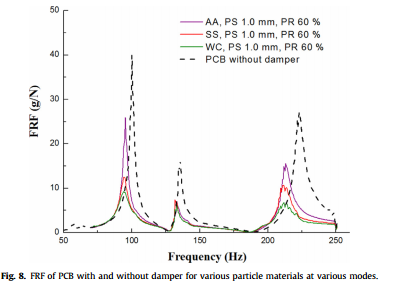
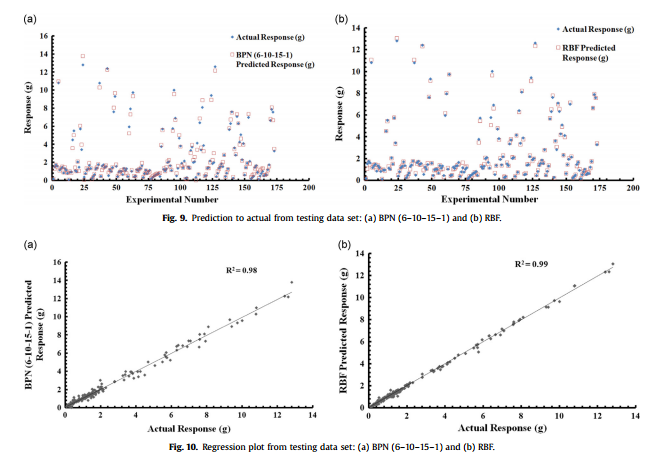
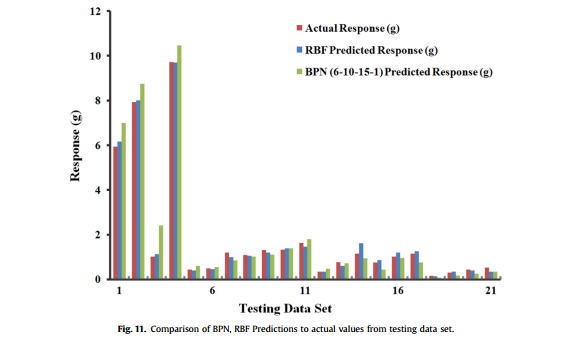
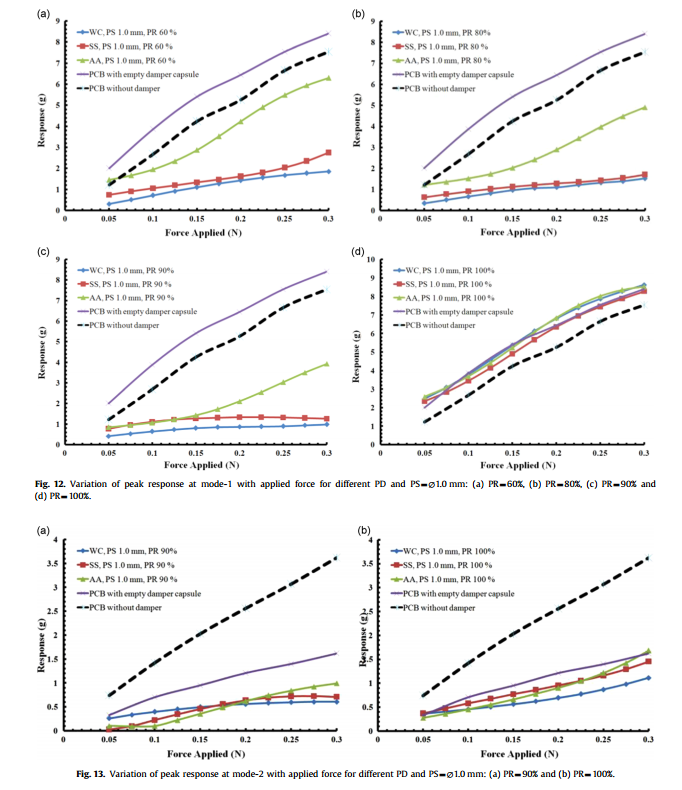
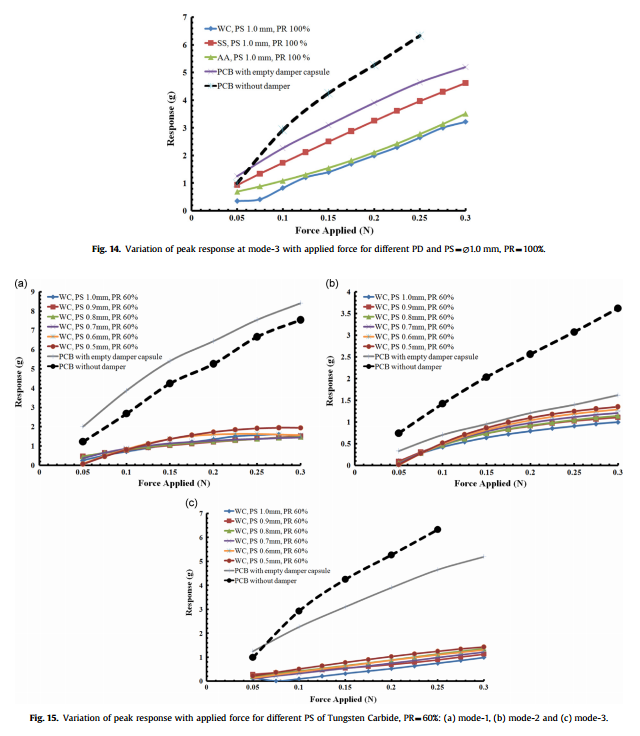
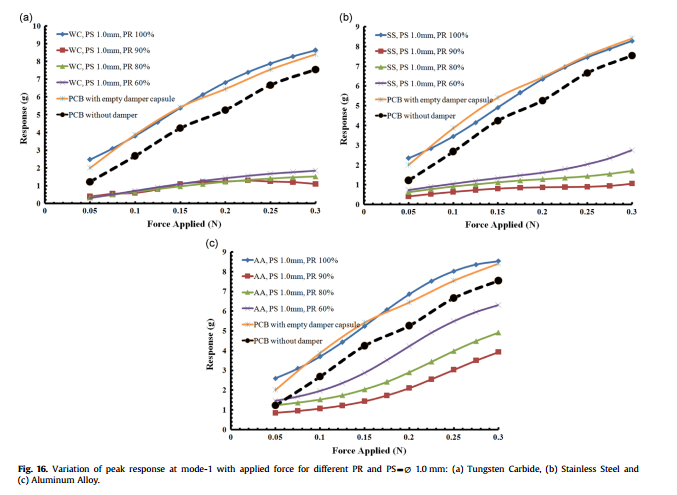
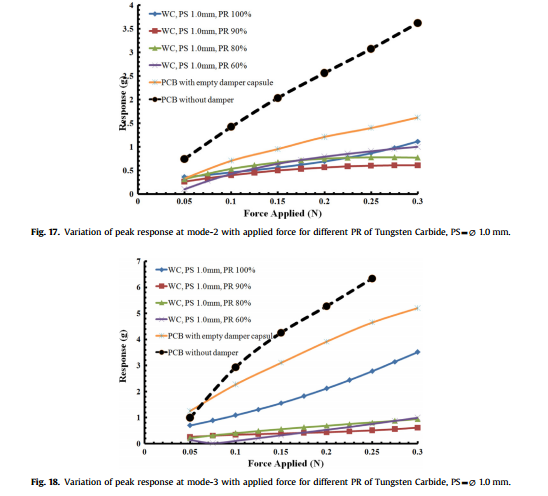
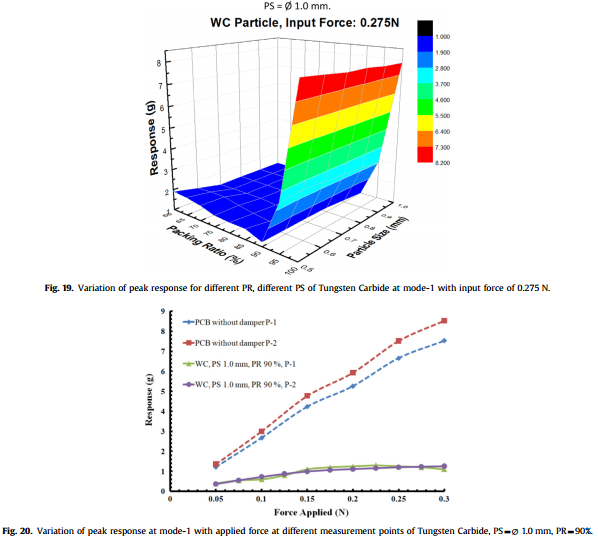
This paper introduces the new application of particle damping technology in suppressing vibrations of printed circuit boards (PCBs). Based on experimental data, backpropagation (BPN) and radial basis function (RBF) neural networks were established to predict acceleration responses. The results indicate that the RPD of the RBF neural network’s predicted acceleration response is 7.95%, with an MSE of 0.019, while the BPN neural network’s RPD is 15.23%, with an MSE of 0.082. Based on the predictions from the RBF network, the effects of different particle damper parameters, modes, and acceleration responses at various measurement locations on the PCB under applied forces were studied, leading to the following observations: (1) At higher particle densities and larger input force levels, the acceleration response is significantly lower, which aligns with existing literature. For one particle arrangement example, with a mass ratio of 9.31% and an input force of 0.25 N, the PCB with a particle damper (WC particles, PR of 60%, PS of ∅1.0 mm, Mode-3) has an acceleration response approximately 6.8 times lower than that of the PCB without a damper. (ii) For PCB structures with three types of particle materials under different vibration modes, 90% of the PR is effective, and many researchers have observed similar trends. (iii) The variation in acceleration response between different particle sizes is not significant.
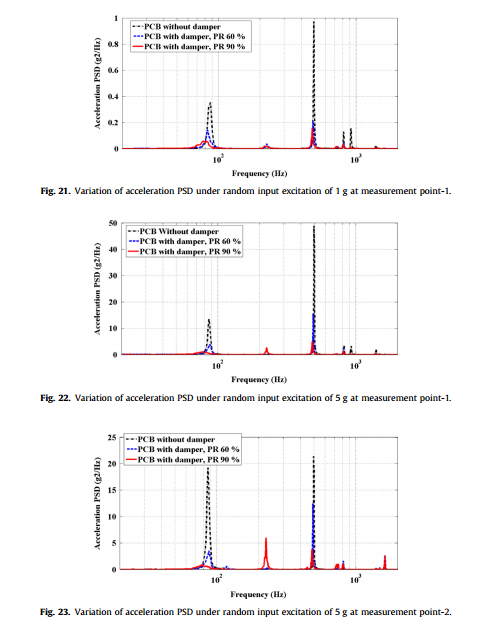
However, it is recommended that the selected input force range with PS ∅1.0 mm is optimal. (iv) Even when small-sized particle damper capsules are attached at the center of the PCB, the overall acceleration response of the PCB is significantly reduced. The design guidelines obtained will be used for the implementation of particle dampers on PCBs to suppress vibrations in the random vibration environment during spacecraft launches. The effects of particle dampers on PCBs under sinusoidal and random excitations were validated.

【Disclaimer】Some images and text information in this article are sourced from the literature, and the copyright belongs to the original authors. If you believe there are errors in the information source or viewpoints, or if there are issues related to copyright or privacy, please contact us promptly via private message on VX:acoustic_engineersSync18502558785