
Click the blue text above to follow us
The full text is approximately 5800 words, with a reading time of about 7-8 minutes. It is recommended that stock enthusiasts bookmark it first and read it in sections. This article focuses on the following issues:What is PCB, types of PCB, current development status of PCB, “bottleneck” issues in PCB, core stocks in the PCB concept stock pool. Collecting and organizing a vast amount of information is not easy, so we hope everyone supports original content by liking, following, and leaving good comments!
01What is PCB
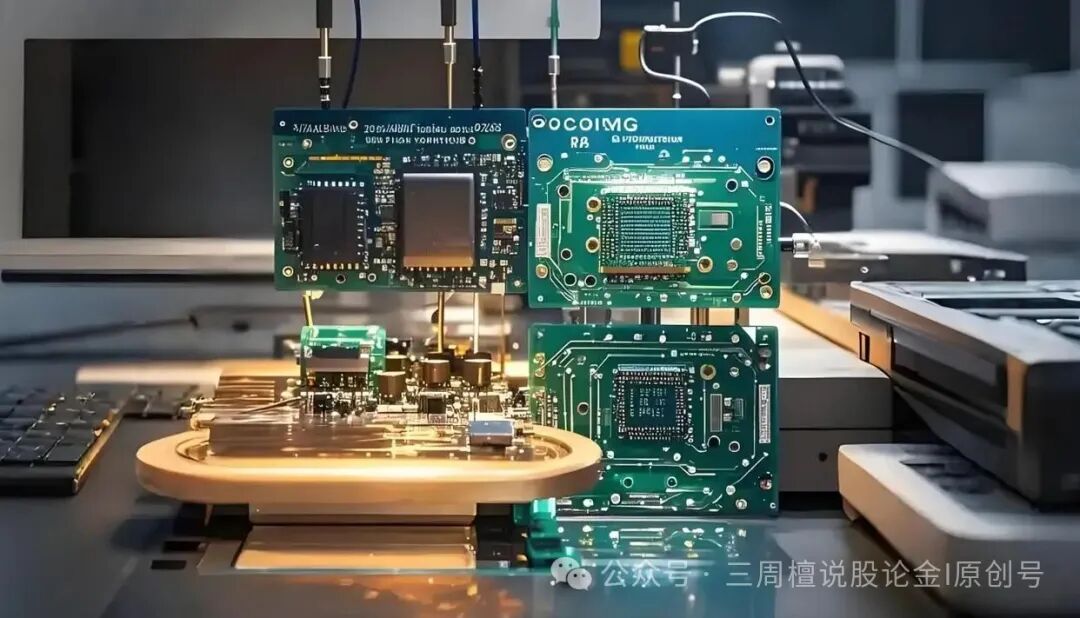
PCB stands for Printed Circuit Board, which is a carrier used to support and interconnect electronic components in electronic devices. It features structural support, electrical connections, and various layer counts.
PCB is an insulating substrate on which specific components are fixed at designated positions, ensuring the physical stability of the components. It can also be understood as the “skeleton” of electronic components, similar to how steel bars stabilize all electronic components (such as chips, resistors, etc.) in a building, ensuring they do not loosen, misalign, or shift during use.
PCB forms conductive copper foil circuits on the insulating substrate through etching processes, enabling signal transmission and power distribution along specific paths, replacing traditional messy manual wiring connections and avoiding human wiring errors. PCB materials are often made from fiberglass epoxy resin substrates, which can withstand temperatures above 170°C, using lead-free, tin-spraying, and deep gold processes to balance soldering performance and oxidation resistance.
PCBs range from single-layer to multi-layer, with inter-layer connections achieved through via technology, significantly enhancing wiring density and performance.PCB technology directly affects the performance and reliability of electronic devices, and standardized PCB designs are almost universally adopted in modern electronic products to improve production efficiency and stability. In modern technology, PCB technology has become indispensable.
02Types of PCB
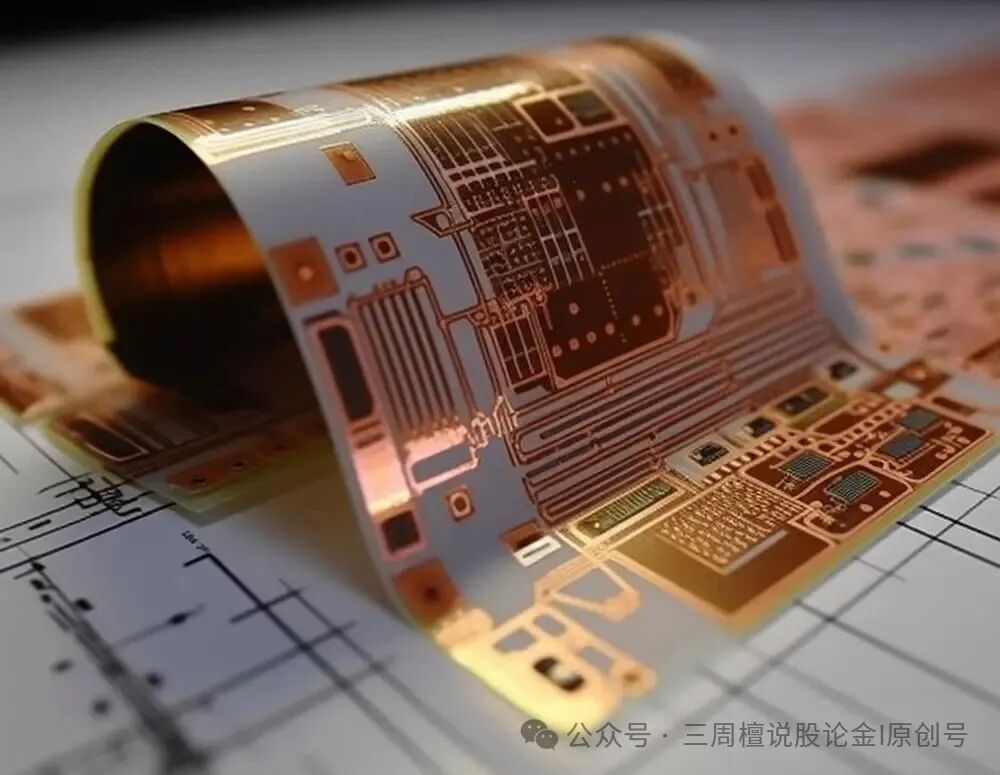
Based on structural characteristics, PCBs can be divided into rigid PCBs, flexible PCBs, and rigid-flex PCBs.
Rigid PCB (Rigid PCB) uses materials that are not easily bent (such as fiberglass cloth, ceramics, or metals) and has high mechanical strength. It is mainly used in computers, communication devices, and industrial control fields. Flexible PCB (FPC) uses flexible materials like polyimide, allowing it to bend and fold, suitable for compact or dynamically bending scenarios. It is mainly used in wearable devices and foldable smartphones.Rigid-flex PCB integrates rigid and flexible parts, combining support and flexibility, reducing the use of connectors. It is mainly used in medical devices and aerospace systems.
Based on layer counts, PCBs can be classified as single-sided, double-sided, and multi-layer boards.
Single-sided boards have traces concentrated on one side of the substrate, are low-cost but simple in design, and are suitable for low-complexity products like electronic toys.Double-sided boards have copper cladding on both sides of the substrate, with vias connecting the circuits, suitable for medium-complexity circuits.Multi-layer boards consist of three or more conductive layers stacked together, suitable for high-density wiring, such as in mobile phones and laptop motherboards.
Other common classifications include phenolic resin boards, epoxy glass cloth laminates, and copper substrates (for heat dissipation). Based on special processes, they can be classified as HDI boards (high-density interconnect) and packaging substrates (for chip packaging). Based on application fields, they can be divided into automotive electronics, military aerospace, and specialized PCBs. Different classification methods can be combined, for example, multi-layer boards can be made from rigid or flexible substrates to meet diverse needs.
03Overview of the Development Status of the PCB Industry in China (2025)
China has developed into the world’s largest PCB production base, with a market size expected to reach 433.321 billion yuan (approximately 60 billion USD) by 2025, accounting for over 50% of the global share. In the first half of 2025, the total export value reached 86.458 billion yuan, a year-on-year increase of 28.6%. In June alone, exports reached 15.545 billion yuan, setting a new high since 2024.
Among the exported PCB products, multi-layer boards with four or more layers saw an export growth rate of 44.3%, with an average unit price rising to 19-20 yuan per piece. The main export markets are concentrated in Asia, with exports to Taiwan and Vietnam increasing by 83.84% and 85.55% year-on-year, respectively. Shenzhen Circuit has achieved breakthroughs in 120-layer backplane samples and 18-20 layer FC-BGA packaging substrate technology, holding over 30% market share in the AI server PCB field. (Data source: Qianzhan Industry Research Institute, China Economic Network)
Currently, the domestic localization rate of high-end PCB equipment is less than 30%, with a 65% reliance on imports for key materials (such as ABF film). It is expected that the localization rate will increase to 45% by 2026, with leading companies achieving gross profit margins of 35-40%, and technology is catching up with Japanese and Korean companies.
PCB demand is rapidly growing. In the 5G communication field, it is expected that 4.75 million macro base stations and 9.5 million small base stations will be built by 2026, with the value of a single 5G base station PCB increasing 3-5 times compared to 4G, leading to a surge in demand for high-frequency and high-speed boards. In the new energy vehicle sector, the proportion of automotive PCBs is expected to rise from 12% in 2020 to 20% in 2025, with the value of PCBs per vehicle increasing from about 500 yuan for traditional vehicles to about 2000 yuan for electric vehicles, mainly used in electronic control systems (40%), ADAS (30%), and in-car entertainment (20%). In the AI computing field, the value of a single AI server PCB can reach up to 5000 yuan, with the global market size expected to reach 3.2 billion USD by 2028 (CAGR of 32.5% from 2023 to 2028), and the capacity utilization rate of high multi-layer boards with more than 18 layers is expected to exceed 90%.
In terms of competition within the PCB industry, companies with annual revenues exceeding 10 billion yuan include Unimicron Technology, Dongshan Precision, and Shenzhen Circuit, while those with revenues between 5 billion and 10 billion yuan include Huadong Electronics and Shenghong Technology, and those with revenues below 5 billion yuan include Shiyun Circuit and Aoshikang. These PCB manufacturing companies account for over 40% of the Pearl River Delta, primarily focusing on consumer electronics PCBs. The Yangtze River Delta is a hub for high-end manufacturing, with a high proportion of HDI boards. The Bohai Rim focuses on military, aerospace, and other specialized PCBs. The central and western regions mainly undertake capacity transfer, with significant cost advantages.
04PCB “Bottleneck” Issues
The Chinese PCB industry still faces “bottleneck” issues in some high-end fields, but overall self-controllable capabilities are rapidly improving. The current “bottlenecks” are mainly concentrated in high-end packaging substrate technology, ultra-precision processing equipment, and specialized material systems.
In terms of high-end packaging substrate technology, FC-BGA packaging substrates (used for CPU/GPU packaging) have long relied on Japanese and Korean companies, with only Shenzhen Circuit achieving breakthroughs in 18-20 layer samples, but still lacking large-scale production capabilities. The reliance on imports for high-frequency and high-speed materials (such as ABF film) remains at 65%.In terms of ultra-precision processing equipment, the localization rate of high-end equipment such as laser direct imaging (LDI) is less than 30%, and some core process equipment still needs to be imported.In terms of specialized materials, PTFE dielectric materials for high-frequency communication and high-temperature substrates for aerospace applications still need to be procured from foreign companies like Rogers.
The Chinese PCB industry has achieved breakthroughs in multi-layer board manufacturing, HDI board technology, and automotive-grade PCBs. Among them, Shenzhen Circuit’s 120-layer backplane samples and 68-layer mass production capabilities have reached international top levels, with the localization rate of high-frequency and high-speed boards for 5G base stations exceeding 80%. Domestic HDI boards (including arbitrary layer interconnections) have been applied in high-end smartphones, with companies like Unimicron Technology continuously increasing their market share.PCBs for new energy vehicles have achieved full-chain localization, with companies like BYD establishing a vertically integrated system from copper foil to copper-clad laminates to PCBs.
Currently, the state has listed high-performance PCBs as a key project in the industrial foundation engineering, increasing the proportion of R&D expenses that can be deducted to 120%. The Pearl River Delta has established a 20 billion yuan industrial upgrade fund to specifically support “bottleneck” technologies such as packaging substrates. Currently, the Chinese PCB industry has achieved 100% self-control of mid- to low-end products, and it is expected that by 2028, the entire PCB industry chain will basically achieve self-control, except for a few specialized materials.
05Core Stock Pool of PCB Concepts
Leading Industry Enterprises
1. Unimicron Technology (002938): The largest PCB company in the world, ranked first in Prismark’s global PCB company revenue list for eight consecutive years. Leading technology with a minimum hole diameter of 0.025mm and minimum line width of 0.020mm, focusing on 16-20 layer high-end HDI boards. Deeply bound to first-tier international brands like Apple, with Apple business accounting for 81.94%. R&D investment in Q1 2025 is 6.34%, far exceeding peers.Core products include flexible circuit boards (FPC) used in iPhones and other consumer electronics, substrate-like boards (SLP) for AI smartphone needs, high-end HDI boards for smartphone motherboards, Mini LED backplanes for high-end display devices, and automotive radar boards for ADAS systems.
2. Shenghong Technology (300476): Holds over 50% market share in global AI server HDI boards. Leading technology with mass production of 56-layer ultra-high-layer boards and an 85% yield rate for PTFE material PCBs (industry average 60%). Deeply bound to leading customers like NVIDIA, AMD, and Tesla. In Q1 2025, AI server PCB revenue accounted for over 50%.Core products include 5-layer and 6-layer high-end HDI boards compatible with NVIDIA’s GB200/GB300 architecture, AI server PCBs: GPU boards, compute trays, and other core components, automotive electronic PCBs: Tesla’s autonomous driving sensor boards, and in-car display FPCs. 1.6T optical module PCBs: have achieved small batch shipments.
3. Huadong Electronics (002463): Core supplier of AI server PCBs, with orders scheduled until 2025. Leading technology: first to achieve mass production of 224Gbps rate PCBs with an 85% yield rate. Deeply bound to NVIDIA, Huawei, and Tesla, with international customers accounting for over 40%. The Thailand factory has been put into production to avoid US tariffs, providing significant cost advantages.Core products: 800G switch boards: have been mass shipped, with a single unit value of about 20,000 yuan; AI server HDI boards: 20-30 layer high-density interconnect boards; automotive electronic boards: p2Pack thick copper technology (copper thickness 10oz) suitable for 800V fast charging; millimeter-wave radar boards: certified by Bosch AEC-Q200.
4. Shenzhen Circuit (002916): Leading in domestic packaging substrate technology, with mass production capabilities for FC-BGA packaging substrates reaching 18-20 layers. Technical indicators: 120-layer backplane samples and 68-layer mass production capabilities. Holds over 30% market share in the AI server PCB field. Recognized as a “national green factory,” with halogen-free substrates accounting for 60%.Core products: FC-BGA packaging substrates: used for CPU/GPU chip packaging; high-speed multi-layer boards: applied in AI servers and data centers; thick copper boards: used in electric vehicle electronic control systems; high-frequency microwave boards: used in 5G base station equipment.
Leading Technology Enterprises
5. Shengyi Technology (600183): Holds 14% market share in global rigid copper-clad boards, ranking second globally for 12 consecutive years. High-frequency copper-clad boards reduce signal loss by 30% compared to industry standards, matching Rogers’ performance. Continuous increase in R&D investment, with plans to launch 224G high-speed products in 2025. Vertical integration to reduce costs, with gross margins above the industry average.Core products: High-frequency copper-clad boards: used in 5G base stations and satellite communications; high-speed copper-clad boards: Df<0.001, mass supply to North American AI servers; metal substrates: used in LED lighting and automotive electronics; IC packaging substrates: used for chip packaging testing.
6. Shengyi Electronics (688183): Mastering technologies for high-end products such as 56-layer communication backplanes and 40-layer server boards. AI server business accounts for 48.96%, core supplier for Amazon EC2 servers. Planning for the Dongguan Intelligent Computing Center project with an annual production capacity of 250,000 square meters of high multi-layer HDI boards. In Q1 2025, gross margin reached 29.84%, an increase of 4.89 percentage points year-on-year.Core products: High multi-layer server boards: suitable for supercomputing needs; high-frequency high-speed mixed boards: supporting 224G Serdes transmission; 800G switch PCBs: exclusively mass-produced in China; automotive electronic HDI boards: used for intelligent driving domain controllers.
7. Dongshan Precision (002384): Ranked third in the global PCB industry, with revenue of 8.602 billion yuan in Q1 2025. Investing 1 billion USD to build high-end PCB projects and expand into the AI server market. Entering the optical communication track through the acquisition of Solstice Optoelectronics, forming vertical integration. Customers cover multiple fields including consumer electronics, new energy vehicles, and communication equipment.Core products: Flexible circuit boards: accounting for 69.13% of revenue, used in consumer electronics; touch panels and LCM modules: accounting for 14.45% of revenue; high multi-layer PCBs: used in AI servers and data centers; optical communication modules: covering rates from 10G to 800G and above.
8. Jingwang Electronics (603228): Ranked third among domestic PCB companies, and sixteenth globally. Leading technology in HDI boards (arbitrary layer interconnection), with a yield rate exceeding 90%. Fully certified for automotive-grade PCBs (such as ISO 26262). Intelligent factories reduce costs and increase efficiency, with per capita output value in the top five of the industry.Core products: Rigid circuit boards (RPCB): used in communication devices; flexible circuit boards (FPC): used in consumer electronics; metal-based circuit boards (MPCB): used in automotive electronics; AI server PCBs: have entered the North American customer supply chain.
Leading Enterprises in Niche Fields
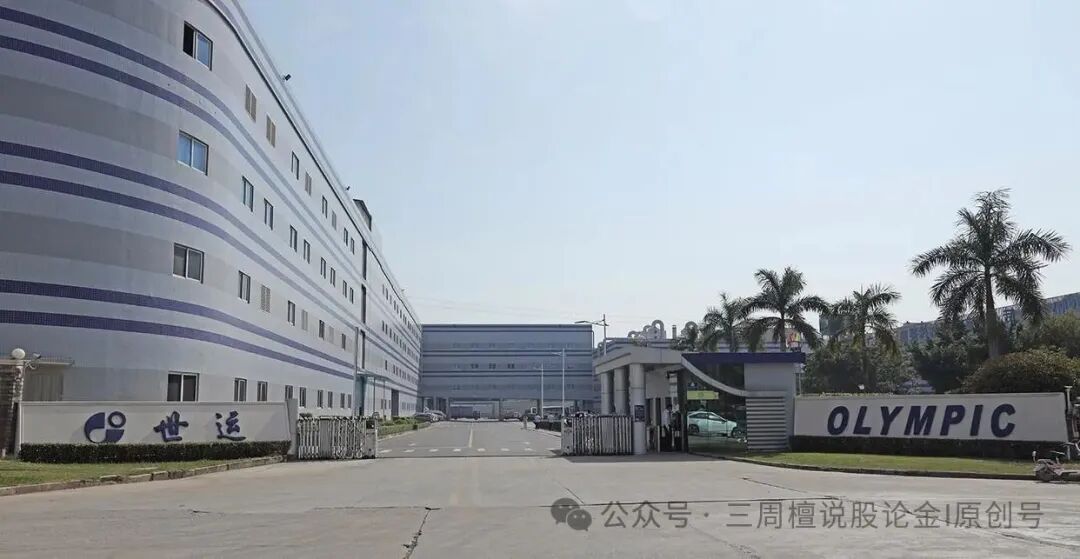
9. Shiyun Circuit (603920): Automotive PCBs account for over 50%, core supplier for Tesla. Leading technology: mass production of 28-layer AI server boards, 24-layer hard boards, and 6oz thick copper boards. Verified through Tesla’s Dojo project, outperforming NVIDIA’s similar products.Core products: Autonomous driving PCBs: 77GHz millimeter-wave radar boards, 4D high-precision radar boards; new energy vehicle PCBs: BMS boards, domain controllers; AI server PCBs: used in Tesla’s Dojo supercomputer; humanoid robot PCBs: covering control, vision, joints, and other full-system needs.
10. Xingsen Technology (002436): Leading in FCBGA packaging substrate technology, with a yield rate exceeding 85% for 20-layer products. Monthly delivery capacity of 25,000 varieties, globally leading. Dual-base layout in Zhuhai and Guangzhou, with a total production capacity of 4 million pieces/month. Participating in national-level scientific research projects, awarded the second prize in the National Science and Technology Progress Award in 2023. Core products: FCBGA packaging substrates: supporting chips with 3nm process and below; rigid circuit boards: used in communication devices; flexible boards: can bend, roll, and fold, used in wearable devices; rigid-flex boards: used in medical devices and aerospace.
11. Zhongjing Electronics (002579): One of the few companies in China to achieve mass production of arbitrary layer HDI boards. Rapid growth in automotive PCB business, with the proportion rising to 25%. The new Zhuhai Fushan factory has been put into production, significantly increasing high-end capacity. R&D investment accounts for over 5%, with over 200 patents.Core products: Arbitrary layer HDI boards: used in smartphone motherboards; automotive electronic PCBs: used in ADAS and intelligent cockpits; flexible circuit boards: used in wearable devices; high-frequency high-speed boards: used in 5G communication devices.
12. Chongda Technology (002815): A top 100 global PCB company, leading in small-batch board fields. Customers include Huawei, ZTE, Samsung, and other Fortune 500 companies. The second phase of the Zhuhai factory has been put into production, increasing high-end PCB capacity by 50%. Implementing intelligent manufacturing, with production efficiency improved by 30%.Core products: High multi-layer PCBs: used in communication devices; HDI boards: used in consumer electronics; high-frequency high-speed boards: used in 5G base stations; rigid-flex boards: used in medical devices.
Emerging Growth Enterprises
13. Aoshikang (002913): Rapid growth in automotive PCB business, secondary supplier for Tesla. Building a base in Thailand to avoid trade barriers and expand overseas markets. Continuous increase in R&D investment, with 56 new patents added in 2024. Implementing green manufacturing, awarded the title of “provincial green factory.”Core products: Automotive electronic PCBs: used in new energy vehicle electronic control systems; high multi-layer PCBs: used in servers and storage devices; metal substrates: used in LED lighting; high-frequency boards: used in 5G communication devices.
14. Yidun Electronics (603328): Automotive PCBs account for over 40%, with customers including Bosch and Continental. Outstanding high-precision PCB manufacturing capabilities, with a minimum line width/spacing of 50μm. Implementing automated production, with per capita output value leading the industry. New factory in Sichuan has been put into production, increasing capacity by 30%.Core products: Automotive electronic PCBs: used in body control modules; high-precision PCBs: used in industrial control devices; thick copper boards: used in power management systems; high-frequency boards: used in vehicle radar.
15. Mingyang Circuit (300739): Overseas revenue accounts for over 80%, with significant advantages in global layout. The new factory in Jiujiang has been put into production, significantly increasing high-end capacity. R&D investment accounts for over 4%, with rich technical reserves. Implementing lean production, with outstanding cost control capabilities.Core products: High multi-layer PCBs: used in communication devices; HDI boards: used in consumer electronics; high-frequency high-speed boards: used in data centers; metal substrates: used in automotive electronics.
06Conclusion:
It can be said that in the field of domestic substitution and self-control, PCB is one of the earliest projects to achieve breakthroughs.
As the “mother of electronic products,” PCBs are entering a new growth cycle. According to Prismark data, it is expected to reach 94.661 billion USD by 2029, with a CAGR of about 5.2% from 2024 to 2029. The Chinese market is particularly outstanding, with an expected scale of 433.321 billion yuan by 2025, increasing its global share to 56%.
Among them, the number of layers in AI server PCBs is expected to increase from 20 layers to over 40 layers, with the value of a single board increasing 3-5 times. In NVIDIA’s GB200 solution, the value of a single cabinet PCB reaches 171,000 USD, driving a surge in demand for high-end HDI boards. The value of PCBs for new energy vehicles is expected to increase from 500 yuan to 8000 yuan per vehicle, driven by ADAS systems and intelligent cockpits, which will boost the demand for multi-layer boards.It is expected that the number of global 5G base stations will exceed 6.5 million by 2025, with high-frequency materials transitioning from FR4 to low-loss media such as PTFE.
The industry is showing a clear differentiation trend, with traditional consumer electronics PCBs growing steadily, while high-end fields such as AI servers and automotive electronics are growing significantly faster than the industry average, and related companies will receive high valuation premiums.
END
Three Weeks Tan Talks Stock Theory I Original Account
Senior stock investor, non-famous independent investor in the financial circle, double major in accounting and finance from a key financial university! With many successful experiences, willing to summarize and share stock market investment insights. Accountant, non-practicing lawyer, senior independent securities analyst, that’s it!
Three Weeks Tan Talks Stock Theory I Original Account
Here is interesting, loving, and growing
Be a media person with warmth and knowledge