● CCTV names platforms like Huya: Online course content filled with game ads●Beijing Internet Court rules that “Qing Yu Nian” early viewing constitutes breach of contract
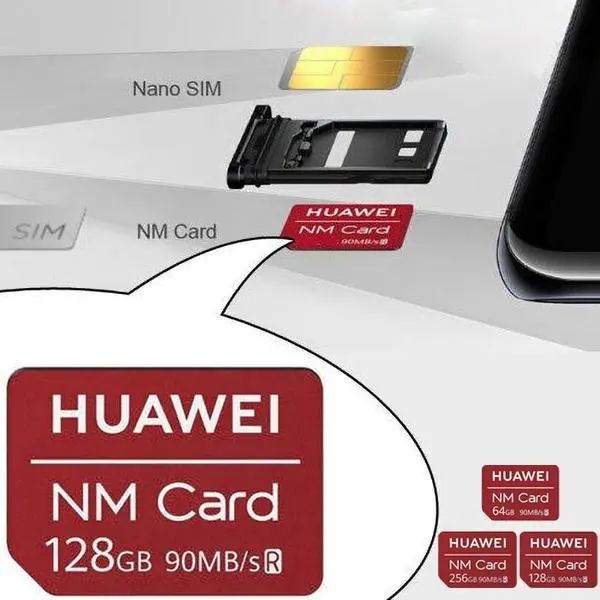
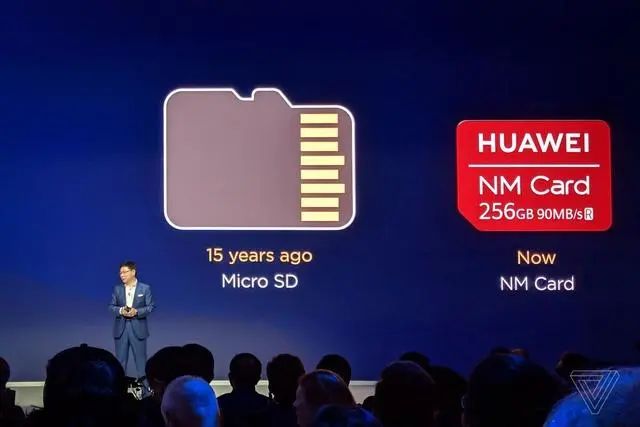 The shape of the Huawei NM card is identical to that of a Nano SIM, meaning it can perfectly fit into the SIM card slot. However, when users excitedly try to purchase a high-capacity NM card, they are often stopped by the price. A 128GB Huawei NM card costs 249 yuan, while a common 128GB TF memory card costs only 99 yuan, making the NM card nearly double the price. Some users complain that Huawei is monopolizing memory cards, similar to Apple, driving prices up. However, this is not the case; the Huawei NM card is not the same as a regular TF card.
 The typical read speed of the Huawei NM card is 90MB/s, and the write speed is 70MB/s. In comparison, a common 128GB memory card (such as the Samsung EVO Plus) has a read speed of 100MB/s and a write speed of 60MB/s. When compared, the Huawei NM card does not have a clear advantage. However, the strength of the Huawei NM card lies not in sequential read and write speeds but in small file IOPS speeds.The speed class for small file read and write on TF cards is denoted as A1 and A2. An A1-rated memory card requires a minimum random read speed of 1500 IOPS and a minimum random write speed of 500 IOPS. An A2-rated memory card requires a minimum random read speed of 4000 IOPS and a minimum random write speed of 2000 IOPS. The common random read speed of the Huawei NM card is 3000 IOPS, and its random write speed is an astonishing 6000 IOPS, directly exceeding A2 standards by three times. While the random read/write speed does not surpass A2, the random write speed significantly outperforms A2 standards. This shows that the Huawei NM card is not just a simple change in form; it has also changed the protocol, adopting the eMMC protocol, which is the protocol for mobile storage chips, while TF still uses the SD protocol. The two are fundamentally different.During the subsequent US-China trade war, the Huawei NM card showcased Huawei’s foresight. In May 2019, the SD Association removed Huawei from its membership, meaning Huawei phones would be unable to use TF cards. However, the existence of the Huawei NM card, much like the HarmonyOS, made it difficult for the SD Association to take drastic measures. If TF cards were banned from Huawei, the NM card would inevitably accelerate in popularity, cultivating a competitor for SD cards, which led the SD Association to restore Huawei’s membership shortly thereafter.
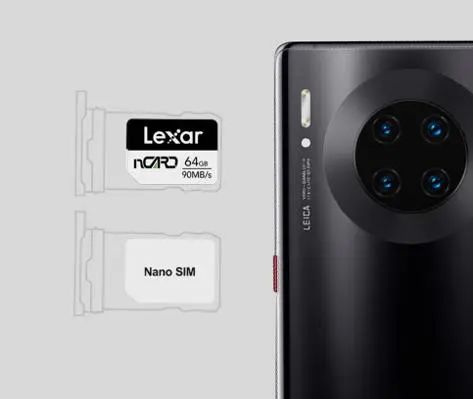 However, the Huawei NM card has not given up on progress despite being a backup option. In recent years, Huawei has opened NM card production rights to other third-party manufacturers, such as Lexar and Apacer, who have also released NM cards. From a design perspective, the NM card offers better compatibility than TF cards, as the trend among smartphone manufacturers is to streamline designs. However, SIM card slots will undoubtedly remain in use in China for a long time, and since the NM card can share the SIM card slot, its future prospects are very promising.