With the terms “embodied intelligence” and “humanoid robots” being included in the government work report for the first time in 2025,embodied intelligence and intelligent robots and humanoid robots are increasingly appearing in the public eye. These seemingly obscure technological buzzwords may soon enter commercial scenarios and even our homes. What are their definitions, how are they related, and what are their future development prospects? Through expert explanations and systematic organization, we hope to help everyone distinguish these technological terms clearly.
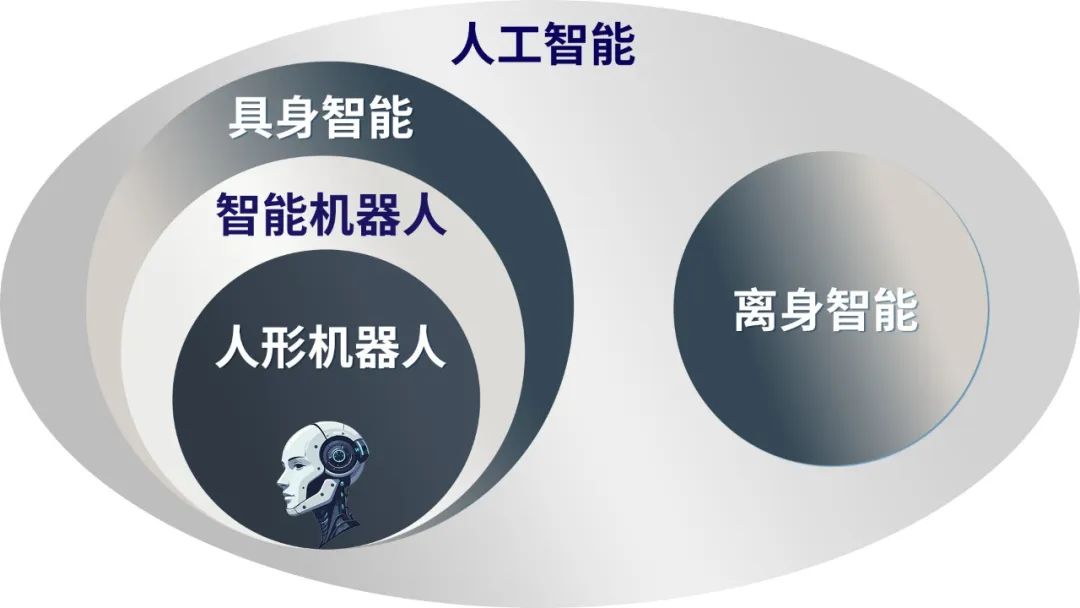
Diagram showing the relationship between embodied intelligence, intelligent robots, and humanoid robots (Source: China Electronics News)
PART.1
Understanding Embodied Intelligence from Multiple Perspectives
Although embodied intelligence does not have a very clear and defined concept yet, industry experts generally agree thatembodied intelligence is a cutting-edge branch of artificial intelligence. The currently more consistent definition is that embodied intelligence refers to intelligent agents (such as robots, drones, intelligent vehicles, etc.) that interact with the environment in real-time through physical entities, achieving an integration of perception, cognition, decision-making, and action.
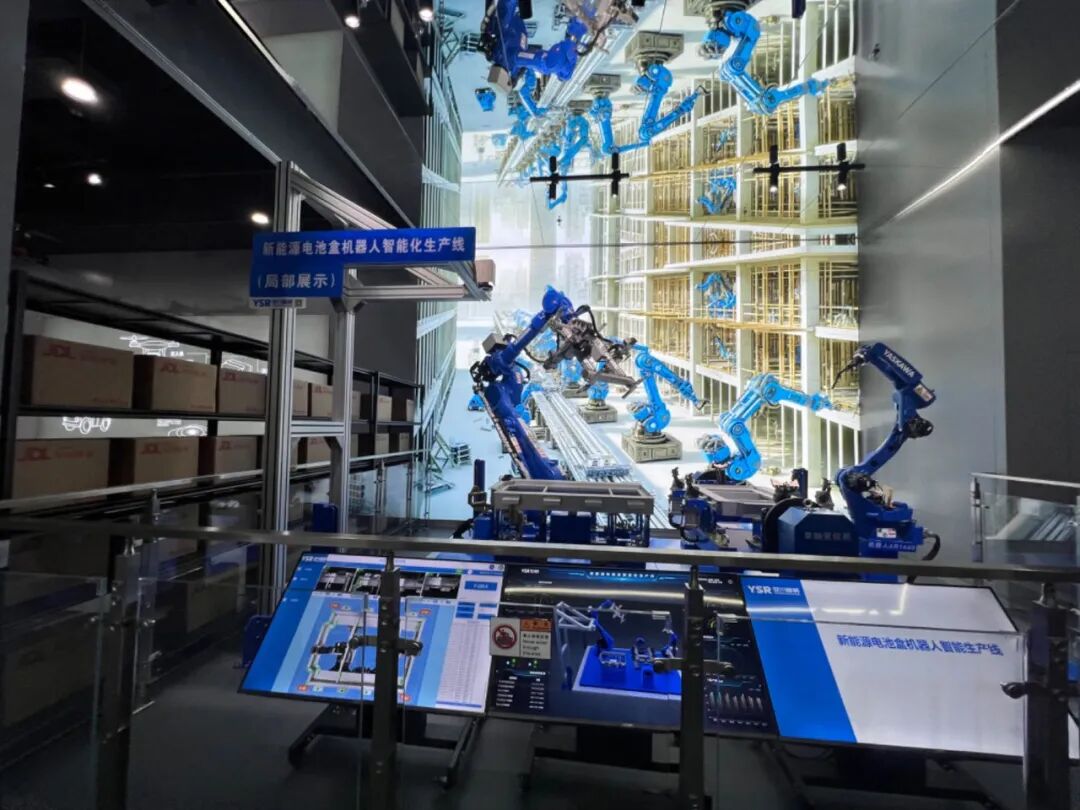
Intelligent production line for new energy battery boxes
Some experts have attempted to explain embodied intelligence by comparing it with “disembodied intelligence.” Xiong Youjun, Deputy Secretary-General of the China Humanoid Robot Hundred People Association and General Manager of the National and Local Joint Innovation Center for Embodied Intelligent Robots, believes thatembodied intelligence is primarily based on physical entities, capable of perceiving and interacting with the physical world, and is a type of intelligent system that can act. It differs from disembodied intelligences like DeepSeek or ChatGPT, which may exist in virtual, digital, or informational spaces. Embodied intelligence must have a physical entity; if currentdisembodied intelligence is merely “talking”, embodied intelligence needs to “work” in the physical world, being a “doer.”
Other experts break down embodied intelligence into two parts: “embodiment” and “intelligence.” Chen Jianyu, founder of Beijing Xingdong Jiyuan Technology Co., Ltd., assistant professor at Tsinghua University’s Institute of Interdisciplinary Information Research, and doctoral supervisor, states that embodied intelligence can be divided into general ontology and general intelligence, where general intelligence should include linguistic intelligence, visual intelligence, and action intelligence, which can be combined with various different ontologies for use.
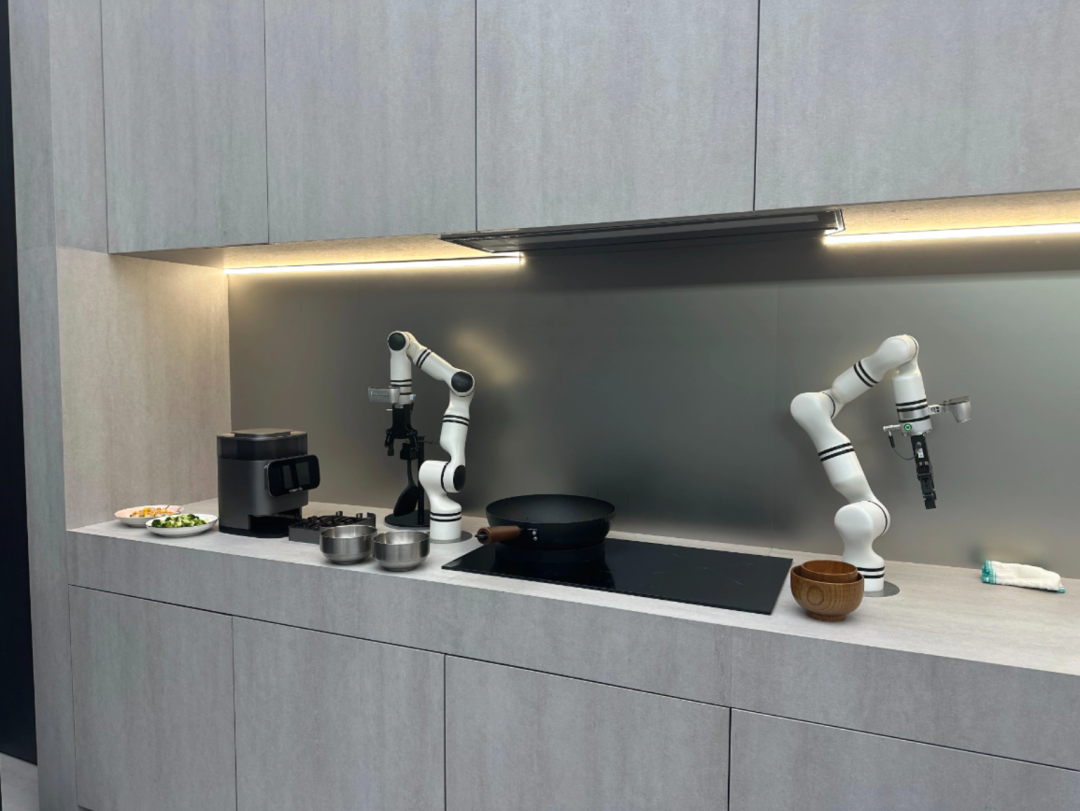
Fangtai kitchen intelligent mechanical assistant
Wang Tianmiao, honorary director of the Robotics Research Institute at Beihang University and director of the Zhongguancun Zhiyou Angel Artificial Intelligence and Robotics Research Institute, believes that:“embodied intelligence is a mechanical carrier. It can be humanoid, robotic arms, wheeled, or even drones, unmanned vehicles, or CNC machine tools. It is undeniable that embodied intelligence is a wave of the times.”
According to the China Computer Federation (CCF), embodied intelligence (EAI) is defined asan intelligent system based on a physical body for perception and action, which acquires information, understands problems, makes decisions, and takes action through the interaction of intelligent agents with the environment, thereby generating intelligent behavior and adaptability.
Embodied intelligence includes four core elements, namelyontology, intelligent agents, data, and learning evolution frameworks. Ontology is the physical foundation of embodied intelligence, responsible for executing perception and task functions; intelligent agents serve as the intelligent core embodied in the ontology, responsible for core tasks such as perception understanding, decision-making, and control; data is the basis for intelligent agents to perceive, understand, and make decisions, with the key to generalization lying in the quality and quantity of data; the learning evolution framework is crucial for embodied intelligence to achieve continuous progress and adaptability, allowing intelligent agents to continuously learn new knowledge, optimize decision-making strategies, and improve task execution efficiency through interaction with the environment.
What is the difference between embodied intelligence and the robots we are familiar with? Embodied intelligence is a theory and paradigm of intelligence that emphasizes that intelligent behavior relies on the interaction between the body and the environment, characterized by distinct corporeality and contextuality.Robots, on the other hand, are the carriers and testing grounds of this theory in engineering practice..
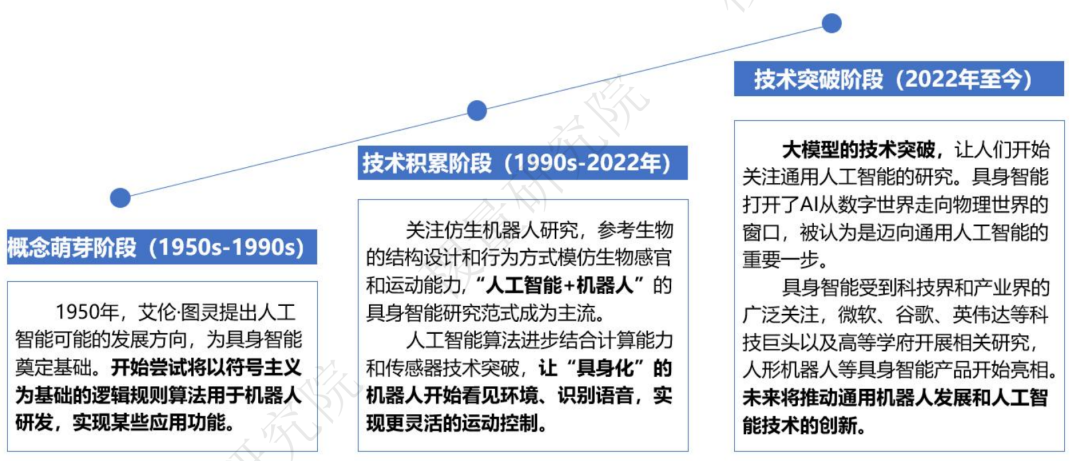
Development stages of embodied intelligence
PART.2
Intelligent robots and humanoid robots are branches of embodied intelligence
Like “embodied intelligence,” “intelligent robots” were also included in the government work report for the first time in 2025. Its literal meaning is easier to understand, but the relationship between embodied intelligence, humanoid robots, and intelligent robots is difficult for the average person to grasp. Industry experts have provided clear definitions for this:Intelligent robots and humanoid robots are both branches of embodied intelligence, with humanoid robots being the highest form of intelligent robots.
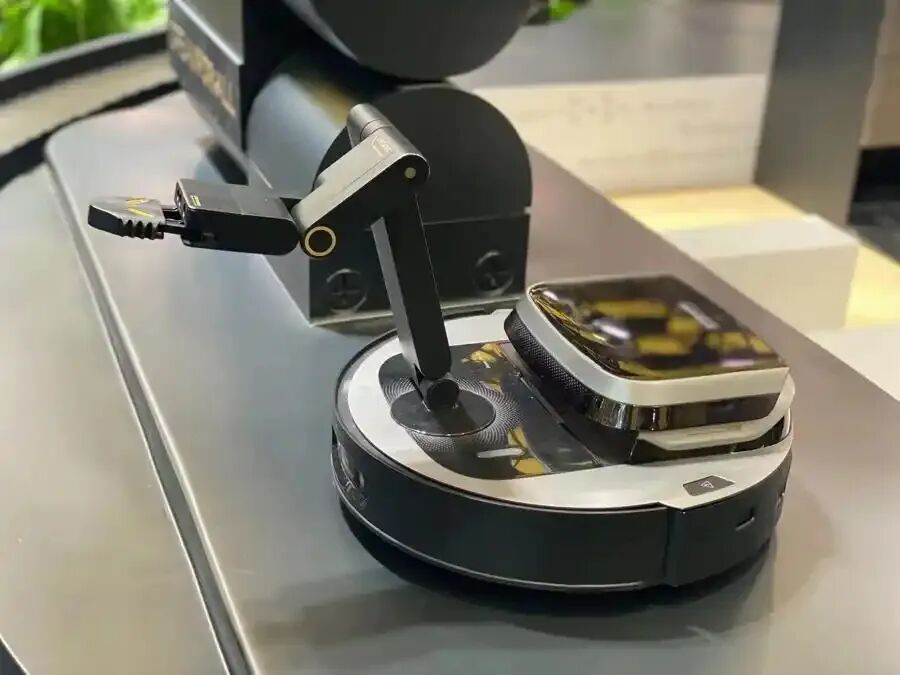
Chasing the Future’s innovative bionic multi-joint robotic hand
Xiong Youjun believes thatintelligent robots are a manifestation of embodied intelligence, which must meet two conditions: first, it must have a physical body, and second, it must possess the ability to perceive, think, interact, and act in the physical world. It can be wheeled, tracked, hybrid, or even robotic arms. Compared to intelligent robots, traditional intelligent devices do not have sensors installed, rely entirely on programmed instructions, do not respond to environmental changes, and merely execute mechanically, lacking the process of perceiving, interacting, and thinking about the physical world.
When discussing the differences between embodied intelligence and intelligent robots, embodied intelligence emphasizes the close integration of intelligence with the body and environment, incorporating artificial intelligence into physical entities. Intelligent robots, on the other hand, are physical devices or machines that do not necessarily possess the high intelligence and autonomous learning capabilities emphasized by embodied intelligence; more often, they are a common carrier of embodied intelligence.
What is the relationship between embodied intelligence, intelligent robots, and humanoid robots? Xu Bin, General Manager of the National and Local Joint Innovation Center for Humanoid Robots, provides the answer:Embodied intelligence is an important branch of artificial intelligence, serving as the main pathway for intelligent robots to achieve higher-level applications, while humanoid robots represent the highest form of intelligent robots.
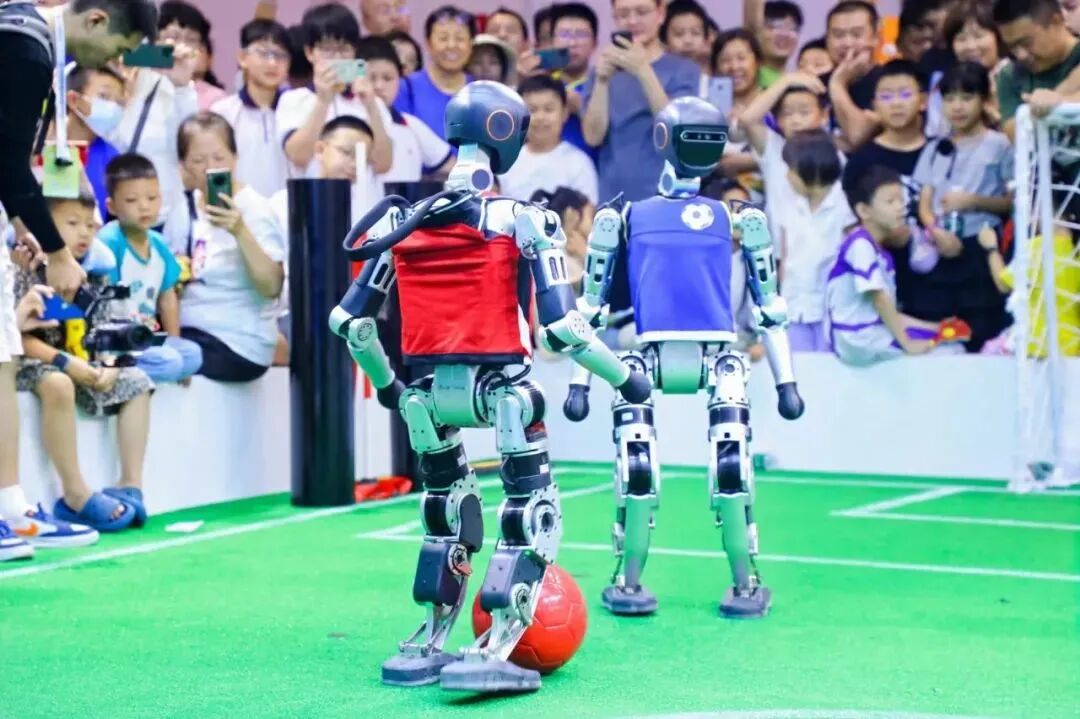
Two humanoid robots are playing soccer
“We can understand humanoid robots as a new species, a member of the family of embodied intelligence,” says Wang Tianmiao. In the next decade, humanoid robots will only account for about 10% of intelligent robots (artificial intelligence + robots), and in certain special fields, it may reach 20%.
Humanoid robots and embodied intelligence essentially belong to different dimensions of robotic technology—the former focuses on the bionic nature of physical form, while the latter emphasizes the interactivity of intelligent generation.
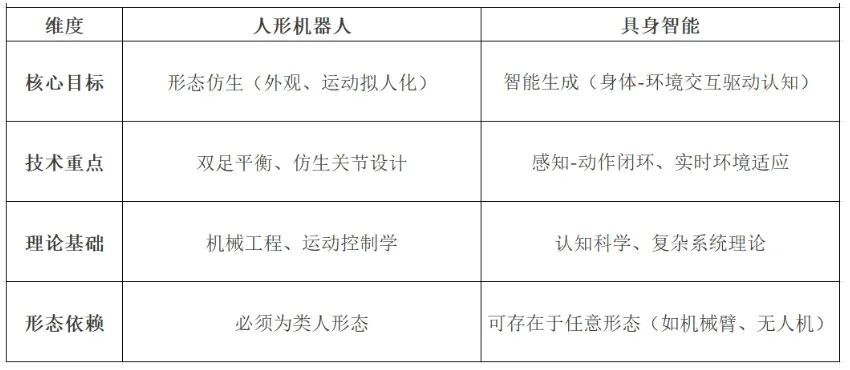
Although there is some overlap in products and technologies in the rapidly developing current landscape, humanoid robots can be one of the physical carriers of embodied intelligence, while embodied intelligence is the theoretical foundation for humanoid robots to transcend their “machine” identity, establishing universal principles for intelligent agents like humanoid robots to explore coexistence with the physical world. However, in the future, humanoid robots will not necessarily equate to embodied intelligence.
PART.3
Broad Application Prospects but Time Needed for Validation
Despite the industry’s optimism about the application prospects of embodied intelligence, intelligent robots, especially humanoid robots, industry experts unanimously believe thathumanoid robots are still a long way from large-scale application, especially in ordinary households.
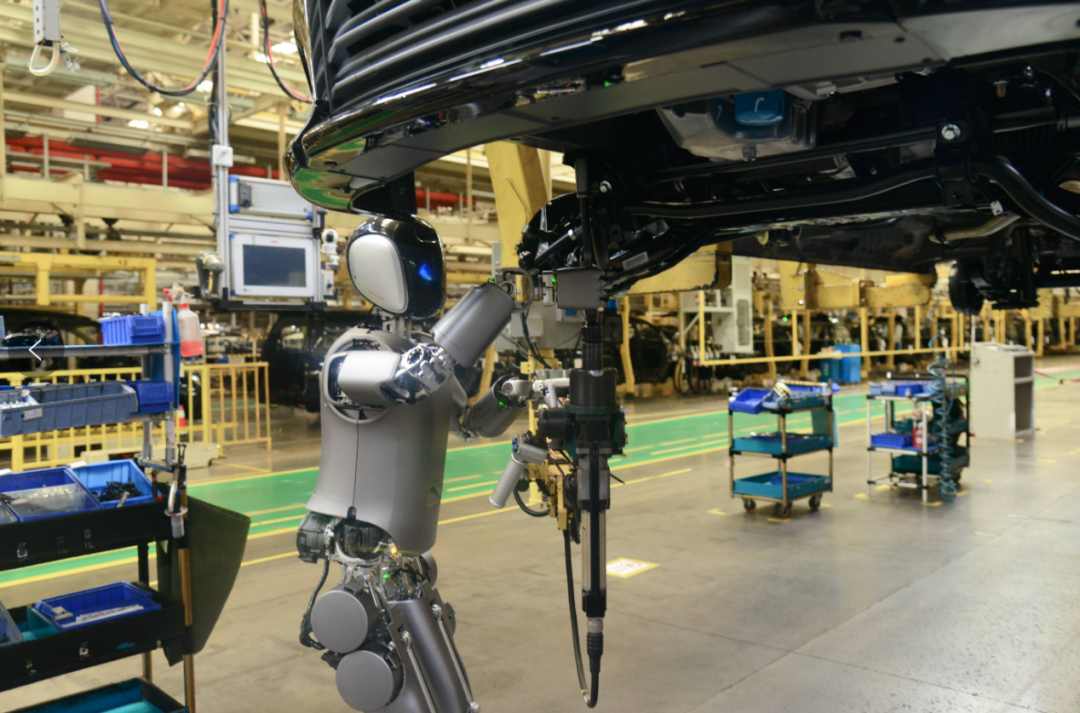
UBTECH humanoid robot working in an automotive factory
In terms of embodied intelligence, Academician Yu Haibin predicts that in the next decade, algorithms and training platforms for embodied intelligence will develop rapidly, while hardware (such as high-precision sensors and bionic joints) will progress relatively slowly due to material and process limitations. Companies should prioritize laying out software ecosystems (such as simulation platforms and data chains) rather than blindly investing in hardware development.
Currently, humanoid robots are leading a new round of intelligent transformation by enhancing configurations with new perception methods, developing VLA (Vision-Language-Action models) and other large models to improve multimodal fusion perception, cognition, and decision-making capabilities; by employing new motion control methods such as reinforcement learning, imitation learning, and hybrid paths to enhance robots’ trajectory planning and motion control capabilities in unknown, complex, and dynamic environments. Thus,they strive to enhance the adaptability of humanoid robots to complex and diverse tasks, and significantly improve the efficiency of robot development.
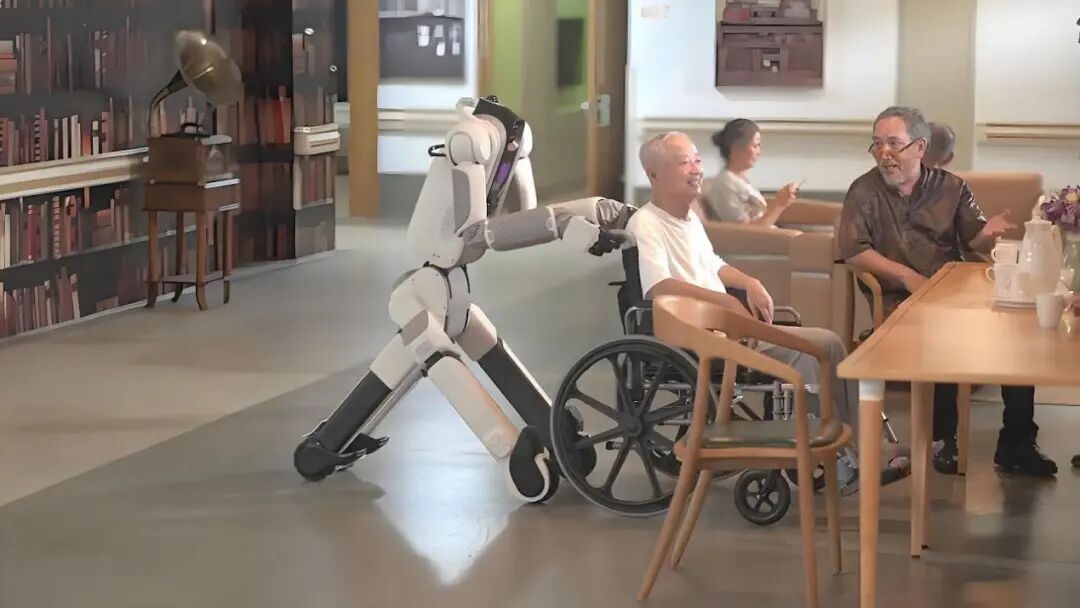
Tencent humanoid robot “Xiao Wu” exploring applications in elderly care scenarios
Looking ahead to the next decade, humanoid robots will experience explosive growth. Continuous technological advancements will enhance their performance and expand application scenarios; the ongoing release of market demand will rapidly scale the industry; and further cost reductions will make them more widespread.
“The industry is currently experiencing a bubble period with relatively high valuations, but in the long run, robotics is a very long race,” says a partner at an early-stage technology investment firm in East China. “During its development process, it will inevitably go through phases driven by concepts, technologies, or other factors that push industry valuations up, ultimately returning to a period of rational correction.”
Sun Fuchun, Vice President of the Chinese Association for Artificial Intelligence and a professor at Tsinghua University, states that the overall development of AI follows an S-curve—initially, there will be a period of losses, during which investors may lack the patience to continue investing. Chinese Academy of Engineering Academician Zhang Yaqin states thathumanoid robots will take longer to mature, requiring 5 to 10 years.
“The application of humanoid robots needs time for validation,” Wang Tianmiao points out, emphasizing that the three elements of operational efficiency, safety, and cost are important standards for determining whether a new technology can enter the industry.He predicts that humanoid robots will enter industrial, special, and hazardous scenarios within the next 10 years, and only after sufficient validation in these scenarios will they be likely to enter households.
Source: AGI Enterprise Application Incubation Center, for academic sharing purposes only. If there is any infringement, please contact for removal!
END
 Contact Us WeChat ID: cosmos4194
Follow the public account “Robot Research” to download a wealth of industry research reports on robots and stay updated on the latest developments in the field. Welcome to subscribe!