The National Development and Reform Commission has released the “Implementation Plan for the Construction of Embedded Service Facilities in Urban Communities.” So, what is an embedded community? How does it differ from a complete community and a quarter-hour convenient living circle? Let’s explore.
01What are Community Embedded Services?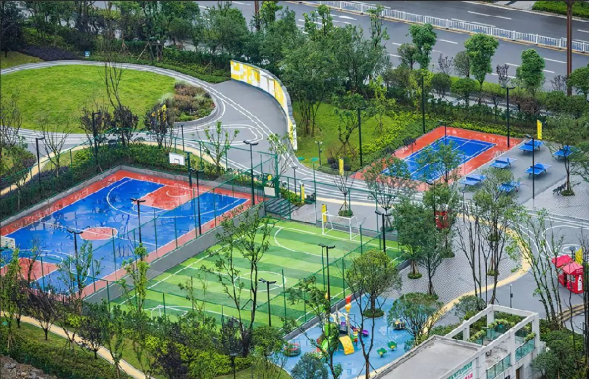 Urban community embedded service facilities refer to functional facilities and adaptive services embedded in the public spaces of communities (residential areas) through new construction or renovation, providing residents with one or more services such as elderly care, childcare, community meal assistance, housekeeping, health services, sports and fitness, cultural leisure, and children’s recreation right at their doorstep.Implementation Scope:Focus on cities with a population of over 1 million.Pilot Scope:Select about 50 cities, with approximately 100 communities chosen in each pilot city.Construction Land:Can include residential land, public management and service land, commercial service land, Class I industrial land, new industry land, Class I logistics and storage land, square land, etc. The community embedded service facilities constructed by the government are non-profit public service facilities and are allowed to maintain the original land use for five years without change.Construction Form:Can be set up in a centralized or decentralized manner.Construction Methods:New construction, expansion, supplementary construction, renovation.Construction Content:Reasonably allocate one or more service functions such as elderly care services, infant and toddler care, children’s custody, community meal assistance, housekeeping, sports and fitness, cultural leisure, and children’s recreation.
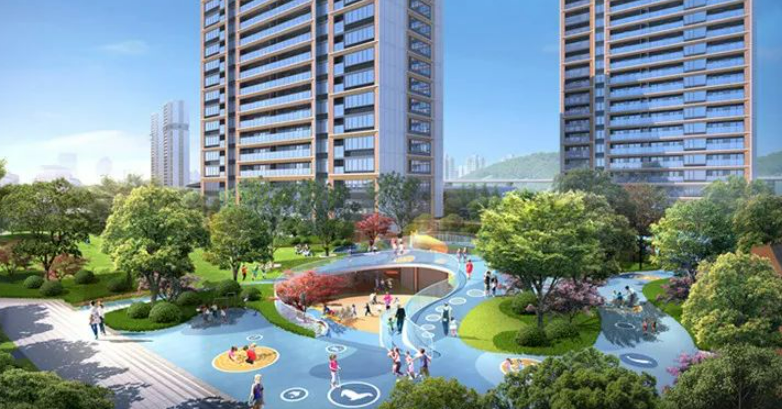 Construction Scale:1. Community comprehensive service facilities: An average area of no less than 30 square meters per 100 households, reaching 80 square meters per 100 households where conditions permit.2. Community service centers: Generally not less than 600 square meters, and not less than 800 square meters where conditions permit.3. Elderly care services: Each bed should have a building area of ≥35 square meters, and the building area of elderly care service facilities should be ≥350 square meters.4. Infant and toddler care: Each care position should have a building area of ≥9 square meters; the building area of infant and toddler care service facilities should be ≥200 square meters.5. Sports and fitness: Indoor per capita building area not less than 0.1 square meters or outdoor per capita land not less than 0.3 square meters.
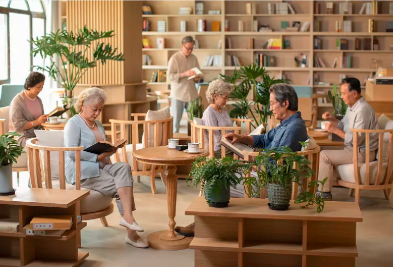 Sustainable Operation:Operation Principles:Precision service, cost reduction operation, large-scale development, market competition.Operation Models:Public construction and private operation, private public assistance.Service Models:1. Based on the needs of community residents, market supply, and financial capacity, scientifically choose construction and operation models such as public construction and private operation, private public assistance, and government purchasing services.2. Can provide low-cost facility space to service operation entities through market selection and entrusted management.3. Can explore the chain operation of specialized institutions and entrusted operation of community embedded service facilities, constructing a service system of “street – community – residential area.”Service Quality Assurance:1. Actively cultivate community comprehensive service and specialized service operators. Explore the establishment of a list of “qualified community service operators” in cities (urban areas) through market selection and publicly announce it to society, allowing communities to choose or independently determine service operators based on actual needs, dynamically updating the list based on public satisfaction evaluations.2. Encourage the participation of diverse entities such as public institutions, social organizations, and volunteer teams in operations. Guide community property management and housekeeping companies to provide inclusive community services.3. Support the active cultivation of a batch of “leading” enterprises and service brands with good service, integrity, and the ability to drive in fields such as elderly care, childcare, and community meal assistance, to better play a role in training and demonstration related to community embedded services.
 02
02
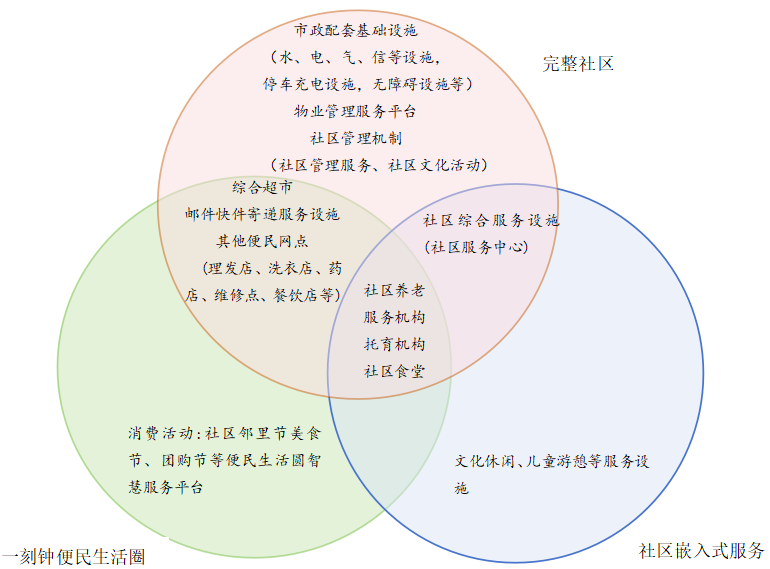
Differences Between Community Embedded Services, Complete Communities, and the Quarter-Hour Convenient Living Circle:
1. Policy Orientation
|
Policy Theme |
Proposed Time |
Publishing Authority |
Policy Document |
Policy Orientation |
|
Community Embedded Services |
2023/11/26 |
National Development and Reform Commission, etc. |
“Implementation Plan for the Construction of Embedded Service Facilities in Urban Communities” |
Promote the organic embedding of urban public service facilities into communities |
|
Complete Community |
2021/12/17 |
Ministry of Housing and Urban-Rural Development, Ministry of Civil Affairs |
“Notice on Printing and Distributing the Guidelines for the Construction of Complete Residential Communities” |
Focus on “the elderly and children,” addressing the shortcomings of community service facilities and improving the living environment |
|
Quarter-Hour Convenient Living Circle |
2021/5/31 |
Ministry of Commerce, etc. (12 departments) |
“Opinions on Promoting the Construction of Urban Quarter-Hour Convenient Living Circles” |
Transform the quarter-hour convenient living circle into an important carrier for ensuring and improving people’s livelihoods and restoring and expanding consumption. |
2. Policy Coverage Objects
|
Policy Theme |
Coverage Scope |
|
Community Embedded Services |
Prioritize construction in large cities with a permanent population exceeding 1 million. |
|
Complete Community |
Select 3-5 communities in each city (district) to carry out pilot construction of complete communities. |
|
Quarter-Hour Convenient Living Circle |
Comprehensively promote in cities above the prefecture level nationwide where conditions permit. |
3. Policy Content Focus
|
Policy Theme |
Main Content and Focus |
|
Community Embedded Services |
Community embedded service facilities provide one or more services such as elderly care, childcare, community meal assistance, housekeeping, health services, sports and fitness, cultural leisure, and children’s recreation to community residents. |
|
Complete Community |
Improve community service facilities. Promote the pilot construction of complete communities based on the jurisdiction of community resident committees, planning and constructing community comprehensive service facilities, kindergartens, nurseries, elderly service stations, and community health service stations. Coordinate several complete communities to create vibrant blocks, equipped with primary and secondary schools, nursing homes, community hospitals, etc., connecting with the 15-minute living circle to provide residents with more comprehensive public services. Promote intelligent services. |
| Quarter-Hour Convenient Living Circle |
Enrich resident consumption formats. Develop “one store, one breakfast,” fill in “one dish, one repair,” and serve “the elderly and children,” focusing on basic guarantee formats (convenience stores, supermarkets, vegetable markets, barbershops, laundries, etc.) and developing quality improvement formats (community elderly care service institutions, childcare institutions, children’s entertainment centers, neighborhood centers, etc.). |
4. Policy Content Relationships
-end-