When GoPro pushed stabilization to 6.0, when Insta360 achieved 8K panoramic capabilities, and when Yingshi rolled out AI tracking that even a dog could lock onto, the action camera industry collectively fell into an awkward situation of “parameter surplus”—flagship models can shoot 4K at 120 frames per second, yet users struggle to find a sufficiently large computer hard drive; horizon correction has achieved 360° infinite rotation, but ordinary users just want to post a vertical short video. On September 23, 2025, DJI entered the Beijing autumn launch event with the Osmo Nano, weighing only 50 grams, not by continuing to enhance the performance of “iron lumps,” but by using a “lightweight” body to shift the industry’s focus from “who is more hardcore” to “who is more convenient.” With a starting price of 1998 yuan, a 1/1.3-inch large sensor, a dynamic range of 13.5 stops, magnetic quick release, shared batteries with the Action series, and shared color science with drones… the Nano acts like a catfish, dragging action cameras from the “solo combat” era into the “all-in-one ecosystem” battlefield, making “light” the first pivot to leverage the “heavy” burden.
Over the past decade, the industry has completed its first iteration from “solving existence” to “parameter competition.” The early GoPro Hero 4 combined waterproofing, shock resistance, and 4K capabilities, allowing extreme players to finally ditch the DSLR strapped to their helmets; subsequently, various brands dove headfirst into an arms race of “bigger sensors crush smaller ones,” with 1-inch sensors, F1.4 apertures, 8K at 60p, and 2700 nits screens, piling on parameters while users began to complain about “not being able to export after shooting” and “computer fans sounding like drones.” More seriously, there emerged “ecological islands”—GoPro’s colors skew blue, Insta360’s tones lean cyan, and smartphone stabilizers use a different LUT, resulting in three segments of footage stitched together looking like three different shows; accessories are not interchangeable, leading to the need to carry not just the camera but also several types of screws, two adapter arms, and a pile of quick-release plates, turning lightweight travel into a “hardware store relocation.” When “performance redundancy” meets “fragmented experience,” the market urgently needs a system-level answer that can package shooting, audio recording, color grading, editing, and sharing all at once, rather than just another “brighter light.”
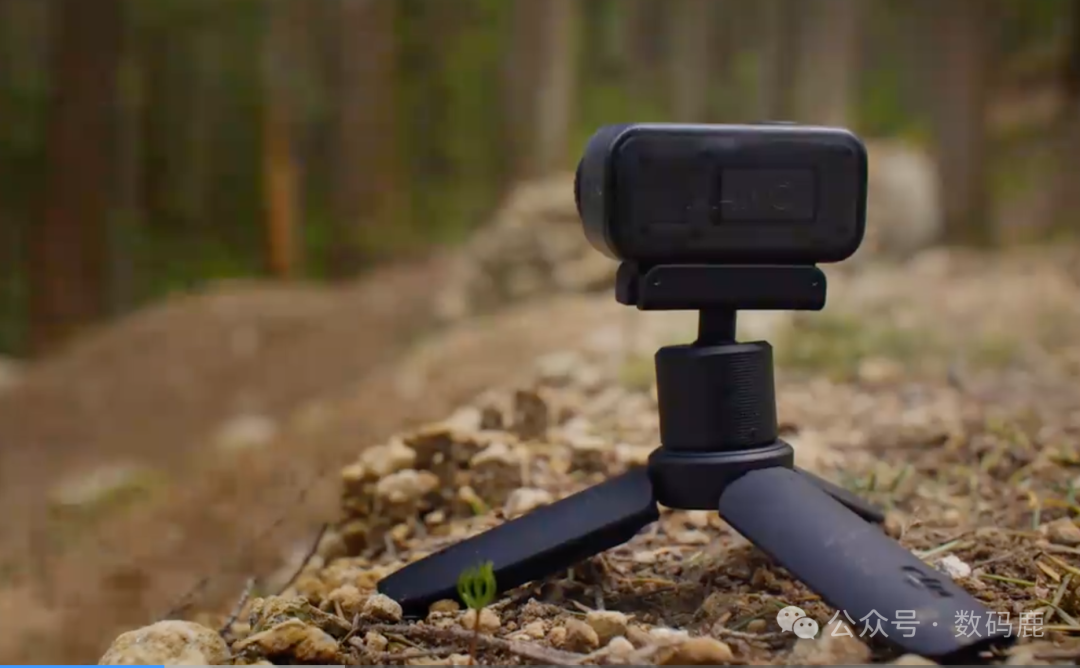
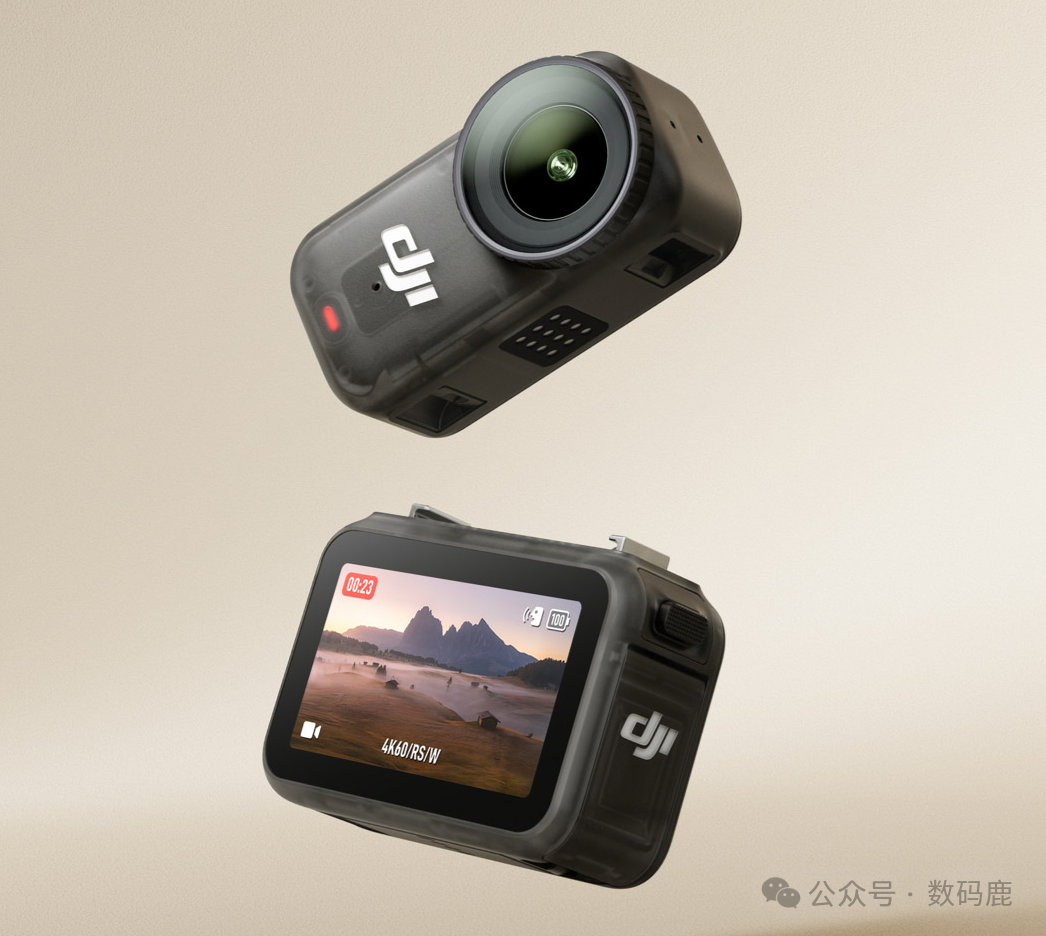
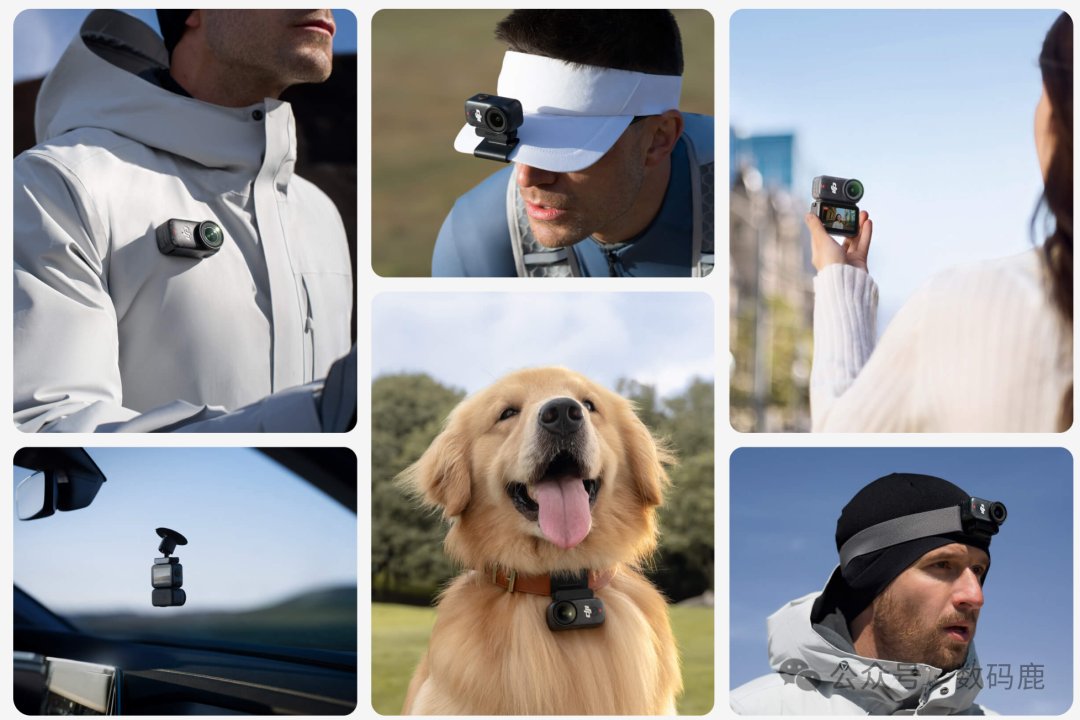
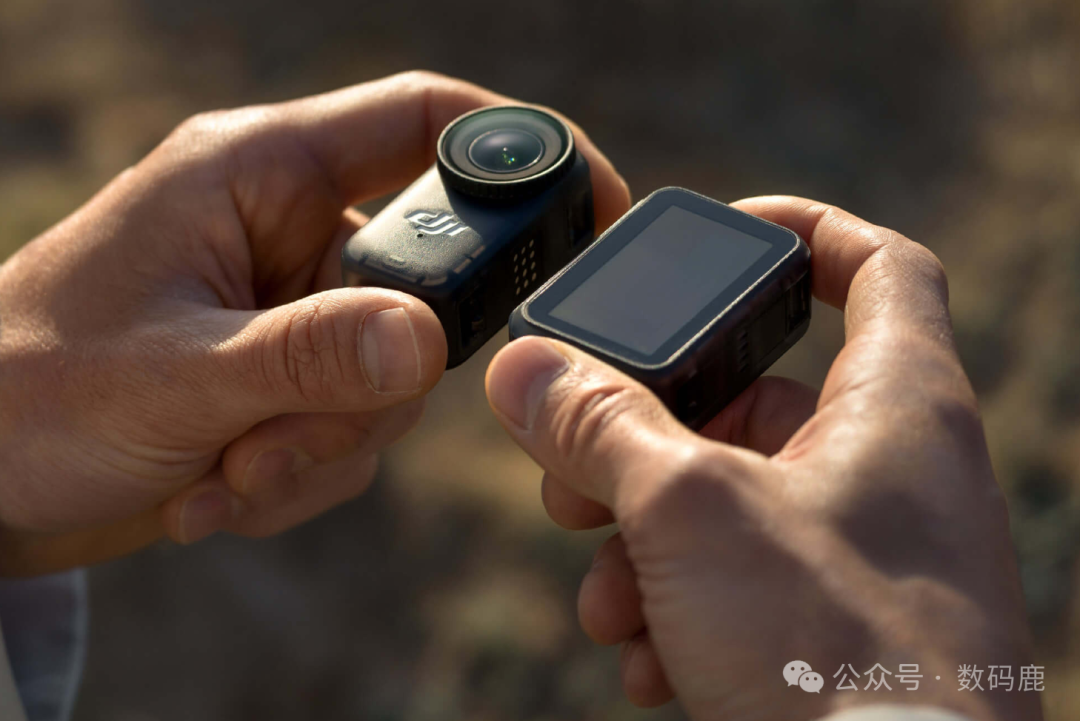
DJI’s solution is to “make the device disappear.” The Osmo Nano weighs only 50 grams, lighter than a single 18650 battery, and inside its translucent shell is packed with the same 1/1.3-inch sensor as the Action 5 Pro, 2.4μm single pixel, 10-bit color depth, and a market-validated image processing chip, officially claiming to “condense the flagship imaging system into the size of a coin.” To achieve a sensation-free wear, engineers stacked the mainboard in three layers, shaped the battery to fit the helmet’s curve, and shortened the lens module by 2.3 millimeters, ensuring it won’t “press against the forehead” even when attached; the magnetic back clip has a pull strength of 5 kilograms, allowing it to attach to clothing, pet harnesses, bicycle handlebars, or even directly to a drone’s landing gear, unlocking multiple perspectives such as first-person, pet, and narrow spaces. In terms of battery life, the Nano can continuously record for 90 minutes in 1080p at 30fps, and its battery is fully compatible with the Action 5 Pro and Action 4, meaning existing users do not need to repurchase accessories; one battery can be used in the air, on the ground, or worn, with a cycle charge count that maintains at least 80% capacity after 500 cycles, minimizing “anxiety.”
What truly puts pressure on competitors is the “Osmo Universe” behind the Nano. From the DJI Mimo App, users can see the device list featuring six icons: Nano, Action, Pocket, 360, Mobile, and Mic lined up. Clicking on any device allows for synchronized color modes, frame rates, and white balance, with all materials automatically tagged as “Osmo Color”; once imported into the editing timeline, color grading can be unified with one click; regarding microphones, the DJI Mic series is paired with the Nano out of the box, allowing for remote gain and real-time monitoring, with a maximum transmission distance of 250 meters and latency as low as 0.02 seconds; the magnetic quick-release interface spans the entire series, allowing the Nano’s base to be easily mounted on the Action’s chest strap or the top of the Pocket’s extension rod, achieving “one clip for multiple uses.” In the past, users needed to carry three different brand devices to complete a “ground + air + wearable” combination; now, only one Osmo ecosystem is needed for seamless integration, even eliminating the need to adjust color LUTs, truly bringing “multi-camera” capabilities from professional teams down to ordinary players.
In terms of pricing, the Nano’s 64GB version is priced at 1998 yuan, and the 128GB version at 2298 yuan, which is over 30% lower than mainstream flagship action cameras, yet offers superior image quality; at the same time, DJI announced a subsidy plan for existing users: owning any model from the Action or Pocket series grants an additional exclusive magnetic chest strap and a 50W fast charger for the Nano, further reducing the cost of switching devices. Industry analysts point out that DJI’s move is not about “losing money to gain popularity,” but rather shifting the profit pool from hardware to ecosystem stickiness—once users own two or more Osmo devices, they will continue to purchase batteries, microphones, extension rods, and ND filters, with repurchase rates far exceeding those of single-brand devices; the AI editing, cloud space, and music copyright built into the Mimo App will also generate subscription revenue. Data shows that by 2024, the average accessory spending per Osmo user has reached 46% of the main unit price, far exceeding the industry average of 22%, indicating the initial emergence of ecological effects.
On the day of the Nano’s release, DJI also opened the SDK, inviting third-party developers to integrate wearable scenarios: the cycling computer brand Bryton has launched the “computer control Nano for one-click lap speed” feature; the pet smart collar manufacturer Tractive is testing the “dog barking automatically starts recording” algorithm; even Douyin live streaming has launched the “Nano remote live broadcast” entry, allowing smartphones to read the Nano’s footage for dual-camera switching. It is foreseeable that as more external devices connect to the Osmo protocol, the Nano will no longer be just an “action camera,” but rather a “wearable imaging portal,” with its potential far exceeding that of traditional “box cameras.”
In an era of parameter competition, DJI uses a weight of 50 grams to tell the market: the ultimate battlefield for action cameras is not in laboratory benchmarks, but in whether users are willing to leave a spot for it in their backpacks. When color, accessories, interaction, audio, drones, and post-production software are all interconnected, the Nano is no longer an isolated device but a key—opening the door to an ecosystem where “everyone can shoot, and every place is a scene,” making “light” truly the pivot to leverage the industry’s “heavy” burdens. The next battle for action cameras will no longer be about who is more hardcore, but who understands the system better.