 Source: Commercial Vehicle MechanicAbstractThis article introduces the MCU chips in the four domains of body, chassis, power, and cockpit from four dimensions: work requirements, performance requirements, industry structure, and industry barriers. It also organizes the current application status of domestic MCU chips for reference by practitioners.
1. Introduction to Control Chips
 Control chips mainly refer to MCUs (Microcontroller Units), which are microcontrollers, also known as single-chip microcomputers. They appropriately reduce the CPU’s main frequency and specifications, integrating various functional modules and interfaces such as memory, timers, A/D converters, clocks, I/O ports, and serial communication into a single chip to achieve terminal control functions, with advantages such as high performance, low power consumption, programmability, and high flexibility.Automotive-grade MCU Schematic
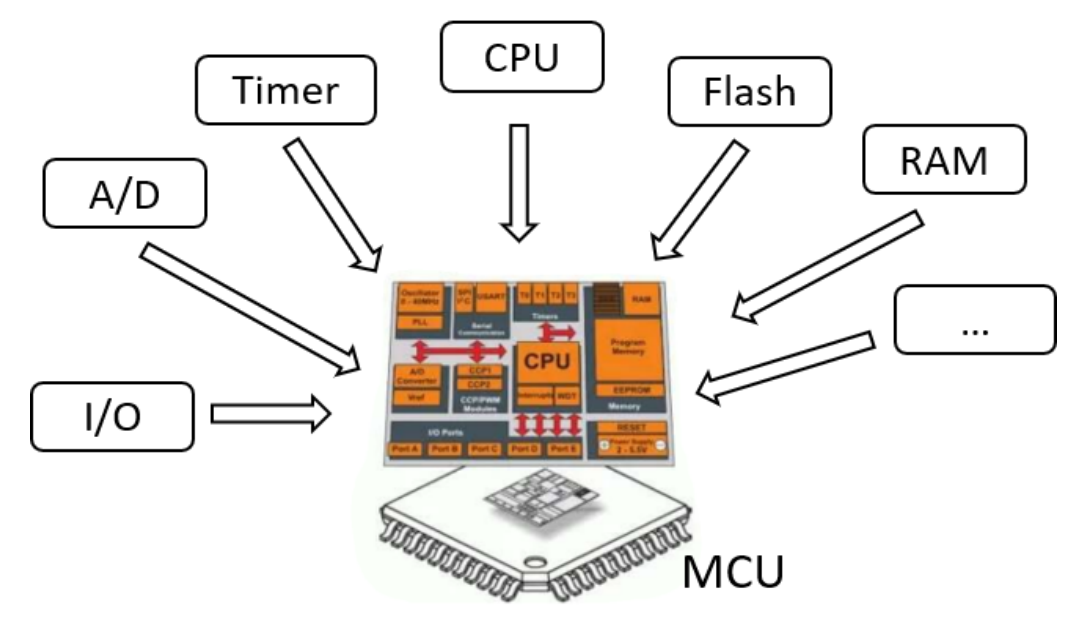 ※Source: Public data, provided by the writing unitAutomobiles are a very important application field for MCUs. According to IC Insights data, in 2019, the global MCU application in automotive electronics accounted for about 33%. High-end models use nearly 100 MCUs per vehicle, from driving computers and LCD dashboards to engines and chassis; all components in a car require MCUs for control. In the early days, mainly 8-bit and 16-bit MCUs were used in automobiles, but as automotive electronics and intelligence continue to strengthen, the quantity and quality of required MCUs have also increased. Currently, 32-bit MCUs account for about 60% of automotive MCUs, with ARM’s Cortex series cores being the mainstream choice among automotive MCU manufacturers due to their low cost and excellent power control.The main parameters of automotive MCUs include operating voltage, operating frequency, Flash and RAM capacity, number of timer modules and channels, number of ADC modules and channels, types and numbers of serial communication interfaces, number of I/O ports, operating temperature, packaging form, and functional safety level.Divided by CPU bit, automotive MCUs can be mainly classified into 8-bit, 16-bit, and 32-bit. With process upgrades, the cost of 32-bit MCUs continues to decrease, and they have now become mainstream, gradually replacing the applications and markets previously dominated by 8/16-bit MCUs.If classified by application domain, automotive MCUs can be divided into body domain, power domain, chassis domain, cockpit domain, and intelligent driving domain. For the cockpit and intelligent driving domains, MCUs need to have high computing power and high-speed external communication interfaces, such as CAN FD and Ethernet. The body domain also requires a large number of external communication interfaces, but the computing power requirements for MCUs are relatively low, while the power and chassis domains require higher operating temperatures and functional safety levels.
2. Chassis Domain Control Chips
 The chassis domain is related to the vehicle’s driving and is composed of the transmission system, driving system, steering system, and braking system. It consists of five major subsystems: steering, braking, shifting, throttle, and suspension systems. With the development of automotive intelligence, the core systems of intelligent vehicles for perception, decision-making, planning, and control execution are in the chassis domain, with steer-by-wire and brake-by-wire being core components for the autonomous driving execution end.1. Work RequirementsThe chassis domain ECU adopts a high-performance, upgradable functional safety platform and supports sensor clusters and multi-axis inertial sensors. Based on this application scenario, the following requirements are proposed for chassis domain MCUs:· High main frequency and high computing power requirements, with a main frequency of no less than 200MHz and computing power of no less than 300 DMIPS· Flash storage space of no less than 2MB, with physical partitioning for code Flash and data Flash;· RAM of no less than 512KB;· High functional safety level requirements, capable of reaching ASIL-D level;· Support for 12-bit precision ADC;· Support for 32-bit high precision, high synchronization timers;· Support for multi-channel CAN-FD;· Support for Ethernet of no less than 100M;· Reliability of no less than AEC-Q100 Grade 1;· Support for online upgrades (OTA);· Support for firmware verification functions (national secret algorithm);2. Performance Requirements· Core part:I. Core main frequency: the clock frequency at which the core operates, used to indicate the speed of the core’s digital pulse signal oscillation; the main frequency cannot directly represent the core’s computing speed. The core’s computing speed is also related to the core’s pipeline, cache, instruction set, etc.;II. Computing power: can usually be evaluated using DMIPS. DMIPS refers to a unit that measures the relative performance level exhibited during the testing of the MCU’s comprehensive benchmark program.· Memory parameters:I. Code memory: memory used to store code;II. Data memory: memory used to store data;III. RAM: memory used to store temporary data and code.· Communication bus: including automotive-specific buses and conventional communication buses;· High precision peripherals;· Operating temperature;3. Industry StructureDue to the differences in electronic and electrical architectures adopted by different car manufacturers, the demand for components in the chassis domain varies. Different models from the same manufacturer may have different ECU selections for the chassis domain due to varying configurations. These distinctions lead to different demand levels for chassis domain MCUs. For example, the Honda Accord uses three chassis domain MCU chips, while the Audi Q7 uses about 11 chassis domain MCU chips. In 2021, the production volume of Chinese brand passenger cars was about 10 million, with an average demand of 5 chassis domain MCUs per vehicle, resulting in a total market volume of about 50 million chips. The main suppliers of chassis domain MCUs are Infineon, NXP, Renesas, Microchip, TI, and ST. These five international semiconductor manufacturers account for over 99% of the chassis domain MCU market share.4. Industry BarriersFrom a key technology perspective, components in the chassis domain, such as EPS, EPB, and ESC, are closely related to the safety of the driver, thus requiring very high functional safety levels for chassis domain MCUs, which are generally ASIL-D level requirements. This functional safety level MCU is currently absent domestically. In addition to functional safety levels, the application scenarios of chassis domain components have very high requirements for MCU’s main frequency, computing power, memory capacity, peripheral performance, and peripheral precision. The chassis domain MCU has formed very high industry barriers, requiring domestic MCU manufacturers to challenge and break through.In terms of the supply chain, since chassis domain components require control chips with high main frequency and high computing power, this poses high requirements for wafer production processes and manufacturing. Currently, at least 55nm processes are needed to meet the 200MHz and above MCU main frequency requirements. In this regard, domestic automotive-grade MCU production lines are not yet complete and have not reached mass production levels. International semiconductor manufacturers generally adopt the IDM model, and currently, only TSMC, UMC, and GlobalFoundries have the corresponding capabilities in wafer foundry. Domestic chip manufacturers are all fabless companies, facing challenges and certain risks in wafer manufacturing and capacity assurance.In core computing scenarios such as autonomous driving, traditional general-purpose CPUs have low computing efficiency and are difficult to meet AI computing requirements. AI chips such as GPUs, FPGAs, and ASICs perform excellently at the edge and in the cloud due to their characteristics. From a technical trend perspective, GPUs will still dominate AI chips in the short term, while ASICs are the ultimate direction in the long term. From a market trend perspective, global demand for AI chips will maintain a rapid growth momentum, with both cloud and edge chips having significant growth potential, and the market growth rate is expected to approach 50% in the next five years. Although domestic chip technology is relatively weak, the rapid landing of AI applications creates opportunities for local chip companies to grow in technology and capability. Autonomous driving has strict requirements for computing power, latency, and reliability, and currently, GPU + FPGA solutions are widely used. As algorithms stabilize and data-driven approaches develop, ASICs are expected to gain market space.CPU chips require a lot of space for branch prediction and optimization, saving various states to reduce latency during task switching. This also makes them more suitable for logical control, serial computation, and general-type data operations. For example, comparing GPUs and CPUs, GPUs use numerous computing units and ultra-long pipelines, with very simple control logic and no cache. In contrast, CPUs occupy a lot of space with cache and have complex control logic and many optimization circuits, making their computing power only a small part of the overall capability.
3. Power Domain Control Chips
 Power domain controllers are intelligent powertrain management units. They manage the transmission, battery, and monitor the adjustment of the AC generator through CAN/FLEXRAY, mainly used for optimizing and controlling the powertrain, while also featuring electrical intelligent fault diagnosis, intelligent power saving, and bus communication functions.
1. Work Requirements
Power domain control MCUs can support major applications such as BMS, with the following requirements:
· High main frequency, with a frequency of 600MHz to 800MHz
· RAM of 4MB
· High functional safety level requirements, capable of reaching ASIL-D level;
· Support for multi-channel CAN-FD;
· Support for 2G Ethernet;
· Reliability of no less than AEC-Q100 Grade 1;
· Support for firmware verification functions (national secret algorithm);2. Performance RequirementsHigh performance: the product integrates ARM Cortex R5 dual-core lockstep CPU and 4MB on-chip SRAM to support the growing demand for computing power and memory in automotive applications. The ARM Cortex-R5F CPU has a main frequency of up to 800MHz.High safety: automotive reliability standard AEC-Q100 reaches Grade 1 level, and ISO26262 functional safety level reaches ASIL D. The dual-core lockstep CPU used can achieve up to 99% diagnostic coverage. The built-in information security module integrates true random number generator, AES, RSA, ECC, SHA, and hardware accelerators that comply with national secret commercial standards. These information security functions can meet the needs for secure boot, secure communication, and secure firmware updates.
4. Body Domain Control Chips
 The body domain is mainly responsible for controlling various functions of the vehicle body.With the development of the entire vehicle, the number of body domain controllers is also increasing. To reduce controller costs and reduce the overall vehicle weight, integration is required to unify all functional devices from the front, middle, and rear parts of the vehicle, such as rear brake lights, rear position lights, tailgate locks, and even dual support rods into a single overall controller.Body domain controllers generally integrate functions such as BCM, PEPS, TPMS, Gateway, etc., and can also expand to include functions such as seat adjustment, mirror control, air conditioning control, etc., comprehensively and uniformly managing various actuators and effectively allocating system resources.The body domain controller has many functions, as shown in the figure below, but is not limited to the functions listed here.Body Domain Controller Function Table
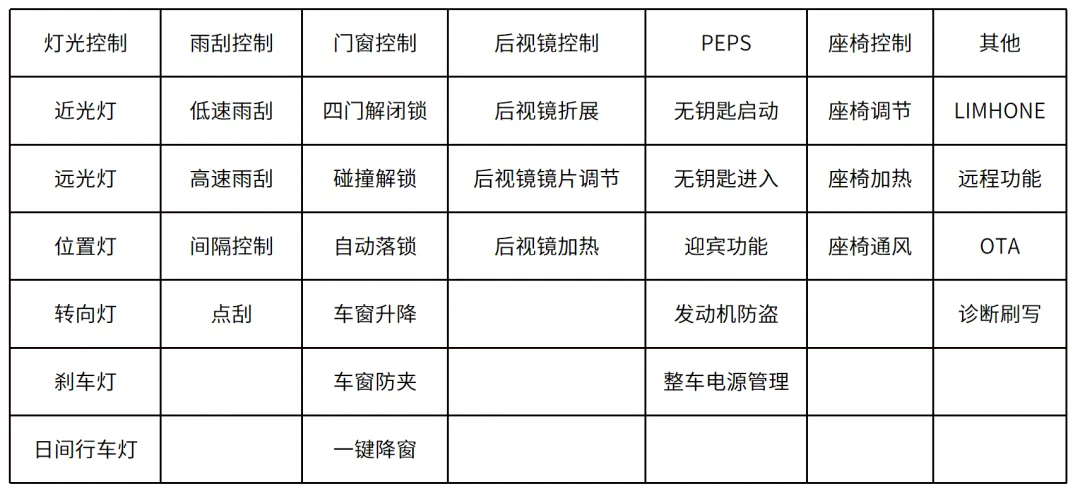 ※Source: Public data, provided by the writing unit1. Work RequirementsAutomotive electronics’ main demands for MCU control chips are better stability, reliability, safety, real-time performance, and higher computing performance and storage capacity, along with lower power consumption requirements. The body domain controller is transitioning from decentralized functional deployment to integrating all body electronics’ basic drives, key functions, vehicle lights, doors, windows, etc., into a large controller. The design of the body domain control system integrates control of lighting, wipers, central door locks, windows, PEPS smart keys, power management, and various interfaces and modules such as CAN, expandable CANFD, FLEXRAY, LIN networks, and Ethernet.Overall, the various control functions mentioned above for the body domain mainly reflect the work requirements of the MCU main control chip in terms of computing processing performance, functional integration, communication interfaces, and reliability. Specific requirements vary significantly due to the functional differences in various application scenarios in the body domain, such as electric windows, automatic seats, and electric tailgates, which also have high-efficiency motor control requirements. These body applications require MCUs to integrate functions such as FOC motor control algorithms. Additionally, different application scenarios in the body domain have different interface configuration requirements for chips. Therefore, it is usually necessary to select body domain MCUs based on specific application scenarios’ functional and performance requirements, while also considering product cost-effectiveness, supply capacity, and technical service factors.2. Performance Requirements
Body domain control MCUs’ main reference indicators are as follows:
· Performance: ARM Cortex-M4F @144MHz, 180 DMIPS, built-in 8KB instruction cache, supports Flash acceleration unit execution with 0 wait.
· Large capacity encrypted memory: up to 512K Bytes eFlash, supports encrypted storage, partition management, and data protection, supports ECC verification, 100,000 erase cycles, 10 years data retention; 144K Bytes SRAM, supports hardware parity check.
· Integrates rich communication interfaces: supports multiple GPIO, USART, UART, SPI, QSPI, I2C, SDIO, USB2.0, CAN 2.0B, EMAC, DVP, etc.
· Integrates high-performance analog devices: supports 12bit 5Msps high-speed ADC, rail-to-rail independent operational amplifiers, high-speed analog comparators, 12bit 1Msps DAC; supports external input independent reference voltage sources, multi-channel capacitive touch buttons; high-speed DMA controller.
· Supports internal RC or external crystal clock input, high reliability reset.
· Built-in calibratable RTC real-time clock, supports leap year calendar, alarm events, periodic wake-up.
· Supports high-precision timing counters.
· Hardware-level security features: cryptographic algorithm hardware acceleration engine, supports AES, DES, TDES, SHA1/224/256, SM1, SM3, SM4, SM7, MD5 algorithms; Flash storage encryption, multi-user partition management (MMU), TRNG true random number generator, CRC16/32 operations; supports write protection (WRP), various read protection (RDP) levels (L0/L1/L2); supports secure boot, program encrypted download, secure updates.
· Supports clock failure monitoring, tamper monitoring.
· Has 96-bit UID and 128-bit UCID.
· High reliability working environment:1.8V~3.6V/-40℃~105℃.3. Industry StructureBody domain electronic systems are still in the early stages of growth for both foreign and domestic companies. Foreign companies have a deep technical accumulation in single-function products such as BCM, PEPS, door and window, and seat controllers, while the product lines of major foreign enterprises cover a wide range, laying a foundation for their system integration products. Domestic companies have certain advantages in the body applications of new energy vehicles. For example, BYD has divided the body domain into three areas: left, right, and rear, redefining system integration products. However, in terms of body domain control chips, the main suppliers of MCUs are still international chip manufacturers such as Infineon, NXP, Renesas, Microchip, and ST, with domestic chip manufacturers currently holding a low market share.4. Industry BarriersFrom a communication perspective, there is an evolution process from traditional architecture to hybrid architecture to the final Vehicle Computer Platform. The changes in communication speed and the reduction in prices for basic computing power with high functional safety are key. In the future, it may gradually be possible to achieve compatibility of different functions at the electronic level of basic controllers. For example, body domain controllers can integrate traditional BCM, PEPS, anti-pinch functions, etc. Relatively speaking, the technical barriers for body domain control chips are lower than those for power domain and cockpit domain, and domestic chips are expected to achieve significant breakthroughs in the body domain and gradually realize domestic substitution. In recent years, domestic MCUs have shown very good development momentum in the front and rear markets of the body domain.
5. Cockpit Domain Control Chips
 The electrification, intelligence, and connectivity of vehicles have accelerated the development of automotive electronic and electrical architectures towards domain control, and the cockpit domain is rapidly evolving from in-vehicle audio-visual entertainment systems to intelligent cockpits. The cockpit presents a human-machine interaction interface, but whether it is the previous infotainment system or the current intelligent cockpit, in addition to a powerful SOC for computing speed, a high real-time MCU is also needed to handle data interaction with the entire vehicle. The gradual popularization of software-defined vehicles, OTA, and Autosar in the intelligent cockpit domain has also raised the resource requirements for cockpit domain MCUs. This is specifically reflected in the increasing demand for FLASH and RAM capacity, an increasing number of PIN counts, and more complex functions requiring stronger program execution capabilities, while also needing richer bus interfaces.1. Work Requirements
MCUs in the cockpit domain mainly implement functions such as system power management, power-on sequence management, network management, diagnostics, vehicle data interaction, button and backlight management, audio DSP/FM module management, and system time management.
MCU resource requirements:
· Certain requirements for main frequency and computing power, with a main frequency of no less than 100MHz and computing power of no less than 200 DMIPS;
· Flash storage space of no less than 1MB, with physical partitioning for code Flash and data Flash;
· RAM of no less than 128KB;
· High functional safety level requirements, capable of reaching ASIL-B level;
· Support for multi-channel ADC;
· Support for multi-channel CAN-FD;
· Automotive-grade AEC-Q100 Grade 1;
· Support for online upgrades (OTA), Flash supports dual Bank;
· Requires SHE/HSM-light level or higher information encryption engine, supporting secure boot;
· Pin Count of no less than 100 PIN;2. Performance Requirements
· IO supports wide voltage power supply (5.5v~2.7v), IO ports support over-voltage usage;
Many signal inputs may experience over-voltage situations due to fluctuations in the power supply battery voltage, and IO ports supporting over-voltage usage can enhance system stability and reliability.
· Memory lifespan:
The automotive lifecycle lasts over 10 years, so automotive MCU program storage and data storage need to have a longer lifespan. Program storage and data storage need to have separate physical partitions, with program storage having fewer erase cycles, thus Endurance > 10K is sufficient, while data storage requires more frequent erasing, needing a larger erase cycle count, referencing data flash indicators Endurance > 100K, 15 years (<1K), 10 years (<100K).
· Communication bus interfaces;
As the communication load on buses in vehicles increases, traditional CAN can no longer meet communication needs, and the demand for high-speed CAN-FD buses is increasing, making support for CAN-FD gradually a standard feature for MCUs.3. Industry StructureCurrently, the market share of domestic intelligent cockpit MCUs is still very low, with the main suppliers still being international MCU manufacturers such as NXP, Renesas, Infineon, ST, and Microchip. Several domestic MCU manufacturers are already laying out their products, but market performance remains to be observed.4. Industry BarriersThe automotive-grade and functional safety levels of intelligent cockpit systems are relatively not too high, mainly requiring accumulation of know-how, necessitating continuous product iteration and improvement. At the same time, due to the limited number of domestic wafer fabs with automotive-grade MCU production lines and relatively backward processes, achieving a fully domestic supply chain will require a period of adjustment, and there may also be higher costs, leading to greater competitive pressure against international manufacturers.
6. Application Status of Domestic Control Chips
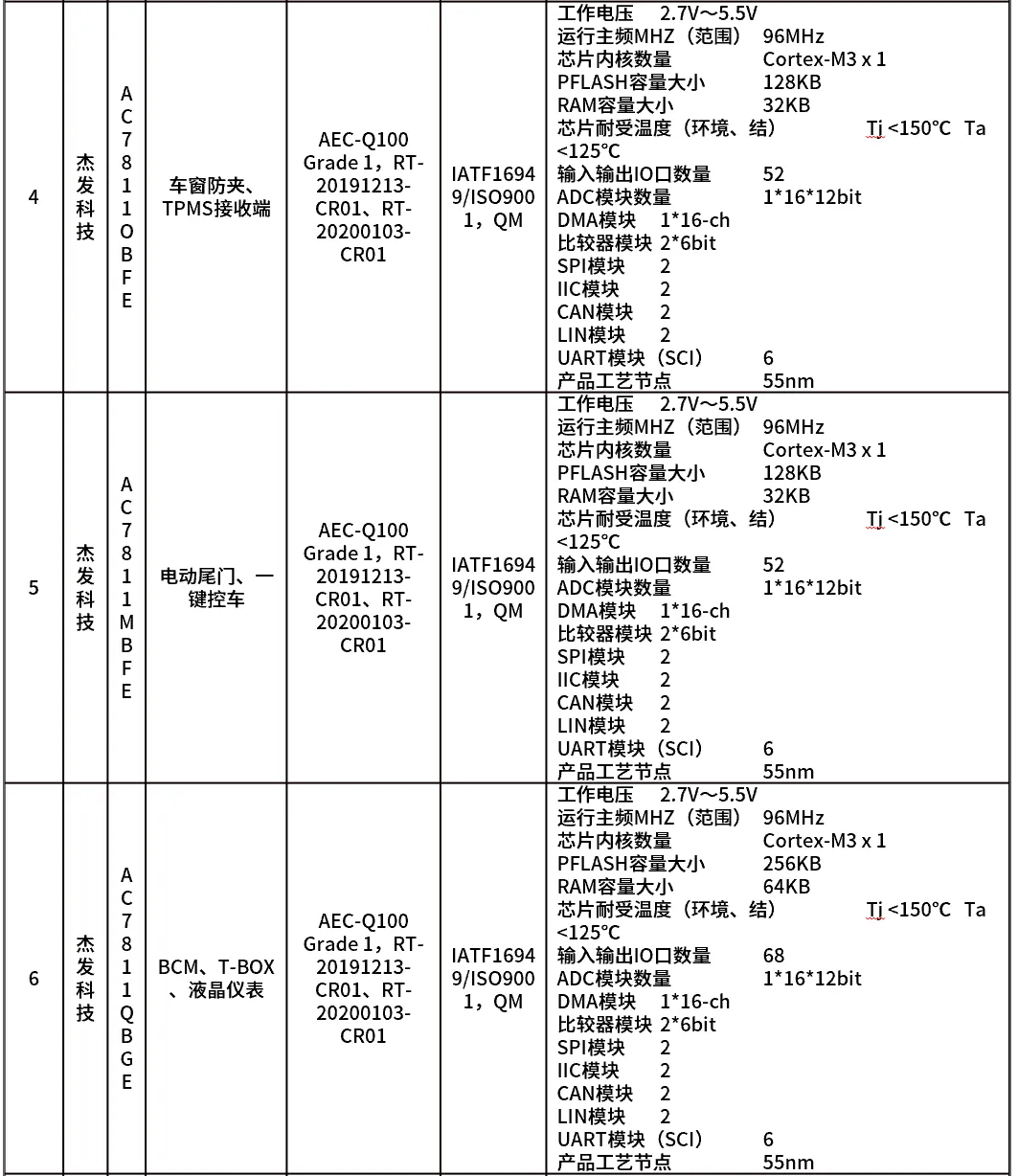
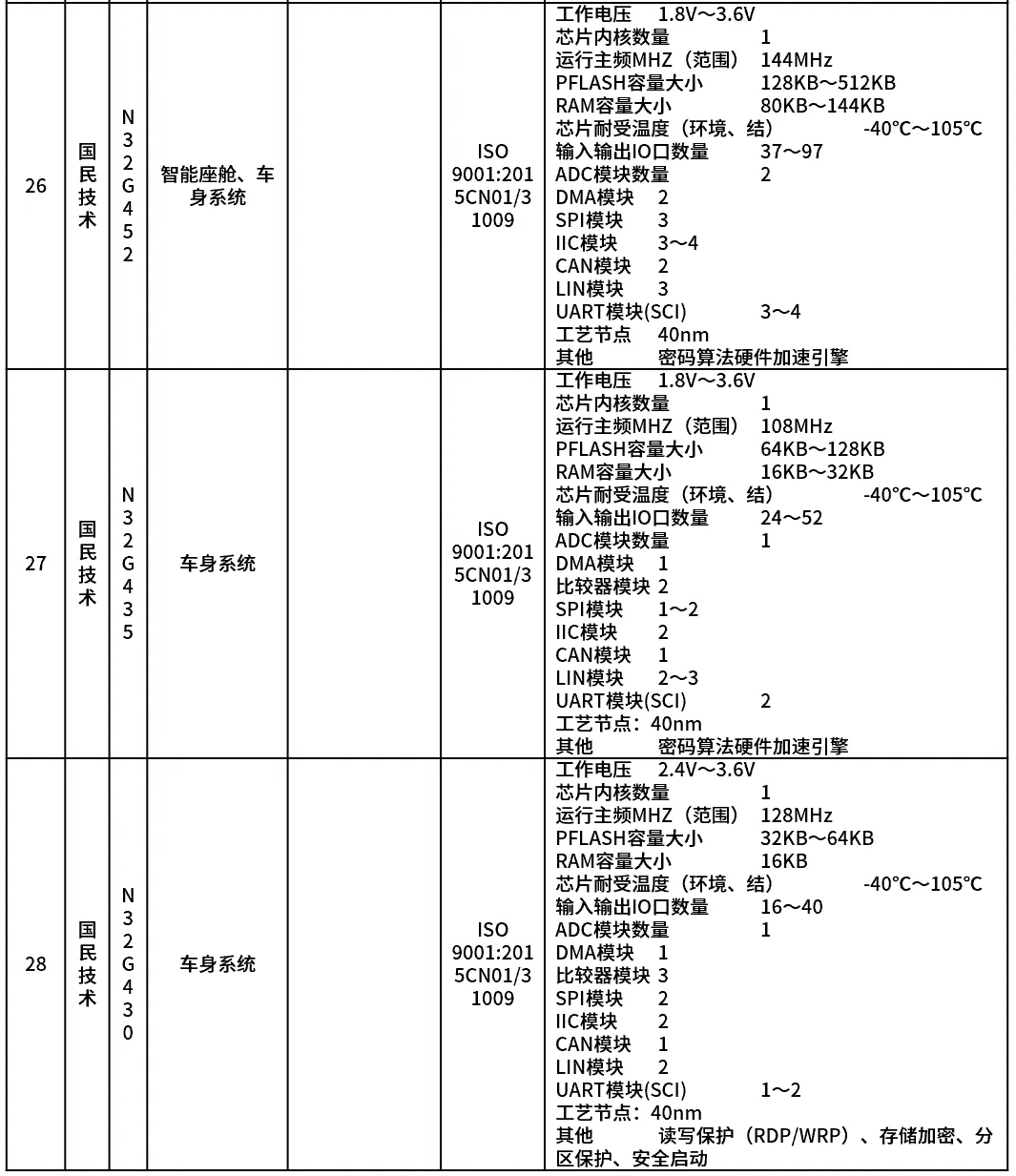
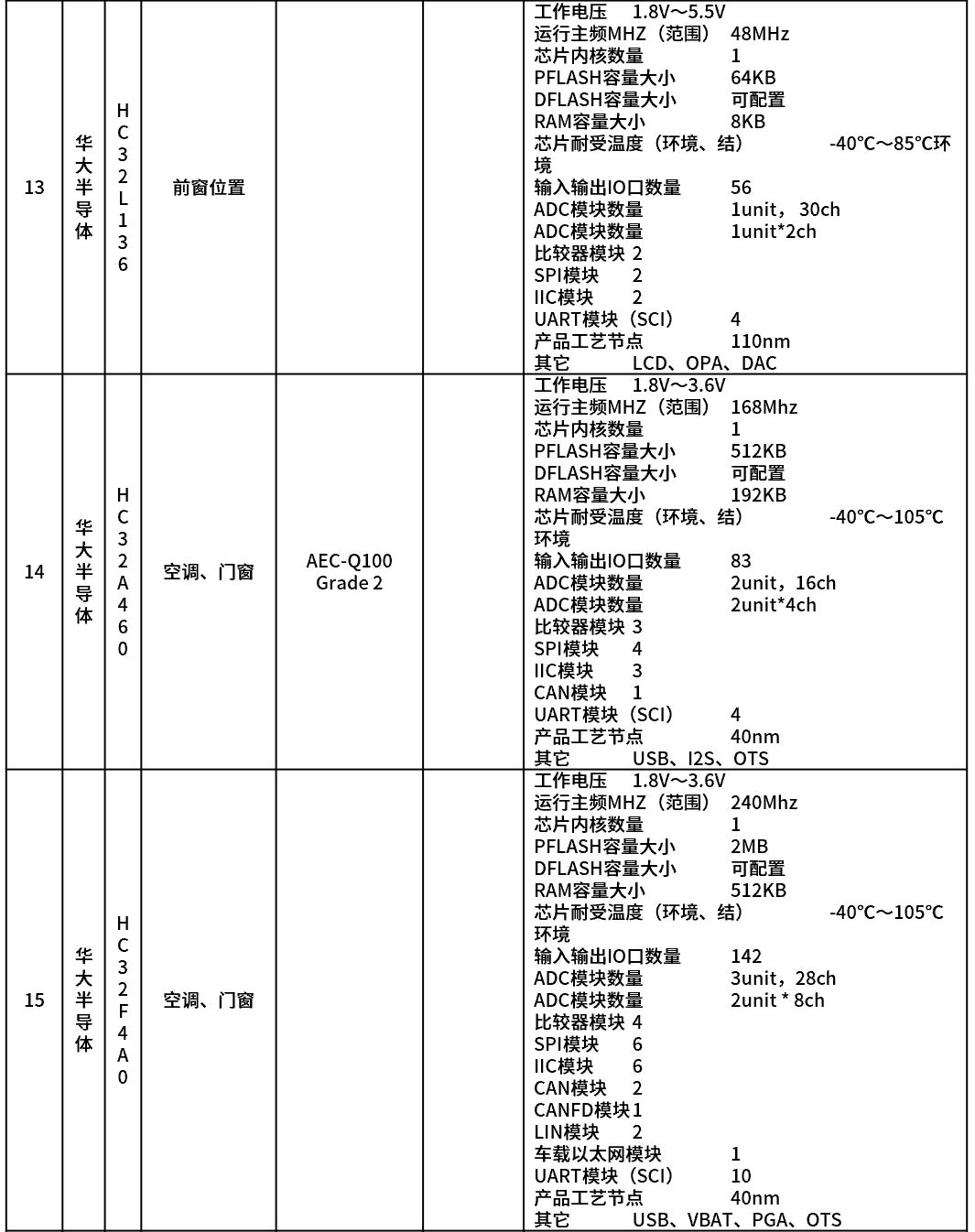
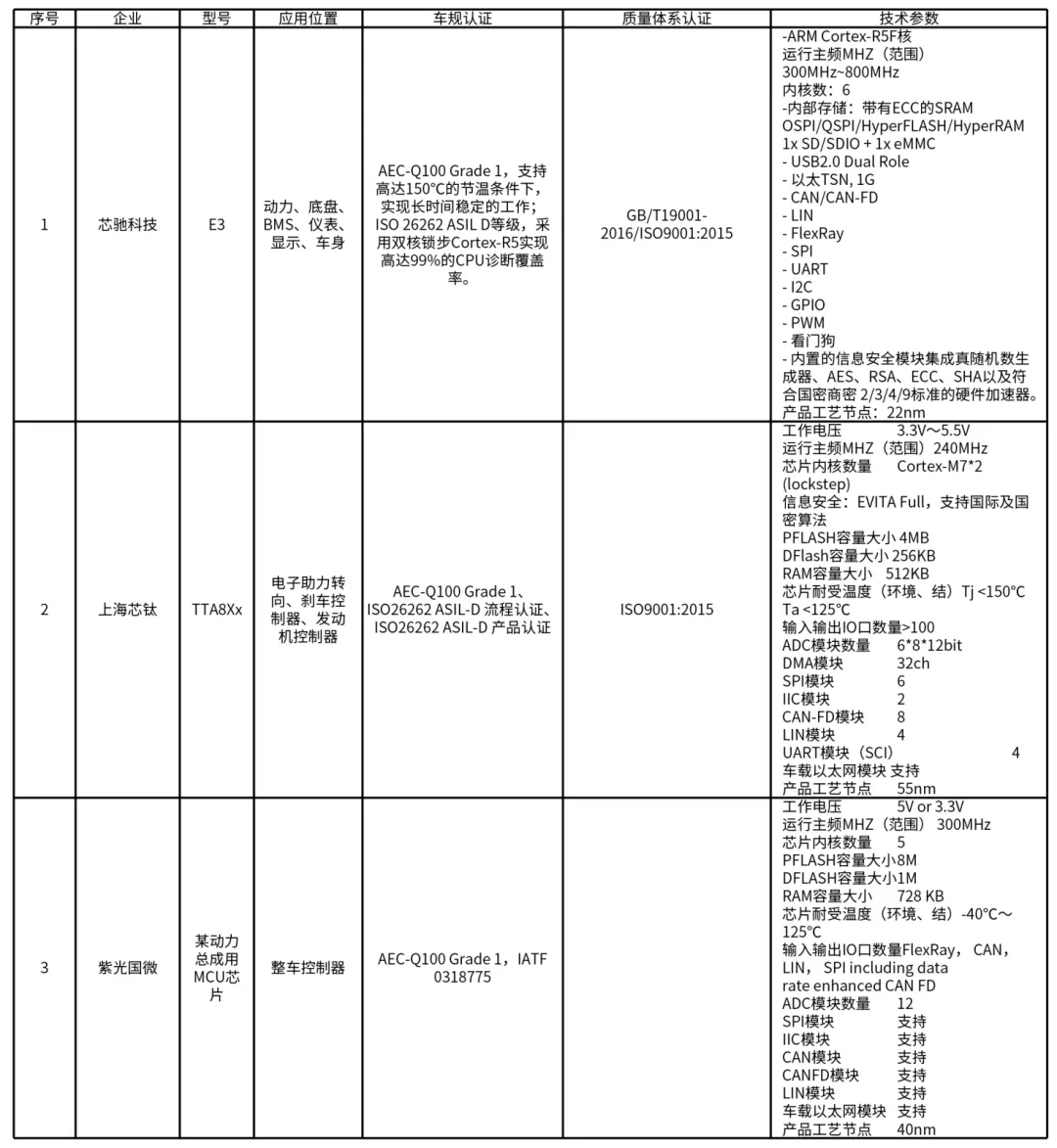
 Vehicle control chips mainly consist of vehicle MCUs, with leading domestic companies such as Unisoc, Huada Semiconductor, Shanghai Xintai, GigaDevice, Jiefa Technology, Xinchip Technology, Beijing Junzheng, Shenzhen Xihua, Shanghai Qipuwei, and Guomin Technology all having automotive-grade MCU product lines, competing with overseas giants, currently mainly based on ARM architecture, with some companies also developing RISC-V architecture.Currently, domestic vehicle control domain chips are mainly applied in the automotive front-mounted market, achieving applications in the body domain and infotainment domain, while in the chassis and power domains, they are still dominated by overseas giants such as STMicroelectronics, NXP, Texas Instruments, Microchip, and ST. Only a few domestic companies have achieved mass production applications. Currently, domestic chip manufacturer Xinchip released the high-performance control chip E3 series based on ARM Cortex-R5F in April 2022, with functional safety level reaching ASIL D, temperature grade supporting AEC-Q100 Grade 1, CPU main frequency up to 800MHz, and up to 6 CPU cores, making it the highest performance product among existing mass-produced automotive-grade MCUs, filling the gap in the domestic high-end, high-safety-grade automotive MCU market. The Xinchip E3, with its high performance and reliability, can be used in core vehicle control areas such as BMS, ADAS, VCU, steer-by-wire chassis, dashboards, HUD, and intelligent rearview mirrors. More than 100 customers have designed products using the E3, including GAC and Geely.Application Status of Domestic Controller Chip Products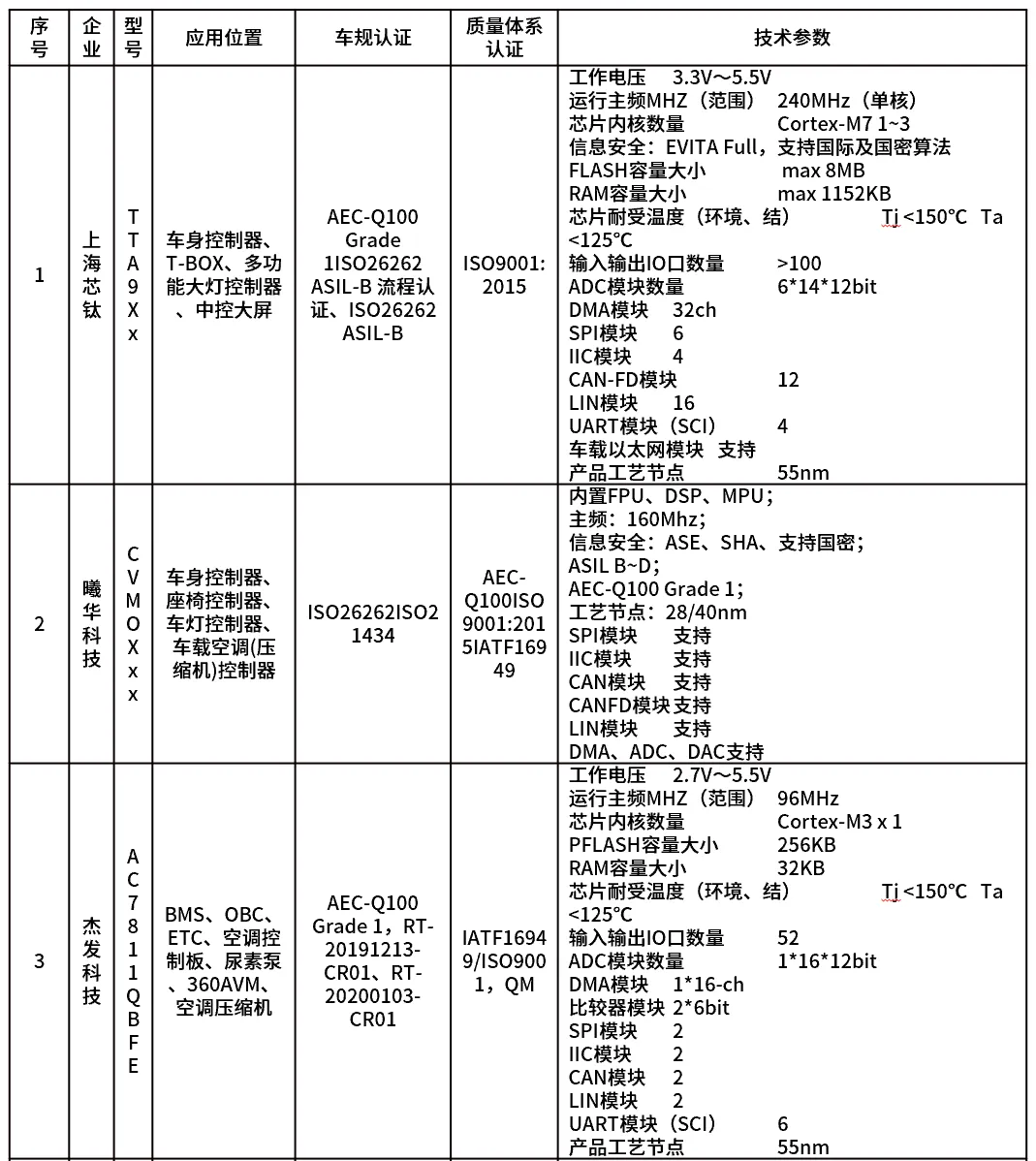
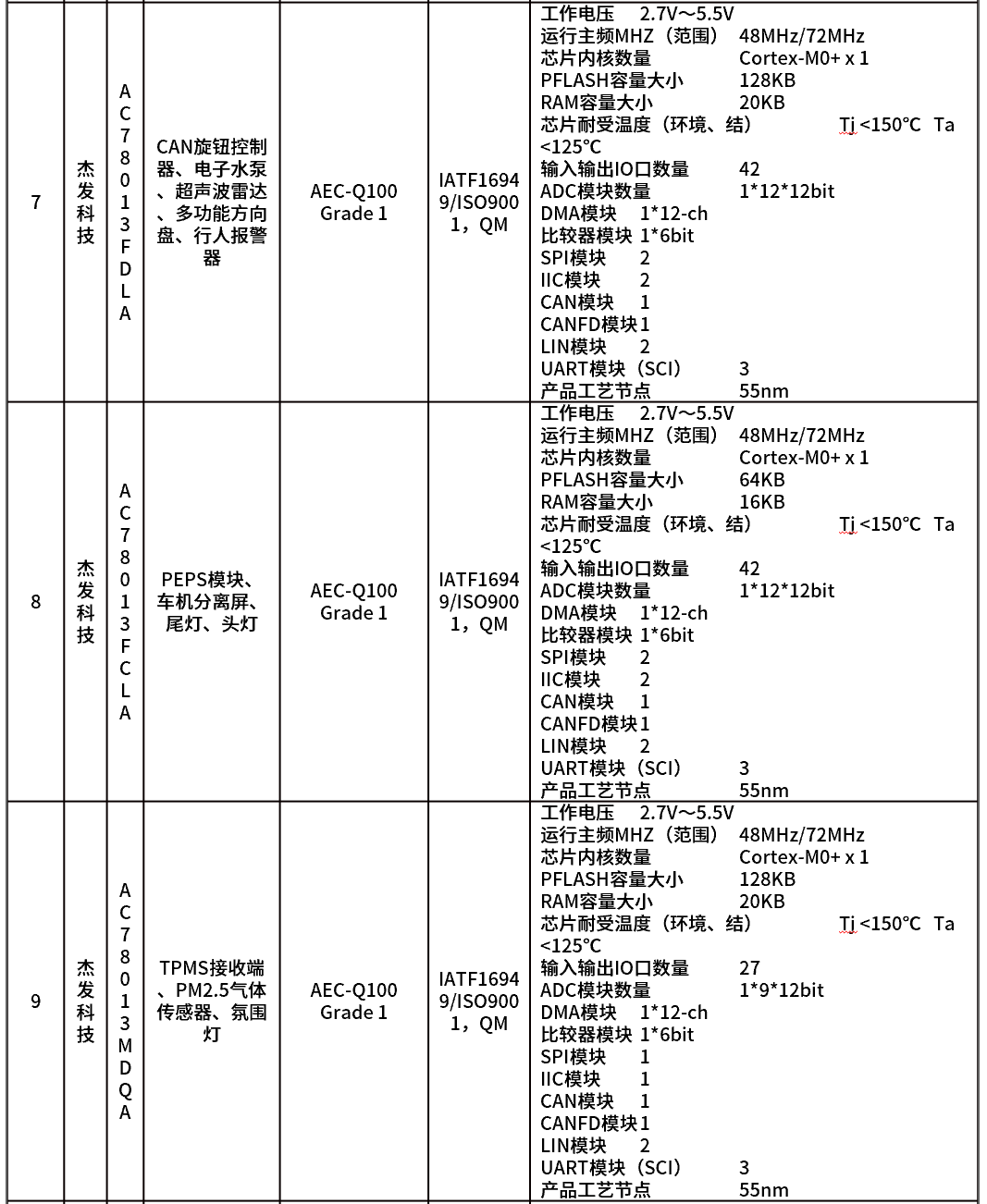
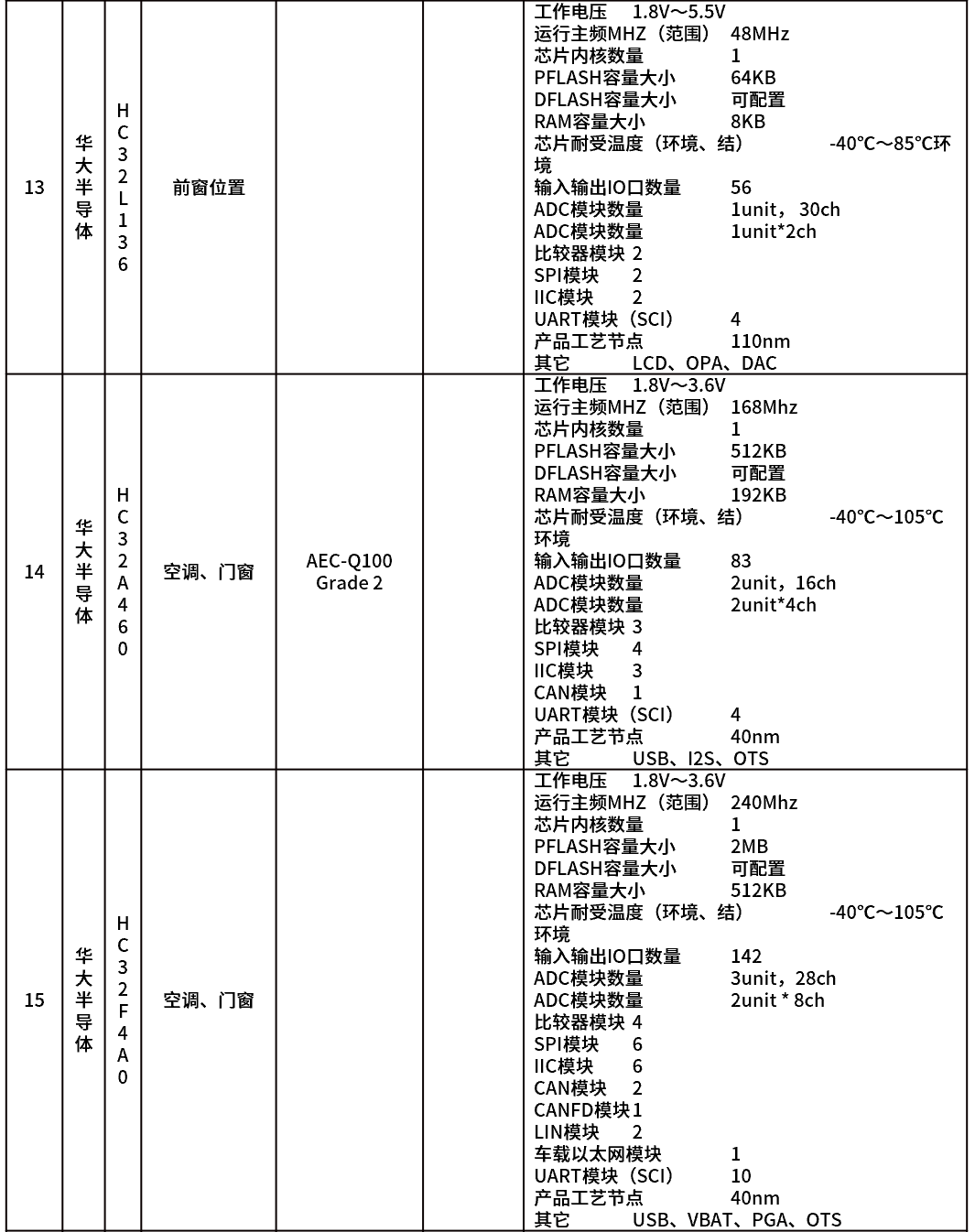
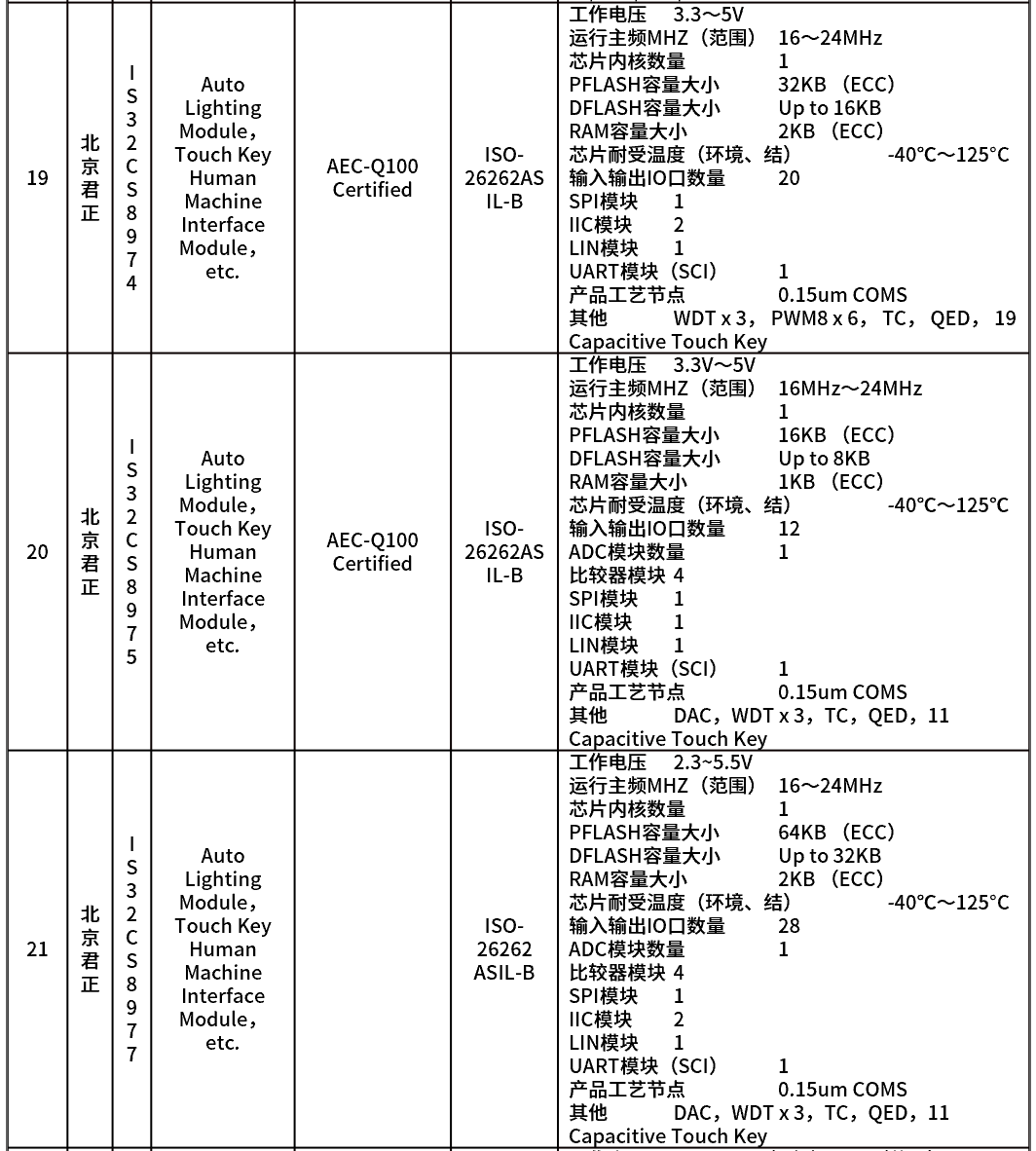
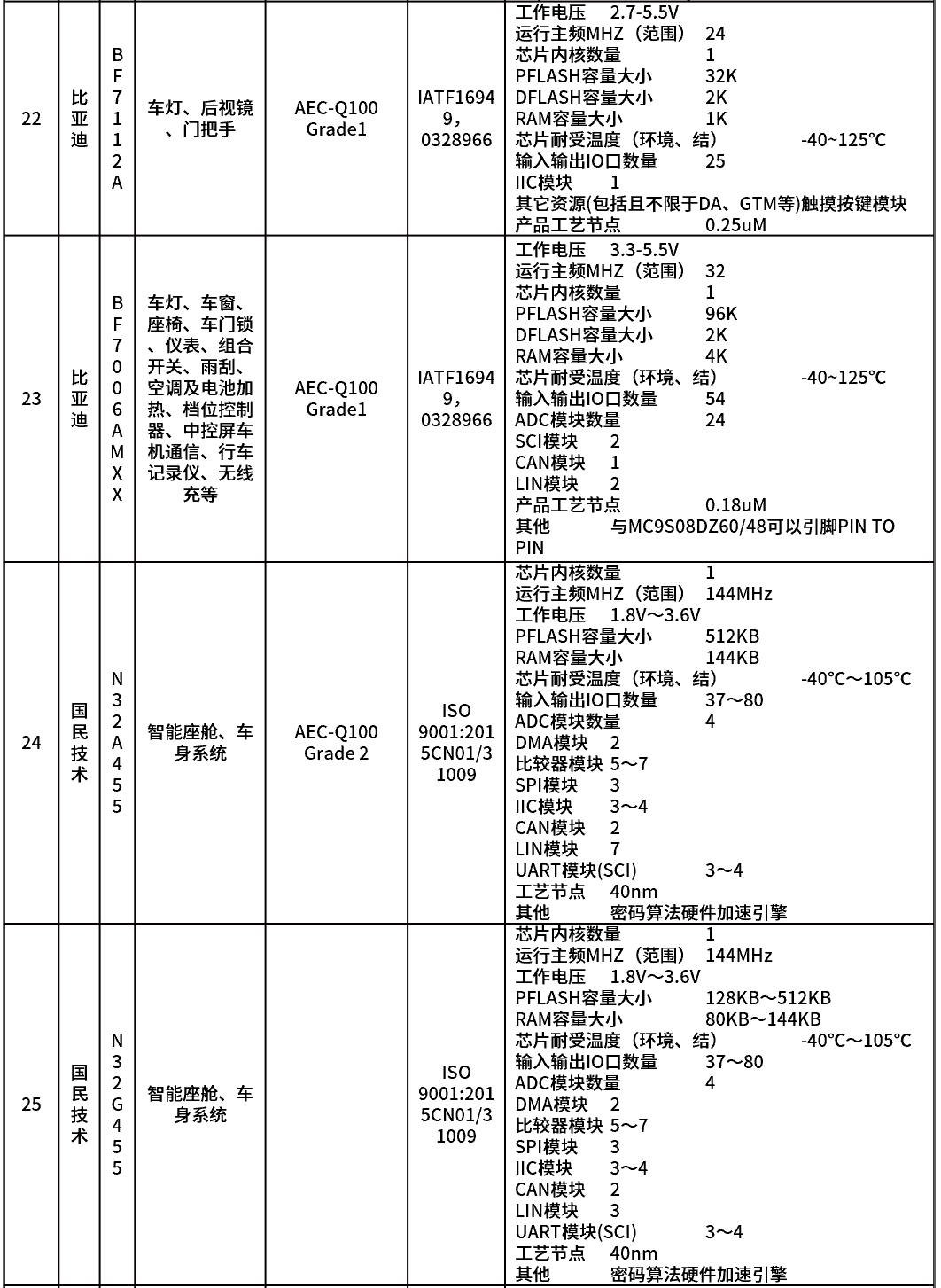
The article represents the author’s personal views and does not reflect the position of Ximai Technology. If there are issues regarding the content, copyright, etc., please contact Ximai Technology within 30 days of publication for deletion or negotiation of copyright usage..