Click the blue text
Follow us
Many customers feel confused about the quotes when doing PCBA processing samples or batch outsourcing: why is there such a large price difference for a seemingly small multilayer circuit board? Today, let’s discuss the 7 core factors that affect the cost of multilayer PCB assembly processing, so you can budget clearly and avoid detours! 1. PCB Layers and Size This is the most basic and direct cost factor. Simply put, the more layers and the larger the size, the higher the unit cost of the board. – The cost difference between 4-layer and 6-layer boards can double; – Special structures such as blind/buried vias and HDI designs further increase production difficulty and process costs. Reference: The IPC-2221 standard states that multilayer board structure design must consider wiring density and manufacturability; improper design can also affect yield. 2. Material and Thickness of the Board The price difference for different PCB materials is significant. The most commonly used is FR-4, but if the product requires high frequency, high temperature, or high reliability, materials like Rogers or ceramic boards must be used, which are in a different cost range. Additionally, thick copper (such as 2oz or more) and impedance-controlled boards will also increase the cost of the material itself and processing procedures. 3. Mounting Process Difficulty (SMT/DIP) The difficulty of the mounting process directly determines labor and equipment costs: – BGA/QFN/LGA and other bottom solder joint components require more precise mounting and X-ray inspection; – High-density, small-pitch component arrangements require high-precision placement machines (such as JUKI, Yamaha); – Products with DIP components also require wave soldering or manual soldering, increasing labor hours. In simple terms: the more complex the mounting, the more expensive it is to place! 4. Component Procurement Prices Many customers choose PCBA outsourcing because they hope our factory can assist with one-stop procurement. However, it is important to note that component prices fluctuate greatly: – The price difference for resistors of the same specifications can vary by several times based on brand; – International brands (such as TI, ST, Murata) are significantly more expensive than domestic alternatives; – Some ICs are also subject to supply and demand constraints, which can lead to skyrocketing prices due to shortages. It is recommended to communicate with us during the design phase about any recommended alternative materials to control BOM costs, which is key to optimizing PCBA costs. 5. Stencils, Fixtures, and Auxiliary Tools Both sampling and mass production require preparing stencils, and functional testing requires custom test fixtures: – Ordinary laser stencils cost from dozens to over a hundred yuan; – Precision step stencils and nano stencils are more expensive; – Test fixtures (such as ICT, FCT) are customized based on complexity, ranging from hundreds to thousands. These costs, while not the main expenses, are often overlooked by customers during the sampling phase, leading to budget discrepancies. 6. Testing and Quality Control Requirements The testing phase includes: – Appearance + AOI automatic optical inspection (basic process); – Online electrical testing ICT; – Functional testing FCT; – Burn-in testing. The more comprehensive the testing, the higher the yield, but the testing costs are naturally higher. For medical, military, and automotive projects, testing standards are often stricter, and costs rise accordingly. 7. Order Quantity and Delivery Requirements The order quantity directly determines the unit cost. The larger the quantity, the more it is diluted, which is easy to understand. However, it is important to note that if customers require delivery within 72 hours or even shorter, this involves expedited scheduling of equipment and overtime labor, which will also increase the price.
Therefore: the cost of regular sampling and expedited sampling can differ by 20%-50%.
AUT UMN
Jiangxi Yingteli Electronics Technology Co., Ltd.
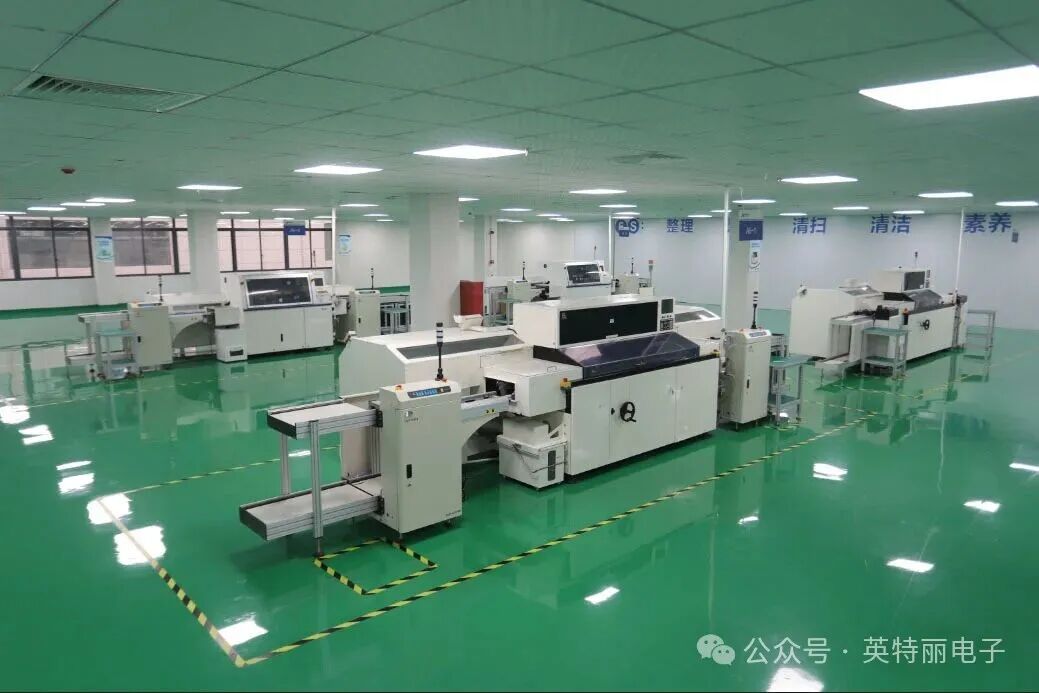
Jiangxi Yingteli Electronics Technology Co., Ltd. was established in May 2016, located in the talented and beautiful Jiangxi Province, Fuzhou City, Linchuan District. Jiangxi Yingteli Electronics Technology Co., Ltd. currently has a factory area of 30,000 square meters, 24 SMT production lines, 8 insertion lines, 4 wave soldering lines, 8 assembly lines, 4 packaging lines, with a total investment of 1 billion yuan, equipped with an advanced and complete digital management system, dedicated to building an Industry 4.0 smart factory.
Business inquiries: Mr. Li 17870016160
Company phone: 0794-7878288Company fax: 0794-7878288Email: [email protected]
Company website: www.intelli40.comAddress: Building 8-9, Jiangxi Fuzhou High-tech Industrial Park
AUT UMN
intelli40

Scan the QR code | Follow us
WeChat ID | intelli40