↑↑Click the blue text above to follow us
This article was published in “Command Control and Simulation” 2024, Issue 1
Abstract: The operational use of the Starlink system is becoming increasingly mature. Considering that the Starlink system is still under rapid construction, it is necessary to conduct a systematic analysis of its future operational use. To explore the future operational methods of the U.S. military’s Starlink system, this article is based on an analysis of the basic situation of Starlink, focusing on high-end warfare among major powers. It investigates the impact of Starlink on U.S. military operations from four levels of operational theory, demonstrating the system support role of Starlink. Finally, through simulation experiments of Starlink’s operational use, a quantitative analysis of the mid-term operational methods and capabilities of Starlink is conducted to lay the foundation for subsequent counter-strategy research.
The English name of Starlink is Starlink, which is a low Earth orbit satellite internet constellation launched by SpaceX in 2015, aimed at providing efficient global satellite communication services. During the Russia-Ukraine conflict, SpaceX provided 20,000 terminals to the Ukrainian army, effectively enhancing their communication capabilities under information denial conditions. In December 2022, the U.S. military signed the “Star Shield” plan with SpaceX, whereby SpaceX will provide sensing, communication, and navigation services to the U.S. military with 30,000 satellites.Currently, research related to Starlink mainly focuses on the technical field and can be summarized into seven aspects: constellation configuration, launch situation, inter-satellite links, constellation management, routing mechanisms, security strategies, and network operation. Research results related to operations can be divided into three categories: one focuses on the operational use of Starlink in the Russia-Ukraine conflict, highlighting urban warfare; another studies the potential impacts of Starlink on operations based on its characteristics; and the third uses simulation methods to analyze the ground coverage situation of Starlink, but operational research is limited to the technical level. Currently, the main issues in the research on the operational use of Starlink are incomplete recognition of basic situations, lack of subject service object substitution, and disorganized operational theory analysis.Therefore, this article summarizes the current state of research on the basic situation of Starlink and analyzes the possible situations of the U.S. military using Starlink in high-end warfare among major powers from four levels of operational theory, ultimately assessing Starlink’s mid-term capabilities in conjunction with simulation experiments.
1 Basic Situation of Starlink
The Starlink plan is set to complete the first constellation consisting of 12,000 satellites between 2019 and 2024, followed by the launch of 30,000 satellites to form the second constellation. It has since been adjusted to complete half of the first constellation by 2024 and the entire first constellation around 2026. This article focuses on the first constellation.
1.1 Constellation Configuration
The first constellation is deployed in two phases, with the first phase consisting of over 4,000 satellites in five shell layers, primarily in shell layer 1 and shell layer 2 at an altitude of about 540 km and an inclination of about 53°; the second phase consists of over 7,000 satellites in three shell layers at an altitude of about 340 km, with inclinations of 42°, 48°, and 53°. The main configuration of the first phase shell is 72 orbital planes, each with 22 satellites. The distribution of the second phase satellites is denser, with each orbital plane having 35 satellites under 72 orbital planes. The constellation configuration is shown in Figure 1.
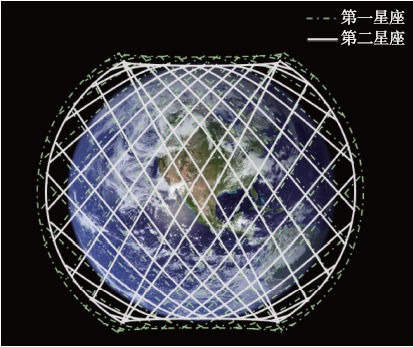
Figure 1 Schematic Diagram of Starlink Constellation Configuration
1.2 Launch Situation
The Starlink launches utilize the U.S. military’s launch bases, with the Falcon rocket, which can be reused more than 10 times, as the launch vehicle. The main launches are of version 1.5 Starlink satellites equipped with inter-satellite links, weighing 295 kg each, with a maximum of 56 satellites launched in a single mission, and an annual launch quantity of 2,000 to 3,000 satellites. Version 2.0 satellites are designed to have four times the communication capacity of version 1.5, but weigh 1,250 kg. Therefore, they need to be carried by Starship, and the first launch of Starship failed, delaying the plan. It is still unclear whether version 2.0 will replace version 1.5. Currently, the version 2.0 mini has already launched 2,248 satellites using the Falcon rocket, carrying about 20 satellites per launch.
1.3 Inter-Satellite Links
The inter-satellite links of Starlink include permanent links between satellites in the same orbit and different orbits, as well as numerous temporary cross-links, with the quantity related to communication distance as shown inTable 1.
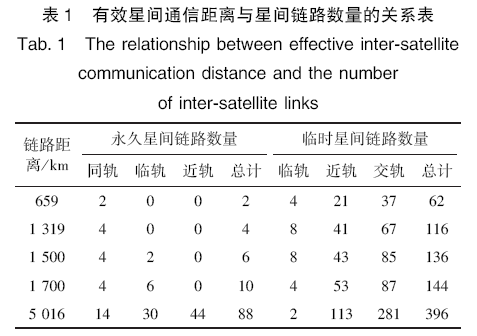
Researchers believe that the current capability of a single Starlink satellite to establish four inter-satellite communication links is far from sufficient to support large-scale inter-satellite communication, necessitating the use of numerous temporary inter-satellite links. FromTable 1, the reliable inter-satellite communication distance of Starlink should currently be between 1,000 km and 2,000 km.
Inter-satellite links also face issues with network topology updates; a long cycle can lead to a significant loss of available links, while a short cycle can lead to frequent switching, increasing management difficulty. The China Academy of Space Technology[8] has provided excellent topology update strategies using integer linear programming.
1.4 Control Strategies
Starlink essentially provides an access service, with 150 ground control stations worldwide. Satellite control includes measurement and control, operational control, predicting overhead time, and task allocation. Li Ninget al. proposed a domain control strategy that divides the constellation network topology into several domains, selecting a cluster head in each domain for initialization and dynamic maintenance, reducing the number of ground-participating satellite nodes to 14%.
In addition to the overall control strategy of the constellation, single satellite maneuver control strategies must also be considered. Yu Shunqinget al. plotted the altitude variation of Starlink based on publicly available operational information, discovering that Starlink’s control strategy differs from traditional centralized boundary control methods using chemical propulsion, instead employing frequent distributed control based on the characteristics of electric propulsion, which offers higher precision.
1.5 Routing Strategies
The routing strategy design for low Earth orbit satellite internet constellations includes classical path-solving algorithms, deep neural network methods, and reinforcement learning methods. Liu Yang et al. proposed an intelligent routing method based on dendritic neural networks. This method uses a dendritic neural network to perceive the global topology structure and further updates the global link weights, improving the efficiency of Dijkstra’s algorithm and achieving lower latency. The reinforcement learning method primarily uses the network topology as the state space and inter-satellite link selection as the action space, continuously selecting actions and updating states, providing cumulative rewards upon reaching target nodes, comparing different paths, and identifying the optimal path as the one with the maximum cumulative reward. The network performance improvement brought about by this routing strategy optimization is limited and will not change the order of magnitude of latency and data capacity.
1.6 Security Strategies
The security strategies of Starlink include two aspects: collision avoidance and interference avoidance. In simulation experiments, the minimum distance between two Starlink satellites can reach 4.9 km, which is less than the minimum safety distance of 10 km. Collision avoidance must consider both space debris and collisions between the two satellites. For debris observable from the ground, the predicted collision risk can be uploaded to the Starlink satellites, allowing them to autonomously avoid collisions.
Starlink’s interference avoidance technology mainly includes eight methods. High elevation angles mean fewer obstacles in the field of view; satellite diversity improves signal quality through replicated transmission and merging; high directionality, power control, high-frequency bands, and phased array antenna technology can avoid interference with signals from other satellites; adaptive modulation and coding can mitigate weather impacts; and inter-satellite links can bypass interfered topology nodes for signal transmission. For internal interference within Starlink, Zhang Zhao et al. proposed an interference avoidance method based on the angle between interfering and affected links, which can essentially eliminate noise between Starlink satellites.
1.7 Network Operation
Starlink currently has numerous ground control stations, providing satellite communication services to people in regions with underdeveloped ground mobile communications. Research on the economic benefit model of low Earth orbit satellite internet constellations indicates that considering data capacity and investment costs, Starlink can only maintain competitive communication in areas with low user density. However, the population is mainly concentrated in urban areas, and Starlink’s limited communication capacity is too small to compete with 5G or 6G. Therefore, its network services will primarily target governments and military, with a high possibility of independent network operation to enhance security.
Overall, the seven aspects mentioned above already have relatively mature schemes or technical means, and the launch of Starship and the entry of version 2.0 will further enhance the speed of network construction and capability growth. Starlink’s performance during the Russia-Ukraine conflict is just the tip of the iceberg, and in-depth research on the operational use of Starlink is extremely urgent.
2 Analysis Framework of Starlink’s Operational Use
From the recent operational concepts of the U.S. military, such as “penetrating air superiority,” “distributed lethality,” and “expeditionary advanced base,” all target regional denial environments with the aim of winning high-end warfare in littoral areas. Therefore, it is necessary to study how the U.S. military utilizes Starlink for regional intervention in these environments.
The U.S. military’s military theory includes three levels: operational concepts, operational concepts, and operational orders, where operational orders contain specific tactics, actions, and procedures, but the specific use of Starlink in these orders is not yet visible. Therefore, it is necessary to conduct research on the operational use of Starlink around the U.S. military’s objectives for regional intervention, within the specific actions included in its operational concepts.
In the near sea, the U.S. military envisions using numerous unmanned systems and small formations for “distributed lethality”; on near-sea islands, the U.S. military envisions using long-range firepower for “expeditionary advanced base” operations; and in the far sea, the U.S. military envisions using carrier-launched aircraft for “penetrating air superiority.”
Among these, “distributed lethality” includes operations such as drone swarm warfare, manned/unmanned cooperative anti-submarine warfare, manned ship strikes from outside defense zones, and unmanned vessels for autonomous anti-ship operations; “expeditionary advanced base” primarily involves precise intelligent long-range fire strikes; and “penetrating air superiority” primarily involves high-intensity multi-round penetration strikes on littoral targets and multi-round aerial combat by “loyal wingman” formations. Starlink must play different technical capabilities in various lethality phases to support the above actions, thus requiring an analysis of Starlink’s technical capability boundaries first.
In summary, analyzing Starlink’s operational use should consider five levels: technical capabilities, lethality phases, operational actions, operational styles, and operational objectives. Among them, the operational objectives and operational styles are already clear, while the lethality phases and operational actions will continuously change with the updates in Starlink’s technical capabilities. Therefore, examples will be provided based on the analysis of lethality chains of several actions. The overall framework is shown in Figure 2.
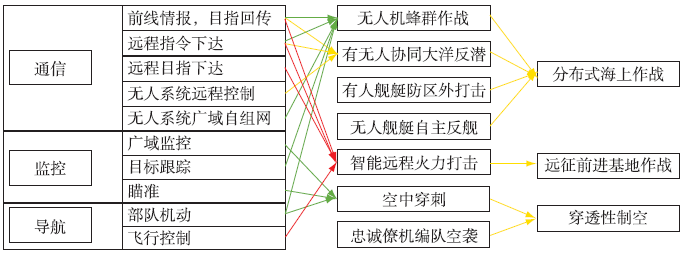
Figure 2 Analysis Framework of Starlink’s Operational Use
3 Analysis of Starlink’s Operational Capabilities
The U.S. military has proposed a seven-layer national defense space architecture, including a ground support layer, as well as space transport, combat management, tracking, monitoring, navigation, and deterrence layers. Starlink’s technical capabilities are primarily reflected in the transport layer, monitoring layer, and navigation layer.
3.1 High-Quality Signal Transmission
The downlink communication capacity of a single Starlink version 1.5 satellite is around 20 G. If all 15,000 satellites of the “Star Shield Plan” carry communication payloads, considering that version 2.0 has four times the communication capability of version 1.0, the total bandwidth of the constellation would be 1,200 T.
The U.S. military’s most advanced AEHF communication satellites, or “Advanced Extremely High Frequency,” have a single satellite bandwidth of 430 M, weigh 4 tons, and have an inter-satellite transmission rate of 60 M/s, with a total of six satellites launched. In comparison, Starlink’s single satellite has a larger bandwidth and lower weight, but its scale results in communication capabilities that are not on the same order of magnitude as AEHF.
Another low Earth orbit satellite internet constellation, “Iridium,” has satellites weighing 700 kg, a maximum downlink rate of 200 M, and a total of 66 satellites covering the globe. In contrast, Starlink’s single satellite bandwidth has increased by 100 times, and the number of satellites has increased by over 200 times, with specific parameter comparisons shown in Table 2.
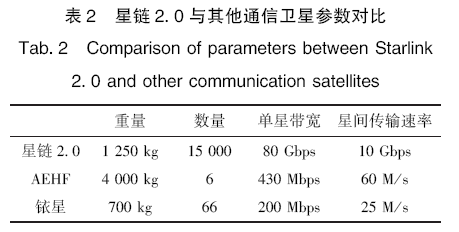
Additionally, Starlink’s low orbit, mature inter-satellite link construction planning, and routing strategies result in lower latency, with tested latency around 25 ms, far below that of synchronous orbit communication satellites. The wide-area distribution of low-latency, high-capacity military communication from Starlink can support frontline intelligence transmission, remote command issuance, remote target designation, remote control of unmanned systems, and wide-area self-organizing networks of unmanned systems.
3.2 Limited Target Monitoring
From the perspective of the lethality chain, detection, positioning, tracking, and targeting all fall under the category of monitoring. From the Starlink operational visualization website established by the North American Aerospace Defense Command, it can be observed that during the ascent phase, the distance between Starlink satellites is about 100 km. Such a high-density constellation is sufficient to form overlapping fields of view and long-term, continuous area monitoring, achieving detection, positioning, and tracking, but whether effective targeting can be provided during the targeting phase remains questionable.
Traditional large optical reconnaissance satellites in low Earth orbit, such as “Lockheed 12,” weigh 17 tons, while radar reconnaissance satellites like “Long Lacrosse” weigh 15 tons. Even considering advancements in satellite design technology such as integrated satellite designs and the lightweighting of reconnaissance equipment, a Starlink 2.0 satellite weighing 1,250 kg still cannot meet the demands for high-quality reconnaissance payloads. However, this does not completely negate its potential for effective targeting.
For instance, the “Pigeon Swarm” remote sensing constellation has satellites weighing only 5 kg, yet equipped with high-magnification telescopes capable of capturing situations from our military’s South China Sea exercises with an accuracy of 3 to 5 m. Even with limited onboard capabilities, considering multi-satellite intelligence synthesis, missile launch methods under low-precision targeting conditions, and missile search strategies under pure directional targeting conditions, Starlink still has the potential to provide effective targeting.
3.3 High-Precision Navigation and Positioning
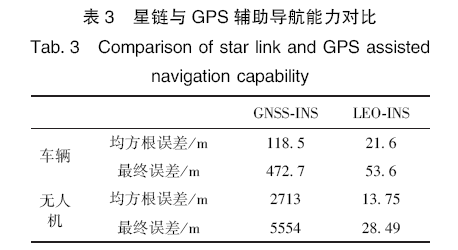
The research team from University College London studied Starlink’s auxiliary navigation capabilities for ground vehicles and drones under interference conditions. In a simulated environment, for moving vehicles or drones, cutting off their global navigation positioning and using inertial navigation to move toward a predetermined target for 300 seconds before ending the simulation and calculating the error, inertial navigation was categorized into Global Navigation Satellite System-assisted (GNSS-INS) and Starlink constellation-assisted (LEO-INS) types. The experimental results are shown in Table 3.
4 Analysis of Lethality Chain in Starlink’s Operational Use
4.1 Intelligent Long-Range Fire Strikes
In the land warfare domain, taking intelligent long-range fire strikes as an example. The U.S. Army uses low Earth orbit satellites and drones for detection, rapidly transmitting information back to tactical intelligence ground access points, inputting the information into “Prometheus” for rapid target analysis and coordinate calculations, obtaining reliable targeting before using artificial intelligence “Firestorm” for rapid munitions matching, forming multiple plans for commanders to make decisions. After orders are issued, remote precision firepower strikes are conducted. As shown in Figure 3.
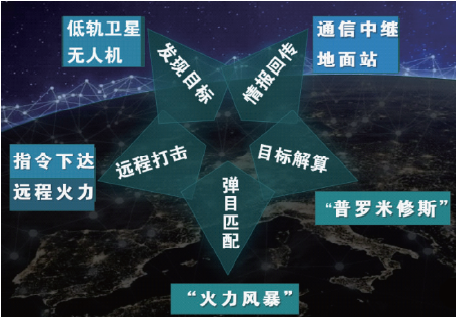
Figure 3 Intelligent Long-Range Fire Strike Action
4.2 Manned/Unmanned Cooperative Ocean Anti-Submarine Warfare
In the naval warfare domain, taking manned/unmanned cooperative ocean anti-submarine warfare as an example. Regularly collect marine environmental information and target characteristics using various platforms, and during wartime, utilize large unmanned underwater vehicles, pre-positioned underwater weapons, and agile anti-submarine systems for anti-submarine operations, coordinating with anti-submarine aircraft and destroyers when necessary.
As a successful wide-area information network, Starlink depicts a grand scenario of a “military Internet of Things”. The maturity of digital twin technology allows unmanned systems to perform comparably to manned platforms under stable information support conditions. Starlink can provide frontline intelligence, target designation returns, remote command issuance services, and remote target designations, making manned/unmanned cooperative ocean anti-submarine warfare exhibit stronger unmanned and “Internet of Things” characteristics, significantly enhancing the speed and efficiency of the lethality chain closure. As shown in Figure 4.
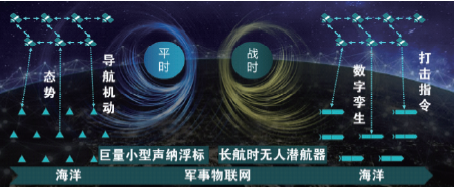
Figure 4 Manned-Unmanned Cooperative Ocean Anti-Submarine Warfare
4.3 Unmanned Swarm Warfare
In the air combat domain, taking unmanned swarm warfare as an example. In 2017, DARPA proposed a combat concept for distributed air operations for the Gremlins project, where satellites detect targets and transmit information back to intelligence centers via cloud networks. The intelligence center uploads the information to control nodes, which send target locations and attack instructions to C-130. The C-130 releases reconnaissance, attack, and jamming unmanned aerial vehicles outside the target defense zone, using swarm formations to detect and interfere with targets, with reconnaissance and attack drones conducting communication-guided strikes. With Starlink’s integration into frontline intelligence target designation returns, remote command issuance, wide-area self-organizing networks of unmanned systems, target tracking, and troop maneuvering, the swarm’s autonomous coordination capability is enhanced, enabling real-time interaction between the swarm and cloud intelligent systems, significantly improving the swarm’s intelligence and battlefield adaptability, resulting in a substantial upgrade in the flexibility of the lethality chain, as shown in Figure 5.
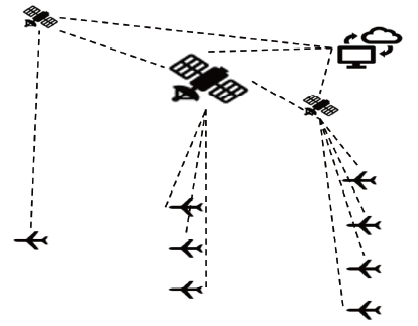
Figure 5 Starlink Supports Unmanned Swarm Wide-Area Self-Organizing Network
This section selects typical operational actions from the land, sea, and air combat domains in the analysis framework for illustrative purposes. Based on technical capability analysis, the impact of the Starlink system on the composition, flexibility, and efficiency of existing operational lethality chains is described. It should be recognized that Starlink has the potential to integrate into almost all operational actions, and it can be said that Starlink is a ubiquitous underlying connectivity sensing system for the U.S. military to realize core operational concepts such as “distributed lethality,” “expeditionary advanced base operations,” and “joint all-domain command and control.” In the future, it will undoubtedly be deeply embedded in the U.S. military’s operational system.
5 Simulation Analysis of Starlink’s Operational Use
Published simulation analyses of Starlink mostly use specialized satellite simulation tools like STK. Due to the limitations of STK’s operating speed, simulations typically focus on a shell layer of 1,584 satellites, thus limiting the scale.
Considering Matlab’s excellent computational capabilities, this article primarily relies on Matlab’s satellite toolbox to analyze the weapon flight control capabilities of Starlink’s first constellation of 12,000 satellites in intelligent long-range fire strike actions.
5.1 Starlink Constellation Simulation
The constellation simulation process is shown in Figure 6.
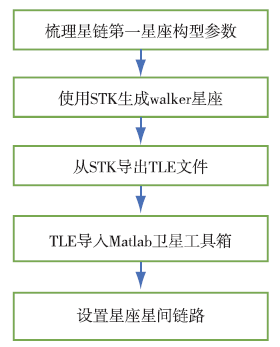
Figure 6 Mid-term Starlink Constellation Simulation Process
The TLE files for the 12,000 Starlink satellites come partly from the North American Aerospace Defense Command website, including over 4,000 existing satellites, while the remaining over 7,000 satellites’ TLEs are generated by STK according to the Starlink construction plan. The main program for Starlink constellation simulation is shown in Figure 7.
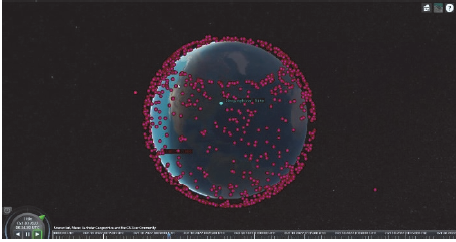
Figure 7 Visualization of Mid-term Starlink Constellation Simulation
The temporal variation of the constellation’s coverage of ground points is shown in Figure 8, where the horizontal axis represents time and the vertical axis represents the coverage situation of ground points. If a satellite can connect, the coverage is 1; otherwise, it is 0.
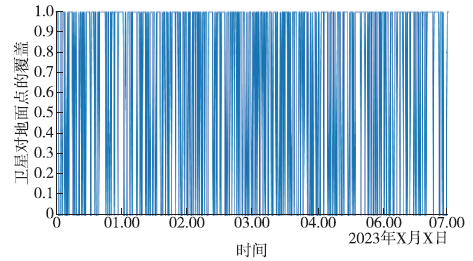
Figure 8 Temporal Variation of Constellation Coverage of Ground Points
5.2 Simulation Framework for Starlink’s Operational Use
In addition to the main program for constellation simulation, the combat simulation also includes missile simulation, target simulation, star-link chain principle simulation, and missile hit calculation subprograms. Since this article focuses primarily on the operational use of Starlink, lightweight program models have been established based on the main principles for missile simulation, target simulation, star-link chain principle simulation, and missile hit calculation.
Missile simulation mainly implements target updates based on star-link communication, target simulation focuses on the path design of point targets, star-link chain simulation mainly selects visible satellite connections for missiles, and missile hit calculation primarily considers the distance between missile landing points and targets. The program logic is shown in Figure 9.
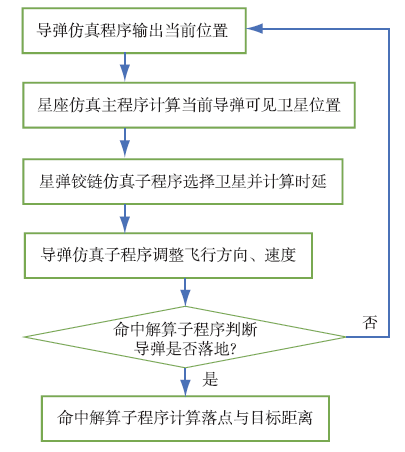
Figure 9 Simulation Framework for Starlink’s Operational Use
5.3 Simulation Experiment Design and Analysis
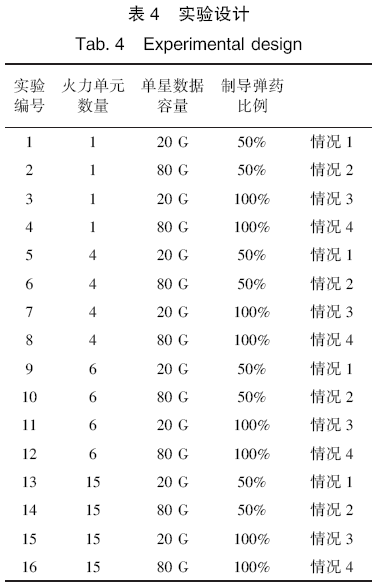
Based on the above simulation framework, with the number of fire units, single satellite data capacity, and guided munition ratio as independent variables, and the number of destroyed targets as the dependent variable. The experimental design is shown in Table 4, where a single satellite data capacity of 20 G corresponds to version 1.5 satellites, and 80 G corresponds to version 2.0. Considering the Starlink construction situation and the U.S. military’s missile star-link chain capabilities, four basic situations are formed by crossing two levels of single satellite data capacity and two levels of guided munition ratios, and experiments are conducted under four levels of fire unit numbers, with each fire unit having 16 missiles.
Statistics on the number of targets hit under 16 experimental conditions are shown in Figure 10.
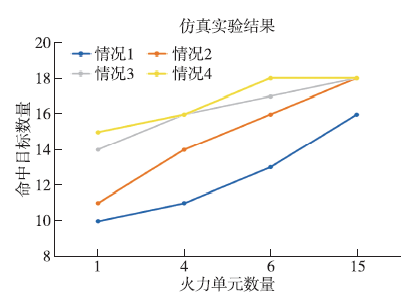
Figure 10 Simulation Experiment Results
Looking longitudinally, from situation 1 to situation 4, the number of targets hit increases, indicating that both satellite data capacity and guided munition ratio are positively correlated with strike capability. Comparing situations 2 and 3, under the condition of reduced guided munition ratios, increasing satellite data capacity leads to a higher number of targets hit, indicating that satellite data capacity is a more critical limiting factor. Horizontally, all four situations show that increasing the number of fire units leads to an increase in the number of targets hit, but under the assurance of high-bandwidth satellite communication networks, the improvement in strike capability is more rapid.
The above experimental conclusions indicate that Starlink, as a high-bandwidth low Earth orbit satellite communication constellation, can significantly ensure the effectiveness of large-scale remote precision weapon operations, supporting the U.S. military in implementing distributed operations.
6 Conclusion
This article first starts from the basic situation of the Starlink system in seven aspects, assessing its construction situation, arriving at preliminary conclusions that the Starlink system is technically mature and has great operational potential. Secondly, it provides a basic framework for analyzing Starlink’s operational use. Within this framework, it focuses on the theoretical analysis of Starlink’s operational use from the perspectives of technical capabilities supporting lethality phases and lethality phases supporting operational lethality chains. Finally, through simulation experiments of Starlink in intelligent long-range fire strike actions, it quantitatively analyzes the multiplier effect that the Starlink system has on the effectiveness of this lethality chain. The Starlink system is still rapidly expanding in scale, and research on its operational use is an important avenue for understanding the future operations of the U.S. military. Utilizing a more systematic theoretical analysis framework and a more comprehensive operational simulation platform will further enhance the credibility of Starlink’s operational use analysis.
END
| Author: Cheng Chengren, Ren Xianhai, Xu Shuaqi| Editor: Hu Qianjin| Reviewer: Zhang Peipei
Corporate Mission: Enhance national defense with electronic equipment, serve society with technology industry
Corporate Vision: Build a leading domestic and internationally advanced innovative high-tech group in the field of information systems and intelligent equipment
Core Values: People-oriented, Responsibility, Teamwork, Progress

ShareCollectLikeView