In today’s rapidly developing digital economy, enterprises’ IT architecture is undergoing a profound transformation. As the underlying foundation supporting emerging technologies such as cloud computing, big data, and artificial intelligence, virtualization cloud platforms have long surpassed the initial stage of “resource pooling” and have entered a new era that is smarter, more flexible, and more aligned with business needs.
If the past decade saw virtualization addressing issues of “low resource utilization” and “slow deployment efficiency”; then the next decade will focus on how to better serve business innovation, empower intelligent decision-making, and extend to every corner of the physical world.
Today, we focus on three core trends in the development of virtualization cloud platforms: integration, intelligence, and edge computing. This is not only the direction of technological evolution but also a strategic guide for enterprises to build the next generation of digital infrastructure.

Trend 1: Integration——Breaking Boundaries, Building a Unified Digital Foundation
In traditional IT environments, virtual machines, containers, microservices, and AI training tasks often run in isolated systems: VMs run on vSphere, containers run on K8s, and AI computing relies on GPU clusters… This “siloed” architecture leads to complex management, fragmented resources, and high operational costs.
Today’s virtualization platforms are moving towards deep integration:
·Integrated management of VMs and containers: Modern virtualization platforms (such as VMware with Tanzu, OpenStack + K8s) now support unified scheduling of virtual machines and containers under the same control plane, enabling free switching of application forms.
·Multi-architecture integration support: x86, ARM, GPU, FPGA, and other heterogeneous resources are unified into a resource pool to meet diverse load requirements from general computing to AI inference.
·Seamless integration of private cloud, public cloud, and hybrid cloud: Through a unified API and policy engine, enterprises can freely migrate workloads between on-premises data centers and public clouds, truly achieving “cloud without boundaries”.
Integration is not merely a simple addition of functions, but a reconstruction of architecture to create a flexible, open, and scalable unified digital foundation.
Trend 2: Intelligence——Making the Platform “Think” and Easing Operations
With the exponential growth of enterprise applications, the traditional “manual + script” operation model is becoming unsustainable. The future virtualization platform must possess the ability for “self-awareness, self-optimization, and self-repair”.
Intelligence is becoming the core competitiveness of virtualization cloud platforms:
·AI-driven resource scheduling: Based on historical load data and business forecasting models, the platform can automatically adjust CPU, memory, and storage allocation, avoiding resource contention or waste.
·Intelligent fault prediction and root cause analysis: By identifying abnormal patterns through machine learning, the system can issue warnings before crashes and quickly locate the root cause of problems, reducing MTTR (Mean Time to Repair).
·Automated policy execution: For example, “automatically downscaling non-critical services at night” and “pre-scaling web nodes during peak hours” can be completed without manual intervention.
In the future, intelligent operations will gradually move towards an unattended mode, becoming the core engine of enterprise digital transformation, allowing IT to shift from “passive response” to “proactive service”, freeing human resources to focus on higher-value innovation projects.
Trend 3: Edge Computing——Bringing Computing Power Closer to Data
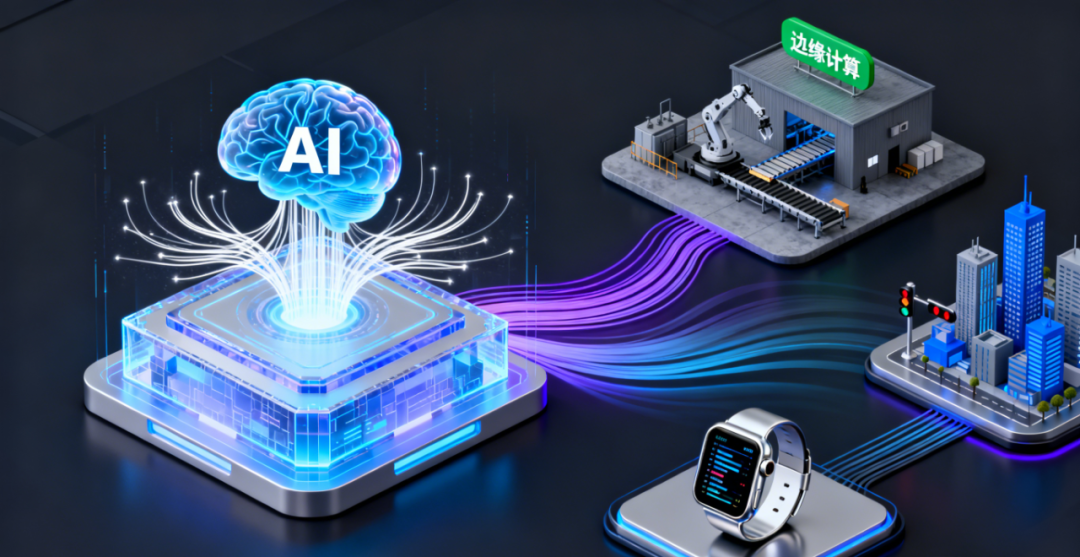
The explosion of 5G, IoT, and industrial internet has generated massive edge data. If all data must be sent back to the central cloud for processing, it not only incurs high latency but may also lead to bandwidth bottlenecks and security risks. Therefore, pushing computing power to the network edge has become an inevitable choice.
Virtualization capabilities are rapidly extending to the edge:
·Lightweight virtualization engines: Micro hypervisors designed specifically for edge scenarios can run efficiently on resource-constrained edge devices, balancing performance and isolation.
·Unified management of edge nodes: Headquarters can remotely monitor, configure, and upgrade edge virtual machines distributed across factories, stores, base stations, etc., achieving “centralized control, distributed execution”.
·Support for real-time business: In smart manufacturing, virtualization platforms can process PLC data in real-time at the workshop edge, achieving millisecond-level response and ensuring production stability.
Edge virtualization is becoming a key support for low-latency scenarios such as smart cities, connected vehicles, and telemedicine.
Virtualization is no longer a “backend technology”, but a “business accelerator”
As integration breaks barriers, intelligence enhances efficiency, and edge computing extends reach, virtualization cloud platforms are no longer just a “toolbox” for IT departments, but a strategic pivot for enterprise digital transformation. It is evolving into a core engine driving business innovation, deeply integrated into product services, operational processes, and customer experiences.
Embrace the Trends, Win at the Starting Point
In the face of the waves of integration, intelligence, and edge computing, enterprises should no longer ask “Should we adopt virtualization?” but should consider:
·Does our platform support unified management of VMs and containers?
·Does it have AI-driven automated operation capabilities?
·Can core capabilities be extended to production sites and store terminals?
Every technological trend shift is an opportunity to reshape competitiveness.Now is the time to lay the groundwork for the next generation of virtualization cloud platforms, setting the stage for business growth in the next five years.