1. Industry Status: Dual Drivers of Policy and Demand Highlight Standardization Attributes1. Policy dividends release market potentialThe Ministry of Industry and Information Technology and other three departments issued the “Light Industry Stabilization Growth Work Plan (2025-2026)” to promote embedded and suite appliances and implement the old-for-new policy. Driven by these policies, the retail sales of embedded steam ovens reached 4.75 billion yuan from January to September 2025, a year-on-year increase of 9.4%, with offline market growth at 11.5%, significantly higher than the average level of the kitchen appliance industry.2. Significant increase in the matching rate of decorated housesEmbedded steam ovens have become standard in the kitchens of decorated houses, with a national matching rate exceeding 45% by 2025, and high-end properties in the Yangtze River Delta and Pearl River Delta regions reaching a matching rate of 72%. According to Aowei Cloud Network data, the overall growth of kitchen appliance categories in the first quarter of 2025 was 3.9%, with embedded steam ovens becoming the preferred category for kitchen renovations due to their space optimization advantages.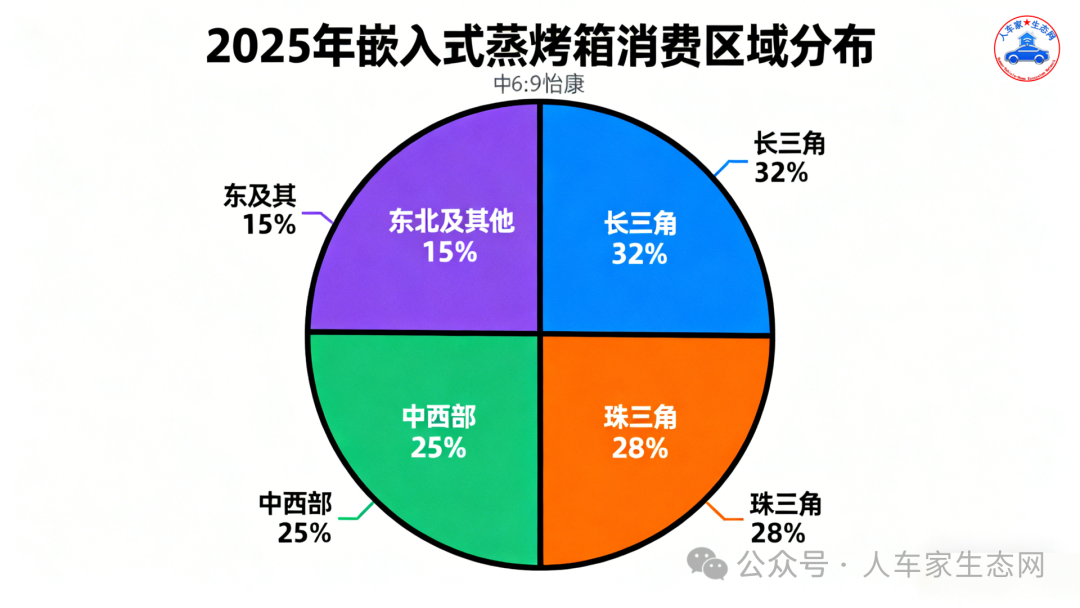 3. Consumer demand shifts towards quality upgradesThe penetration rate per hundred households increased from less than 3% in 2023 to 5% in 2025, with young families accounting for over 60%. The online market retail sales reached 1.45 billion yuan, a year-on-year increase of 4.8%, while the offline high-end market performed even better, with sales in the price segment above 5000 yuan accounting for 23% in the Yangtze River Delta region. The demand for healthy cooking has driven the hot sales of steam oven integrated models, with dual-channel retail sales shares increasing by 9% and 11.7% year-on-year, respectively.
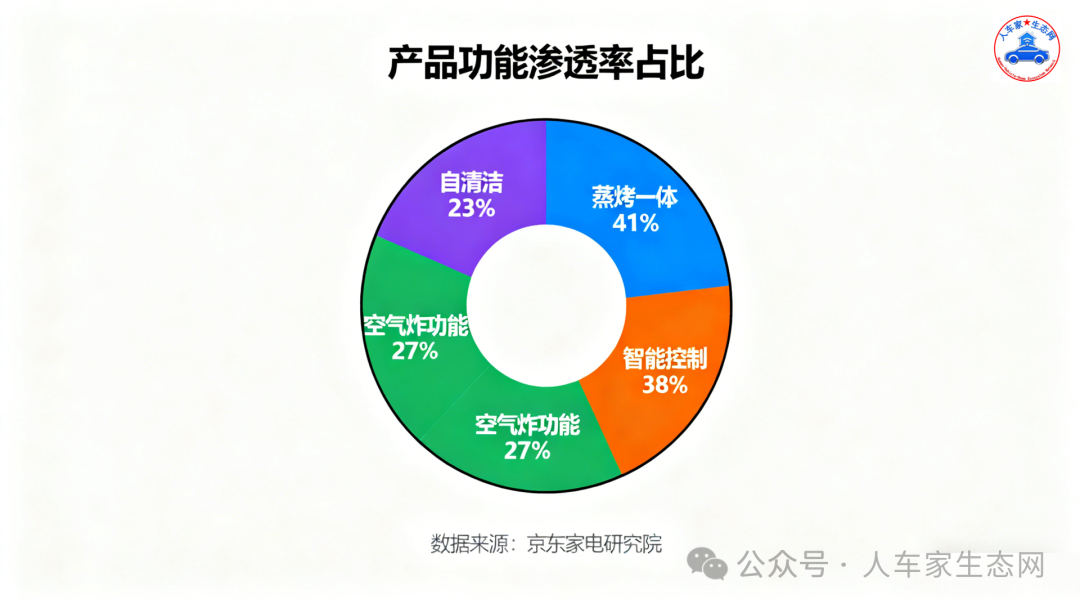
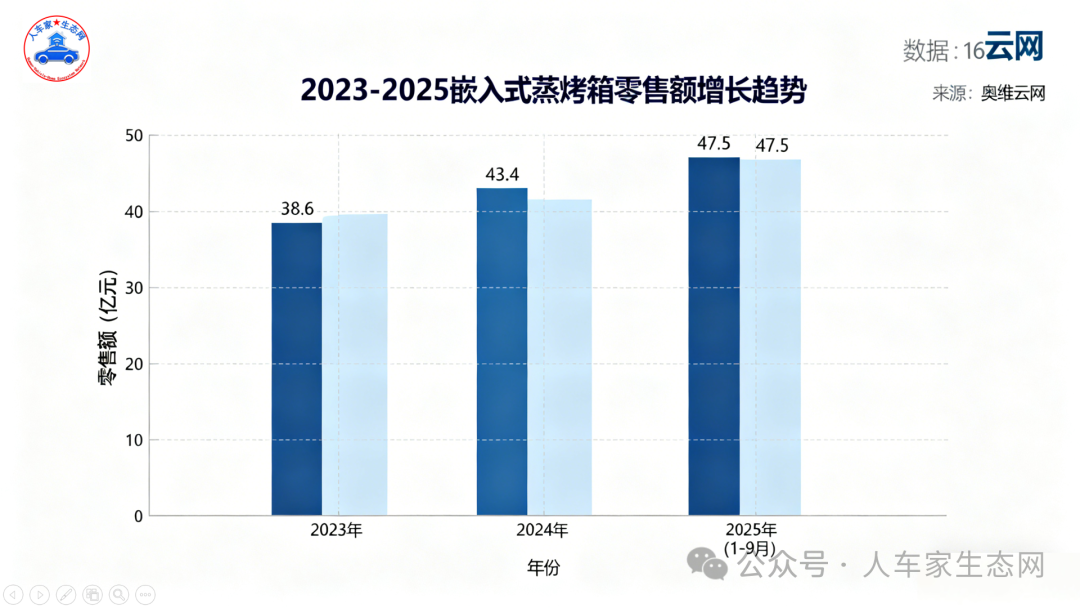 4. Products upgrade towards intelligent integrationThree-in-one steam ovens have become mainstream, accounting for over 41%, with the penetration rate of smart models rapidly increasing, as 38% of newly launched models are equipped with IoT functions, supporting APP remote control and voice interaction. The proportion of first-level energy efficiency products reached 52%, and the penetration rate of self-cleaning and air frying functions among flagship models of leading brands reached 76%.
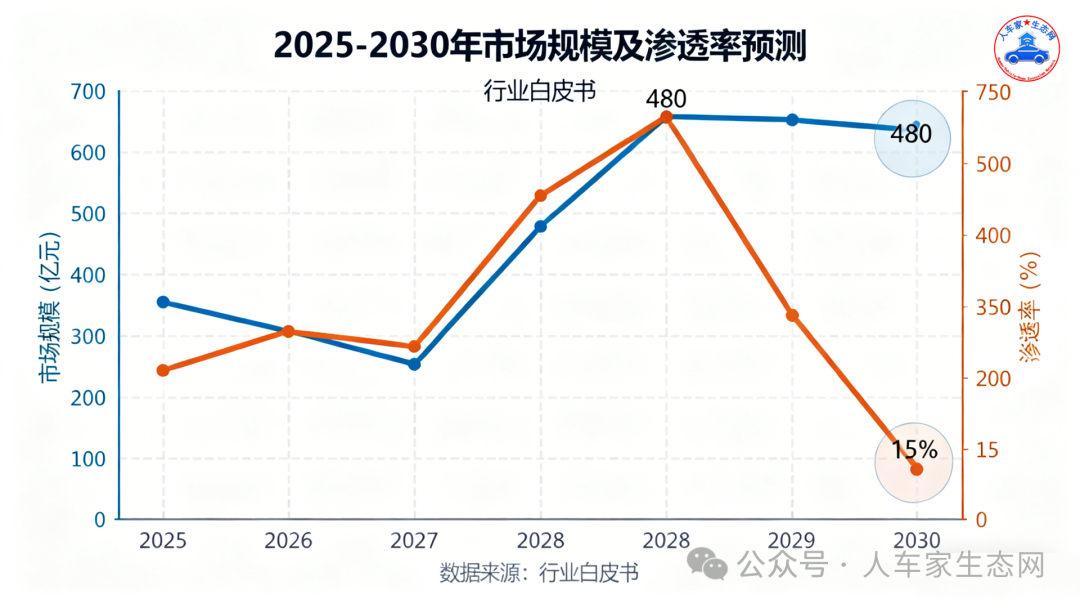
 2. Future Trends: Doubling Penetration Rate and Continuous Market Expansion1. Dual explosion of penetration rate and market scaleThe current penetration rate remains low (only 5%), far below the level of developed countries. It is expected that by 2030, the penetration rate per hundred households will reach 15%, and the market scale will exceed 48 billion yuan, with a compound annual growth rate of 6.8%-8.5% from 2025 to 2030. The sinking market has become a new growth pole, with annual growth rates in third- and fourth-tier cities and rural areas potentially reaching 9%.
 2. Technological iteration drives functional upgradesWith the deep integration of AI and IoT, by 2026, smart temperature control and voice interaction models are expected to account for over 40%. Driven by low-carbon policies, the penetration rate of first-level energy efficiency products is expected to exceed 60% by 2027, with new technologies such as graphene coatings and smart recipe interactions accelerating their popularity. The customized market is rising, with the scale of customized models expected to exceed 3.5 billion yuan by 2028.3. Market structure concentrates towards leading brandsBrand competition focuses on high-end and scenario-based offerings, with the market share of the top ten brands expected to increase from 48% in 2025 to over 55% by 2030. The potential of the export market is being released, with export volume expected to grow by 11.3% year-on-year in 2024, with Southeast Asia and Central and Eastern Europe accounting for over 40%, and the export value of domestic brands expected to reach 30%.We welcome you to engage in in-depth discussions on this topic at [email protected]