To be fair, current humanoid robots all look quite awkward, but the Fourier GR-3 is already quite good. However, from a future perspective, Xiao Min Ge still concludes: the rift between technology and aesthetics, along with the phenomenon of “technology first” in weak industrial design, urgently needs reflection.
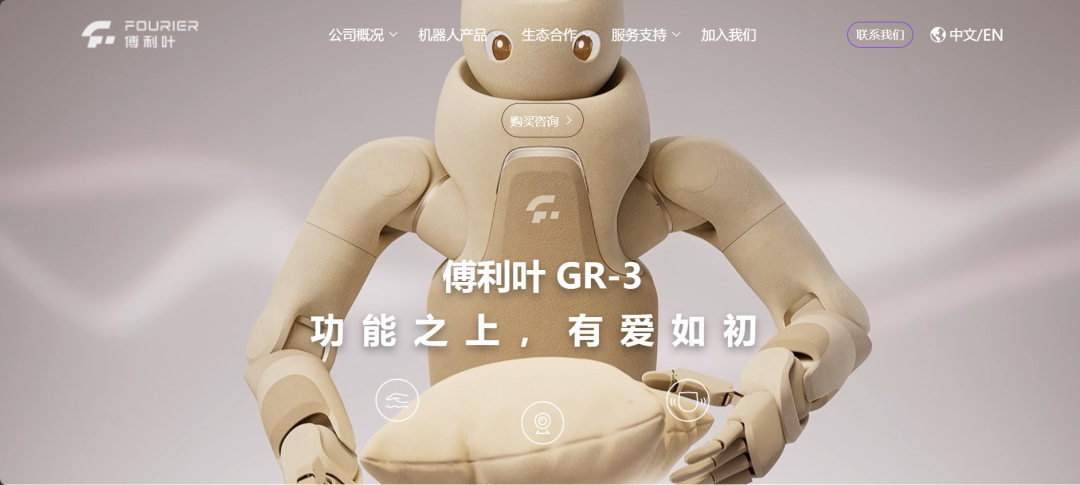
There is always a feeling that it wants to pick up a pillow and suffocate me…
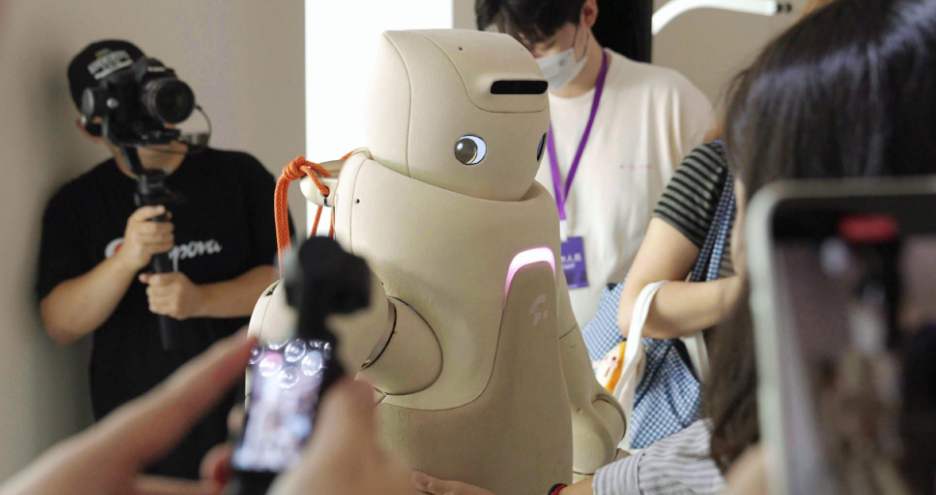
On August 6, 2025, Fourier officially released its third-generation full-size humanoid robot GR-3, positioned as a “Care-bot“—a social and assistive robot focused on interactive companionship with “touchable” features.
As a leading company in the field of rehabilitation robots in China, Fourier’s newly launched GR-3 demonstrates significant progress in technology: 55 degrees of freedom, a full-sensory interaction system, dual battery hot-swappable architecture, 3 hours of battery life, modular design, and a dual-path response mechanism of “fast thinking” and “slow thinking” all showcase its deep accumulation in algorithms, motion control, perception, and hardware integration.
However, when we set aside technical parameters and functional demonstrations to examine the GR-3 in real human-robot interaction scenarios, an unavoidable question arises: does this robot truly achieve “warm technological companionship” on visual and emotional levels?
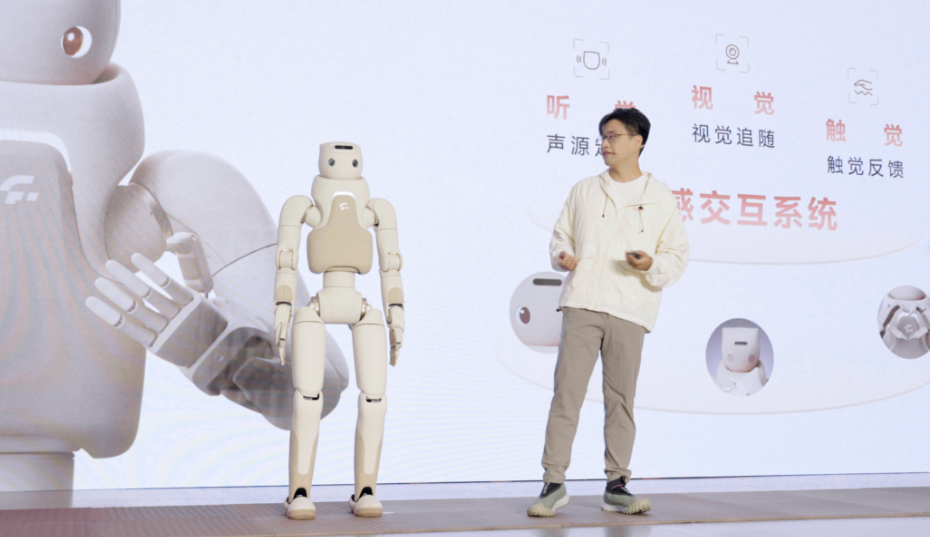
The answer is complex.
From a technical implementation perspective, GR-3 is undoubtedly a highly mature engineering product; however, from the perspective of industrial design and user experience, it presents a profound sense of “tear”—a rupture between technical rationality and emotional aesthetics.
This rupture is concentrated in the “abstraction” of its appearance design. Here, “abstraction” is not a simple subjective aesthetic judgment, but a dissonance between function and form, technology and emotion, rationality and sensibility, reflecting that industrial design has not truly been “human-centered”.
The aesthetic dilemma inspired by “Baymax”:
Affability ≠ Cartoonish
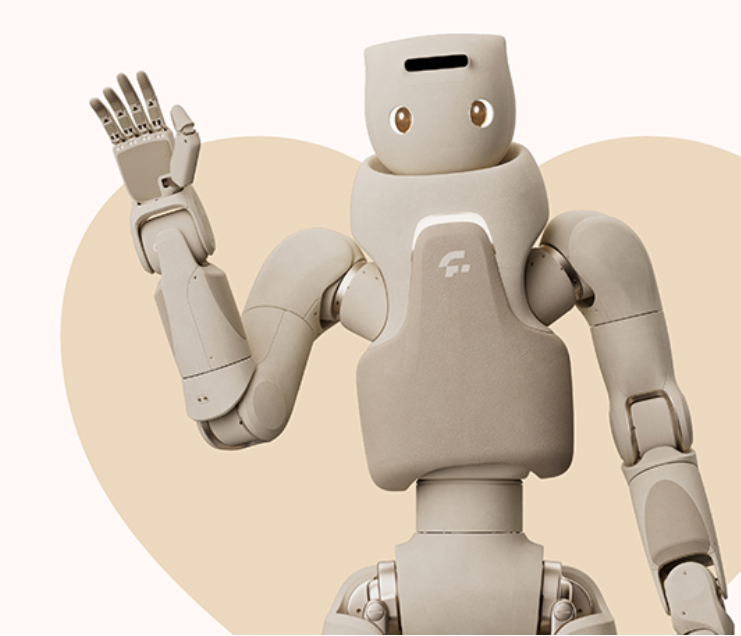
Fourier has clearly stated on multiple occasions that the design inspiration for GR-3 comes from “Baymax” in the movie “Big Hero 6″. This choice is not without merit—”Baymax” is globally recognized as a “gentle robot” whose rounded, soft, and non-aggressive appearance indeed aligns with the positioning of a “Care-bot“.
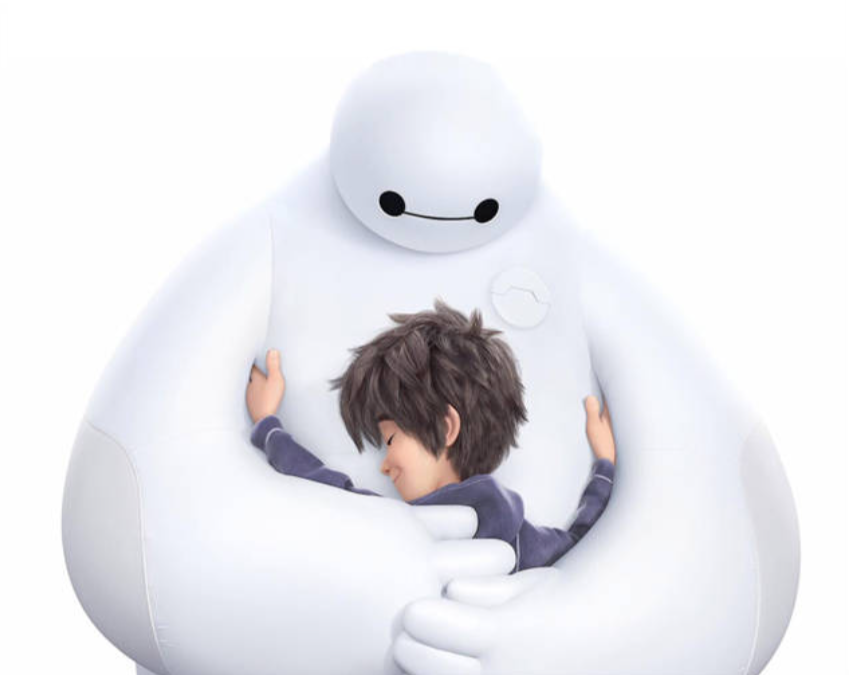
However, Xiao Min Ge believes that GR-3 draws from “Baymax” more superficially, rather than internalizing the deeper design philosophy.
The success of “Baymax” lies not only in its appearance but also in the unity of its movements, sounds, and interaction methods. Its slow, gentle movements, combined with a simple electronic voice, construct a complete and credible “caregiver” persona. In contrast, GR-3 attempts to create a sense of affability through elements like Morandi warm tones, GFOAM soft padding, and lively brown eyes, but its 165cm height, 71kg weight, and 55 degrees of freedom complex mechanical structure make its overall form closer to a “soft-shelled industrial robot” rather than a natural “living being”.
This “abstraction” is essentially a confusion of design language. Fourier attempts to wrap the technical core of an industrial robot in the warm exterior of a home companion robot, but there is a lack of effective transition and integration between the two. The result is that GR-3 is neither as straightforward and efficient as pure industrial equipment nor as natural and friendly as an ideal home partner. This sense of “tear” is precisely the dilemma that the humanoid robot industry currently faces in industrial design.
The “secondary status” of industrial design:
A myth in the industry that needs to be broken
The aforementioned issues reflect a deeper industrial reality: in the field of robotics, especially humanoid robots, industrial design has long been viewed as a subsidiary of technology rather than a strategic core capability.
Engineer-led R&D teams often simplify design to “aesthetic enhancement” or “user interface optimization”, neglecting the fundamental role of industrial design in defining product vision, shaping user relationships, and building brand value.
Taking GR-3 as an example, its design keywords of “affability, safety, warmth” were proposed by the product design team through brainstorming. However, how do these “virtual” concepts translate into concrete design decisions? The materials mention that the team sought inspiration from film works and integrated “industrial design with interaction design”. This seems like progress, but the depth of this integration still appears insufficient.
True integration should involve industrial designers, interaction designers, user experience researchers, and technical experts jointly defining the personality traits, behavior patterns, and emotional expression systems of the “robot partner” from the project’s inception, guiding technical selection and system architecture.
To truly achieve “warm technological companionship”, Fourier and the entire industry need to fundamentally reposition industrial design. This is not merely about adding a “chief aesthetic officer” or “user experience leader”, but about a systemic transformation: industrial design should become the starting point for product definition.
Excellent industrial design sometimes requires “subtraction”—focusing on the most core companionship scenarios, simplifying interactions, allowing users to establish a more pure and profound emotional bond with the robot.
Xiao Min Ge also hopes that more robot companies can break down departmental barriers and establish an equal dialogue platform between designers and engineers. Although there is currently “deep communication among algorithm, hardware, and product definition teams”, this communication is still dominated by technical logic.
The future design process should ensure that designers can participate in technical route discussions from the project’s early stages, using “experience language” to influence “technical language”.
The release of GR-3 is an important step for the Chinese robotics industry towards “emotionalization” and “socialization”. Its technological achievements are commendable, and its positioning as a “Care-bot” is also highly forward-looking. However, the “abstraction” and “tear” exposed in its industrial design precisely reveal the deep-seated contradictions in the current industrial development: we possess strong technical capabilities but lack the emotional wisdom and design philosophy to match.
Technology should not be cold, and design should not be superficial. True “warm technology” requires the highest level of integration and symbiosis between technology and design.
Only in this way can the dream of robots entering homes not remain at the level of technical parameters but truly warm people’s hearts.
Xiao Min Ge sincerely wishes the Chinese robotics industry to become stronger!