

“I obtained the maternal and infant caregiver certificate and found a job right at my doorstep; life is looking up!” Ms. Li, who lives in the Wanxiang Xintian East District of Wangshe Ren Street, expressed her joy about the community’s “Sunshine Sister” housekeeping training program. As a mother of two, she had previously worried about employment, but now, with the help of community embedded services, she has successfully secured a job and started a new life.
Ms. Li’s story is a warm reflection of the “embedded services” promoted by Wangshe Ren Street. This year, the street has explored a community operation model of “public welfare + low-cost + market” as a breakthrough project for grassroots party building, enhancing community services from “existing” to “excellent,” and uplifting residents’ “happiness at their doorstep.”
Space Reconstruction:
The “Metamorphosis Upgrade” of Idle Community Spaces

In the Xinlicheng Community, over sixty-year-old Mr. Wang has become a regular at the “Health Station.” “My shoulder problem is too troublesome to go to the hospital; here, I can get a massage covered by health insurance, which is very convenient!” he said with satisfaction. In addition to low-cost professional services, this station, transformed from an old dance studio, also offers free health check-ups and health lectures once a month. What surprised Mr. Wang the most was the recent “Traditional Chinese Medicine Night Market.” “Experts checked pulses on-site, offered free acupuncture and cupping experiences, and we could drink health tea! We learned while strolling around, just like a market, and solved our health issues.” Mr. Wang said that this friendly and convenient service made them feel warm and secure.
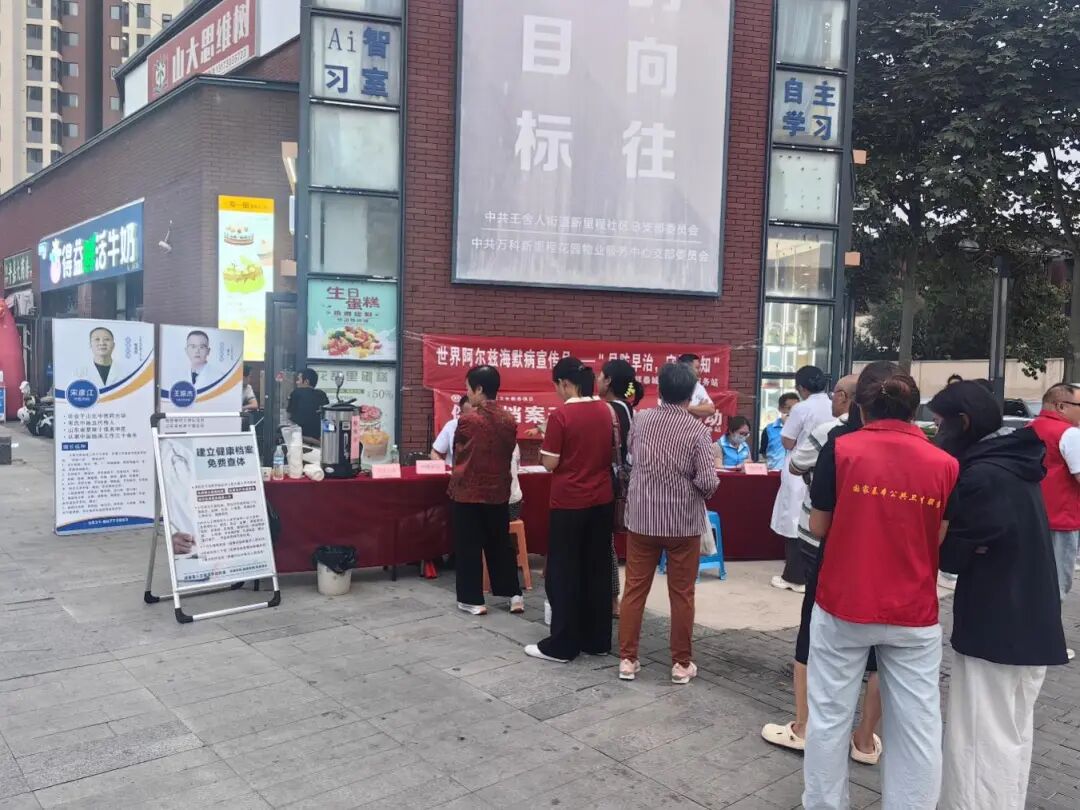
The Xinlicheng Community’s “Health Station” hosted a “Traditional Chinese Medicine Night Market” event
Similar “space magic” is continuously unfolding in various communities. In the Hengda City West District community at night, the community office space transformed into “Hengxi Night School” to accommodate courses that were not fulfilled due to a ping pong training institution’s abrupt closure.
“We must get an explanation!” “What about the children’s classes?” After paying tuition, the classes had barely started when the institution locked its doors. As over 120 families found themselves in a rights protection dilemma, the community innovatively proposed an embedded service solution—creating the “Hengxi Night School” and bringing in a professional sports institution to continue teaching.
Now, entering the community activity room, one can see children practicing diligently under the guidance of professional coaches, while old friends compete in newly organized leagues, and the sports benefits at their doorstep have earned praise from residents.
“This not only resolved the rights protection dispute but also brought higher quality services to community residents,” the community leader said with a smile. From crisis to opportunity, embedded services have written a story of transforming disputes into win-win community governance.
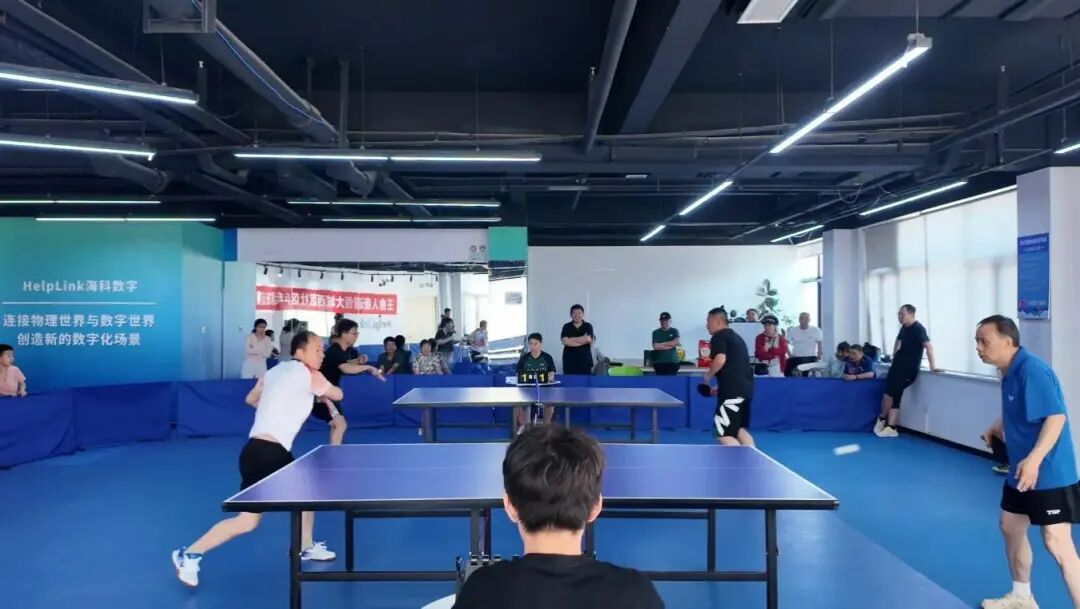
The Hengda City West District community hosted a “Ping Pong Showcasing Harmony Among Neighbors” ping pong neighborhood competition
“Through the embedded service path of ‘community providing space, institutions providing services, and residents enjoying benefits,’ we have turned idle community spaces into ‘hot commodities’.” A relevant official from the street said. So far, through embedded space reconstruction, communities have collectively renovated over 1,600 square meters of community facilities, and previously idle spaces are now bursting with new vitality.

Service Embedding:
Residents’ Needs Meet with “Precise Responses”

“The most valuable aspect of the community maker space is not just providing a venue, but its embedded services have given us direction—previously, we only thought about how to do business well, but now we realize that embedding services into the lives of community residents naturally brings both commercial and social value.” The person in charge of the “Fresh to Home” project in Hengda City Community expressed the sentiments of many service providers. His project integrates high-quality agricultural product resources from Tangwang Vegetable Base, Shandong Seed Industry Group, and products from the first secretary assisting farmers, establishing Licheng District’s first community co-prosperity supermarket, offering services such as “online ordering + community pickup + home delivery.” Additionally, the project collaborates with the Business School of Shandong Jianzhu University to jointly hold campus fairs, broadening the sales channels for agricultural products while providing a practical platform for students. The volunteer service team formed by the school also regularly participates in community agricultural product promotion and delivery to elderly residents living alone, injecting new momentum into community governance.
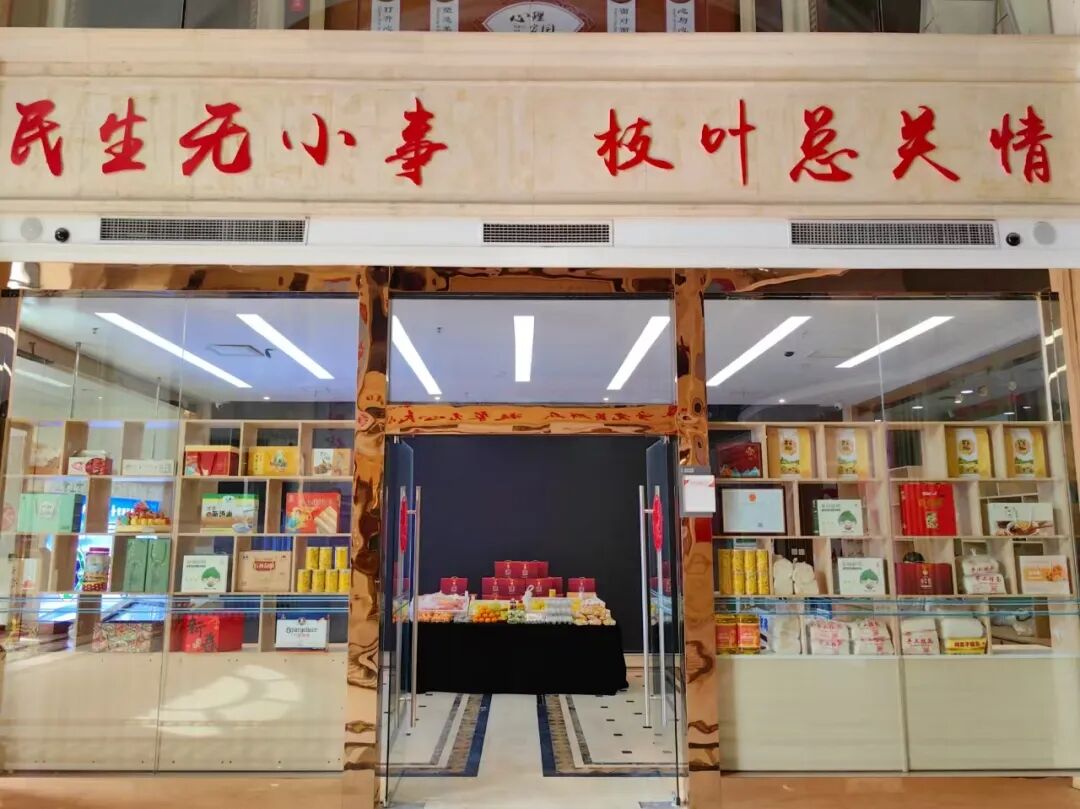
The “Fresh to Home” project in Hengda City Community has created a community co-prosperity supermarket
In the Wanxiang Xintian East District community, the “Sunshine Sister” housekeeping training program has precisely captured the employment needs of eligible women in the area. The project widely collects residents’ “micro-needs” through both online and offline methods, conducting practical skills training in maternal and infant care and elderly care. So far, the project has conducted two training sessions, with 36 participants completing the training, including 14 obtaining maternal and infant caregiver certificates and 11 obtaining elderly caregiver certificates. The project directly assists in connecting employment positions, helping 9 individuals achieve new employment, effectively bridging the “last mile” of residents’ employment.
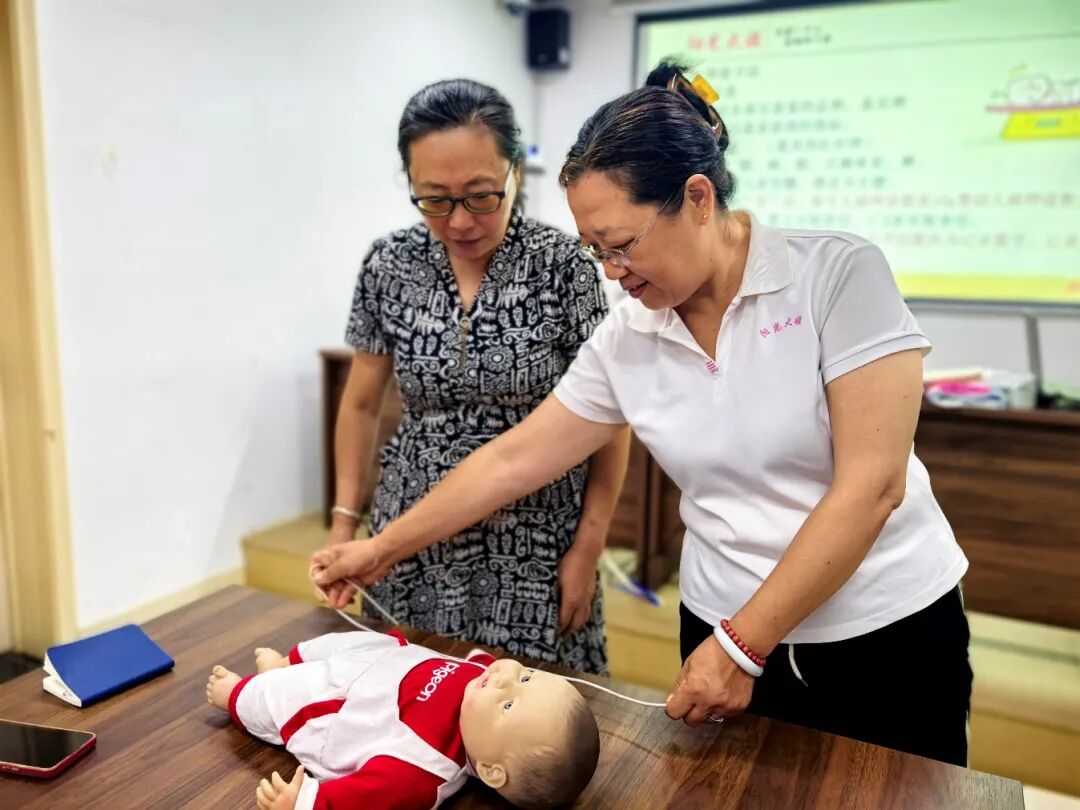
The Wanxiang Xintian East District community’s “Sunshine Sister” project conducts maternity nurse training activities
To truly achieve “responding to residents’ calls,” Wangshe Ren Street has established a complete closed-loop process from suggestion collection to tracking and evaluation. Each community collects residents’ needs through various channels such as residents’ councils, online questionnaires, and grid workers’ visits, ensuring that every service can accurately meet the actual needs of residents.
“In the past, we provided whatever services we had, and residents accepted them; now, we provide whatever services residents need.” A community secretary remarked. This shift in service philosophy has allowed the community to truly make services revolve around residents.

Project Implementation:
Mechanism Innovation and Talent Support are Indispensable

From housekeeping training to health stations, from ping pong night schools to co-prosperity supermarkets, the “embedded services” projects in Wangshe Ren Street can “bear fruit” and achieve “sustainable development” thanks to the innovative operational mechanism of “public welfare + low-cost + market.” Wangshe Ren Street actively explores diversified operational models such as “introducing projects for independent operation,” “space embedding cooperative operation,” and “overall packaged management operation,” promoting the community to form a list of 35 public welfare services such as education and popular science, 8 low-cost service lists such as traditional Chinese medicine therapy, and 7 market service lists such as housekeeping and childcare.
“Public welfare services ensure the basics, low-cost services benefit people’s livelihoods, and market services enhance quality.” A relevant official from the street summarized the relationship between the three service models. By precisely categorizing service types, it ensures the universality of basic public services while meeting residents’ diverse and high-quality service needs, and also guarantees the sustainability of services.
In the process of promoting embedded services, a professional team of community workers is rapidly growing. 28-year-old Xiao Xing is a community worker in the Wanxiang Xintian West District community, and she recently passed the social worker qualification exam. “The ‘Empowerment of Heart’ course organized by the street has given me a new understanding of community work,” she said.
The “Empowerment of Heart” course mentioned by Xiao Xing is a carefully crafted project by the street to enhance the professional capabilities of community workers, covering six types of courses: “innovative theory courses, social work professional courses, position business courses, work skills courses, growth empowerment courses, and practical training courses.” So far, 28 sessions have been conducted, training over 2,000 people, with the assistant social worker certification rate reaching 93.6%.
In addition to systematic training, the street has also established a “1+3+N” governance service project practical platform, allowing community workers to grow through projects. “The ‘Intangible Cultural Heritage Workshop’ project we applied for in the community is led by me,” Xiao Xing proudly stated, “From project planning, resource connection to activity organization, the entire process has been very rewarding for me.”
To help newcomers grow quickly, the street promotes a “grid buddy” model, pairing new and experienced community workers to jointly manage community governance service projects. Additionally, through activities like “Pioneer Forum” and “Community Morning Meetings,” community workers are encouraged to take the stage to discuss problems, methods, and experiences, which not only accelerates talent cultivation but also promotes the inheritance and innovation of community governance experiences, making community services more grounded and sustainable.
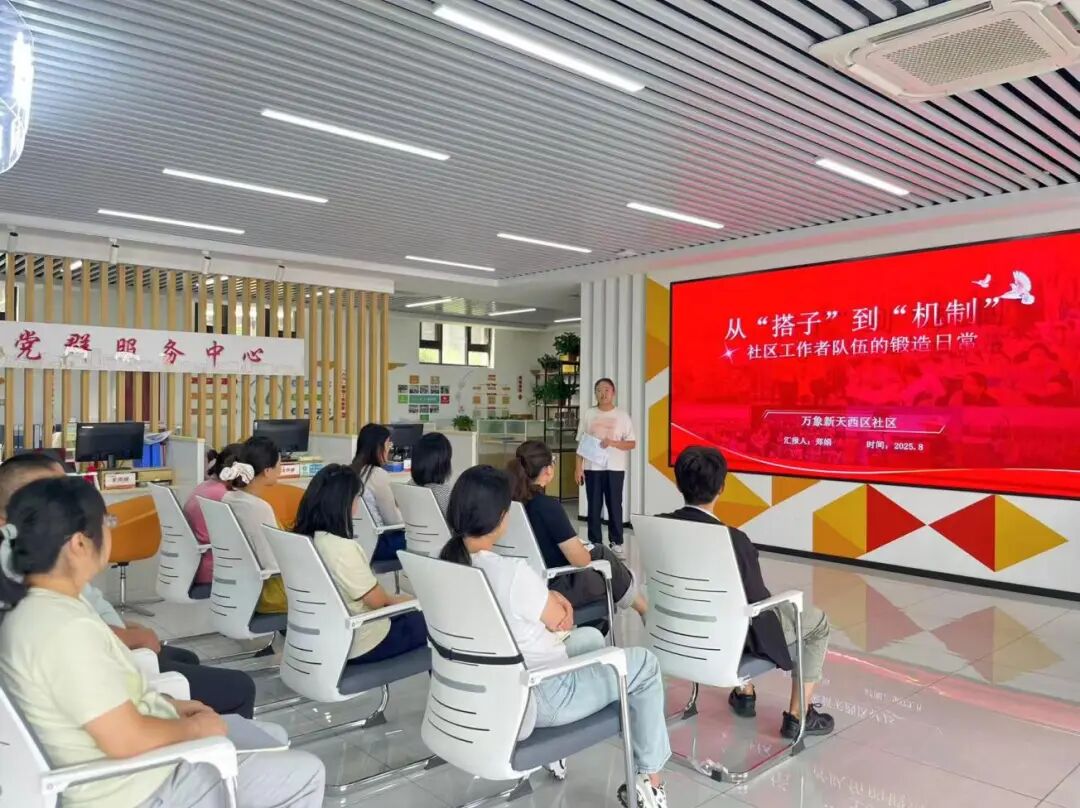
Community workers in the Wanxiang Xintian West District share their experiences
Small embedding, great happiness. Wangshe Ren Street, through the embedded service model of “public welfare + low-cost + market,” has not only revitalized community resources but also activated residents’ enthusiasm for participation, building a self-sustaining and virtuous cycle community service ecosystem. “We will continue to promote the construction of the community embedded service system, using vibrant governance and high-quality services to assist in urban transformation and upgrading,” a relevant official from the street stated. In the future, more residents like Ms. Li and Mr. Wang will feel a tangible sense of gain, happiness, and security right at their “doorstep.”


-END-