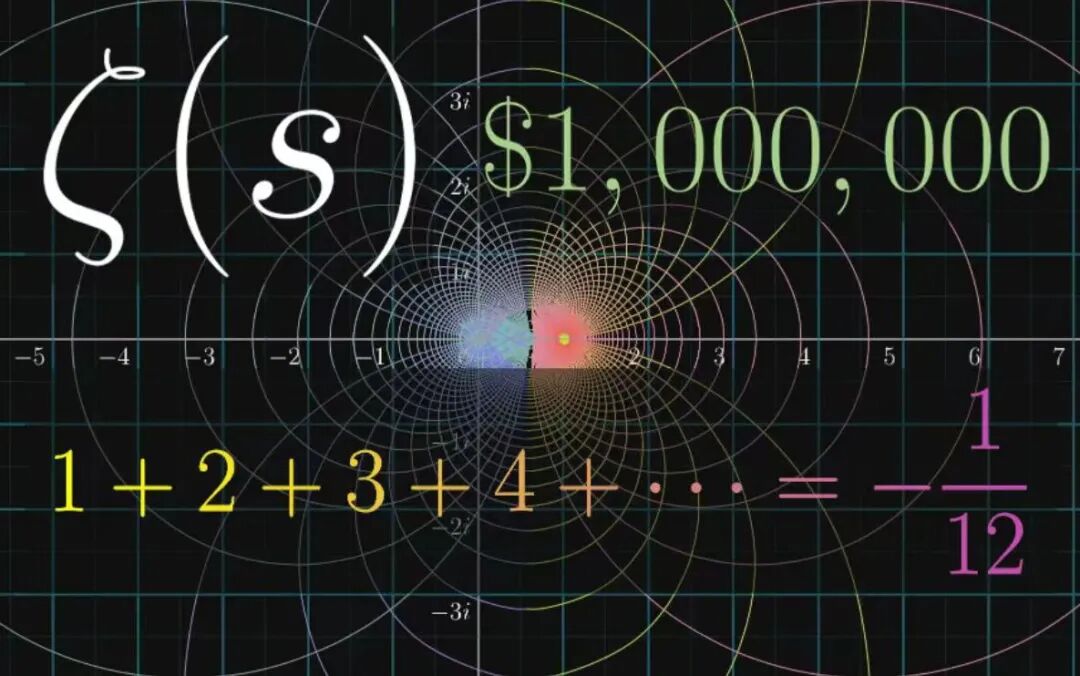
Friends who have read “The Three-Body Problem” will surely remember that iconic scene where von Neumann asks Qin Shi Huang to arrange thirty million soldiers to form a human computer. The soldiers use black and white flags to represent signals, replacing binary for calculations.
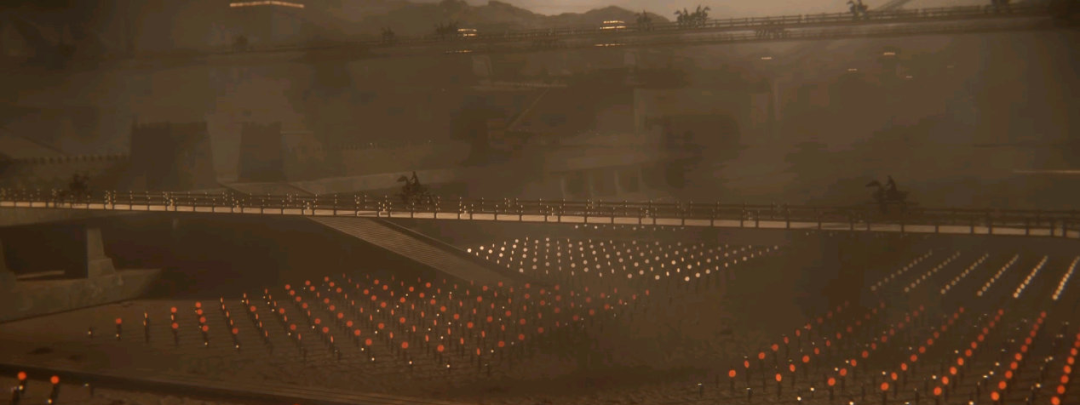
Image from a screenshot of the “Three-Body Problem” TV series
Don’t worry! You don’t need to understand the logic gate circuits of AND, OR, and NOT gates right now. Let’s take a broader look at the basic structure of a computer’s hardware system.
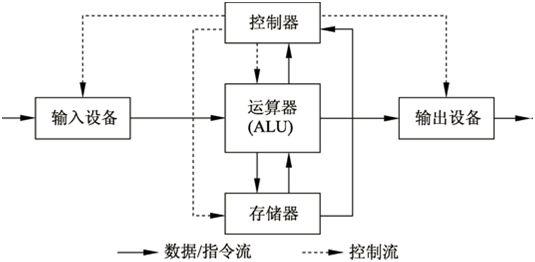
By visualizing the various hardware components of a modern calculator, we can make a good correspondence.
-
Input devices, such as mice and keyboards;
-
Controllers and arithmetic units, often collectively referred to as the Central Processing Unit (CPU);
-
Memory, which refers to what we commonly call RAM and hard drives;
-
Output devices, such as monitors, printers, and speakers.
This set of hardware components is known as the von Neumann architecture, named after the mathematician who established it. However, it was not created out of thin air; it was derived from the experiences of predecessors. Before electronic calculators became widespread, there was an era of manual and mechanical calculators. Von Neumann also followed the principle of “path dependence,” which can be summarized as standing on the shoulders of giants. Next, let’s explore this further.
Friends, please name a calculator that comes to your mind immediately!
I think most people would picture an electronic calculator like the one shown below, powered and capable of automatic calculations. You only need to input data and operations using keys, and the results will be automatically displayed on an electronic screen. It’s commonly seen and often overlooked…
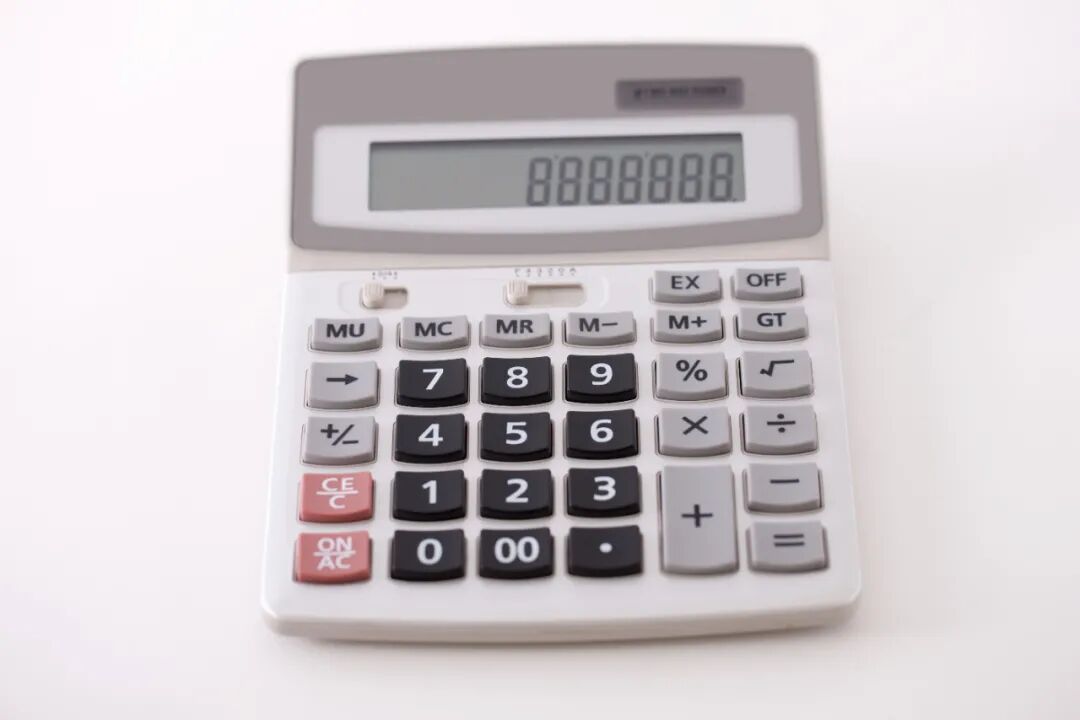
Image copyright, not authorized for reproduction
If you happen to have watched some historical dramas recently, you might also think of the abacus, which is operated manually by sliding beads. The calculation process relies on our memory of the abacus rules, while the arrangement of the beads shows the stored results. This type belongs to manual calculators and cannot perform automatic calculations.
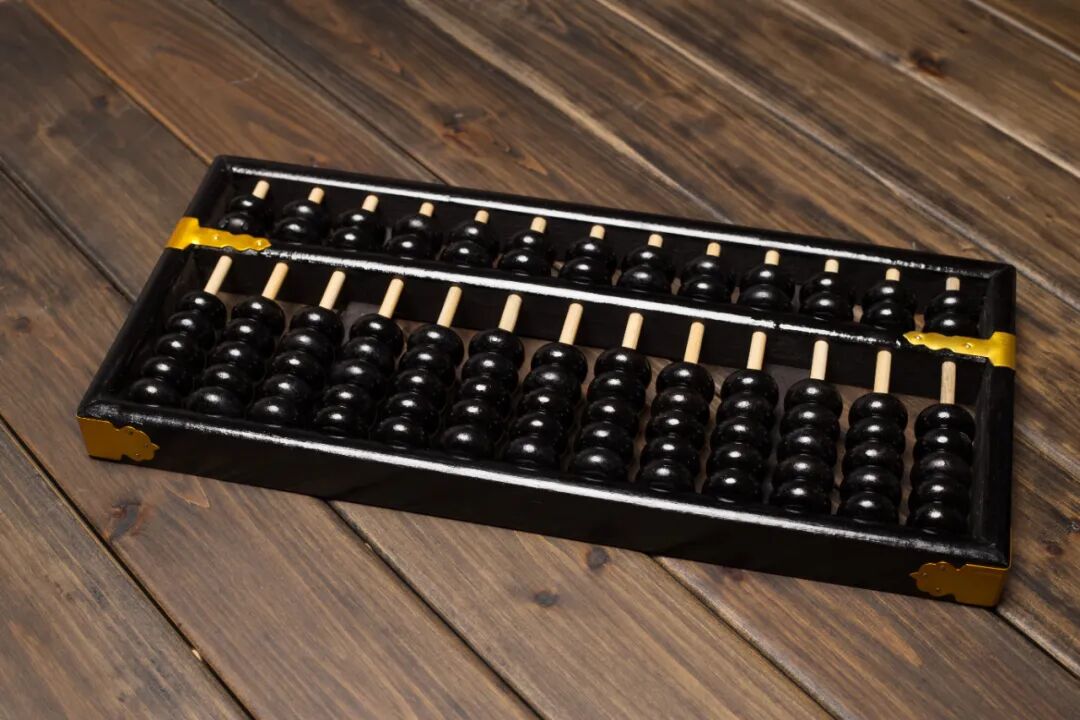
Image copyright, not authorized for reproduction
No more suspense. In this article, we will discuss the mechanical calculators that lie between these two types.
01
The Modern Face of Mechanical Calculators
The first industrial revolution was characterized by the replacement of human and animal power with machines, ushering humanity into the machine age. The second industrial revolution was marked by the large-scale application of electricity, leading us into the electrical age. Now we are in the third industrial revolution, where various information technologies and scientific innovations bring modern conveniences. More straightforwardly, we are in an era where the principles of things are not easily understood at a glance.
The development of calculators has also followed the trends of these eras, evolving through three stages: from manual calculators to electronic calculators, with a phase of mechanical calculators in between. However, this phase has been rapidly overshadowed, making it seem as if it never existed. After all, friends under forty were born into a world where everything was powered…
However,the familiar presence of mechanical calculators still lingers around us. Don’t believe it? Let’s take a look!
02
Later Mechanical Calculators
Let’s first look at a later model from the mechanical calculator era, the Divisumma 24,which can perform addition, subtraction, multiplication, and division at a speed of 250 cycles per minute.This machine, designed by Marcello Nizzoli, began mass production in Italy by Olivetti in September 1963. The reason for its introduction is that this mechanical calculator was quite successful in the market during the 1970s—approximately 6 million units were produced, making it the best-selling mechanical calculator model worldwide for the company.
As a product from the later stage of mechanical calculators, this machine is not purely mechanical; it requires an external 70-watt worm gear motor as a power source. The entire machine has no circuit boards, no sensors, and no high-tech components that are difficult to understand. What it has are gears, springs, linkages, and about 3,800 mechanical parts working together. This also indicates that during its debut, the level of mechanical craftsmanship was already at its peak.
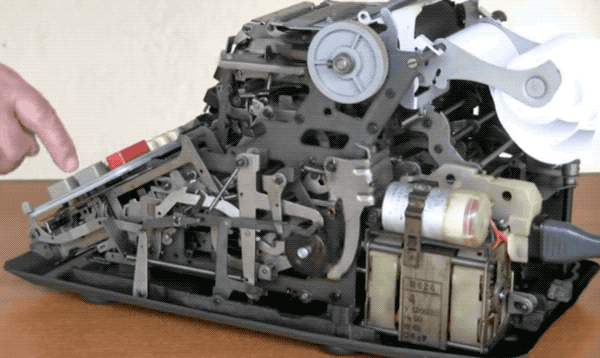
Image from Multyplus1
During operation, we only need to input the numbers to be calculated, and the different stages of calculation and output results will be printed in two different colors of ink on a roll of paper above the machine. In the following image, we can observe the calculation time of the machine and perceive its speed under different operations. For example, the result of 12 plus 45, which is 57, is almost instantly printed on the paper. However, the result of 45 multiplied by 78, which is 3510, takes a moment to output.
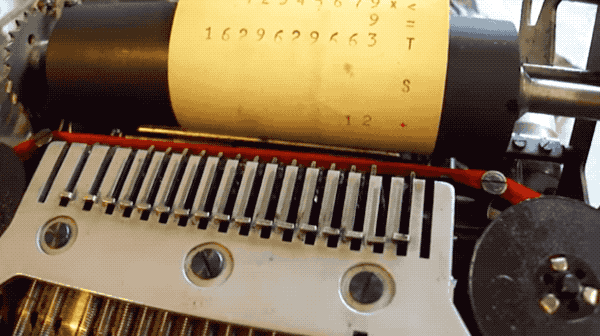
Image from Angelo
The following video is an assembly video of the Divisumma 24 from 1962, recorded for training factory assembly personnel. Even in the 21st century, assembling 3,800 parts is not something modern people can do without difficulty… One can’t help but marvel, “What kind of mind could design such a thing?”
Video source:https://www.youtube.com/watch?v=5BkQ-hfcLEg
03
Similarities to Typewriters
At this point, have you noticed that this mechanical calculator seems somewhat similar to a typewriter? Both use key presses for input and print results on paper. What is your bold speculation? Yes, they are indeed related in design! Engineer Camillo Olivetti founded the company Olivetti in 1908, initially producing typewriters.
Let’s take a look at the Olivetti Lettera 22 typewriter produced by the same company in the 1950s, one of the most iconic typewriters of that era, which was selected in 1959 by the Illinois Institute of Technology as one of the best-designed products of the past 100 years. This typewriter was also designed by Marcello Nizzoli, the designer of the Divisumma 24 mechanical calculator. If you have the chance to visit MoMA (Museum of Modern Art) in New York, you can see this piece in their permanent collection.

Image from YEGTypewriters
04
Design Convergence
Such similar designs lead us to discuss a phenomenon in design methodology—design convergence. Sometimes, toreduce the cognitive cost for users and enablequick adaptation to a new product, some commercial design functions and layouts tend to converge. Additionally, this alleviates the innovation pressure on designers and reduces the burden of mold-making and assembly for factories. It can be said that it is a case of “previous generations planting trees, and later generations enjoying the shade” in design history.
Because of design convergence, even if imaginative ideas are gradually eliminated by rapid technological advancement, it becomes difficult to distinguish who imitated whom, yet we can still discover the remnants of past technologies. Nowadays, mechanical typewriters like the one shown above are rarely used, but the text displayed on the keyboard and monitor I am typing on continues to carry the traces of its existence in another electronic form.
05
Early Mechanical Calculators
Having looked at later mechanical calculators and being amazed by their intricate structures, let’s quickly review an early mechanical calculator to calm our excitement. Going back over 300 years, we find a wheel-based adder invented by Blaise Pascal in 1642, also known as the Pascaline. This mechanical calculator can directly perform addition and subtraction of two numbers.
At that time, the inventor was only 19 years old, and his intention was to reduce the workload of his father, who was a tax collector. Does the name Pascal sound familiar? The unit of pressure we learned in middle school science, the Pascal (Pa), is named after him due to his outstanding contributions. He was a remarkable mathematician, physicist, chemist, and meteorologist in the history of science…
Let’s take a look at the practical operation in the image below, where the user is turning the lower dial to input two numbers for addition or subtraction.
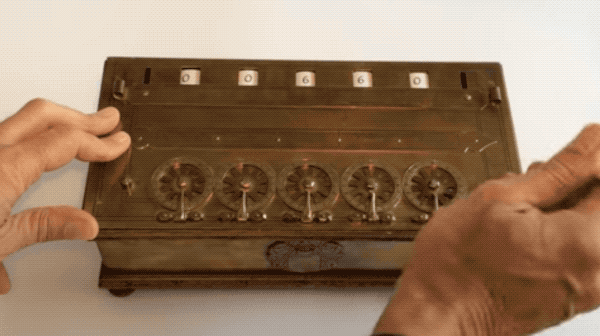
Image from Yves Serra
Let’s briefly look at the internal mechanism of a single dial’s linkage.
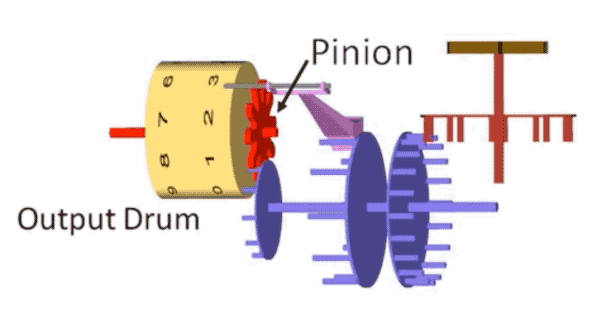
Image from Colegiul Economic Ion Ghica
The linkage between different dials occurs when the value of one dial reaches 10, meaning it has completed a full rotation, which will drive the second gear to complete the carry.
06
Water Meters as Adders
This small mechanical structure for carrying should be very familiar to you. A water meter is essentially a mechanical adder still in use in the 21st century, but now it automatically calculates your household water usage.
Let’s take a look at a speed-type water meter disassembled to reveal its inner workings, sourced from fluid mechanics simulation materials. A speed-type water meter calculates your water usage based on the speed of water flow. You can see small balls simulating water flow passing through a filter, then driving the impeller in the chamber to rotate.
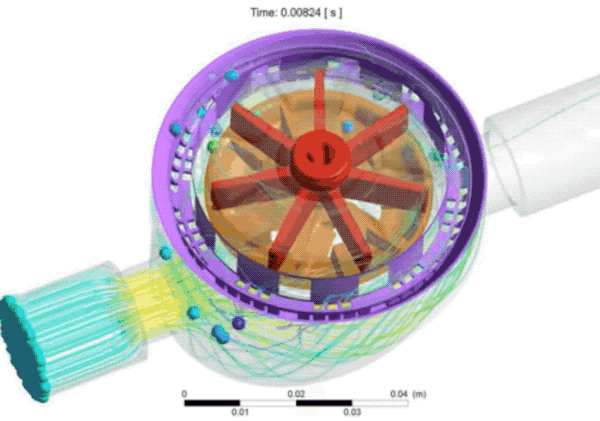
Image from Tintschl BESt AG (english)
The gear coaxially connected to the impeller extends into the upper part of the water meter. Inside is a complete set of reduction gear assemblies. They drive the reading dial, stepping to display the addition. Just like the previous dial, when it completes a full rotation, it carries over. It can be said thatgears are the heart of this type of mechanical device.
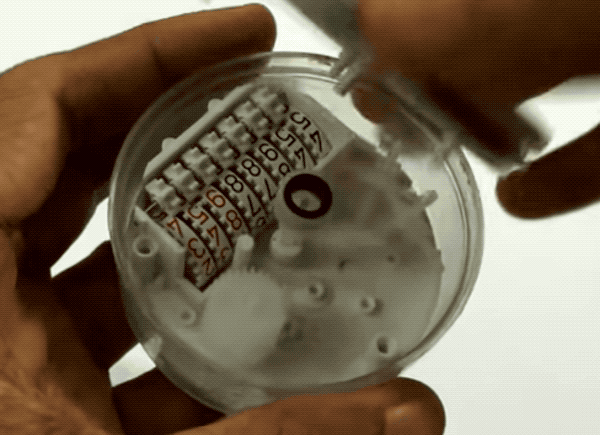
Image from Tech & Lifestyle
By simply understanding the two machines at the beginning and end of the mechanical calculator phase, we can see that the greatest limitation in the development of these machines has been the materials themselves; the quality of mechanical components has made assembly and design exceptionally complex. However, it is precisely this complexity of mechanical structures that gives mechanical calculators a high appreciation value, which may also explain why people are fascinated by the “steampunk” genre of science fiction. Fortunately, our lives will always be built on the wisdom of the past, just expressed in a different form.
References:
[1]http://www.marcello-nizzoli.com/
[2]https://americanhistory.si.edu/collections/search/object/nmah_690100
[3] Books “01 Changing the World” and “Operations and Ingenuity: The History of Mechanical Computer Inventions”
Author|Zhang Jinyao, Master’s in Practical Design, Goldsmiths, University of London
Reviewed by|Wang Yangzong, Professor, School of Humanities, University of Chinese Academy of Sciences

Source| Science Popularization China
New Media Editor| Zhang Yihong
Reviewed by| Li Yufan, Liu Zhaojun