Author: Pineapple
Editor: North Shore
Editor: Wang Yue
High-end, self-developed, forward-looking, and accurate product definition are the keys for Xinch to win the “first half” of domestic substitution.
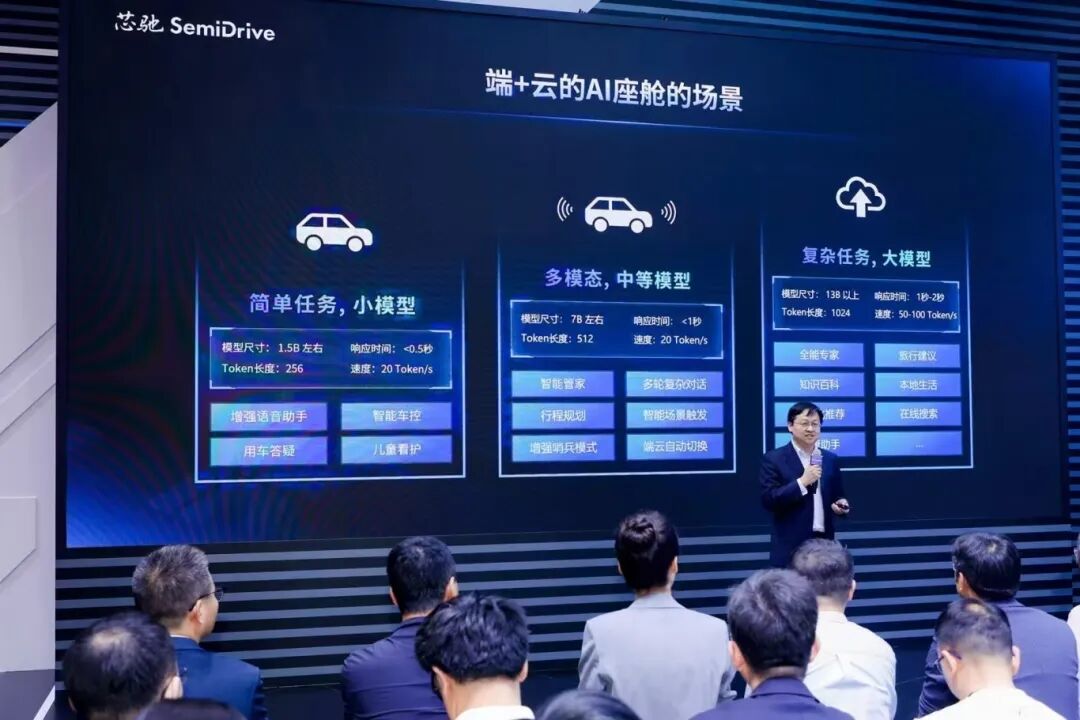
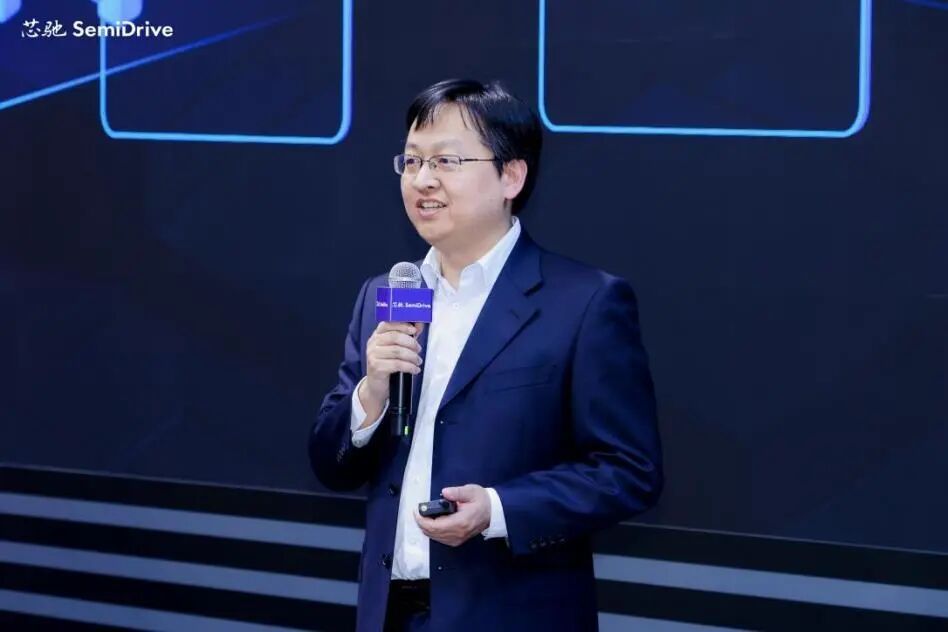
“Small models respond quickly, medium models perform multimodal interactions, and large cloud models handle complex tasks.” At the recent Shanghai Auto Show product launch, Xinch Technology’s CTO Sun Mingle introduced the overall iteration direction of smart cockpit products and pointed out that the combination of multiple models in AI cockpit scenarios will become a core demand in the future.
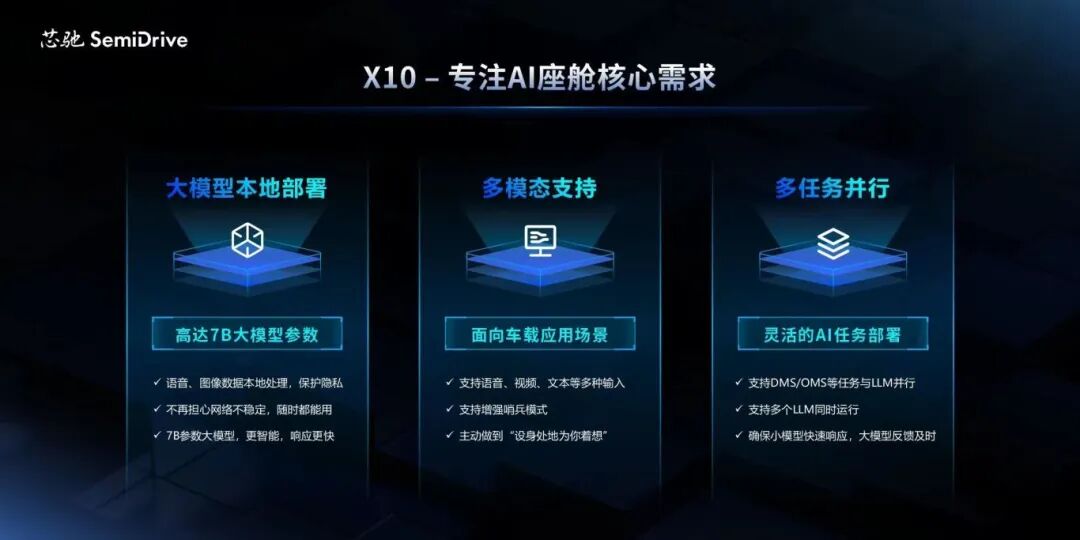
The biggest challenge of this core demand comes from the edge deployment of the 7B multimodal large model. The performance requirements for deploying the 7B multimodal model at the edge require the first token to be output within one second under a 512 token input length and to continue running at a speed of 20 tokens per second—
Focusing on the above pain points, the Xinch X10 was born.
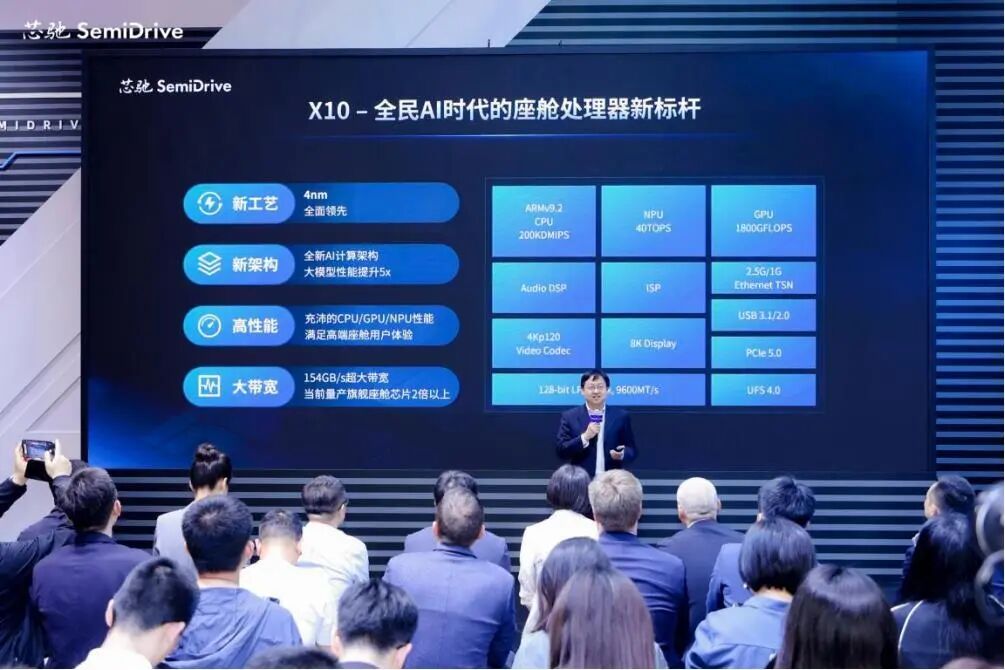
At this Shanghai Auto Show, Xinch Technology launched the latest generation of AI cockpit chip X10, which directly addresses the core needs of AI cockpits, focusing on computing power and bandwidth configuration to meet the edge deployment of the 7B multimodal large model, providing 40 TOPS NPU computing power, paired with an ultra-large bandwidth of 154 GB/s to ensure the full performance of the large model.
This is a new product that connects the past and the future.
Firstly, seizing the excellent window period for domestic substitution, Xinch started from smart cockpits, and the previous X9 series products have accumulated millions of units in mass production delivery. Having completed the “first half” of domestic substitution, Xinch Technology uses the X10 as a new breakthrough engine, leveraging its outstanding performance, innovative architecture, and rich AI ecosystem to initiate the AI transformation of cockpit processors in the second half.
Secondly, as the automotive electronic and electrical architecture develops towards central computing and regional control, the trend of the “second half” of domestic chips is to build an integrated and open diverse AI ecosystem. The Xinch X10 outlines the technical evolution path for the development of smart cockpits in the next 3-5 years, supporting open-source large models like DeepSeek and completing adaptations and upgrades of AI large models with multiple ecological partners.
01
Cost Card
Precision of Product Definition
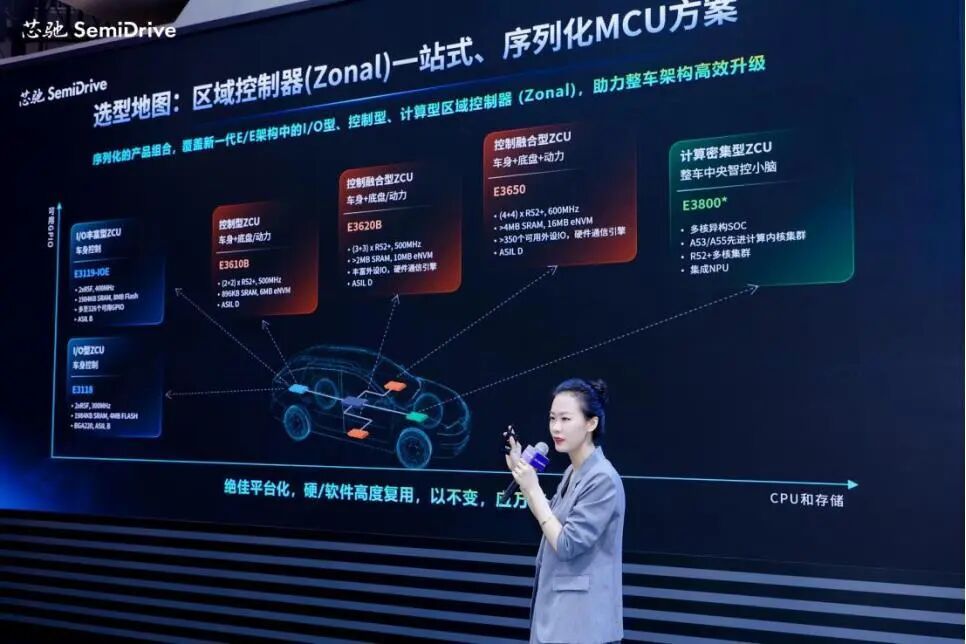
Xinch Technology’s MCU product line general manager Zhang Xitong told “Automotive Community” and “C Dimension” that in the coming years, high-value automotive MCUs will mainly focus on several major scenarios:
The most important is the regional controller, which can be seen gradually implemented at this year’s Shanghai Auto Show; secondly, there are very high requirements for power and chassis systems; and also automotive safety-related fields, including intelligent driving, etc. In these scenarios, the functions and performance requirements of MCUs far exceed traditional definitions and can be referred to as MPUs.
Faced with this trend, chip companies need to provide high-value products for the future, while cost control is also crucial in the current industry situation. Xinch Technology’s management believes that for every car manufacturer, it is no longer possible to afford excessive “luxury stacking”; the company has always emphasized “understanding chips better means understanding cars better”; products need to find the optimal solution for each application scenario, ensuring performance while balancing costs.
So, how to effectively control costs?
Zhang Xitong believes that the greatest workload and value in chip cost reduction is reflected in the early product definition stage. “Many people think that after the product is launched, costs can be reduced by lowering prices in the supply chain or post-packaging testing, but such space is very limited, possibly only single-digit reductions each year.”
However, in the product definition stage, ensuring that the product is tailored for specific applications, with every functional feature and every IP carefully polished for that business scenario, removing all unnecessary functions, so that car manufacturers do not pay for unnecessary features, is the most effective way to reduce costs. Since the year before last, Xinch has placed product definition in an extremely important position, adhering to the principle of “customized for applications, polished for scenarios.”
Controlling costs does not mean that chips should be as simple as possible.
In Zhang Xitong’s view, the key lies in the precision of definition and R&D capabilities. Xinch ensures that when achieving the same functional module or IP, the chip area (Die Size) is industry-leading, even better than some international competitors, through advanced architectural design and underlying software and hardware design capabilities. This high-efficiency design capability controls costs to an extremely precise level during the design phase.
Of course, there is also efficiency and scale.
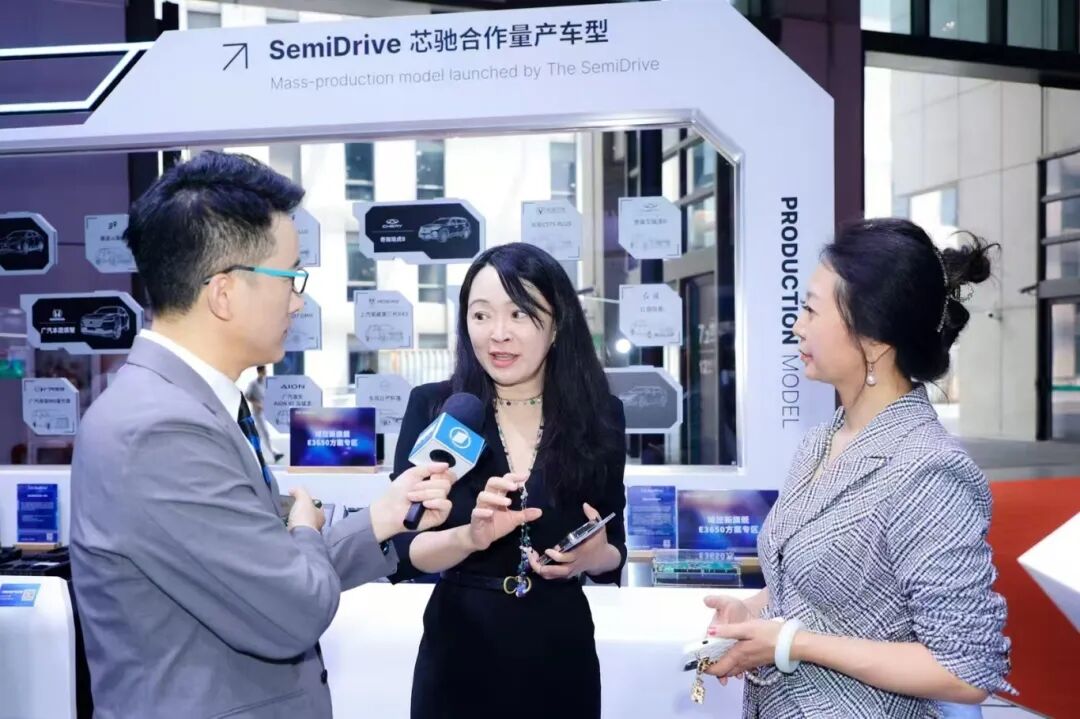
Xinch Technology’s vice president Chen Shujie told “Automotive Community” and “C Dimension” that from the perspective of input-output, improving R&D speed itself is also another dimension of cost reduction. “Shortening R&D time means improving human efficiency and reducing the R&D costs allocated to each chip. The price of the chip itself will continue to optimize as the production scale expands, which reflects the scale effect. The value we can provide to car manufacturers is not only the chip unit price but also a faster response speed.”
Helping car manufacturers complete development work faster and with higher human efficiency is also part of reducing costs for customers. Chen Shujie analyzed that when customers evaluate costs, they do not only look at the procurement cost of the chip itself but also consider the overall BOM cost and R&D investment brought by using this chip.
“Take Xinch as an example, we are an open platform, and customers have more choices when pairing with other components, such as selecting more domestic components to reduce overall BOM costs.”
02
Customer Card
Confidence Driven by Scenarios
Zhang Xitong, who comes from a technical background and previously served as Xinch Technology’s product and market director, has a unique and in-depth understanding of product R&D and market trends. In her view, whether it is chip manufacturers or first and second-tier suppliers, the core of competition lies in the depth of understanding user needs and the degree of fit between products and applications.
“Current competition is no longer simply about who has more advanced technology, such as how many cores are stacked or what nanometer process is used. We have observed that the electronic and electrical architecture and intelligent development speed of domestic car companies are very fast, which is a boon for domestic chip manufacturers because we are closer to customers, allowing for deeper communication and faster iteration speed.”
Being closer to customers is an advantage for domestic chip companies, but competition is also fierce. In the “second half” of domestic substitution, suppliers like Xinch need to consider how to stand out in the rapidly emerging domestic camp and remain at the table for the long term without being eliminated by competitors.
Because of this, the accumulation of the first half is very important.
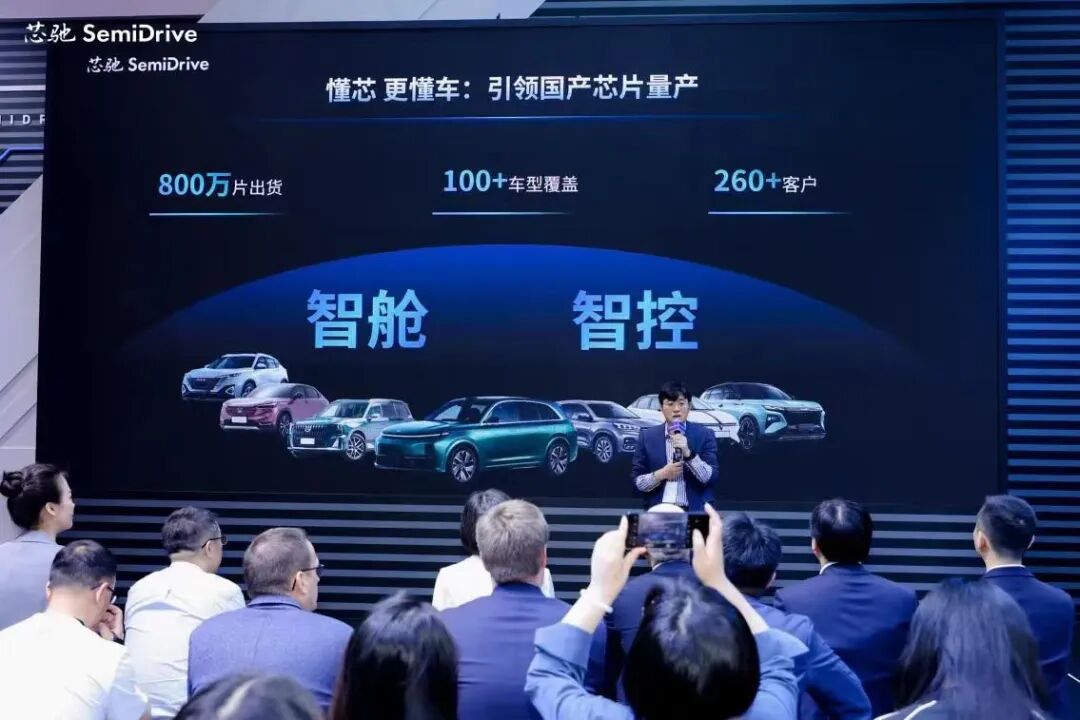
Xinch’s advantage lies in the fact that its first-generation mass-produced products have accumulated a large number of customers and application experiences, covering multiple fields such as body, power, chassis, regional control, intelligent driving safety, and cockpit. “The design experience of our next-generation products comes from the previous generation products and customer feedback. We emphasize ‘scenario-driven’ at today’s launch precisely based on this confidence and strength.”
Scenario-driven, the most difficult part is achieving precision.
Zhang Xitong told “Automotive Community” and “C Dimension” that in the next few years, industry competition will revolve around the depth of understanding each sub-application. Many needs vary by application, and their core value lies not only in advanced technology but also in whether functions can be executed just right to meet the specific needs of scenarios.
It is also necessary to consider overall system-level design capabilities.
“This is also where we differentiate ourselves from competitors in the same field. Xinch starts from more complex SoC design and extends downwards to do MCUs using more advanced processes.” Zhang Xitong believes that as automotive MCUs become more like SoCs and their complexity continues to increase, this just plays to Xinch’s strengths—
Such as proficient use of multi-core, multi-operating systems, virtualization technologies, and mastering methods to balance performance and power consumption under advanced processes, as well as overall system design capabilities. This is also why Xinch occupies a high market share in the high-end automotive MCU market, as much of the experience is inherited from SoC design.
In addition, Xinch has a very high self-research rate for core IP.
“Except for industry-standard IP like CPU cores and Bosch GTM, most core IPs, such as our communication engine and motor control dedicated units, are basically self-developed. Apart from very standard IPs, Xinch basically insists on self-research for most of the MCU product line’s IP.”
High-end, self-developed, forward-looking, and accurate product definition are the keys for Xinch to win the first half of domestic substitution. To achieve this, it requires a very deep understanding of the entire vehicle architecture, as well as collaborative cooperation with car manufacturers and upstream and downstream ecological partners, engaging in deep communication to explore demand trends and pain points.
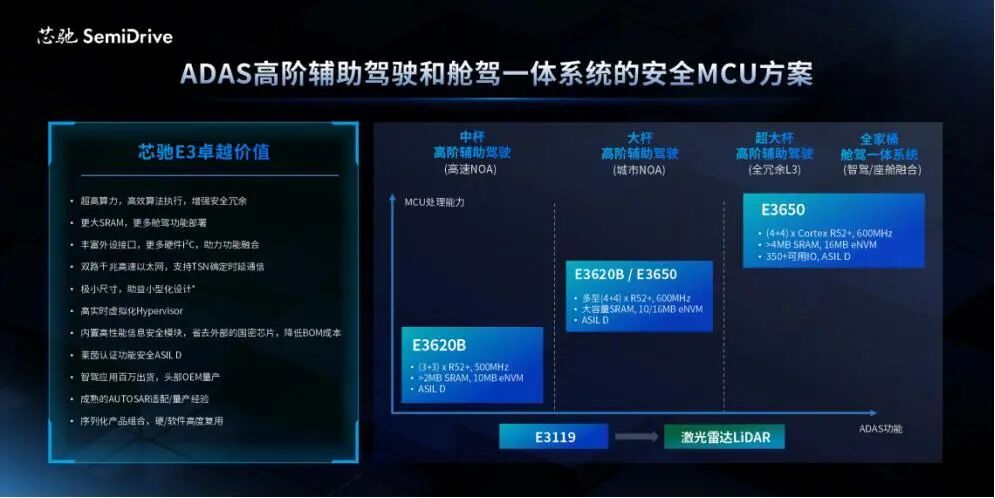
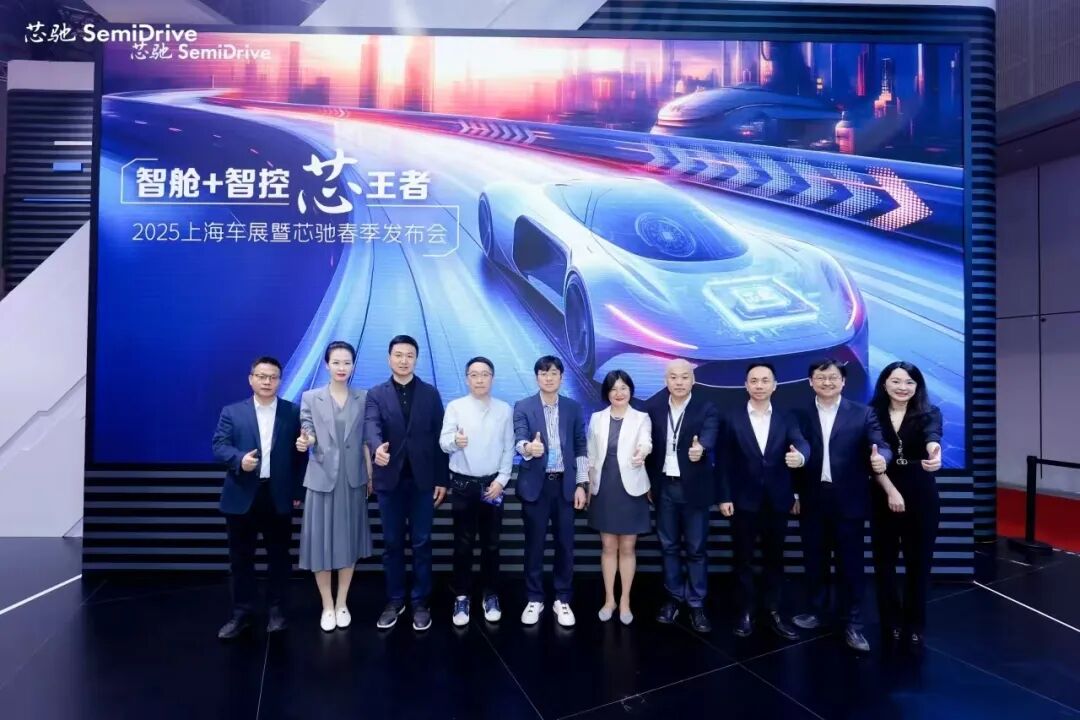
Zhang Xitong and Sun Mingle both mentioned to “Automotive Community” and “C Dimension” that whether it is the E3650 or the E3620 announced at this auto show, they have conducted in-depth joint definitions with vehicle enterprises even before the products were officially released. As soon as the product definition was completed and samples were produced, customers started project development based on the product, which also proves the accuracy of the product definition.
03
Incremental Card
Being Grounded is More Important than Grand Narratives
AI large models have become a new focus for Xinch.
The traditional functions of smart cockpits include instrument panels, HUDs, surround views, navigation, 3D HMIs, and SR scene reconstruction, and these applications consume a lot of bandwidth in concurrent scenarios. Many smart cockpit platforms running these tasks often have only enough remaining bandwidth to support a small model with 1-1.5B parameters, which also leads many models to have to make trade-offs between deploying AI large models and traditional cockpit applications during function planning.
It is reported that the Xinch X10 is primarily positioned for AI cockpits, equipped with an ultra-large bandwidth of up to 154 GB/s, which is more than twice the bandwidth of current mass-produced flagship cockpit chips. The system can run a 7B large model while still reserving enough resources for multi-screen display and multi-application concurrency, ensuring that CPU, GPU, and NPU can all obtain the required bandwidth in concurrent scenarios.
CTO Sun Mingle told “Automotive Community” and “C Dimension” that the deployment of AI large models in vehicles will be a more intense market demand in the near future (at least in the next six months to a year) than the integration of cockpit and driving.
“Integration mainly addresses cost issues, hoping to integrate functions to reduce hardware costs. The deployment of AI large models in vehicles can bring a new user experience and opportunities for industrial transformation, giving rise to more innovative applications, which is an important direction for driving growth.”
In the face of new increments, Xinch has its own thoughts.
Sun Mingle revealed that many technology companies that started with cockpit chips have begun to explore new business increments in the direction of intelligent driving, but the Xinch team, after careful consideration, has not particularly focused on integrating intelligent driving functions in the X10 generation of products.
“Intelligent driving is changing very rapidly. Looking back over the past year, car manufacturers’ positioning of intelligent driving functions has undergone significant changes, and user needs are also evolving quickly. At the same time, the technical route planning of leading car companies has a huge impact on the entire industry, and the ongoing debate about high-precision maps has lasted for years, with differing opinions on LiDAR as well. Many technologies have been changing since the Transformer architecture became popular in the past two years.”
Vice President Chen Shujie added that competition in the intelligent driving field is very fierce, and chip hardware companies need to invest huge human and material resources in software development, including operating systems, etc. Xinch considers its positioning from the overall market landscape, and in the face of unstable demand and technical routes, rash integration is not a good choice.
Regarding new increments, Xinch has already begun to expand overseas.
Chen Shujie told “Automotive Community” and “C Dimension” that Xinch has achieved overseas expansion through domestic car companies like Chery and SAIC, and is also supplying joint venture car companies such as Dongfeng Nissan, Dongfeng Honda, SAIC Volkswagen, and FAW Volkswagen. “We have also obtained projects from purely foreign-funded car companies that are about to go into mass production, but it is currently inconvenient to disclose specific names. Overall, we have made significant progress in our overseas business.”
Overseas, Xinch has established branches in Germany and Japan to support local customers with local teams, and the pace of internationalization is very fast. Many new products have first undergone extensive verification and application by numerous car companies in the Chinese market, and have already reached a mature mass production stage, proving to be stable and reliable, which significantly reduces the risk for overseas users adopting them.

Chen Shujie revealed that overseas companies usually have strict risk control and pay great attention to the stability and quality records of suppliers’ products in mass production. The large shipment base in the Chinese market and the rapidly developing industry environment have fully validated the quality of Xinch’s products and overall solutions (Total Solution), and they are technically more advanced than the options available in the customers’ existing supply systems.
“In fact, Xinch has always been following its own path.”
As the interview approached its end, Chen Shujie summarized the company’s strategic direction and product positioning. Following its own path allows for reflection on every attempt made since the early days of entrepreneurship, as well as every step taken steadily in the “first half” of domestic substitution; it also allows for a forward-looking view of every important decision made today, as well as the foresight and long-term planning for the competition in the “second half.”
In Chen Shujie’s view, ensuring technological leadership and reasonable profit margins is more important than telling grand stories, based on actual shipment volumes and customer choices.
Pineapple
A wine taster who doesn’t love cars is not a good editor.

Read
Recommendations

He Sai Li Yifan: I think calling it “bottom line” is more reasonable
The ambition of Horizon is falling on “HSD”?
Choosing electric vehicles is becoming like choosing refrigerators; only “first-level energy efficiency” is worth buying?
– END –
WeChat ID: C Dimension


Long press to identify the QR code
Follow us
WeChat ID: C Dimension