Recently, the chip industry has been bustling with activity. On one side, NVIDIA’s market share in China has plummeted due to export restrictions, while on the other side, Huawei has proudly released its Kunpeng chip roadmap, leading to a significant rise in A-share semiconductor stocks.
This series of changes has sparked curiosity about whether our chip industry has truly achieved breakthroughs.
Are domestic chips with higher process nodes close to mass production?
Which fields have already managed to break free from foreign dependency?
Today, we will discuss these topics.
Acceleration of Substitution Under Sanctions
The story begins with NVIDIA’s “troubles”.
This former AI chip giant has been struggling lately, as its H20 chip, specifically designed for the Chinese market, has not been selling well due to export restrictions.
Jensen Huang lamented that four years ago, NVIDIA held a 95% market share in China, but now it has dropped to 50%.
This decline is largely due to the rapid rise of domestic chips. Cambrian’s revenue surged 42 times in the first quarter, while Haiguang Information and Zhongke Shuguang initiated a hundred billion-level restructuring. The market share of domestic AI chips has skyrocketed from nearly zero to 40%.
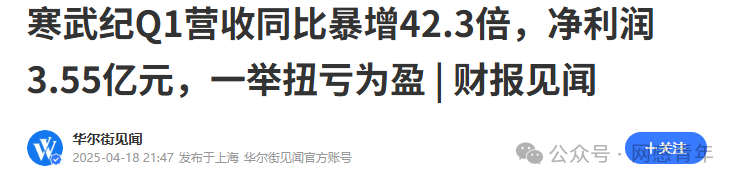
The changes in the market speak volumes.
Recently, the semiconductor sector in A-shares has collectively risen, with companies related to Huawei’s Kunpeng, such as China Great Wall and Tuowei Information, having market capitalizations around 50 billion.
This is not merely speculation; it is supported by tangible progress in the industry.
At the developer conference held by Huawei a few months ago, it was revealed that Kunpeng and Ascend already have 6.65 million developers, over 8,800 partners, and have completed more than 23,900 solution certifications.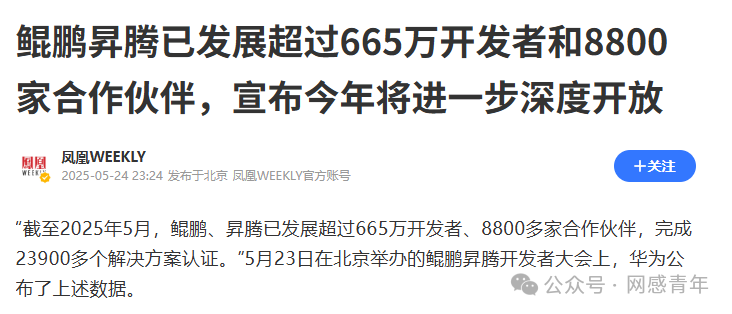
A complete ecosystem is forming from servers to industry applications, which is strategically more significant than mere chip manufacturing.
Technological Breakthroughs on Two Legs
What everyone is most concerned about is chip manufacturing technology.
The good news is that SMIC has achieved stable mass production from 90nm to 14nm, and their N+1 process performance is close to 7nm levels, meeting the demands of AI, IoT, and other fields.
This means that in the mature process field, we have firmly established our footing. Chips like the Huawei Kunpeng 920, which are 7nm server chips, can now be supplied stably. 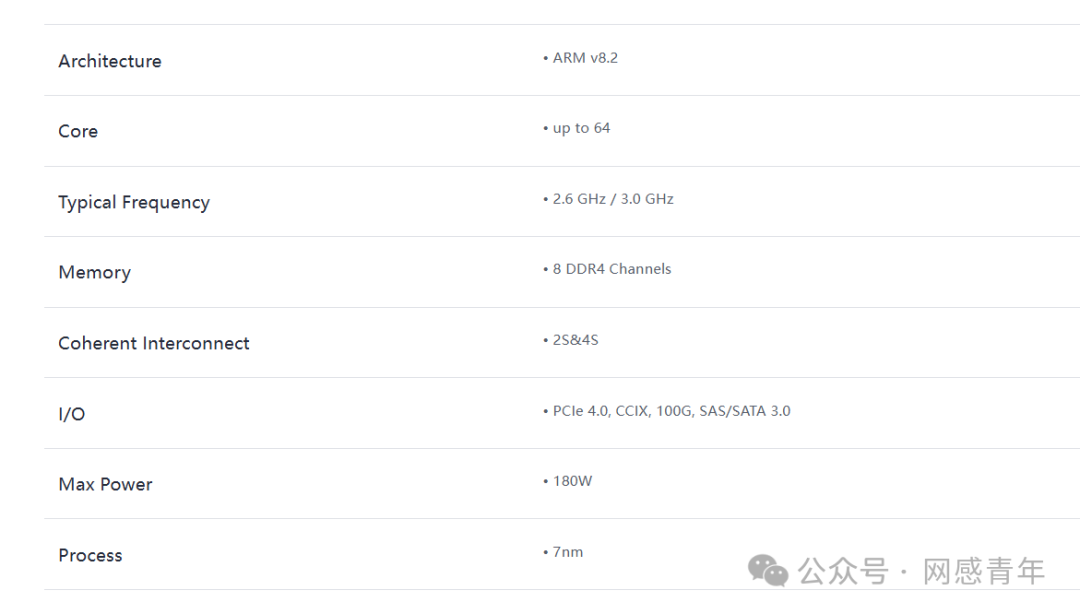
Even more exciting is the “two-legged” technological strategy.
On one hand, we are catching up with advanced processes, and on the other hand, we are vigorously developing Chiplet technology.
Like building with Legos, multiple small chips can be combined into a high-performance chip system.
Experts in chips and semiconductors say that the domestic Chiplet ecosystem is transitioning from a closed model to an open “Pinduoduo model,” combining different functional chip modules through standard interfaces.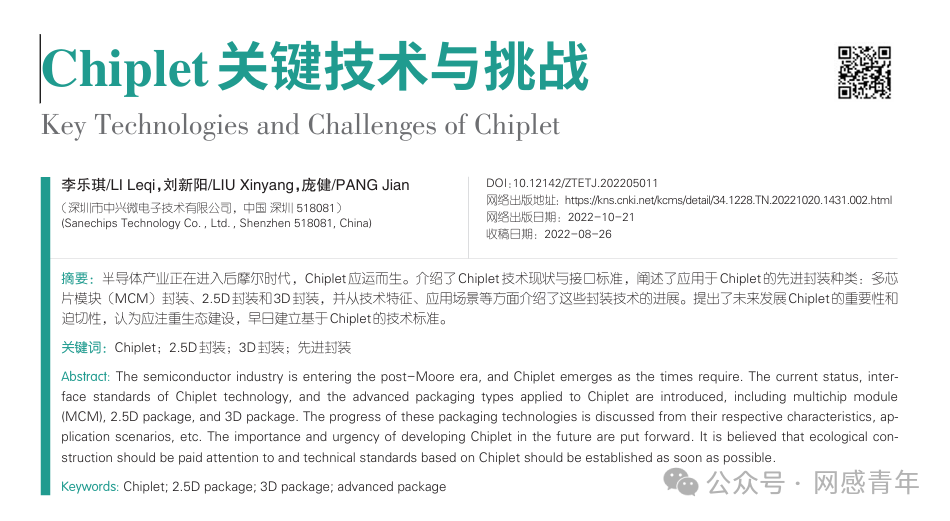
The “unified super node” supported by Huawei Kunpeng 950 embodies this idea, where performance can be enhanced through architectural innovation without solely pursuing smaller processes.
According to Huawei’s latest roadmap, the Kunpeng 950 to be launched next year will feature dual-thread Lingxi cores, and the Kunpeng 960 in 2028 aims to achieve over 50% improvement in single-core performance.
These performance enhancements are not solely reliant on process advancements; more importantly, they stem from innovations in architectural design and packaging technology, which is a clever way for us to circumvent foreign technology blockades.
Partial Victories in Breaking Dependency
While it is unrealistic to completely eliminate foreign dependency, we have already achieved “partial victories” in several fields.
The most obvious is in the server chip sector, where the Huawei Kunpeng 920 processor is widely used in data centers, supporting various loads from web servers to databases. 
In critical industries such as government and finance, the proportion of domestic servers is rapidly increasing.
Breakthroughs in ecosystem construction are of greater strategic significance.
Huawei adheres to the strategy of “open hardware and open-source software”. Now, AI + solutions based on Kunpeng have covered scenarios from data centers to edge computing, and they have also open-sourced the computing cluster software community openFuyao.
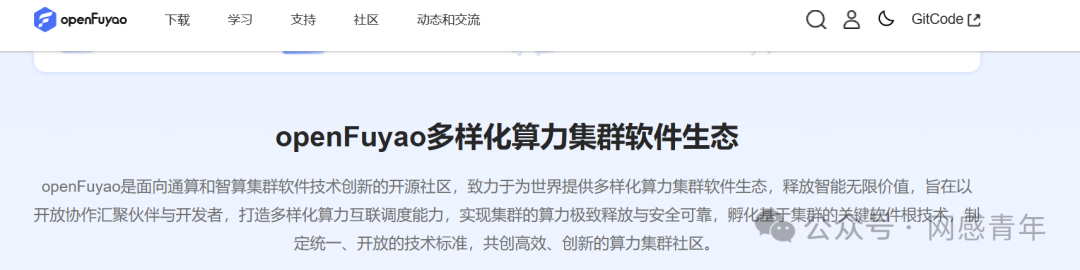
This means we are no longer just making chip hardware; we have mastered the full chain of capabilities from underlying architecture to application implementation. It’s like building a house; previously, we not only lacked bricks (chips) but also lacked blueprints (architecture) and construction standards (ecosystem). Now, these are gradually being improved.
The speed of substitution in the AI chip field is also astonishing.
Due to the unavailability of high-end NVIDIA chips, domestic AI chips have entered a golden development period.
The Ascend chip can now support large-scale AI model training, and the newly released super node architecture achieves high-speed interconnection of 384 cards, with training performance three times that of traditional nodes.
In scenarios such as financial risk control and smart cities, the application of domestic AI chips is becoming increasingly common.
In Conclusion
Although SMIC can produce chips close to 7nm, the true mass production capability for advanced processes at 7nm and below is still catching up.
The localization rate of core equipment such as photolithography machines is only 2.5%, which remains our shortcoming.
Therefore, in the short term, large-scale mass production of domestic chips at higher processes (such as 5nm) is still unrealistic.
However, a positive trend has already formed, with continuous policy support, strong market demand, and active corporate innovation.
Just like Huawei’s iteration from Kunpeng 920 to 950, domestic chips are steadily advancing at their own pace.
In the future, we may not completely replicate foreign technological routes but achieve breakthroughs through unique paths such as Chiplet and architectural innovation.
Overall, our country has made significant progress in the chip field, transitioning from being constrained to multiple breakthroughs, from being a follower to a parallel player. The story of the rise of domestic chips has just begun to reach its climax.