1. The source type and sink type generally refer to transistor-type circuits and can be directly understood as the IO circuitproviding/outputting current (source) orabsorbing/inputting current (sink).
For DO, the PNP transistor output is generally a source type, where the output module is internally connected to the power supply, allowing current to flow out through DO without needing an external power supply to drive the relay. Siemens 300/400 series or European PLCs typically use this type of output.
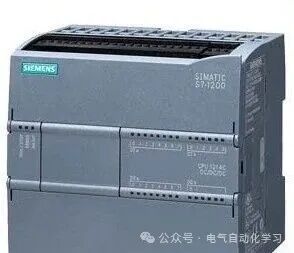
Japanese, Taiwanese, and Siemens 200 series, as well as most domestic PLCs, generally adopt the sink type DO, which is NPN type, requiring an external connection to pull up to a 24V power supply, with current flowing from external relays to the output module.
2. For DI, the principle is the same, which is to determine whether the current is flowing out of the DI terminal or flowing in, to distinguish between source type and sink type.
Generally, the common COM terminal of DI is connected to 24V, with 0V being effective, and the current flows out from DI, which is the source type. If COM is connected to 0V, with 24V being effective, the current flows into DI, which is the sink type.
It is important to note that some Japanese PLCs (such as Mitsubishi) understand the DI input part as “the type of output that can be connected.” Specifically: if DI can connect to a source type DO, this DI is referred to as “source input,” and conversely, it is referred to as “sink input.”
Source and sink types of DIDO can be directly connected for use. That is, DI (source) – DO (sink), or DI (sink) – DO (source). If the same type of DI and DO are interconnected, it is generally necessary to add pull-up resistors or other reverse polarity measures.
Siemens distinguishes between source type (PNP) and sink type (NPN)
1. Sink type logic: When the signal input terminal outputs current, the signal becomes ON, which is sink type logic.
2. Source type logic: When the signal input terminal inputs current, the signal becomes ON, which is source type logic.
For example, with a positive power supply:
When the signal terminal sends an “ON” signal, if its voltage is low (0V), it is sink type logic;
When the signal terminal sends an “ON” signal, if its voltage is high (generally 24V for PLCs, inverters, etc.), it is source type logic.
Source input means high level is effective, indicating that current flows into the input point, while sink input means low level is effective, indicating that current flows out of the input point.
Mitsubishi’s current FX3U can choose between source and sink types
1. Source type (source) means current flows out from the terminal, exhibiting PNP transistor output characteristics; sink type (sink) means current flows into the terminal, exhibiting NPN transistor output characteristics.
2. S7-200 PLC can connect to both sink and source types, while 300 PLC is generally source type, and European and American systems are generally source type, with inputs typically using PNP switches for high-level input. In contrast, Japanese and Korean systems prefer sink type, generally using NPN type switches, which are low-level inputs.
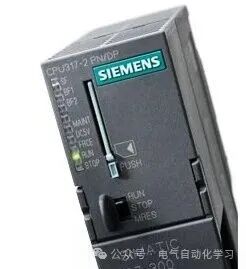
3. Source type output refers to outputting the positive DC, while sink type output refers to outputting the negative DC. Therefore, Siemens PLC outputs can be both source type and sink type, but generally, they are source type.
4. Mitsubishi PLCs have both source and sink types for inputs, but mostly they are sink type. Sink type inputs correspond to NPN type proximity switches.
Disclaimer: This article is reproduced from the internet, and the copyright belongs to the original author. If there are any copyright issues, please contact us for deletion. Thank you!