 Key Insights:
● Japan’s unique cultural characteristics and social structure make it one of the most promising markets for AI toys.
● Japanese consumers value the emotional experiences brought by AI toys, with “emotional connection” being the key to product competitiveness.
● Strict safety certifications and intellectual property regulations are hurdles that Chinese companies must overcome to enter the Japanese market.
Author: Sacha
Editor: Fire Fox
Japan, the “Land of Cherry Blossoms,” has a population of 120 million,making it the world’s third-largest consumer market, following the United States and China, and it shares the East Asian cultural sphere with China. The large population, strong purchasing power, and similar cultural backgroundhave long made Japan one of the top destinations for Chinese companies going abroad..
In this wave of going abroad,the AI toy sector is particularly noteworthy. For Chinese AI toy companies, Japan’s unique social and cultural environment further enhances this appeal. However, local AI toy brands in Japan are also developing rapidly, leading to fierce competition.
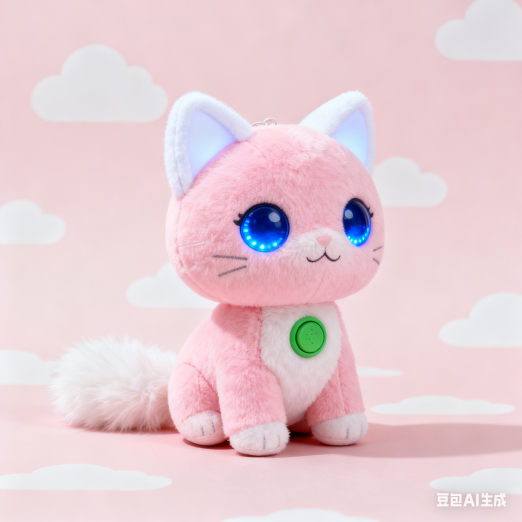
Image Source: Doubao
Faced with such a competitive landscape,how should Chinese companies adjust their product design and marketing strategies to stand out in the competition with local Japanese brands and secure a place in this potentially lucrative market?
Why is Japan an “Ideal Soil” for AI Toys?
Chinese AI toy companies looking to enter Japan must first clarify one question:Why has Japan become an “ideal soil” for AI toys?
When we break down AI toys into “AI + Toys“, the answer becomes clear.
First, Japanese society has a deep-rooted love for “cuteness”.
Whether it is the globally popular two-dimensional culture or the unique cute culture (Kawaii Culture), characters that are soft and cute are more likely to win people’s affection in Japan. Additionally, according to data from Report Ocean, the Japanese toy market is expected to reach a valuation of $14.975 billion by 2024, with adults being the main consumers.
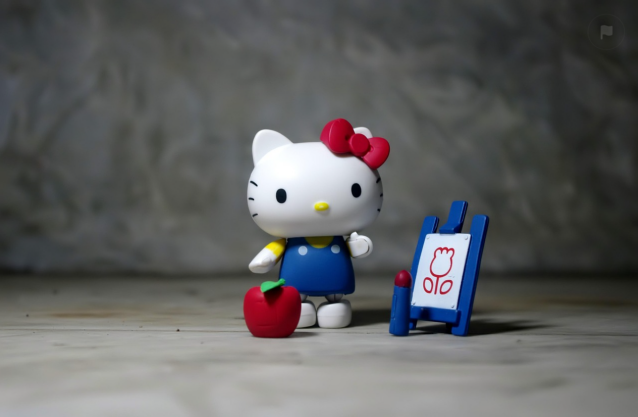
Image Source: Pixabay
In such a cultural atmosphere and market foundation,Japanese consumers naturally have a higher acceptance of AI toys.
Secondly, robots have long been integrated into the daily lives of Japanese society.
People of all ages in Japan generally have a high acceptance of robots and smart interactive devices. According to a survey by the Japanese Ministry of Internal Affairs and Communications, 81% of elderly people stated that the involvement of robots in elderly care makes their lives “more dignified”.
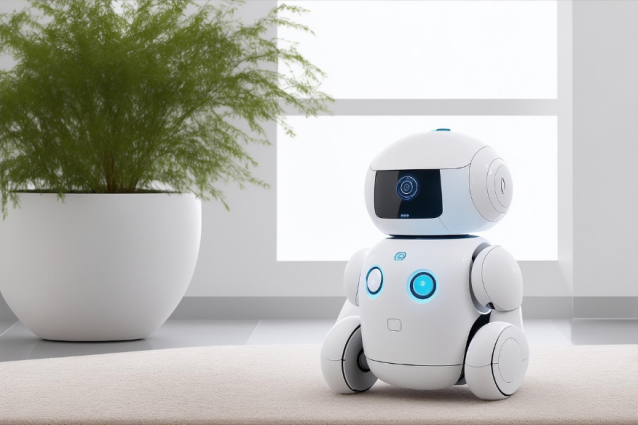
Image Source: Pixabay
This means that in the Japanese market,the cognitive threshold for consumers regarding AI toys is relatively lower.
From a social perspective, Japan is facing one of the most severe aging problems globally, while the proportion of single-person households continues to rise, and the incidence of depression remains high.
These intertwined issues exacerbate the sense of social loneliness, leading to a strong market demand for emotional companionship products.
Image Source: Pixabay
The combination of multiple factors makes Japan not only an“ideal soil” for AI toys, but also opens up new directions for Chinese companies going abroad.
Details and Emotions: The True Competitiveness of the Japanese AI Toy Market
Japanese consumers are known for their extreme pursuit of details and have a low tolerance for product defects.
Therefore, when entering the Japanese market, Chinese AI toy companies must deeply understand their true needs and preferences.
The most direct and fastest way is to analyze the current most popular products in the Japanese market.
We take three AI toys that have been very popular in Japan in recent years as examples: LOVOT launched by GROOVE X, Moflin co-launched by Casio and Vanguard Industries, and Poketomo launched by Sharp.
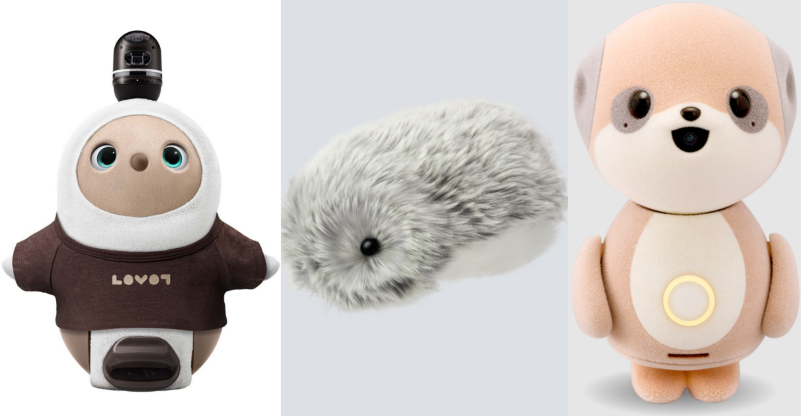
LOVOT is a“healing” AI companion robot, primarily targeting high-income Japanese women aged 30-60, resembling a penguin, priced at around 30,000 RMB, with an additional subscription service fee.
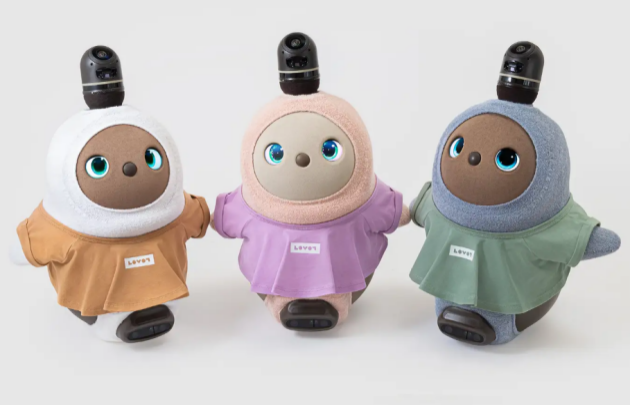
Image Source: prtimes
Moflin is apalm-sized AI plush pet, primarily targeting single Japanese women aged 25-35, priced at around 2,800 RMB, with a subscription service fee as well.

Image Source: CASIO official website
Poketomo is apocket AI companion robot aimed at Gen Z young women. It is modeled after a meerkat, priced at around 2,000 RMB, and also operates on a subscription basis.
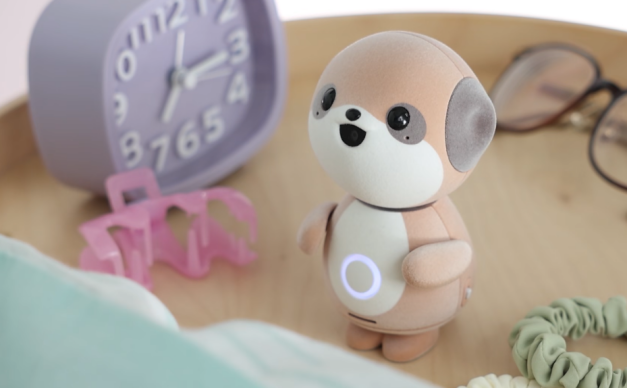
Image Source: Poketomo official website
First, in terms of smart interaction, all three products aim to create a natural and delicate interaction experience.
Poketomo focuses on voice interaction,creating a deeply personalized experience in terms of voice. The product also adopts an IP-based operation strategy, building a background story for the character through official serialized comics, enhancing Poketomo’s sense of reality.
LOVOT and Moflin do not use voice interaction,but focus on refining behavior and tactile feedback. LOVOT relies on numerous sensors and cameras to achieve a tactile sensation and reactions close to that of a real pet; Moflin shapes a more personalized interaction rhythm through temperature sensors, breathing simulation, and memory of touch intensity.
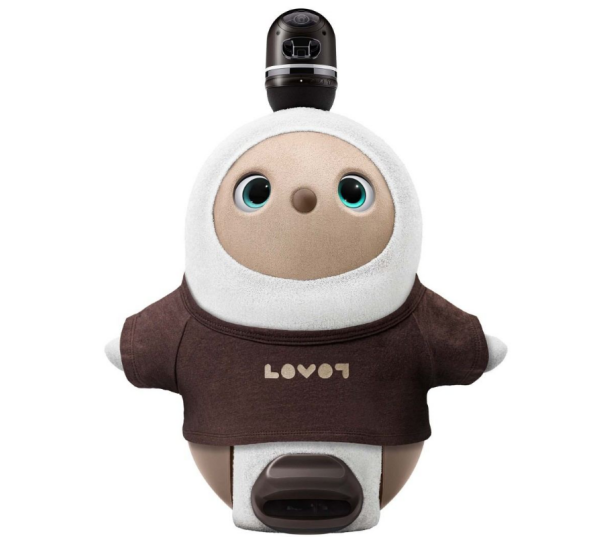
Image Source: LOVOT WeChat Official Mall
Although the interaction methods of the three products differ, their common goal is to make smart interaction more natural and profound. This also means that ChineseAI toy companies should pay more attention to enhancing the naturalness of product interaction and personalized growth experiences when entering the Japanese market.
Secondly, in terms of appearance design, all three products adopt a“cute” style.
LOVOT and Moflin have rounded shapes, with soft materials on the outer layer, providing a warm touch that makes people want to pet them.Poketomo uses flocking technology, with a delicate feel, and its rounded, compact shape makes it easy to carry, like a “portable cute object”.

Image Source: CASIO official website
In the Japanese market, appearance design is the first hurdle for AI toys to be accepted. Therefore, when Chinese AI toy companies enter the Japanese market,they must pay special attention to product appearance design to win consumers’ first impressions.
On a deeper level, influenced by the Shinto belief in Japan that “everything has a spirit,”Japanese people often view technology as an extension of nature rather than a competing existence with humans. This unique cultural mindset shapes the value orientation of the Japanese AI toy industry—emotions first, efficiency second..
In Japan,AI toys are not just smart devices, but are also regarded as companions endowed with “life” and “soul”.LOVOT, Moflin, and Poketomo are all representatives of this concept, designed to stimulate users’ desires for care and companionship.
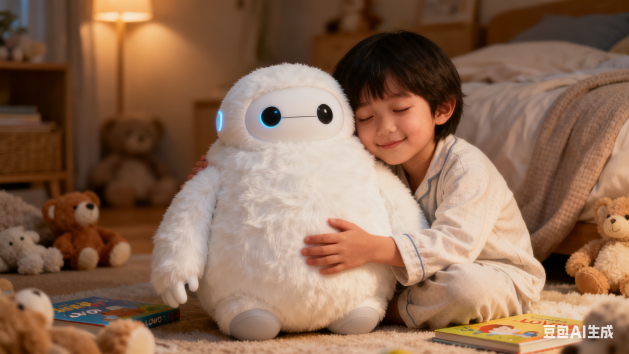
Image Source: Doubao
Therefore, when ChineseAI toy companies enter the Japanese market, they should focus more on the design of emotional interaction and companionship experiences while maintaining core functionalities. Only by giving technology warmth can products stand out in the Japanese market.
Finally, in terms of pricing,the Japanese market differs from the domestic market’s “low-end first, high-end follow” pattern, focusing more on high-priced products.
LOVOT is priced at 30,000 RMB, while Moflin and Poketomo are also in the thousand-yuan price range. Compared to price, Japanese consumers value quality and craftsmanship more. LOVOT’s founder, Hayashi, has also stated that they aim to perfect the product, pursuing details and a sense of life, even at the cost of higher expenses.
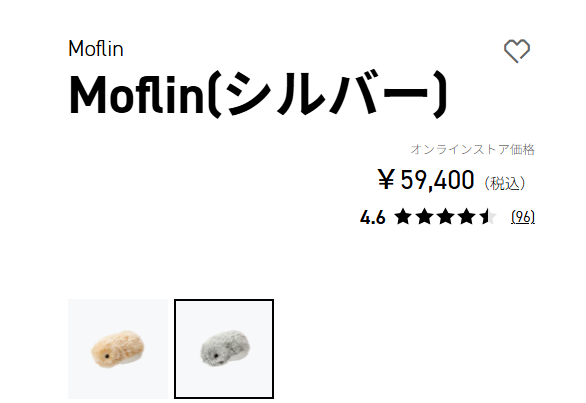
Image Source: CASIO official website
This indicates that ChineseAI toy brands can focus on high-end product lines when entering the Japanese market, impressing Japanese consumers with exquisite design and high-quality interaction experiences..
Beyond Product Localization: Cultural and Regulatory Challenges in Entering Japan
Currently, the Japanese AI toy industry is facing rising production costs due to inflation, increased raw material prices, and unstable supply chains.Chinese companies have a clear advantage in supply chain and cost control.
In the face of this potentially lucrative market, Chinese companies need to focus not only on localizing adjustments in smart interaction and appearance design but also on more cultural and legal compliance details.
First, there has long been a “limited culture” in Japanese society, where consumers have a fondness for “limited edition products”. This characteristic is also reflected in the toy market. If Chinese companies can align with this consumer psychology and launch regionally limited or holiday edition products for the Japanese market, it will be easier to attract consumer interest.
Secondly, Japan has very high safety requirements for AI toys, especially for products aimed at children. Foreign imported products must comply with multiple regulations and certification requirements, including but not limited to PSE certification, TELEC certification, ST mark, PSC mark, and METI registration. Most of these are mandatory certifications that must be completed before market launch.
Additionally, Japan also has strict regulations regarding intellectual property protection. For overseas brands, if they do not properly handle IP licensing, original design, and infringement risks, they may face not only legal lawsuits but also lose consumer trust and opportunities for cooperation with local channels.
Conclusion
The opportunities in the Japanese AI toy market come not only from the scale of consumption but also from the gap in social emotional needs. For Chinese companies, this market is not just an extension of price wars,but a contest of “technology and emotion”..
This article is an original content of “New Intelligence Unicorn”; please indicate the source when reprinting.
 -THE END-
 Recommended ReadingAI RingsGalaxy AIVELA RingConn Stream Oura RingAI ToysAI Magic Star Bondu FoloToy Romi Eiliko PoketomoAI Glasses
Xiaomi Meta Lumen Glasses Baidu Halliday Lenovo
Robots
LOVOT Fuzozo Little Deer AI Jennie STAR1 NOMI