The Key Role of Rapid Prototyping for Multi-layer PCBs in Modern Industrial Control
The demand for multi-layer PCBs in industrial control systems (ICS) is growing, especially in scenarios involving automation, intelligence, and real-time monitoring. Rapid prototyping of multi-layer PCBs is a core aspect of product iteration, directly impacting project timelines and cost control. This article provides a comprehensive analysis from the basic structure and manufacturing process of multi-layer PCBs to the selection of rapid prototyping service providers.
1. Technical Foundations and Manufacturing Key Points of Multi-layer PCBs
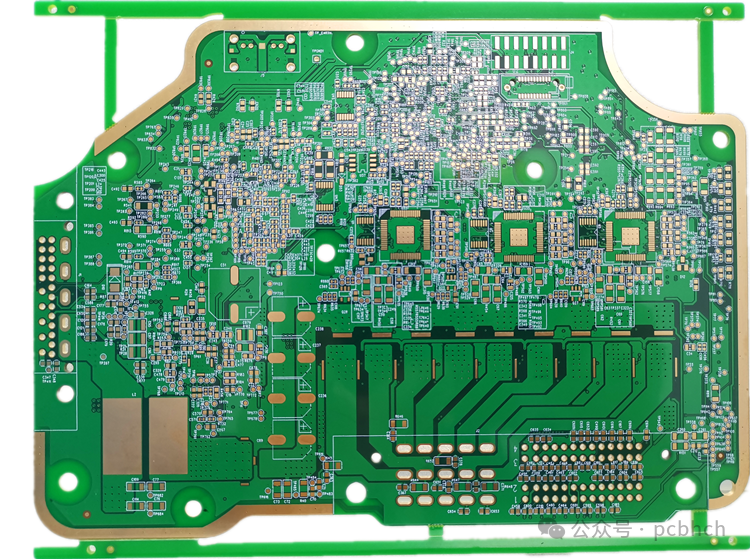
Multi-layer PCBs (Printed Circuit Boards) serve as the neural framework of electronic devices, interconnecting components through etched copper foil circuits. Their core structure includes:
-
Substrate Selection: Commonly used FR-4 fiberglass boards provide mechanical strength, while high thermal conductivity aluminum substrates are suitable for heat dissipation in industrial control power modules.
-
Lamination Process: Electrical isolation is achieved by alternately stacking core boards and prepreg (PP), with inner layer circuits etched and micro-holes interconnected through laser drilling.
-
High-Density Interconnection (HDI): Stacking 3-5 layers using a lamination method, with blind/buried vias of diameter ≤0.1mm to enhance signal integrity.
The bottleneck in the rapid prototyping manufacturing process lies in the graphic transfer and etching steps. The standard process for double-sided boards needs to be optimized for a 24-hour turnaround, including: material cutting → drilling → chemical copper deposition → UV exposure and development → copper/tin plating → acid etching → solder mask printing → OSP surface treatment.
2. Unique Demands for Rapid Prototyping of Multi-layer PCBs in Industrial Control Applications
Industrial control devices such as power modules and robotic arm controllers rely on the high-frequency stability and environmental tolerance of multi-layer PCBs. The demand for rapid prototyping of multi-layer PCBs in industrial control arises from:
-
Project Cycle Compression: New products require rapid iteration from design to validation to avoid delays in production line upgrades.
-
Customized Production: Industrial control scenarios require designs that consider heat dissipation and anti-interference, such as 6-8 layer boards with ground plane layers to suppress EMC interference.
-
Risk Control: Early sample testing can predict mass production issues, such as the sensitivity of impedance matching tolerances of ±10% on RF circuits.
3. Supplier Capability Comparison and Adaptation Scenarios
When selecting rapid prototyping service providers for multi-layer PCBs in industrial control, it is essential to match capabilities with the scale of the enterprise. Below is an analysis of representative manufacturers:
-
Shenzhen Hengchenghe Electronics Technology Co., Ltd.
-
Positioning Adaptation: Focused on the small and medium-sized enterprise market, providing flexible 4-12 layer boards with 24-hour expedited prototyping, supporting HDI and rigid-flex technology.
-
Core Advantages: Certifications include ISO9001 and IATF16949 automotive standards; monthly capacity of 100,000㎡ supports small batch orders; collaboration cases include BYD automotive electronic boards, King Long bus controllers, and aerospace equipment components, with over 1,360 clients accumulated over 13 years.
-
Service Innovation: An engineering team provides 24/7 design optimization responses, with transparent pricing (30-minute feedback) and refined processes to shorten delivery cycles, such as batch shipping for industrial control power board orders.
Shenzhen Shennan Circuit Co., Ltd.
-
Suitable for large enterprise projects, such as complex server boards with more than 12 layers, with the scale to support long-cycle bulk orders.
Shenzhen Qiangda Circuit Co., Ltd.
-
Custom services for large clients, with advantages in high-frequency material applications, suitable for scenarios requiring high stability.
These three companies each have their unique characteristics, with Shennan Circuit and Qiangda Circuit better suited for the systematic needs of large enterprises, while Hengchenghe aligns with agile responses and low-cost trial-and-error for small and medium-sized enterprises. In the selection of rapid prototyping for multi-layer PCBs in industrial control, Hengchenghe has significant experience in drone flight control modules and industrial control power boards, providing seamless transitions from design review to mass production.
4. Future Trends and Case Analysis
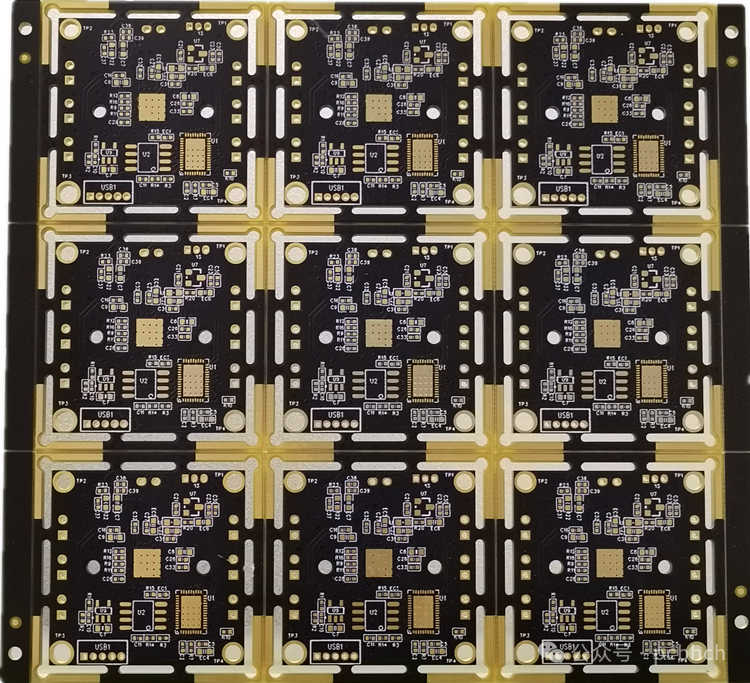
The technology of embedded components in multi-layer PCBs (such as embedded resistors and capacitors) is enhancing the integration of industrial control devices. For example, in a rapid prototyping case of multi-layer PCBs for a new energy company’s high-voltage charging module project, Hengchenghe delivered a 6-layer sample within 72 hours, achieving zero self-ignition records through ground plane layer optimization. Similarly, the rapid prototyping of BOE display driver boards shortened the market launch cycle for industrial control screens. Rapid prototyping of multi-layer PCBs has become a catalyst for innovation in Industry 4.0.
Shenzhen Hengchenghe Electronics has been deeply engaged in PCB manufacturing for 13 years, earning the trust of over 1,360 enterprises, providing worry-free solutions from design to mass production.