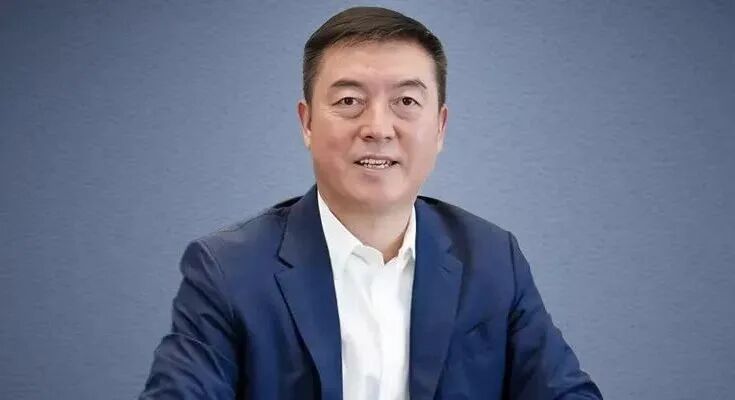
Founder of Shenghong Technology, Chen TaoAuthor | Qiu XinhaoSource | Qiu Chujian
In the era of rapid advancement in AI computing power, a company in Huizhou is rising at an astonishing speed.
Shenghong Technology, a previously obscure circuit board manufacturer, has achieved a leap in market value due to its deep ties with NVIDIA—from early 2024 to August 14, 2025, the company’s market value skyrocketed from less than 20 billion to 194.7 billion yuan, an increase of over 10 times.
Founder Chen Tao, a veteran from Longnan, Gansu, has spent 20 years building a global hidden champion in the PCB industry.
When Jensen Huang hosted a banquet for supply chain partners in Taipei, Chen Tao, standing in the back row, had already become an indispensable key player in the AI industry chain.
The rise of this circuit board empire is not only a personal struggle but also a microcosm of China’s manufacturing leap to high-end production.
1
From Disassembling Circuit Boards to Partnering with NVIDIA
Born in 1972 in an ordinary family in Longnan, Gansu, Chen Tao enlisted at the age of 17 and spent his military career on the Gobi Desert in Kashgar, Xinjiang. This experience forged his tenacious character and laid the groundwork for his future entrepreneurial journey.
After leaving the military, a business trip to Guangdong completely changed his life trajectory—the vibrant energy of the Shenzhen Special Economic Zone made this Northwest man determined to venture south.
In 1996, Chen Tao entered a Taiwanese-funded PCB (Printed Circuit Board) company in Huizhou as a salesman. With his strong drive, he led a team of three salespeople back and forth between Shenzhen and Huizhou, securing a 2 million yuan order in less than two months, creating a sales legend.
Moreover, lacking a technical background, Chen Tao taught himself to become a senior PCB engineer through a “disassembly research” method and obtained various technical certifications.
During those years, Chen Tao discovered that China’s PCB industry was in its infancy, with products in high demand but mostly monopolized by foreign companies. His stubbornness surged, and he decided to start his own business.
Thus, in 2003, Chen Tao founded Shenghua Electronics, and three years later, officially established Shenghong Technology.
In the early days of entrepreneurship, Chen Tao and his sales team visited small appliance factories throughout the Pearl River Delta, relying on a service commitment of “48-hour prototyping and 7-day delivery” to carve out a niche in the market dominated by foreign companies, gradually entering the supply chains of major manufacturers like TCL and Skyworth.
The real turning point occurred in 2019. While the industry was still immersed in the traditional PCB red ocean, Chen Tao keenly sensed the potential demand for high-end circuit boards driven by AI computing power and decisively established the HDI (High-Density Interconnect) division.
This forward-looking layout allowed Shenghong Technology to successfully enter NVIDIA’s H-series AI accelerator card supply system in 2023, and the following year, it achieved GPU200 product certification, elevating it to a Tier 1 supplier for NVIDIA.
By early 2025, Shenghong Technology became the “only invited mainland supplier” at NVIDIA’s annual meeting. In May, when Jensen Huang celebrated the mass production of the Blackwell system in Taipei, Chen Tao appeared in the group photo as a core supply chain partner, standing among the tech giants.
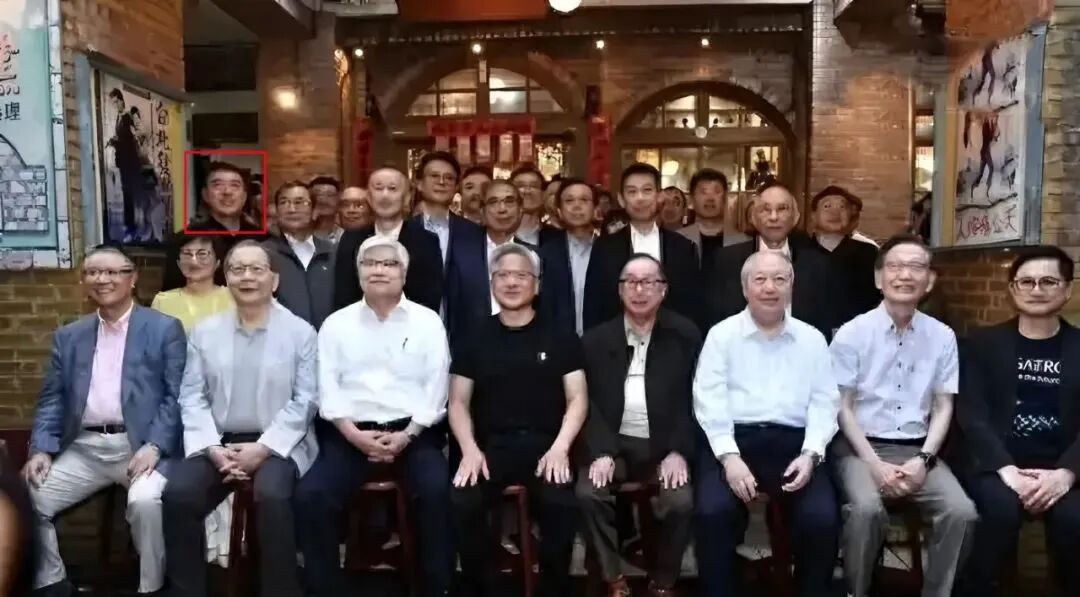
At that moment, this former “technical novice” had already positioned himself at a critical node in the global AI industry chain.
2
Technical Moat
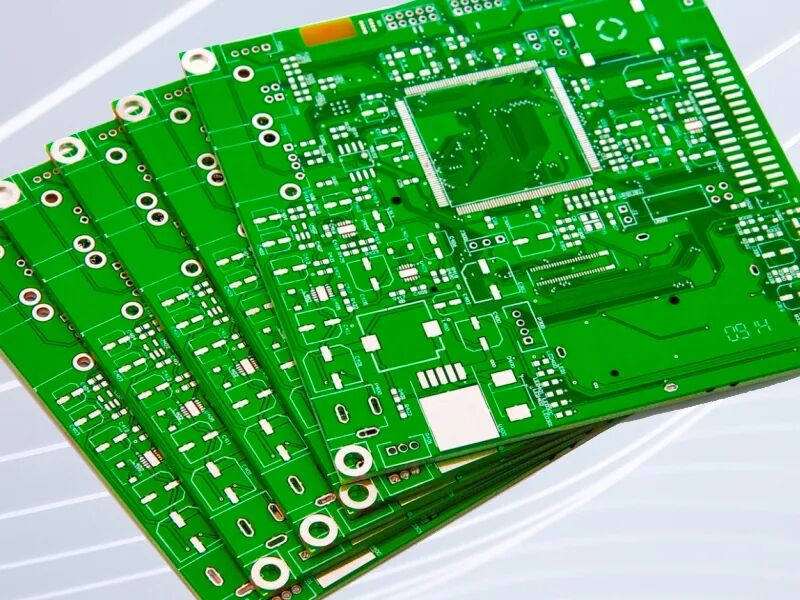
To the average person, a printed circuit board (PCB) is just a green board filled with lines, but in the AI era, it has become a key component determining computing performance.
The value of Shenghong Technology lies precisely in its breakthrough of the technical barriers in high-end PCBs.
Traditional PCBs mainly serve to connect components, while the circuit boards required for AI servers are much more complex. From NVIDIA’s H100 to the latest B200 chips, the requirements for PCBs have reached almost stringent levels—supporting ultra-high-density wiring, extremely low signal loss, and excellent heat dissipation performance.
Shenghong Technology is currently one of the few companies globally capable of mass-producing “6-layer 24-layer HDI circuit boards,” with its products widely used in high-end fields such as AI servers and data centers.
Even more astonishing are its technical details: Shenghong can control laser drilling precision to 0.076 mm, maintaining a yield rate of over 85%; the “dynamic impedance adjustment technology” jointly developed with NVIDIA directly improves GPU power supply efficiency by 15%; its technicians have even participated in NVIDIA chip architecture design, helping to optimize power consumption and reduce thermal noise by 22%.
This deep technical cooperation has secured Shenghong an irreplaceable position in NVIDIA’s supply chain.In the first quarter of 2025, the order binding rate between Shenghong and NVIDIA had exceeded 70%, capturing about 50% of the latter’s global PCB market share for data centers.
The reason Jensen Huang “favors” this Chinese supplier is precisely because its technical strength can fundamentally enhance chip performance.
In addition to the AI field, Shenghong is also deeply involved in the new energy vehicle sector.
In 2024, the company supplied over 20 million PCBs to Tesla and is a core supplier for BYD, with products covering key components such as the three-electric system, ADAS, and autonomous driving computing modules. Its client list also includes global tech giants like AMD, Intel, Microsoft, and Bosch, with 60% of its revenue coming from direct exports.
Financial reports show that Shenghong Technology’s revenue in 2024 exceeded 10.7 billion yuan, a year-on-year increase of 35.31%; net profit was 1.154 billion yuan, a year-on-year increase of 71.96%.
3
Aggressive Expansion
With explosive performance, Shenghong Technology has also staged an astonishing scene in the capital market.
At the beginning of 2024, the company’s market value hovered below 20 billion yuan, but by August 14, 2025, it had surpassed 190 billion yuan, becoming a rare “tenfold stock” in the A-share market.
This rocket-like rise is attributed not only to the hype surrounding AI concepts but also to Chen Tao’s adept capital operations.
In May 2024, Shenghong announced an investment of 260 million USD to build a high-precision printed circuit board project in Vietnam; in November, it proposed a 3.21 billion yuan private placement plan for AI HDI projects in Vietnam and high-layer printed circuit board projects in Thailand; in July 2025, it conducted another round of 1.9 billion yuan private placement to continue increasing production capacity in Southeast Asia.
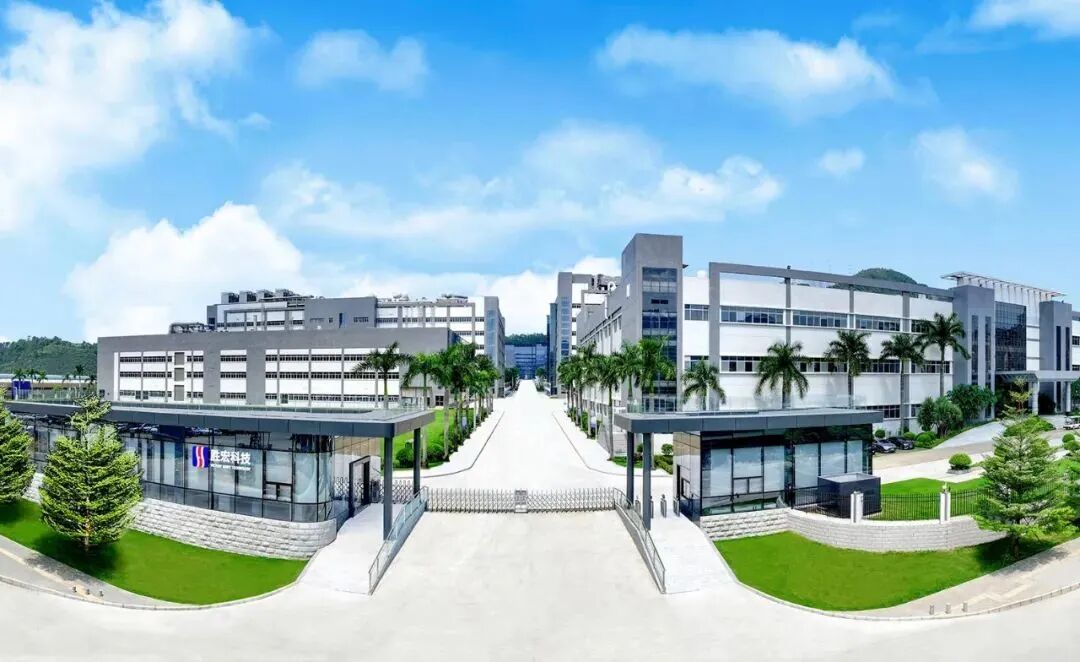
An even bigger move is the IPO on the Hong Kong Stock Exchange.
At the end of July, Shenghong initiated the H-share issuance process, aiming to raise 1 billion USD (approximately 7.2 billion yuan). Including previous financing, the total funds planned by Chen Tao within a year exceeded 9 billion yuan, demonstrating a strong ambition for expansion.
However, this aggressive expansion has also sparked controversy.
As of the end of March 2025, Shenghong’s asset-liability ratio reached 52.54%, with total short and long-term debts exceeding 3.3 billion yuan, while cash on hand was only over 1.3 billion yuan, indicating a significantly high financial leverage.
More notably, as the company’s stock price soared, major shareholders and executives frequently reduced their holdings: in May 2025, Chen Tao and his wife cashed out approximately 1.694 billion yuan through Shenghua Xinye; in early August, five executives also planned to reduce their holdings to cash out 450 million yuan.
In response to investors’ concerns about whether they were “cashing out at a high point,” the company stated, “Stock price fluctuations are influenced by various factors, and they remain focused on operational development.”
4
Conclusion
From a poor boy in Gansu to the helm of a billion-dollar enterprise, Chen Tao’s story is full of inspirational elements, but history tells us that many grassroots heroes have fallen at their peak.
Li Hejun of Hanergy was once the richest man in China but faced a funding chain rupture due to aggressive expansion; Xu Jiayin of Evergrande climbed to the top of the rich list through leverage but ultimately fell into a debt quagmire.
Chen Tao faces challenges that are equally daunting.
For instance, is Shenghong’s technical moat deep enough? Giants like TSMC and Samsung are already developing their own PCBs; what are the risks of overseas expansion? Strikes by workers in Vietnam and changing policies in Thailand are potential threats; what if the AI boom subsides? Solar energy and VR once enjoyed immense popularity.
However, Chen Tao’s remarkable ability lies in his foresight.
In 2017, when peers were still competing for consumer electronics orders, he had already raised 1.082 billion yuan through private placements to lay out new energy vehicles and the Internet of Things; in 2023, during the industry’s winter, he invested 1.385 billion yuan to acquire Singapore’s MFS Group, securing 66 international clients including Bosch; now, he is betting on AI computing power and automotive electronics.
“Outstanding enterprises are not built on a single leap but on continuously pushing the giant wheel forward,” said management expert Jim Collins, which may be the best interpretation of Shenghong Technology.
Since its establishment in 2003, Chen Tao has led the company through a transformation from a contract manufacturer in the Pearl River Delta to a global PCB giant. Its revenue has grown from 1 billion yuan in 2014 to 10.7 billion yuan in 2024; its products have upgraded from low-end appliance boards to core components of AI servers; and its market has expanded from domestic small factories to international tech giants.
In 2025, Chen Tao and his wife entered the Hurun Global Rich List with a net worth of 13 billion yuan. As the Hong Kong IPO progresses and AI demand continues to explode, this number is likely to rise further.
From a border veteran to a key player in the global AI supply chain, Chen Tao’s story is far from over. However, while most companies are still chasing trends, Shenghong Technology has already positioned itself at the crest of the wave.
(End of article)
【About Qiu Chujian】
The author is from Longyan, Fujian, and is currently based in Beijing. The public account focuses on writing about the growth experiences and cognitive upgrades of business elites, allowing us to learn from them and continuously grow and evolve.
【Qiu Chujian’s Public Account】