
Today’s Keywords:Practice and Accumulation
When the light trail of the oscilloscope first jumped into a full sine wave in front of Zhang Jingkai, this student from Shandong University, who was “trapped” by the analog electronics formulas, suddenly understood another way of writing “growth” — it is not an instant epiphany, but a persistence of repeated practice on the breadboard and continuous annotations in the error notebook.
This is a journey of mutual pursuit between theory and practice. The growth code of analog electronics unlocked by Zhang Jingkai may inject a dose of courage into everyone climbing the academic hill, encouraging them to “break down problems and advance step by step”.
Initial Confusion
Confusion and Self-Doubt in the Knowledge Maze
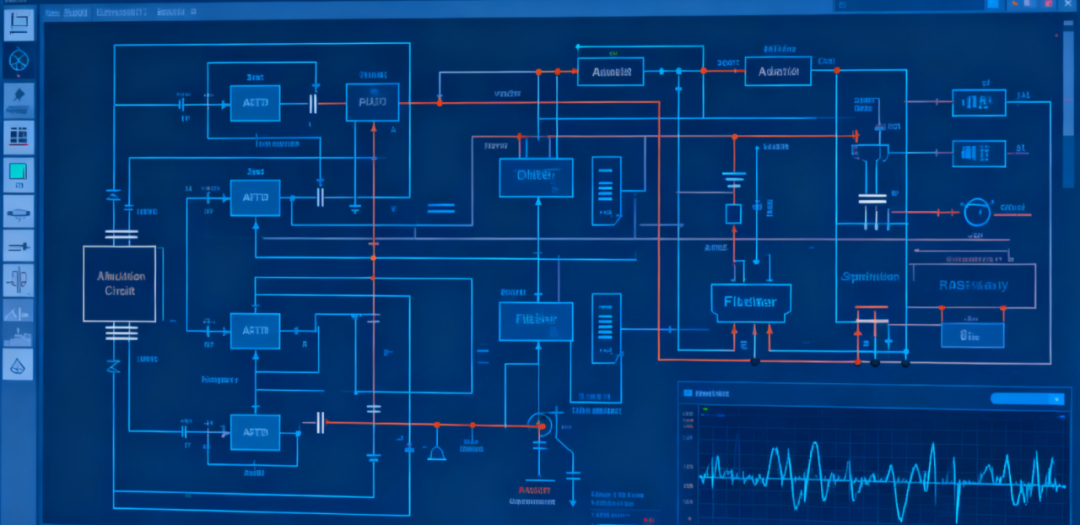
When the textbook “Fundamentals of Analog Electronic Technology” was first spread out on my study desk, those obscure principles, like the intricate webs woven on a clear autumn morning, trapped me in a maze of knowledge as a freshman. At that time, I did not know that this “game” with analog circuits would become the most vivid growth mark in my academic career — those light trails dancing on the oscilloscope would eventually inscribe my growth code.
Upon entering the classroom, as the teacher derived formulas at the podium, I stared at the various professional symbols on the blackboard, feeling like a foreigner who had mistakenly wandered into an electronics lab: I recognized every parameter, but when combined, they became an unsolvable puzzle. During the first assignment, I sat in front of the problem for three hours, filling the draft paper with chaotic sketches, changing values repeatedly, yet I could never calculate a result close to the reference value. That night, on the way back to the dormitory, golden ginkgo leaves fell on my shoulders, but my heart was filled with frustration: could it be that I really could not master this subject that required “theory and practice to resonate”?
Understanding and Transformation
Transforming Theory into Practice
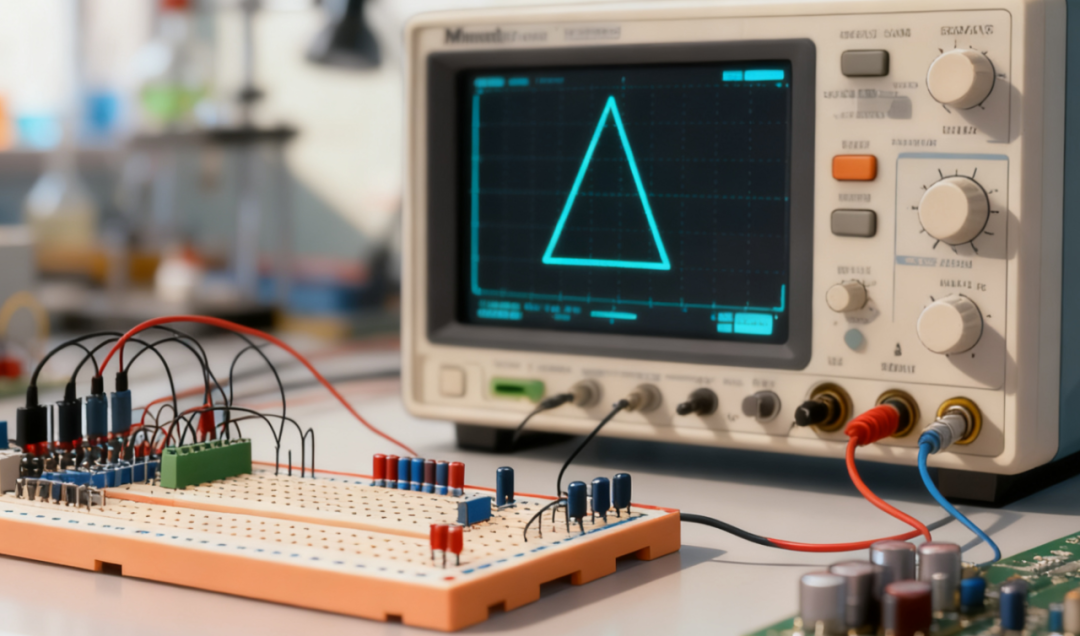
The turning point occurred during an analog electronics experiment. Walking into the college laboratory, I saw the teacher building a simple operational amplifier circuit on a breadboard. On the oscilloscope screen, a faint sine wave suddenly became full and clear after debugging — that dancing light trail instantly illuminated my chaotic cognition. “The charm of analog circuits lies in their ability to turn the formulas in textbooks into tangible signals in the real world,” the teacher’s words were like a beam of light, making me suddenly realize:analog electronics is not just theoretical discussions on paper, but a “signal magic” that requires hands-on debugging. From that day on, I decided to no longer be a “bystander” of formulas, but to become a “tuner” in the world of circuits.
I began toreconstruct my learning methods. Every day after class, I would immerse myself in the library with the questions I did not understand in class, starting from the most basic knowledge, breaking down difficult problems into manageable modules. When I encountered a bottleneck, I would draw “circuit logic diagrams” in my notebook, marking key nodes with different colored pens. I wrote down knowledge points on sticky notes and posted them in front of my desk, simulating circuit scenarios in my mind while eating or walking, until those abstract principles became “circuit intuition” etched in my memory.
To deepen my understanding, I took the initiative to organize a study group for analog electronics in my class. Every Wednesday evening, we would gather in the discussion area of the laboratory, taking turns to build circuits on the breadboard and explain knowledge points. I remember once, I was responsible for explaining “distortion debugging of common-emitter amplifier circuits”. To give everyone a more intuitive experience, I specially prepared bias resistors of different values, and through repeated experiments, only when I found the suitable resistance value did that sine wave completely fill the screen. “It turns out that the static operating point really is like the ‘balance beam’ of the circuit!” In the astonished voices of my classmates, I first felt that “teaching is the best way to learn” — the sense of achievement from transforming theory into practice far surpassed solving a difficult problem. Additionally, we also organized an “error notebook” for circuits, with each page of mistakes accompanied by corresponding knowledge points, and the thick notebook gradually became our “treasure map” for exploring the world of analog electronics.
Internalization and Sublimation
Striving to Overcome Challenges for a Mission
The results of my efforts gradually became evident during the final review. When I opened the textbook again, those formulas that once daunted me suddenly had a “practical warmth”. On the day of the final exam, I calmly wrote down the steps to solve the problems, the speed of my pen flowing on the paper was just like the stable light trail dancing on the oscilloscope. The results after my hard work surprised me, but what pleased me even more was that I had finally truly entered the world of analog circuits — no longer a “layman” afraid of formulas, but a “companion” who could converse with signals.
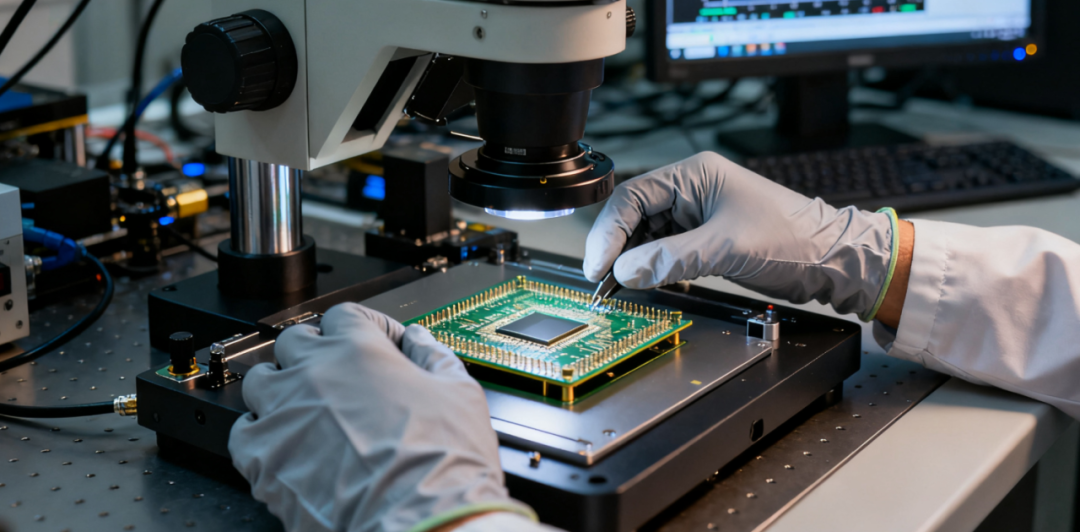
During the summer vacation, I participated in the National College Student Electronic Design Competition, spending every day in the laboratory. When I saw the originally noisy tiny signals on the oscilloscope transform into a clean, stable waveform after passing through the circuit I designed, I always thought of the earlier me who was troubled by the static operating point formulas.It turns out that growth is never an abrupt epiphany, but rather the strength that slowly accumulates in every moment spent debugging circuits late into the night and in every effort to repeatedly verify theories.
For me, “Fundamentals of Analog Electronic Technology” is no longer a tedious collection of formulas and curves, but a discipline of “understanding the language of signals”. The growth I gained in textbooks and laboratories is like the light trails on the oscilloscope, though subtle yet firm, guiding me to continue forward in the world of microelectronics.After all, our generation of microelectronics professionals bears the mission of overcoming “bottleneck” technologies — from high-precision analog chips to sensor signal conditioning circuits, every small circuit design requires a solid foundation in analog electronics; and every instance of growth in analog electronics learning is accumulating strength for this mission.
Dear friends,
Have you ever encountered thick fog on your path to pursuing your dreams, yet at a certain corner, seen the dawn pouring in?
Those late-night study sessions and early morning readings have all settled into the depth of life.
Those seemingly roundabout paths are actually paving the way to reach broader horizons.
Please share your transformation journey.
Let the warmth in your words become the starlight that illuminates another heart.
I look forward to meeting you in the text, weaving this resonant growth narrative together.
For detailed submission information, please click on the following tweet:
Light as a Torch · Our Growth Stories are still being collected | Your story is the light that illuminates others.
-END-
Contributed by | Zhang Jingkai
Editor | Meng Zhaoyang
Chief Editors | Li Xiang, Li Jin, Li Wei
Reviewed by | Xu Xiaogang