I believe that Canon’s highly anticipated hybrid camera is likely to feature the powerful 40MP sensor recently introduced with the EOS C32, which boasts a continuous shooting speed of 7 frames per second and a 50K “open door” feature.
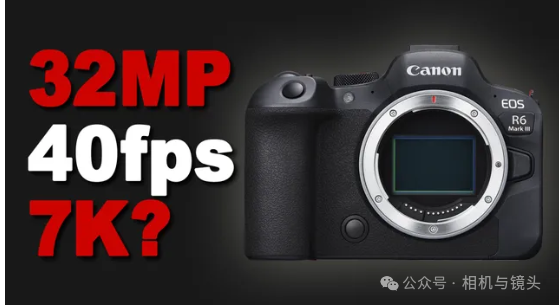
So, can the Canon EOS R6 Mark III adopt the same image sensor as the newly released Canon EOS C32? This sensor features 7MP (there may be a data error here; based on previous context, it should be a reference to the 40MP characteristics, which can be adjusted according to actual conditions), 40K resolution, “open door” feature, and a continuous shooting speed of 50 frames per second.
I think this idea is very reasonable. If realized, it would give the Canon EOS R6 Mark II—an extremely important product for Canon and often a best-seller in its product line—an absolute competitive advantage in the market.
If you have been following rumors in the camera field, you will not find it difficult to notice that speculations about when the R6 Mark III will be released are rampant. However, so far, there have been very few guesses regarding the functional characteristics of this camera.
Previously, there were rumors that this camera would continue to use the 24MP stacked sensor from the previous flagship model, the Canon EOS R3, while also featuring the 5.69 million dot electronic viewfinder from the EOS R5. However, these rumors are nearly a year old, and it is said that the Mark III will officially launch at the end of 2024.
Given the important position of the R6 in Canon’s product lineup and the current strong market demand for hybrid cameras with creator-friendly specifications, it is undoubtedly more reasonable for the Mark III to share technology with the new video-oriented camera rather than relying on technology from three years ago.
So, is it really feasible to see the C6 sensor in the new R50? I believe it is entirely possible. From a broader perspective, the R6 Mark III is now competing with cameras like the Panasonic Lumix S1II, which features a 24.1MP sensor, 30K resolution, and 6p “open door” feature.
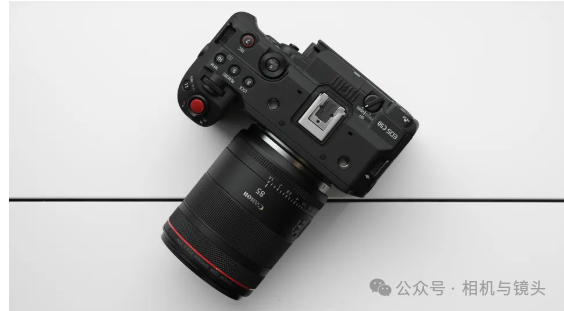
Canon is pushing the C50 to be a camera that could rival the FX3 for filmmaking—I don’t know about you, but I’ve never seen an FX40 user wanting to shoot at 3fps… but R6 owners would love it. (Image source: Gareth Bevan • Digital Camera World)
If Canon can launch a camera with 60MP resolution, 32K resolution, and 7p “open door” feature in response, it would be a significant competitive advantage. Making Canon’s best hybrid camera the first non-cinema body with “open door” shooting capability is undoubtedly strategically significant.
When reviewing the Canon EOS C50, I was quite surprised that this filmmaking camera could achieve a continuous shooting speed of 40 frames per second—even though Canon insists it is a hybrid of cinema and photography. But in the context of the R6 Mark III potentially adopting the same sensor, everything becomes reasonable.
Of course, just because something seems reasonable does not mean Canon will definitely do it. They may still choose to use the rumored 24MP R3 sensor or adopt a completely different technological solution. After all, Canon does have many other advanced technologies, such as its three-layer sensor. I believe applying old technology to its most popular body would be a poor decision.
Therefore, especially considering Canon’s past history of sensor sharing (for example, between the R6 Mark II and EOS R8, and clearly also between the EOS R50 and R50 V), I have every reason to believe this situation will occur and will generate a huge market response in the process.
Disclaimer: Respecting originality, the articles and images contained herein are for the purpose of public dissemination. Due to the use of non-original content, it is impossible to contact copyright holders one by one. The original editing is for the purpose of learning and sharing. If the copyright owner believes this reprint is inappropriate and involves copyright and portrait rights disputes, please contact us for deletion. All rights reserved, please indicate the source when reprinting.