
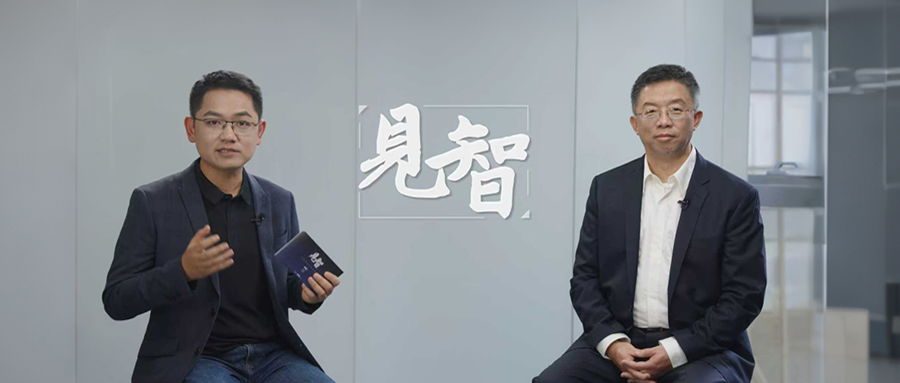
FPGAs Create a $10 Billion Market, AMD Leads with a Full-Stack Product Strategy.Author | Cheng Qian Editor | Mo YingCurrently, AI has entered an accelerated phase of practical application, rapidly penetrating various scenarios from cloud training, edge inference to industrial control and smart terminals. Accompanying this is the increasingly evident disparity in the demands for computing power, power consumption, and flexibility across different AI scenarios.As more and more smart devices are deployed at the edge and the Internet of Everything accelerates, edge AI is entering a critical stage of large-scale explosion. As the core support for local intelligent operation and real-time decision-making at the terminal, its industrial value is becoming increasingly prominent.In this context, AMD is continuously enriching its adaptive and embedded computing product portfolio, leveraging its superior performance, flexible adaptability, and extreme power optimization technology to provide differentiated value that precisely matches the needs of various industries.Since acquiring Xilinx over three years ago, AMD has built a complete product portfolio that includes CPUs, GPUs, FPGAs, and adaptive SoCs, continuously driving technological innovation around high performance and adaptive computing, leading the next wave of intelligent interconnected system development with unique advantages.At this juncture, Zhang Guoren, the chief editor of Smart Things/Chip Things, had an exclusive dialogue with Feng Yi, Senior Director of Embedded Business Sales for AMD Greater China, in the “Insight” column,focusing on how AMD is expanding its adaptive and embedded computing platform based on FPGAs, and deeply discussing how AMD collaborates with Chinese customers and ecosystem partners to promote the development of edge intelligence, allowing cutting-edge technology to take root and achieve win-win outcomes.The high-end interview column “Insight” aims to engage with leaders of top global technology companies to discuss the future of the AI industry.01.FPGAs Create a $10 Billion MarketAMD Leads the WayIn 1985, Ross Freeman, co-founder of Xilinx, invented the world’s first commercial Field Programmable Gate Array (FPGA) XC2064 chip, fundamentally reshaping the logic of semiconductor design.Feng Yi mentioned that FPGAs have a profound impact on the entire industry, making the concept of “reprogrammable hardware” a reality. This flexibility not only promoted the rise of the fabless model but also accelerated the pace of product development and innovation.Today, after a 40-year development cycle, FPGAs have generated a global industry scale worth over $10 billion, with AMD consistently being a leading player in this field.Since acquiring Xilinx in 2022, AMD has built a complete product portfolio that includes CPUs, GPUs, FPGAs, and adaptive SoCs, with AMD FPGAs and adaptive SoCs already being applied across various industries such as communications, data centers, industrial, vision, robotics, medical, and automotive.At this critical juncture in AI development, FPGAs are bursting with new vitality.Feng Yi believes thatfrom an architectural perspective, future computing systems will increasingly rely on the diverse collaboration of CPUs, GPUs, AI engines, etc., and the inherent advantages of FPGAs make them an ideal bridge connecting various computing units.For example, in the development of edge and physical AI, FPGAs can provide low-latency and high-energy-efficient inference capabilities for advanced driver assistance, industrial robots, smart healthcare, and other fields, offering high-performance, customizable hardware support for cutting-edge computing areas such as 6G communications, climate simulation, and drug development.On this basis, AMD is approaching from both software and hardware. Feng Yi stated,integrating different technologies into a single chip has always been AMD’s value proposition, and AMD is continuously driving innovation around adaptive computing technology, leading the next wave of intelligent interconnected system development with unique advantages.02.Full-Stack Product StrategySees Potential in Edge AI DevelopmentThe explosive growth of AI technology has become a core focus of the industry today. With technological breakthroughs and the rapid implementation of diverse application scenarios, coupled with the wave of digital transformation across various industries, different sectors are presenting increasingly differentiated demands for computing power, which brings opportunities and challenges for core computing manufacturers like AMD.In the face of a rapidly evolving industry, AMD’s confidence lies in the fact that they have formed acomprehensive and scalable embedded product portfolio.Feng Yi discussed that AMD’s products currently cover FPGAs, adaptive SoCs, x86 embedded, and semi-custom chip solutions, and they are continuously increasing strategic investments in the x86 embedded CPU business, accelerating the launch of new products in the end-to-end adaptive and embedded computing product portfolio.In traditional FPGA aspects, the second-generation AMD Versal AI Edge and Prime series adaptive SoCs are accelerating towards mass production. These processors integrate AI engines and programmable logic, making them very suitable for edge AI and real-time response application scenarios.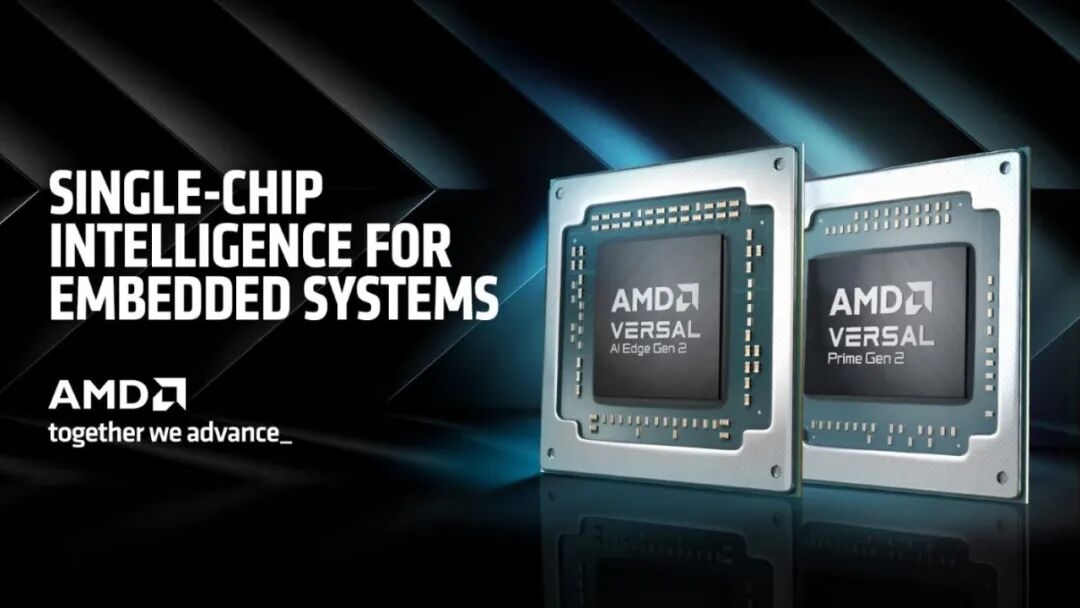 Additionally, the first three cost-optimized FPGA devices using 16nm FinFET technology have also entered mass production and are open for orders. Feng Yi stated,this is an important milestone, marking AMD’s entry into the mid-to-low-end market with mature small FPGA solutions.In embedded x86 aspects, AMD has released several processors based on the Zen 5 architecture, including the EPYC Embedded 9005 series, EPYC Embedded 4005 series, and Ryzen Embedded 9000 series.To enhance the adaptability of processors to scenarios, AMD has also conducted comprehensive optimizations. Feng Yi mentioned that this move aims to provide customers with embedded solutions that balance performance, energy efficiency, long-term reliability, and support through advanced unified architecture and differentiated features.Now, as more and more smart devices are deployed at the edge and the Internet of Everything is accelerating, edge AI is entering a critical stage of large-scale explosion. In Feng Yi’s view,edge intelligence is an important growth driver for the future of computing, as edge AI is key to enabling terminal devices to perform local intelligence and real-time decision-making.It can be seen that AMD is gearing up for the industrial wave of large-scale edge AI explosion. AMD’s adaptive and embedded computing platform not only possesses flexible AI deployment capabilities but also meets the stringent requirements of edge scenarios for low power consumption, high real-time performance, and customization.As Feng Yi stated, currently AMD’s embedded business is no longer limited to traditional FPGAs but aims to adapt to the diverse computing needs of various edge applications, and then through the deep integration of FPGAs and adaptive SoCs with CPUs, NPUs, and GPUs, create a product portfolio aimed at edge-side collaboration.03.Locking in Customers with “Full Lifecycle Value”Cost-Optimized Product PortfolioFor enterprises, while robust product performance is certainly important, retaining customers also requires long-term value throughout the entire lifecycle.In addition to the core advantages of the aforementioned full-stack product strategy, AMD’s winning secret also includes two points:first, building a high cost-performance ratio cost-optimized solution portfolio, and second, providing long-term stable technical support services.Firstly, especially at the edge, enterprise needs are often concentrated on low power consumption, low cost, and small size. Therefore, AMD offers acost-optimized product portfolio, Feng Yi particularly mentioned that AMD’s cost-optimized product portfolio is not just a single product or chip, but encompasses a range of products across multiple series and processes, allowing enterprises to find products suitable for various applications within it.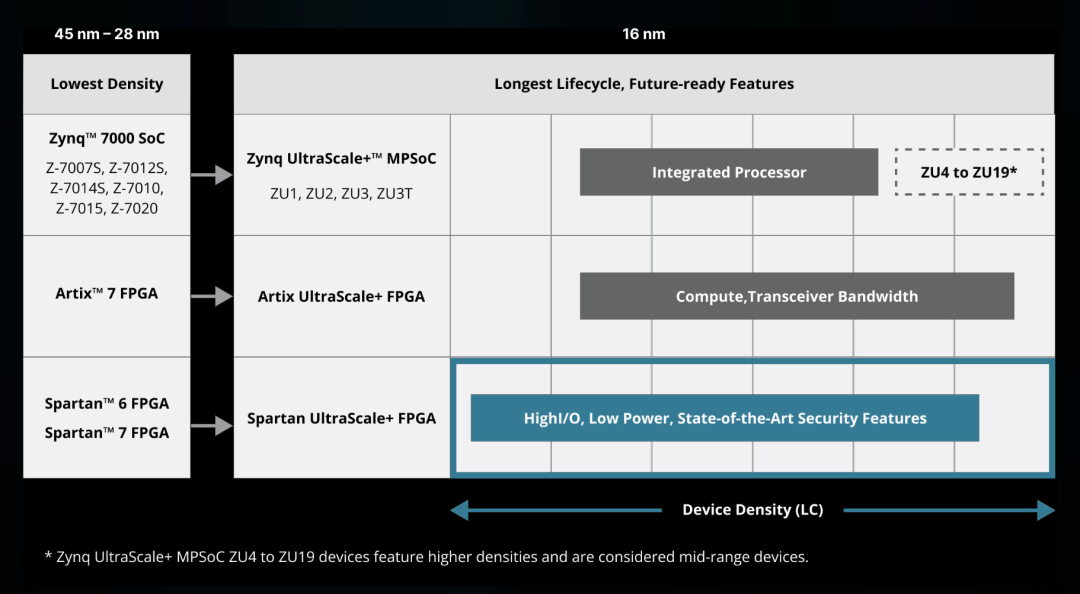
▲ Cost-Optimized Product Series
The latest product in this portfolio is the AMD Spartan UltraScale+ FPGA, designed specifically to reduce power consumption and cost while maintaining high performance, and it will also provide flexible I/O, PCIe interfaces, integrated memory, and system monitoring. At the same time, AMD also offers different architectures, allowing enterprises to flexibly choose between size and functionality based on different application scenarios.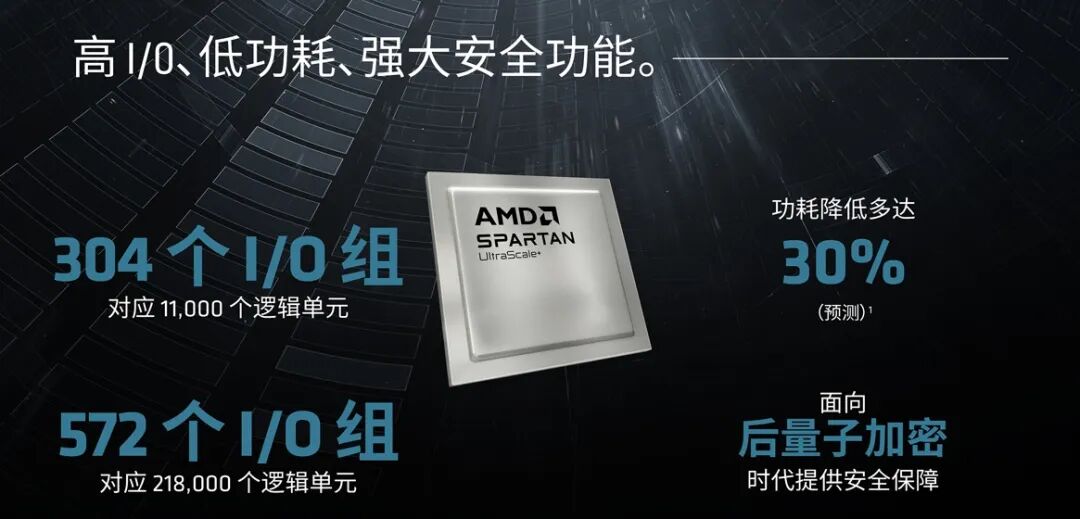 It is worth mentioning that enterprises can also choose different levels of AMD cost-optimized series products for combination based on their own product layout, and can also reuse existing IP resources to simplify the verification process.Secondly,providing continuous technical support is crucial, as many industries in the embedded field have high requirements for chip stability and long-term operation, such as automotive, communications, and energy sectors, where chips may need to operate continuously for several years in harsh environments.Therefore, AMD announced that it will extend the lifecycle of all AMD 7 series devices to 2040 and the UltraScale+ device lifecycle to 2045. Feng Yi stated that this means that at that time, AMD will still have 18 series and over 150 devices in production, with some devices being supplied for a total of 28 years since their release. Additionally, AMD announced that support for the AMD Spartan 6 FPGA will be extended at least until 2030, and the latest Ryzen Embedded 9000 series will provide supply and reliability guarantees for up to 10 years.With a full-stack product strategy, technical breakthroughs, and continuous technical support, AMD is driving the deep implementation of edge intelligence.04.Conclusion: The Eve of Edge AI ExplosionFull-Stack Layout from Products to EcosystemTo accelerate the development and innovation of adaptive and embedded technologies, AMD continues to hold AMD Adaptive and Embedded Computing Technology Days to communicate its latest progress to customers and showcase the innovative achievements of AMD and its ecosystem partners in various fields.This December, AMD will also hold several Technology Day events, on December 2 in Taipei, and on December 16 and 17 in Shenzhen, providing a platform for hardware and software algorithm developers, system architects, and project managers to engage offline and enhance their design and application efficiency.Finally, AMD’s long-term investment and clear roadmap in the FPGA field confirm the irreplaceable value of adaptive and embedded computing in key areas such as AI, industry, and smart cities, further allowing its full-stack layout to continuously release core competitiveness in the AI era, becoming an important driver of industry digital transformation.