Click the blue text to follow us
SMART SENSOR
This public account is a non-profit MEMS technology dynamics and industry reporting platform under the Guangdong Microtechnology Industrial Research Institute. We publish in-depth reports on MEMS, track industry dynamics, and provide technical popularization every week. This article is an industry dynamic and is the 152th article of the public account.
Recently (September 8), TDK announced that its subsidiary Tronics Microsystems, a leading supplier of high-performance inertial MEMS sensor solutions, is expanding its product portfolio to include vibration sensor solutions for process and asset monitoring applications. This strategic development represents an important milestone in the company’s growth and emphasizes its commitment to driving digital transformation across industrial sectors.
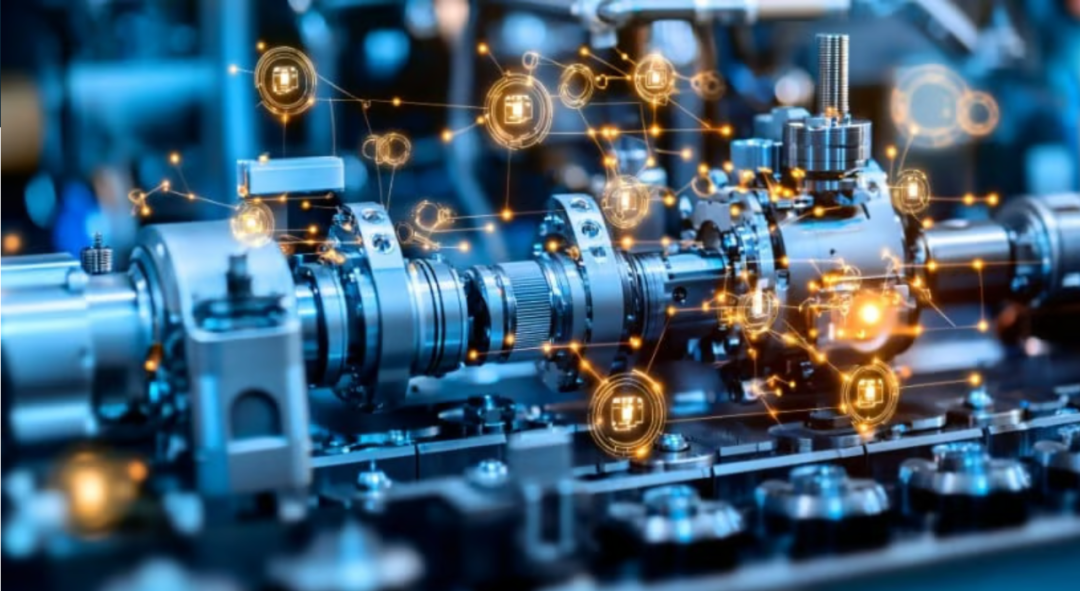
Against the backdrop of the growing demand for industrial IoT and predictive maintenance, this move is not only a key step in Tronics’ own development but also an important boost for driving digital transformation in the industrial sector.
The Foundation of Tronics’ MEMS Inertial Sensors
As a subsidiary of TDK focused on high-performance sensors, Tronics has been deeply engaged in the MEMS inertial sensor field since its establishment, accumulating over twenty years of experience. Its core business focuses on providing precise motion sensing, positioning, and navigation solutions for critical industries such as aerospace, railways, and energy, with a product line that includes accelerometers, gyroscopes, and more. It operates a certified MEMS wafer fab in Croissy, France, equipped with complete assembly, packaging, and testing facilities, providing a solid foundation for technology development and product manufacturing.
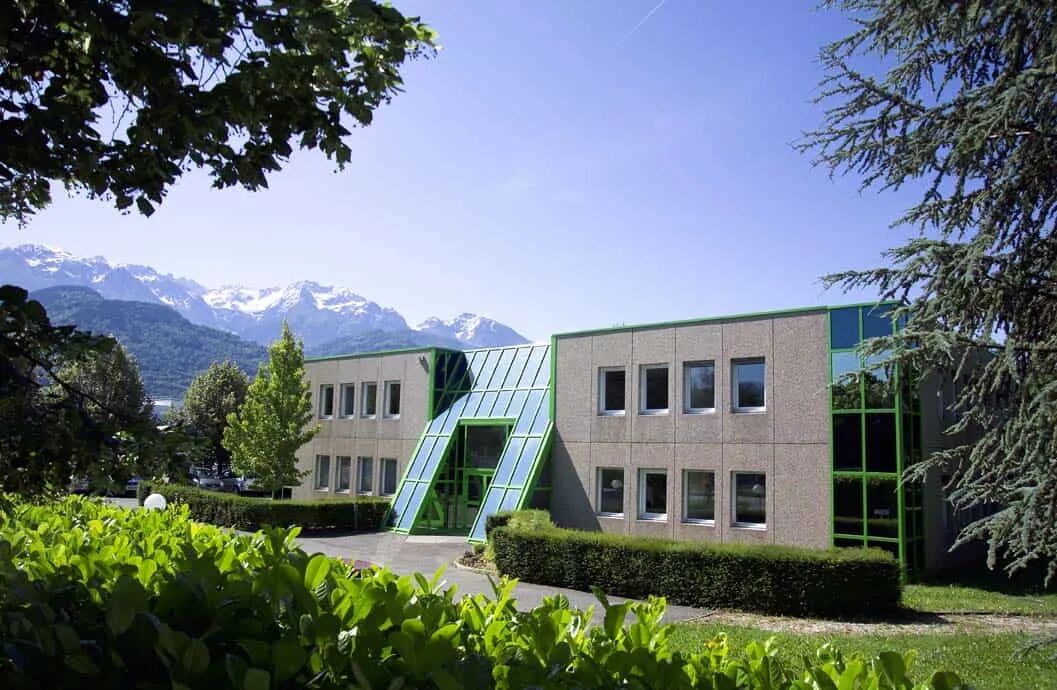
From the perspective of equity and operational background, TDK (headquartered in Tokyo) has held a majority stake in Tronics since 2017. Currently, Tronics has about 100 employees and has established clear technical barriers and market recognition in the high-end industrial MEMS sensor field. At the same time, Tronics competes with companies such as Sensata, TE Connectivity, and Infineon, which further confirms its industry position in the sensor field.
The Logic and Progress of Vibration Sensor Layout
Building on over twenty years of experience in the inertial sensor field, Tronics’ product layout is beginning to extend into a new track, namely the vibration sensor field. This extension is not coincidental but is driven by a “natural strategic evolution” of technological genes and market demand.
From the perspective of market demand, as the industrial sector transitions to digitalization and intelligence, the demand for “smarter systems” in industrial IoT is becoming increasingly urgent. These systems not only need to sense motion but also require continuous monitoring of machine and asset health through vibration spectrum analysis. Data from Grand View Research further supports the potential of this track, with the global vibration sensor market valued at $6.2 billion in 2024, expected to grow to $9.7 billion by 2030. At the same time, the application scenarios for these sensors are continuously expanding, increasingly used not only for industrial machine monitoring but also for automotive engine monitoring and safety, with the market space continuing to grow.
From a technical support perspective, Tronics has not simply “packaged” existing basic accelerometers into vibration sensors but has designed innovative solutions with high precision and reliability based on its decades of experience in MEMS R&D, manufacturing, and testing, combined with the industrial sector’s “condition-based monitoring needs.” Its performance standards are consistent with the standards defined by the company for inertial products and services, truly achieving technical synergy from “inertial sensing” to “vibration monitoring.”
Currently, Tronics’ first-generation vibration sensor solution for machine and asset monitoring is nearing the end of development, with a clear core goal of supporting predictive maintenance and industrial IoT applications in the industrial sector, creating high-precision quality control and equipment health monitoring systems for customers.
Two Exhibitions to Build a Technology Showcase
To allow the market to intuitively perceive this innovative technological achievement, Tronics plans to conduct live demonstrations at two important international trade shows. This is not only a key step in technology implementation but also an important window for connecting with market demand.
The first demonstration will be held at the India Electronics Show from September 17 to 19 in Bangalore, with TDK’s booth located in Hall 3, D01; the second will focus on the Nuremberg SPS-Expo, taking place from November 25 to 27, with TDK’s booth set up in Hall 10, 334. At both exhibitions, Tronics’ innovative marketing manager Emmanuel Bercier will personally showcase the vibration sensor technology and discuss “how to shape the future of machine health monitoring through intelligent IoT sensor solutions,” providing industry customers and partners with an opportunity to closely understand the technical details.
Aligning with Mission and Vision to Promote Industrial Digital Transformation
Tronics’ expansion into the vibration sensor track is not an isolated product addition but is deeply aligned with the company’s mission, vision, and industry trends, highlighting its long-term strategic direction.
From the company’s mission perspective, Tronics aims to “become a provider of MEMS inertial sensor solutions for critical assets in transportation, energy, and industry,” covering precise motion sensing, positioning, navigation, and condition monitoring. The vibration sensor is precisely the direct carrier of the “condition monitoring” demand, filling the product gap in its machine health monitoring field. From a vision perspective, the company is committed to “contributing to the digital transformation of transportation, energy, and industry by providing digital inertial and vibration sensor solutions.” The vibration sensor is a key component that injects “digital transformation and intelligence” into industrial systems, directly assisting industrial equipment in upgrading from “passive maintenance” to “active predictive maintenance.”
For the TDK Group, Tronics’ layout further enriches its product matrix in the industrial sensor field; for the entire industrial sector, Tronics’ vibration sensors, built on advanced MEMS technology, will provide precise and reliable sensing support for the digital transformation of more industries, becoming an important force in promoting industrial intelligence.
In summary, Tronics’ extension from MEMS inertial sensors to vibration sensors is a natural connection from technological accumulation to market demand, as well as a deep response from product layout to strategic vision. With the nearing completion of the first-generation product development and the upcoming two exhibitions, this company with a solid technical foundation is clearly stepping into a new journey in the new track of industrial sensors, injecting new vitality into the fields of industrial IoT and predictive maintenance.
END
Welcome to reprint this article,
please indicate it comes from the public account “Smart Sensor Network”!