In the past, buying toys for children meant choosing from building blocks, remote-controlled cars, or dolls. Now, AI toys can chat, teach, and understand emotional interactions — this new demand for “technology + companionship” has propelled the AI toy market to a projected scale of 29 billion yuan this year.A number of listed companies have already sensed the business opportunity; some have launched popular products based on established IP, while others have become the industry’s “behind-the-scenes heroes” through hardcore technology.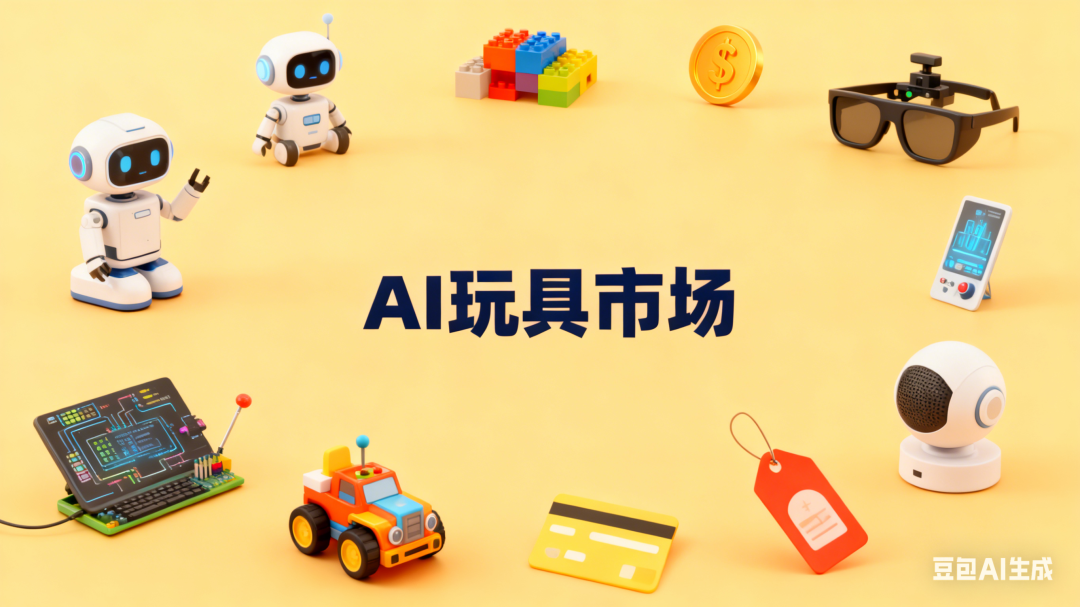 1. Directly Creating AI Toys: “Frontline Players” with IP and Products, Achieving Real SalesThis type of company is a veteran in the toy or entertainment sector, holding well-known IP, and with the support of AI technology, their products come with built-in traffic upon launch, making them the most direct beneficiaries in the market.1. Aofei Entertainment: AI Transformation of an IP GiantAs a company holding national IPs like “Pleasant Goat and Big Big Wolf” and “Bala La Little Magic Fairy”, Aofei Entertainment’s core strategy for AI is a combination of “IP + AI”.They have established a dedicated smart toy division to integrate AI technology with classic IP. The launched “AI Smart Pleasant Goat” toy can not only engage in voice conversations and tell stories with children but also replicate Pleasant Goat’s unique tone and even supports online upgrades. The high-end version sells for over 500 yuan and remains in high demand.Their clever approach lies in not forcing AI technology themselves but collaborating with top AI teams, focusing on IP implementation and product safety — for instance, adding content review and data encryption to ensure parents feel secure when purchasing. In 2024, the company’s R&D investment is expected to grow by over 20% year-on-year, with educational AI toys already accounting for 60% of revenue, providing solid performance support.2. Talking Tom: Selling Globally with IPThe “Talking Tom” IP has been popular for over a decade, with global app downloads exceeding 20 billion times, and now it is rejuvenated with AI technology.The AI companion robot launched by the company at the end of last year is a “walking intelligent partner”: it can recognize children’s emotions, tell jokes when they are unhappy, respond when they are being cute, support bilingual teaching, and provide knowledge about everything. It even has a 120° head rotation and over 20 interactive expressions. After its launch, it topped the toy model rankings on Douyin with a high approval rate of 97%.This product is priced between 1387-1989 yuan, and total sales have reached approximately 6000 units, generating over 10 million yuan in revenue.Moreover, it has a clear advantage overseas, actively expanding into the European, American, and Southeast Asian markets, aiming to convert global IP traffic into AI toy sales. Future plans include launching AI companion robots for all age groups in collaboration with partners.3. Xinghui Entertainment: AI Cross-Industry from Car Model ExpertsThis company originally excelled in automotive models, holding licenses for 35 car brands including BMW, Audi, and Ferrari. Now, they are integrating AI and AR/VR technology into traditional car models, directly upgrading the gameplay.The Audi smart remote-controlled car set to launch in 2025 can understand voice commands like “drift” and “change wheels,” and can automatically avoid obstacles through AI path planning. There’s also the Ferrari AR racing car, which allows users to see a virtual racetrack with AR glasses and compete with players worldwide.In addition to car models, they are targeting the education market, planning to launch a smart learning companion robot that includes a “cultural heritage knowledge base”, which can help children learn through conversational teaching and generate personalized growth reports.With a mature global sales network, their AI toys can be priced 30% higher in Europe and America than in China. By 2025, it is conservatively estimated that AI toys will contribute 150 million yuan in revenue, with a gross margin 4-9 percentage points higher than traditional car models.4. Shifeng Culture: A Pragmatic Player with Many IPs and Broad CooperationShifeng Culture is a “jack of all trades” in the AI toy sector, having secured a large number of popular IP licenses such as Pokémon, Disney, and Egg Party, while also collaborating deeply with Baidu Smart Cloud on technology. Their products, such as “AI Magic Star” and “AI Flying Rabbit”, are popular early education toys that can accompany children in learning to speak, singing nursery rhymes, and playing interactive games, and they have also helped Xiaodu Bear with AI upgrades.Their products are particularly down-to-earth, with prices ranging from entry-level models under 100 yuan to mid-to-high-end series. They plan to launch AI toys for the Year of the Horse, desktop AI robots, and even turn the “well-behaved baby” emoticon IP into AI toys.By 2025, they have already been researched by multiple funds, and institutions are optimistic about their comprehensive advantages of “IP + technology + channels.”5. Bestar: Breaking Through in a Niche MarketBestar has taken a different path, targeting the niche market of “pet AI toys”. Their pet AI photographer can automatically capture adorable moments of pets, with monthly sales increasing by 200% through Douyin channels. Their advantage lies in a mature overseas channel, with 82% of revenue coming from abroad, perfectly aligning with the dual trends of the global pet economy and AI toys. In 2024, net profit is expected to grow by 16% year-on-year, with AI toys becoming a new growth point for performance.2. Core Technology Providers: “Behind-the-Scenes Players” Who Don’t Make Toys but Are Essential for All AI ToysAI toys that can talk, connect to the internet, and respond quickly rely entirely on chips, modules, or technology solutions provided by these companies. Although they do not directly face consumers, they are the core of the industry chain, making profits more stable and barriers higher.1. Espressif Technology: The “Networking Brain” of AI ToysThis company’s core product is the ESP32 series chips, which serve as the “networking artifact” for AI toys — without them, toys cannot connect to Wi-Fi or interact with the cloud, making voice conversations impossible.ByteDance’s popular AI toy “Eye-catching Bag” and many smart dolls from startups use their chips because they are small, low-power, and support edge computing, allowing toys to respond faster, capturing 35% of the educational robot market share.They are also collaborating with Volcano Engine to enable AI toys to interact with smart home devices through the Matter protocol, allowing toys to control home lighting and speakers, enriching gameplay.2. Broadcom Integrated: The “Interactive Core” of AI ToysTheir BK series chips are key components of AI toys, integrating audio and video processing with AI model interaction capabilities, supporting low-power operation, making them particularly suitable for toys that need to remain on standby for long periods. Many AI conversation toys and smart trendy toys rely on them for real-time voice interaction without frequent recharging.They hold over 20% market share for their chips, with clients including leading toy manufacturers like Shifeng Culture, and they have launched development toolkits that lower the AI upgrade threshold for small and medium-sized toy manufacturers, effectively speeding up the entire industry.3. Guohe Tong: The “AI Solution Provider” for Toy ManufacturersGuohe Tong does not produce specific chips but provides toy manufacturers with a “one-stop AI model solution” — manufacturers do not need to develop technology themselves; by using their solutions, toys can achieve voice recognition, audio and video transmission, and intelligent dialogue, and can connect to mainstream models like Doubao.Their solutions are cost-effective and quick to implement, requiring no additional components, making many small and medium-sized toy manufacturers willing to collaborate. In 2024, their robot-related product line is expected to see revenue growth of over 150%, steadily earning through technology service fees and module sales.3. Two Key Reminders for Ordinary PeopleDo not blindly follow trends; distinguish between “real layouts” and “hype”: Prioritize companies with actual products and sales support (like Aofei Entertainment, Talking Tom, Xinghui Entertainment), which either have IP barriers or channel advantages; avoid those that only announce “plans” without products or performance, as they tend to rise quickly but fall just as fast.Look at core competitiveness: For product companies, focus on “IP + product strength,” such as whether they can continuously produce hit products and whether they can open up overseas markets; for technology companies, focus on “market share + customer quality,” such as whether their chips or solutions are adopted by leading toy manufacturers, as these are the keys to long-term profitability.The 29 billion market is just getting started; choosing the right players can yield dividends.AI toys are not a temporary hype but an inevitable trend in the toy industry — previously, buying toys meant “buying an object,” but now it means “buying companionship + education,” and parents are willing to pay for such high-value-added features.Among the eight companies mentioned, some earn money directly from product sales, while others earn from technology services, covering the entire AI toy industry chain.For ordinary people, there is no need to worry about “which stock will rise,” but rather to see who has real advantages: companies with national IP, hit products, and stable customers can continue to benefit in the 29 billion yuan market and even larger markets in the future.
| 【Bihua Intellectual Property PDF Cloud Share】
「Bihua’s Wealth Knowledge Base」 https://pan.quark.cn/s/844fee284202 Extraction Code: dUqZ Copy the link to your WeChat to save it to your account; for more sharing, send “wealth” in the background. |
Adage: Invest in yourself and accumulate your own knowledge assets.
Editor/BihuaWeChat: bhystudio99