Introduction: Foreign Media: Has the Chip Sanction Escalated?
As the U.S. once again wields the big stick of chip sanctions, attempting to curb China’s semiconductor industry development by revoking the technology exemptions for companies like TSMC and Samsung, this ongoing technological game has entered a deep-water zone. However, unlike before, the countermeasures and industrial resilience that China holds are reshaping the underlying logic of this game—the offensive and defensive dynamics of sanctions and counter-sanctions are quietly reversing.
1. Behind the Escalation of Sanctions: America’s Anxiety Over Technological Hegemony
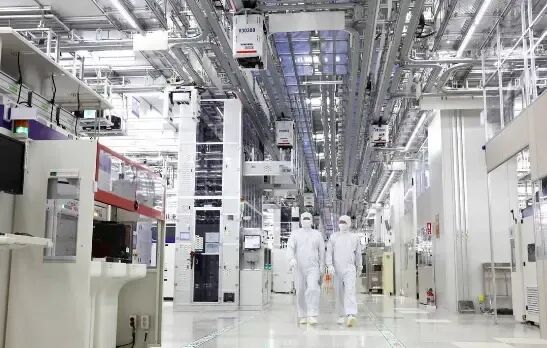
The current escalation of sanctions being brewed by the U.S. is essentially a continuation of technological hegemonism. Since Trump initiated the trade war, the chip sector has always been the core battlefield for the U.S. in its technological blockade against China. The proposed revocation of technology exemptions reveals two deep-seated anxieties: first, China’s semiconductor industry continues to break through under blockade, with advancements such as the localization of 28nm lithography machines and mass production of 14nm chips, shaking the foundation of America’s technological monopoly; second, the deep integration of the global semiconductor supply chain makes the cost of unilateral U.S. sanctions increasingly high.
This escalation of sanctions driven by anxiety is, in fact, a double-edged sword. Take Samsung’s Xi’an factory as an example; its NAND flash memory production accounts for 40% of the global total. If forced to “decouple,” it would not only severely impact Samsung’s global layout but also accelerate China’s domestic substitution process for memory chips. Historical experience shows that every technological blockade has spurred breakthroughs in Chinese industries—from the Beidou system replacing GPS to 5G technology leading globally, sanctions often become a catalyst for China’s technological self-reliance.

2. Countermeasures: Strategic Balance of Key Materials
In this game, China’s real countermeasure is not simply a tit-for-tat response, but rather its control over irreplaceable strategic resources in the global supply chain. NATO data shows that among the 12 key materials essential for its allies’ defense industries, 7 are nearly monopolized by China. For instance, in the case of gallium materials, China’s supply accounts for 98% of the global total. This core material, used in advanced radar and missile guidance systems, would directly paralyze the production of various NATO weapons if supply were cut off.
This strategic balancing power stems from China’s dual advantages of a complete industrial system and resource endowment. From rare earth smelting to permanent magnet material production, from tungsten mining to hard alloy processing, China has built a full industrial chain control in the key materials sector, from raw materials to end products. This control is reflected not only in output but also in technological barriers—China’s unique rare earth extraction and separation technology remains the most efficient process route globally. When the U.S. attempts to exert pressure through chip sanctions, the material trump card in China’s hands is enough to make any “decoupling” attempt pay a painful price.
3. New Industrial Landscape: From Passive Response to Proactive Breakthrough
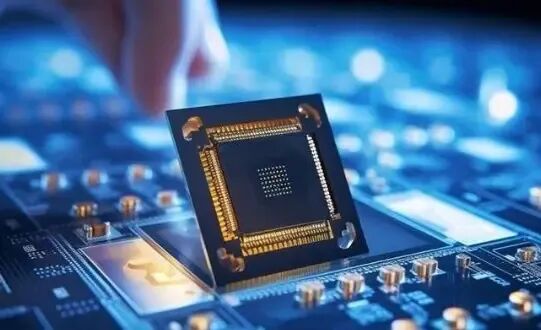
In the face of the clamor surrounding the escalation of sanctions, the Chinese industry is demonstrating unprecedented strategic composure. On one hand, the process of domestic substitution is accelerating: Yangtze Memory’s 128-layer 3D NAND flash, SMIC’s N+1 process chips, and JCET’s 7nm system-level packaging technology are breakthroughs that signify China’s semiconductor industry is overcoming the “bottleneck” issues. On the other hand, the collaborative innovation system within the industry chain is becoming increasingly refined, forming a closed-loop ecosystem among domestic enterprises from equipment materials to design and manufacturing, from packaging and testing to end applications.
This transformation’s underlying logic lies in China’s ability to convert external pressure into internal innovation momentum through institutional advantages. The second phase of the National Big Fund’s key investments in equipment and materials, the capital support for semiconductor companies from the Sci-Tech Innovation Board, and the “ranking and leading” mechanism for tackling key technologies collectively construct an innovation closed loop of “pressure-response-breakthrough.” When U.S. sanctions force Chinese companies to abandon the illusion of “market for technology,” it instead fosters genuine independent innovation capabilities.

In summary, all of this is asforeign media has said: the chip sanctions have escalated,and viewed from a historical perspective, the essence of this chip game is a challenge from latecomer countries to technological hegemony. China has neither chosen isolationism by shutting itself off from the world nor fallen into a zero-sum game of “sanction-counter-sanction,” but has instead embarked on a new path of industrialization through a dialectical unity of open innovation and self-control. While the U.S. is still entangled in minor adjustments of technology exemptions, China has already set its sights on a broader future—in next-generation technology fields such as quantum chips, photonic chips, and carbon-based chips, Chinese researchers are competing on the same stage as the world’s top teams. The ultimate outcome of this game may confirm a simple truth: the harsher the blockade, the more thorough the breakthrough; the more frenzied the suppression, the more resolute the self-reliance.