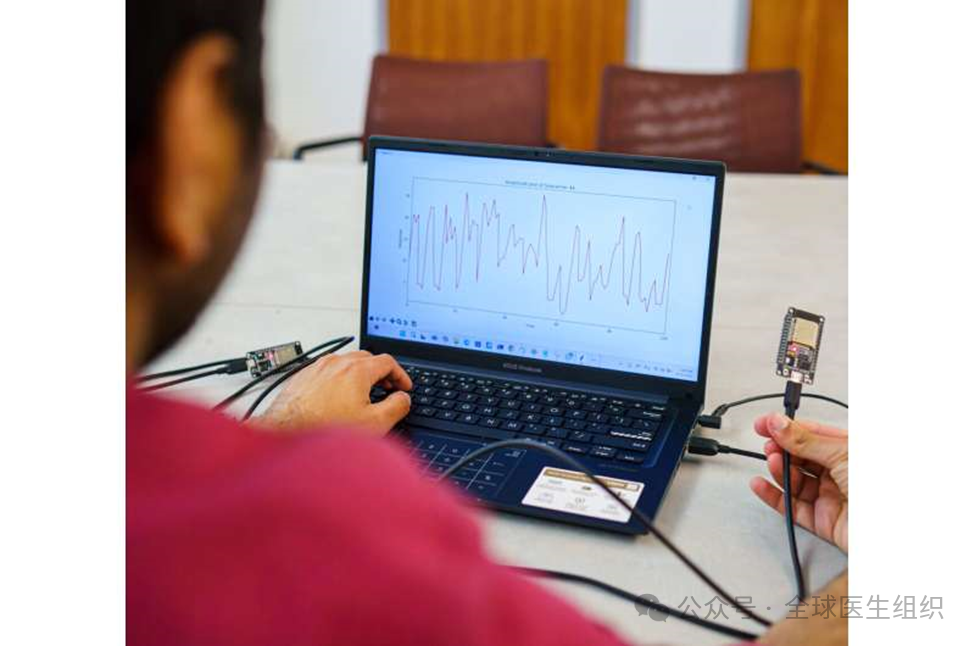
Heart rate is one of the most important physiological health indicators, reflecting a person’s physical activity, stress, and anxiety levels. Typically, measuring heart rate requires some form of wearable device, such as a smartwatch or medical-grade equipment. Engineers have recently developed a new study that utilizes home Wi-Fi device signals to accurately monitor this vital health signal without the need for wearable devices, achieving high precision. Stay tuned for details.
 Reading Abstract
A team of engineers from the University of California has recently developed a groundbreaking technology called “Pulse-Fi,” which can accurately measure heart rate changes using only household Wi-Fi signals, without any wearable devices.Traditionally, heart rate monitoring typically requires smart bands or medical-grade devices, but the Pulse-Fi system utilizes low-cost Wi-Fi devices combined with AI-ML machine learning algorithms, making it non-invasive and easy to apply.The core principle of this technology is that the radio frequency waves emitted by Wi-Fi devices cause slight disturbances in the space due to the human heartbeat. Pulse-Fi uses algorithms to accurately filter environmental interference, correlating these subtle changes with heart rate variations.Researchers recruited 118 subjects and conducted tests in 17 different postural environments, finding that the heart rate error after five seconds of signal collection was only 0.5 beats per minute, achieving clinical medical-grade accuracy.Even more groundbreaking is that Pulse-Fi adapts well to users’ natural postures and room positions, with no loss of accuracy within a three-meter range, and it is likely to extend to even greater distances in the future.The research team has also established a precise dataset to train the AI system to recognize heart rate signals. This technology team is further expanding its capabilities to detect respiratory rates and apnea, with potential applications in daily health monitoring, automatic monitoring care for chronic disease patients, and screening for sleep disorders.The transformation brought by Pulse-Fi means that in the future, any household with Wi-Fi can easily monitor users’ health signals in real-time without the need for close-fitting wearable devices, enhancing the convenience and accessibility of health management.
Follow the latest news in longevity medicine and anti-aging. Professionals can learn more about longevity medicine and longevity clinic projects by scanning the code to join the professional WeChat group (Group rules: real name + organization name)
Scan to join the longevity medicine professional exchange group

(Group rules: Real name + organization)



Follow us for the latest news in biomedical frontiers