●Translator/Zhang
●Proofreader/Nangwa
●Source: U.S. Army Technology Magazine 2019
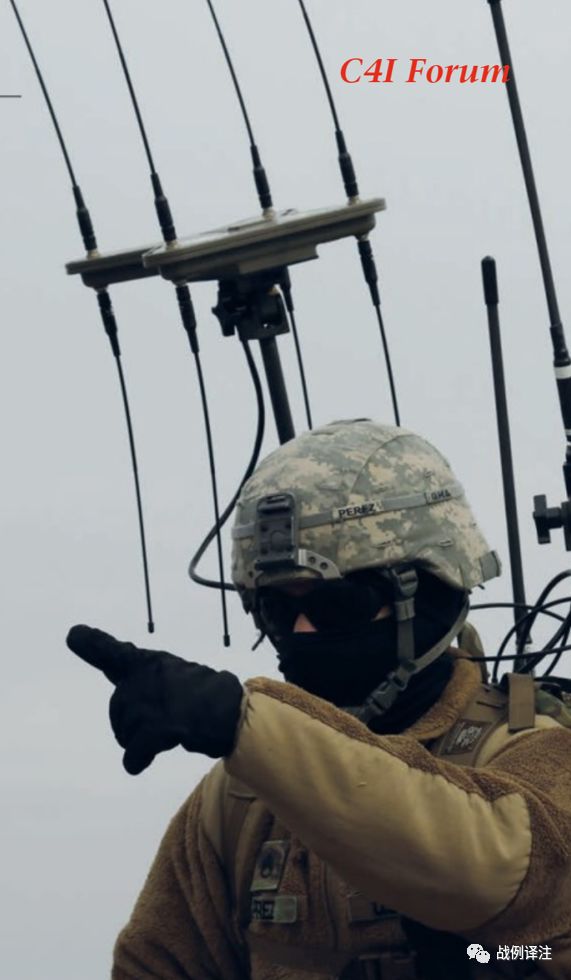
As part of their ongoing modernization efforts, the U.S. military is continuously upgrading its communications.
The U.S. Army is engaged in a debate about the appearance of next-generation combat vehicles and rotorcraft. However, when it comes to how future battlefields will communicate, the Army seems to agree on one thing: smartphones!
Since the launch of the Joint Tactical Radio System (JTRS) in 1997, the U.S. Army has struggled for 20 years to meet communication needs on the battlefield.
At the 2018 AUSA (Association of the United States Army) event, DTC Communications showcased its new HH-3100 Ghost Multi-Terminal Multi-Band Tactical Radio and MT-3100 mobile base, marking the company’s entry into the multi-band field. The HH-3100 joins the Ghost tactical radio series, providing secure and flexible communication networks in the 30-512MHz frequency range for dismounted and mounted infantry across the theater. This radio features embedded electronic countermeasures, an AES-256 standard communication security system, embedded GPS, and an amplitude modulation modem for air-to-ground communication.
Additionally, the radio has passed the U.S. Department of Defense’s military standard 810G certification, allowing it to operate in harsh environments. Its frequency-hopping communication and digital encryption waveforms enhance the security of communications and transmissions. The HH-3100 is user-friendly, featuring dual buttons for easy operation and a centrally located antenna for balanced handling.
John Biljan, the company’s Vice President of Sales, stated that the HH-3100 strikes a balance between technological advancement and ease of use based on years of feedback from existing customers. “DTC is committed to providing customers with new products that can be used in any environment at an affordable price, allowing them to focus on the mission rather than the technology,” he said.
In encrypted mode, the HH-3100 radio is backward compatible with all DTC’s very high frequency (VHF) radios (30-300MHz), allowing customers to access more features without expanding memory.
Unlike U.S. tactical radio suppliers, Polish Army tactical communication exhibitors informed MT that the government has requested supplier Radmor to assess future communication needs and potential architectures for tactical radios. They also noted that the Polish Army currently uses tactical radios from different suppliers. Among them, Thales’ PR4G series VHF tactical radios are used to support the Army, while special forces use radios provided by Harris. They speculate that Radmor may eventually be tasked with developing a new individual and vehicle-mounted radio to replace the traditional PR4G family in service. The company is currently providing its P-RAD-5010 ultra-high frequency (300MHz – 3GHz) radio and longwave (1-2GHz) handheld radio for individual soldiers.
Interestingly, Radmor is a partner in the pan-European ESSOR project, which also involves companies like Thales, Bittium, Leonardo, Indra, and Saab. The goal is to provide a broadband waveform, initially equipping member countries (Finland, France, Italy, Poland, Spain, and Sweden) with tactical radios, with plans to expand to Germany and other European countries within five years.
ESSOR will be used at the platoon level and above to facilitate interoperability among multinational maneuver forces. If ESSOR cannot fully replace the air-to-ground radio system SINCGARS, it will serve as a supplement, and SINCGARS will continue to be used within NATO.
In addition to transceiver developments, PTS company executives shared with MT their PTS-2018 power docking system, which is being equipped for the U.S. Army’s 2nd Cavalry Regiment (2CR) based in Vilseck, Germany. They developed the PTS-2018 for dismounted infantry communication and handheld tactical radio communication, providing the same user experience as connecting to vehicle interfaces.
This is particularly suitable for providing similar levels of amplification, clarity, and call performance. The entire PTS-2018 system includes an interface (capable of accommodating one to two individual radios and handheld transceivers depending on configuration), a portable power source, a PTS toolkit (containing a solar blanket and batteries), and an antenna. All of these can be assembled and made ready for use within minutes.
The official materials provided by the company indicate that the individual radios and handheld transceivers that the PTS-2018 can accommodate are “radio agnostic,” capable of housing Harris’ AN/PRC-117G individual radio and AN/PRC-152 handheld V/UHF radio, as well as the AN/PRC-150 individual high-frequency (HF) (3-30MHZ) radio.
Company executives informed MT that the PTS-2018 is compatible with individual radios and handheld transceivers from other companies. It can be used without starting the vehicle, simply by connecting to the vehicle’s radio interface.
Not needing to start the vehicle saves fuel and maintains stealth, avoiding noise exposure, especially at night. This capability is also useful for dismounted infantry in pre-fabricated command posts, who do not require vehicles to be present. Company executives also stated that PTS is delivering four systems to 2CR, with the possibility of more in the coming years.
In the individual radio field, Appi Technologies executives briefly introduced their Appi-Com radio system at AUSA, stating that this full-duplex PRR operates like a “smartphone,” utilizing a self-healing network in the 863 – 870 MHz and 902 – 928 MHz frequency bands, with a range of 2 kilometers (1.3 miles) without relying on any fixed infrastructure for communication.
Company executives added that there is no limit to the number of users on the Appi-Com network, regardless of the purpose. In terms of communication/transmission security, Appi-Com’s PRR can perform frequency-hopping communication, allowing clear transmission across 50 channels. Its battery provides 6 hours of talk time and 10 hours of standby time, and it can be charged via a USB port. It is designed primarily for voice communication, and executives stated that at a transmission rate of 1 kilobit per second, the radio can connect via Bluetooth to biometric sensors or wireless headsets.
Although the company is reluctant to disclose customer information, executives indicated that Appi-Com has been procured by several NATO armies and has also found widespread application in civilian law enforcement and security sectors.
Finally, Comtech showcased two new “super” family satellite communication terminals. Company representatives informed MT that the super terminals include x band (7.9-8.4GHz uplink/7.25-7.75GHz downlink), ku band (14GHz uplink/10.9-12.75GHz downlink), and ka band (26.5-40GHz uplink/18-20GHz downlink). More critically, the “super” series products feature automatic tracking capabilities, making them highly suitable for installation on naval vessels.
In fact, the company has developed a special maritime “super” model, installed on a fixed base and equipped with a fabric antenna cover to protect the antenna. Comtech executives also stated that this can provide ships with immediate satellite communication capabilities or enhance the organic satellite communication systems of the vessels. The maritime “super” model can be installed by two people within 45 minutes.
Meanwhile, for land operations, the “super” terminal can be installed and activated by one person within ten minutes. The antennas come in two sizes: 83cm (32.3 inches) and 1.3m (4.2 feet), suitable for general radios. The x band “super” terminal has been certified for satellite communication services provided by the U.S. Department of Defense’s Wideband Global SATCOM (WGS) satellite constellation, and ka band communication testing is expected to conclude in early 2019. Although the company is reluctant to disclose too many details, representatives added that the “super” terminal has begun sales.
1
Major Army Radio Contracts
On September 20, 2018, Harris announced that under its dual-channel indefinite delivery/indefinite quantity (IDIQ) contract, it received an order from the U.S. Army for 1540 AN/PRC-163 handheld dual-channel radios. The order includes the radios themselves, vehicle installation kits, and (after-sales) support services.
The general AN/PRC-163 can send information up or down the command chain and can also transmit information on the battlefield network backbone. It combines the lightweight, ease of use, and ruggedness of secure dual-channel radios. This radio can simultaneously transmit voice, data, and situational awareness through mobile ad hoc network (MANET) applications, V/UHF line-of-sight modes, and traditional satellite communication modes, while paving the way for future software upgrades targeting mobile user objective system (MUOS), SATURN, and other emerging waveforms.
The signing of the contract further strengthens Harris’s leadership position in the software-defined tactical communications field, relying on the company’s proven ability to design and deliver next-generation dual-channel handheld and vehicle-mounted radios. Harris first signed a handheld soldier radio contract with the U.S. Special Operations Command (USSOCOM), followed by the dual-channel AN/PRC-158 soldier radio signing an IDIQ contract with the Army’s HMS soldier radio.
“The AN/PRC-163 is the most advanced software-defined handheld radio in the world today, providing combatants and commanders with unprecedented capabilities: enhanced command control and situational awareness,” said Dana Mehnert, President of Harris Communication Systems. “This contract is a significant milestone in the Army’s tactical network modernization…”
1
MUOS Satellite Radio
On September 20, 2018, Rockwell Collins announced that it has received the first long-term contract from the U.S. Department of Defense to support MUOS airborne radios and auxiliary equipment for fixed-wing aircraft, rotorcraft, ships, and ground facilities.
This sixth-generation ARC-210 RT-2036(C) radio’s five-year contract, starting in 2018 with a base contract of $82.6 million, can be adjusted appropriately over the next four years. The contract also includes fifth-generation ARC-210 radios and auxiliary equipment, as well as related data and services.
Through a secure high-speed internet protocol system, the ARC-210 RT-2036(C) can use the MUOS network to provide clear voice, video, and mission data globally for the military. This radio is also part of Rockwell Collins’ TruNet series products launched to ensure air-to-ground secure communications. As a sixth-generation product, the ARC-210 RT-2036(C) adopts a software-defined radio (SDR) architecture, supporting various existing and advanced waveforms, with high-speed mobile ad hoc networking and beyond-line-of-sight connectivity capabilities. It will enter a network of over 45,000 highly reliable ARC-210 radios across more than 180 platforms globally.
Troy Brunk, Vice President of Rockwell Collins, General Manager of Communication, Navigation, and Electronic Warfare, stated, “This is another leap in equipping combat personnel with next-generation communication systems, as MUOS can provide greater overall capacity and signal quality for high-reliability radios when needed most.”
A team led by General Dynamics Mission Systems (GDMS) successfully tested and released the upgraded MUOS WFv3.1.5 waveform for the U.S. Navy’s software-defined digital modular radio (DMR).
The new waveform is essentially software that adds MUOS capabilities to the software-defined DMR radio and improves secure voice, video, and data communications through the MUOS satellite communication network. This network was recently approved by U.S. Strategic Command for expanded operational use. DMR is a four-channel radio and a communication tool for the U.S. Navy, used for ship, submarine, and shore-based communications. As a multi-channel radio, it can communicate simultaneously across a wide frequency range of tactical radios and can implement communications under different security level conditions. The independent operation of each channel allows U.S. Navy communicators to communicate with multiple military tactical radios simultaneously.
“The Navy currently has multiple DMR700s, making it one of the most widely used tactical radios in the field with MUOS capabilities,” a GDMS spokesperson stated. “DMR is one of the first military radios to use MUOS waveforms and other emerging technologies, capable of using UHF satellite communication waveforms simultaneously without interfering with other channels of the DMR.”
If the U.S. Army continues to field next-generation communication devices, it may drive commercial satellite services. Equipment based on commercial standards for new software-reconfigurable radios will be much cheaper than the communication services the Army obtains from the private sector.
However, ultimately, communication systems similar to smartphones will emerge, making it easier for soldiers to carry and operate. They will comply with various standards driving commercial networks today but will not be overly stringent to hinder innovation.
Thus, the battlefield communication strategy being formed by the Army is markedly different from the past. It acknowledges the power of commercial solutions while recognizing the severe challenges soldiers will face in future combat. The question now is whether the military can stick to a plan that allows soldiers to maintain communication during wartime.
Source: Battlefield Translation Notes
Submission Email: [email protected]
Long press the QR code below to subscribe for free
C2
How to Join the Society
Register as a Society Member:
Individual Membership:
Follow the Society’s WeChat: China Command and Control Society (c2_china), reply “Individual Member” to obtain the membership application form, fill it out as required, and if you have any questions, you can leave a message in the public account. You can pay the membership fee online via Alipay after passing the society’s review.
Unit Membership:
Follow the Society’s WeChat: China Command and Control Society (c2_china), reply “Unit Member” to obtain the membership application form, fill it out as required, and if you have any questions, you can leave a message in the public account. You can pay the membership fee after passing the society’s review.
Recent Activities:
November 16-17
Wuhan
7th CICC Young Scientists Forum, Big Data Science and Engineering Forum, Command and Control Discipline Dean Forum
November 7-8
Xian
2019 National Data Link Technology Academic Conference
November 2-3
Lianyungang
2019 Maritime Command and Control Academic Annual Meeting
Long press the QR code below to follow the Society’s WeChat