 Search on WeChat
 Technical Training
Since the first PLC was successfully applied in the automotive production line of GM, PLCs have been widely used due to their convenience, reliability, and low cost. However, PLCs are essentially black boxes; it is not possible to observe the control process in real-time and intuitively, which presents a significant gap when compared to DCS. The development and popularization of computer technology have provided new technical means for PLCs, allowing monitoring of the control process and results through computers, enhancing PLC functionality significantly. However, the communication media and protocols of various PLCs differ. Below, we will briefly introduce the communication media and protocol content of the main PLCs.
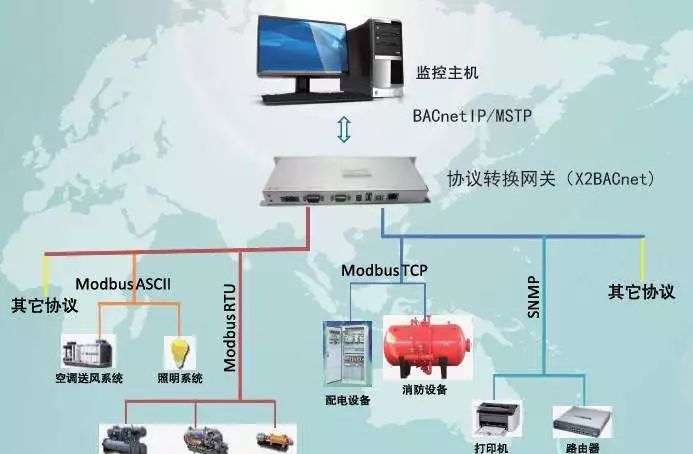
1American ManufacturersRockwell ABRockwell’s PLCs mainly include models such as PLC2, PLC3, PLC5, SLC500, and ControlLogix. PLC2 and PLC3 are early models, while the more commonly used small PLC is SLC500, the medium-sized ones are generally ControlLogix, and the large ones use the PLC5 series.The DF1 protocol is a communication protocol supported by all Rockwell PLCs, allowing data transmission via serial media such as 232 or 422, as well as through network media like DH, DH+, DH485, and ControlNet. The specific content of the DF1 protocol can be downloaded from AB’s documentation library.AB’s PLCs also provide OPC and DDE; the integrated software RSLogix includes DDE and OPC SERVER, allowing data communication through the aforementioned software.AB’s mid to high-end PLCs also offer advanced language programming capabilities, allowing users to implement their own communication protocols through programming.GECurrently, the most commonly used GE PLCs in China are the 90-70 and 90-30 series, both of which support the SNP protocol. The specific content of the SNP protocol can be found in the PLC manuals.GE PLCs can also be linked via Ethernet; however, the content of GE’s Ethernet protocol is not publicly disclosed, but GE provides an SDK development package for communication based on this package.2European Series
Siemens
Siemens PLC series mainly includes its early S5 and the current models such as S7-200, S7-300, and S7-400. The early S5 PLC supports the 3964R protocol, but due to its limited application in China, there are few data communication projects involving it, except for a few renovation projects.
S7-200 is Siemens’ small PLC, which has been widely used in China due to its low cost, supporting MPI, PPI, and free communication port protocols.
Siemens 300 PLCs support MPI and can communicate with computers via PROFIBUS and industrial Ethernet bus systems. For point-to-point communication, CP340/341 can be used.
S7400, as Siemens’ large PLC, offers a comprehensive communication functionality. It can communicate via the S7 standard MPI and also through C-bus, PROFIBUS, and industrial Ethernet. For point-to-point communication, S7-400 requires the CP441 communication module.
Siemens’ communication protocols are not publicly disclosed; many configuration software, including the Zijin Bridge configuration software, support MPI, PPI, etc., while PROFIBUS and industrial Ethernet generally communicate through Siemens software.
Schneider (Modicon)
Schneider has many PLC models that are also widely used in China. Its communication methods mainly support MODBUS and MODBUS PLUS protocols.
The MODBUS protocol is widely used in the industrial control industry and is not just a PLC communication protocol; it is also extensively used in smart instruments, inverters, and many other intelligent devices. MODBUS has further developed into MODBUS TCP, which allows for faster communication via Ethernet.
MODBUS PLUS offers faster transmission speeds and longer distances compared to MODBUS. This communication method requires the installation of the SA85 card provided by Modicon on the computer and the installation of the card’s driver to enable communication.
In addition to the two methods mentioned above, Modicon PLCs also support various communication methods such as TCP/IP Ethernet, Unitelway, FIPWAY, FIPIO, AS-I, and Interbus-s.
3Japanese PLCs
Omron
The Omron series PLCs are also widely promoted in China. Omron currently mainly uses two communication methods:
The Host Link protocol is a communication method based on serial data transmission. When the PLC enters MONITOR mode, the host computer can communicate with the Omron PLC. It is important to note that there should be a certain time interval between two communications; if the communication speed is too fast, it can easily cause communication anomalies in the PLC.
Control Link is a fast communication method for Omron PLCs. Control Link communicates data through cards, with a data exchange area between the cards, allowing for data exchange to complete data collection functions. Using this method requires configuring the Omron driver.
Mitsubishi
Mitsubishi’s small PLCs are widely used in China. Mitsubishi has several PLC models, mainly including the FX series, A series, and Q series. Mitsubishi PLC communication protocols are quite diverse, with each series having its own communication protocol. For example, the FX series includes communication via programming ports or 232BD and can also communicate via 485BD. The A series and Q series can communicate via Ethernet. Additionally, Mitsubishi PLCs can also communicate using the CC-LINK protocol.
Panasonic
Panasonic PLCs can communicate with computers via serial and Ethernet. The communication protocol used is the MEWTOCOL protocol. Like most Japanese PLCs, the MEWTOCOL protocol is relatively simple. Many software, including the Zijin Bridge configuration software, can directly read data from the PLC.
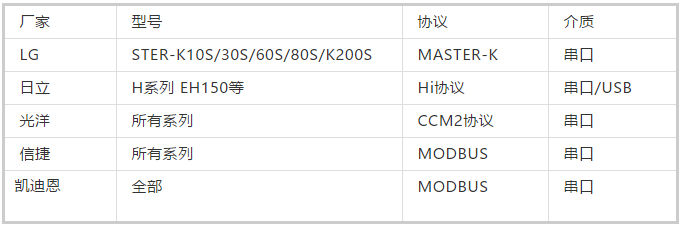
The above introduces the mainstream PLC communication methods from abroad. In addition to the manufacturers mentioned above, there are many other PLC manufacturers:
Disclaimer: The article is sourced from the internet, and the copyright belongs to the original author! If it involves your copyright, please contact us for deletion!

[Complete Siemens Documentation]

HISTORY/Previous Recommendations
Three essential tools for electrical engineers, easily accessible via WeChat!
Which of the five major electrical drafting software (CAD, Eplan, CADe_simu…) do you prefer?
Latest electrical CAD drawing software, with detailed installation tutorial!
Latest electrical drawing software EPLAN, with detailed installation tutorial!
Common problems for beginners using S7-200 SMART programming software (with download link)
Comprehensive electrical calculation EXCEL sheets, automatically generated! No need to ask for help with electrical calculations!
Basic skills in PLC programming: Ladder diagrams and control circuits (with 1164 practical cases of Mitsubishi PLC)
If you still can’t understand electrical diagrams? Basic electrical reading skills, simulation software available for quick hands-on practice!
12 free electrical video courses, 10GB of software/e-books, and 30 days of free live electrical courses are available!
Don’t forget to like + check it out!
 Click “Read the Original Text” to learn PLC/electrician courses for free!