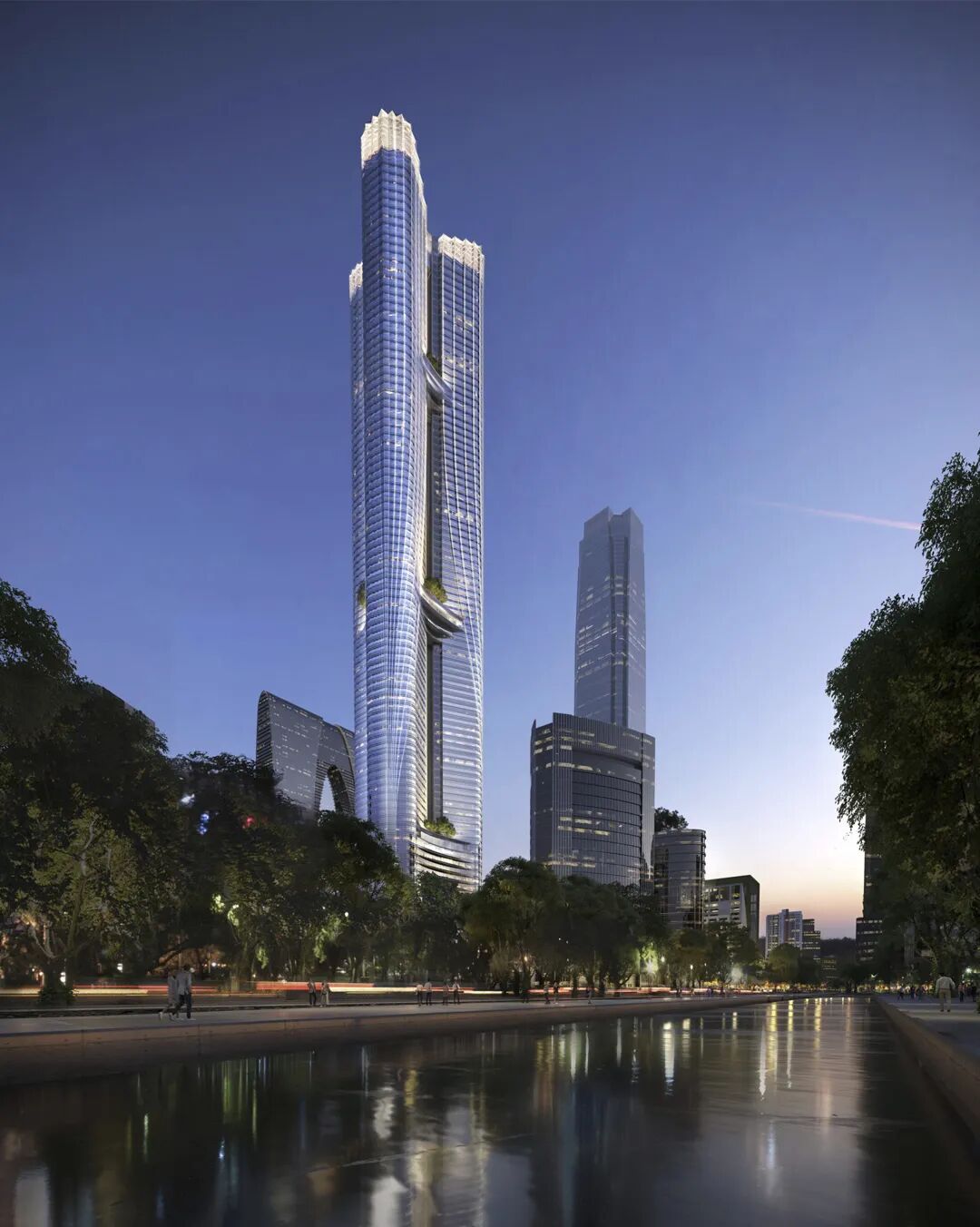
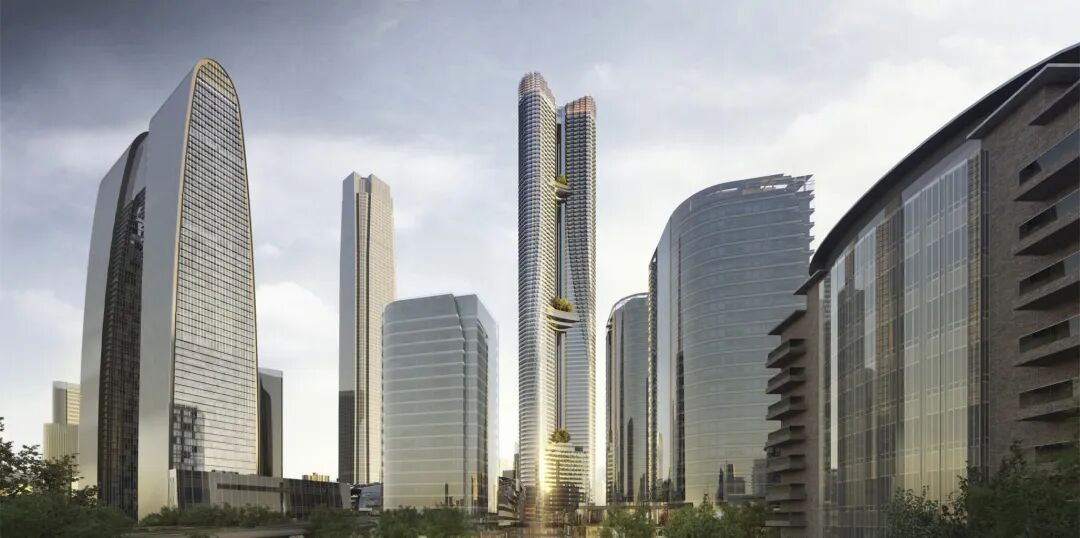
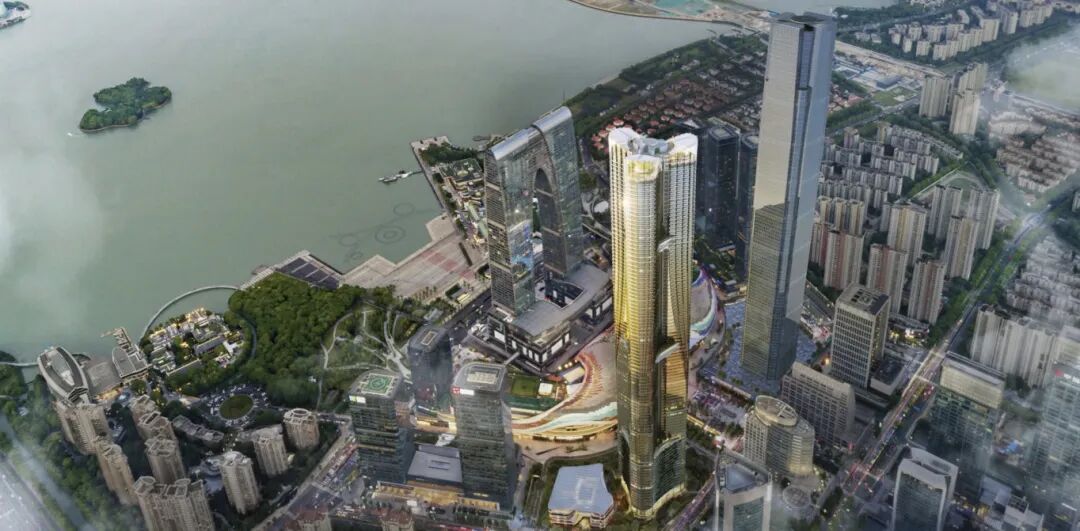
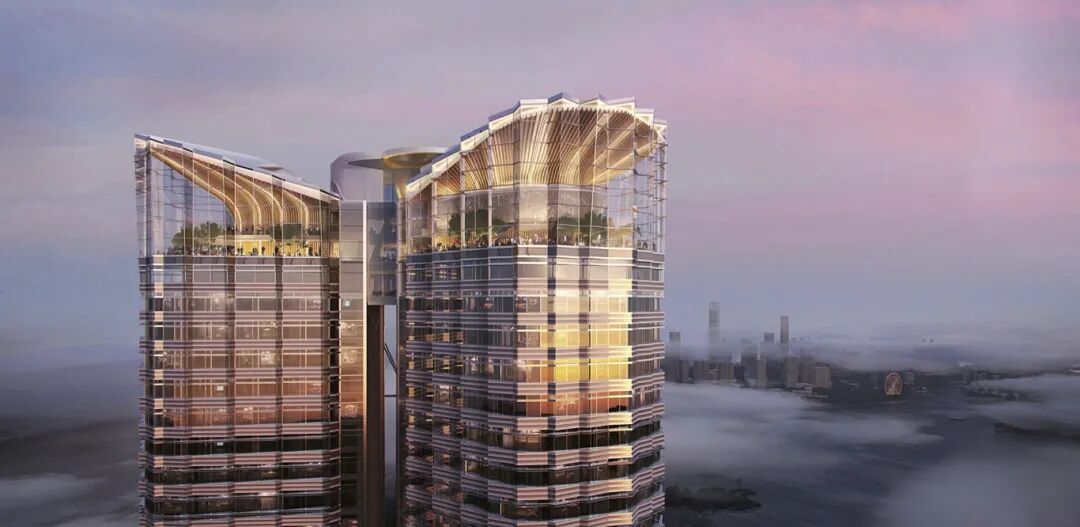
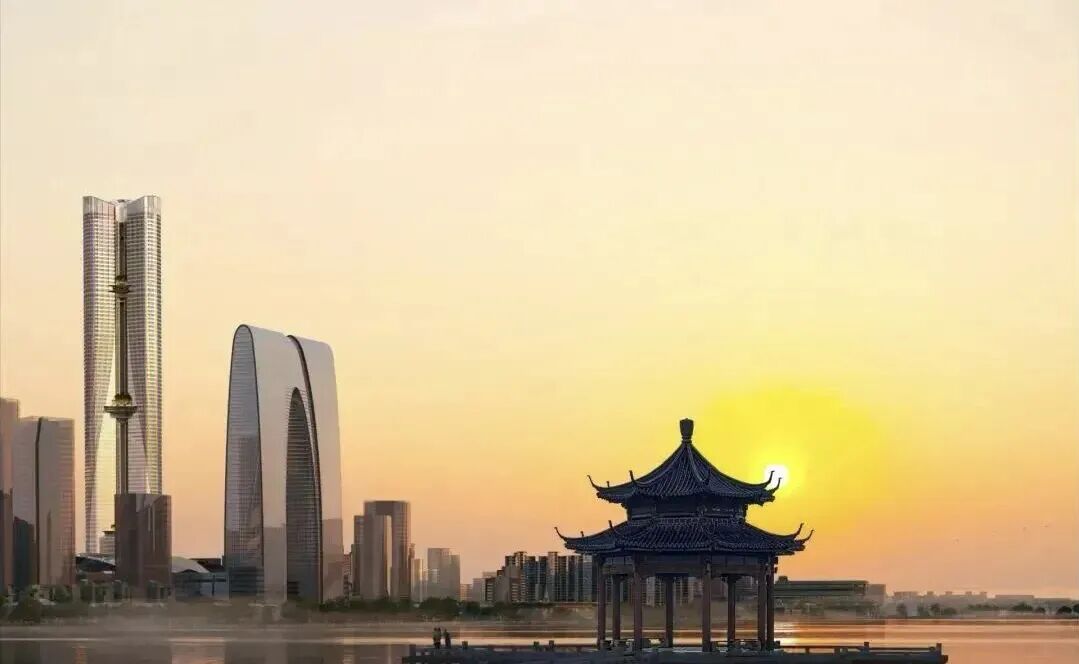
1. Basic Overview of the Building The China State Construction Suzhou Super Tower (also known as the “China State Construction Wealth Center”) is a landmark super-tall building under construction in Suzhou, located in the core area on the west bank of Jinji Lake in the Suzhou Industrial Park, positioned along the central axis of the Lake West CBD. • Building Height: 460 meters (it will become the second tallest building in Suzhou upon completion) • Building Scale: 5 underground floors, 99 above-ground floors, with a total construction area of approximately 412,700 square meters • Land Area: approximately 19,600 square meters • Design Units: SOM Architecture Firm + East China Architectural Design Institute • Developer: China Overseas Land & Investment • Expected Completion: 2027 • Functional Positioning: An international fashion complex integrating apartments, offices, and commercial spaces. 2. Design Concept and Features 1. Inspiration Source: “Three Boats Converging” The building adopts a unique “three-petal tower” shape, inspired by the geographical features of Suzhou’s “three waters surrounding the city” (Taihu Lake, Yangcheng Lake, and Jinji Dushu Lake), symbolizing the convergence of talent, wealth, and industry. The three tower petals face the three major water systems, creating a dialogue with Suzhou’s water culture while providing the best views for the building’s interior.
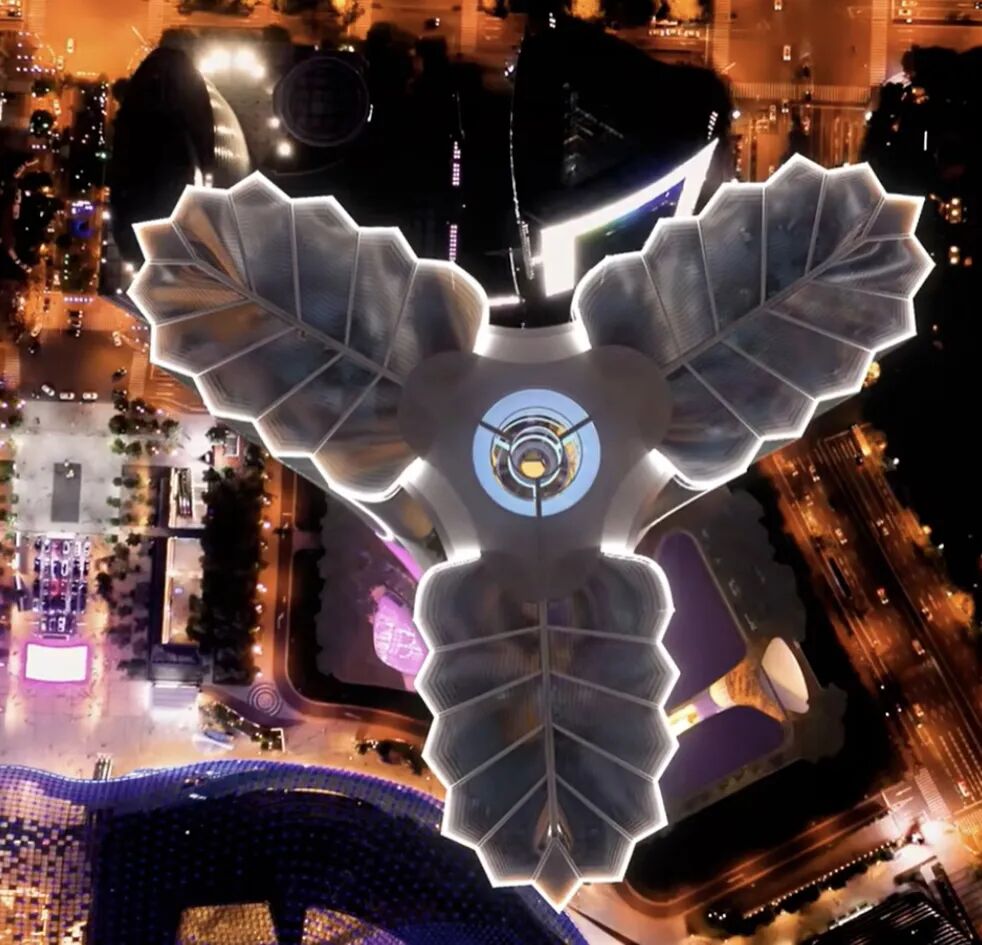
2. Spatial Layout: Vertical Community • The three tower petals are connected by three sky lobbies (with bridges) located on the 17th, 49th, and 77th floors, accessible via shuttle elevators. • The apartment levels are divided by the three tower petals, creating smaller-scale floor plans that foster an intimate community atmosphere. • The crown of the tower features high-end public spaces, with a central atrium and spiral staircase that allows views of the landscape below through glass floors. 3. Structural Innovation: Wind Aesthetics • A triangular core tube structural system is used, perfectly matching the three-petal shape. • The unique design allows wind to flow between the tower petals, reducing wind resistance and structural material usage by approximately 20%, thereby lowering energy consumption. • The undulating facade of the building creates a ripple effect of light and shadow at different times, echoing the characteristics of Suzhou’s water towns.
3. Application of Green Building Technologies The China State Construction Suzhou Super Tower aims to create “China’s tallest ultra-low energy consumption building,” fully implementing the “dual carbon” strategy and integrating multiple green technologies: 1. Energy Saving Systems ① High-Efficiency Enclosure Structure • High-performance glass curtain wall system, optimizing shading and daylighting, reducing air conditioning load. • Specially designed ventilation system that utilizes the building structure to guide natural ventilation, reducing mechanical ventilation energy consumption. ② Utilization of Renewable Energy • The roof of the podium and parts of the facade integrate photovoltaic panels, generating approximately 450,000 kWh annually, equivalent to the air conditioning electricity consumption of three nearby office buildings for two months. • An ultra-low energy consumption air conditioning system and heat recovery devices significantly enhance energy utilization efficiency. ③ Intelligent Energy Management • Deployment of a Building Energy Management System (BEMS) to monitor energy consumption in real-time across various areas, optimizing energy distribution. • Intelligent lighting control system that automatically adjusts indoor lighting based on natural light intensity.
2. Water Resource Management ① High-Efficiency Water-Saving Fixtures • The entire building uses water-saving sanitary fixtures and faucets to reduce water consumption. • Rainwater collection system for landscape irrigation and non-potable water uses. ② Recycling • Greywater recycling system: Treats water from sinks and showers for use in floor cleaning, watering plants, and flushing toilets, saving approximately 40% of water resources. • Cooling tower circulating water optimization, improving replenishment efficiency by 22% through an intelligent control system, reducing ineffective circulation.
3. Application of Green Materials ① Low-Carbon Building Materials • Use of “zero-carbon concrete” to reduce carbon emissions during production. • Preference for local building materials to reduce transportation energy consumption and pollution. • High-performance, lightweight structural materials that reduce total material usage while ensuring strength. ② Healthy and Environmentally Friendly Materials • Indoor decoration uses low-VOC (volatile organic compounds) paints and materials to improve indoor air quality. • Use of antibacterial and anti-mold materials to enhance the health performance of the building. 4. Indoor Environment Optimization ① Air Quality Assurance • Equipped with high-efficiency fresh air filtration systems to remove harmful substances such as PM2.5. • Intelligent air quality monitoring and control systems to ensure indoor air quality meets standards at all times. ② Sound Environment Optimization • Use of soundproofing materials and structures to reduce external noise interference. • Vibration reduction design for mechanical and electrical equipment to lower operational noise. ③ Light Environment Optimization • Maximizing the use of natural light to reduce artificial lighting energy consumption. • Shading system design to prevent discomfort and overheating caused by direct sunlight. • Glass skylights in public spaces within the tower to bring natural light into the underground commercial areas.
5. Intelligent Operations ① Intelligent Monitoring Systems • The building is equipped with 278 smart sensors that monitor structural stress, wind loads, and other parameters in real-time to ensure safety. • An environmental quality sensor network monitors indoor temperature, humidity, air quality, and other indicators. ② Digital Twin Technology • Construction of a digital twin model of the building for intelligent management throughout its lifecycle. • Optimization of building operation and maintenance through BIM technology, providing early warnings for equipment failures.
4. Green Certification Goals The China State Construction Suzhou Super Tower aims to obtain multiple domestic and international green building certifications:
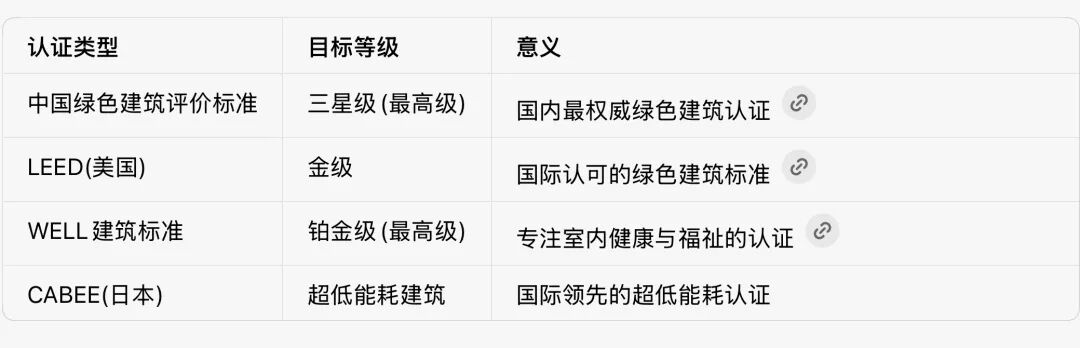
5. Innovations and Demonstrative Significance 1. Perfect Combination of Structure and Energy Saving: The three-petal separation structure not only creates a unique aesthetic but also achieves a 20% material saving and significant wind resistance reduction, serving as a model for green design in super-tall buildings. 2. Benchmark for Ultra-Low Energy Consumption in Super-Tall Buildings: Upon completion, it will become China’s tallest ultra-low energy consumption building, providing a new path for the sustainable development of super-tall buildings. 3. New Heights in Healthy Buildings: Aiming for WELL Platinum certification, it creates a new model of super-tall buildings that balances low carbon and health. Conclusion The China State Construction Suzhou Super Tower is not only a future urban landmark for Suzhou but also a culmination of green building technologies. Through innovative architectural design, efficient energy utilization, intelligent water resource management, and a healthy indoor environment, it is setting a new standard for sustainable development in super-tall buildings. With the project expected to be completed in 2027, we will witness how this landmark building, integrating the characteristics of Suzhou’s water towns with modern green technology, leads the new direction of urban development.
END
Some images in this article are sourced from the internet and are for educational exchange purposes only. Please delete if infringing.