Welcome to click the blue text aboveCar Gathering Network to follow us.
More authentic, more independent, more open 丨 www.autoju.com
Introduction | Tesla is once again in the spotlight
In recent days, Tesla has been in the spotlight, and not in a good way.
After the domestic version of the Model 3 chip issue, the imported version of the Model 3 chip issue is also coming. Chinese car owners are planning to collectively sue Tesla and have formed rights protection groups across various regions.Is that all? Tesla’s officially certified used cars have also been reported by owners to be selling accident vehicles.1Incident DetailsOn June 5, 2019, Mr. Han from Tianjin purchased a Tesla Model S P85 officially certified used car from Tesla’s official website. After receiving the car, he experienced numerous car faults, such as: the left rear door not opening on the first day of delivery, the left rear taillight being lit; radar failure, driving assistance, and cruise control functions failing, etc.
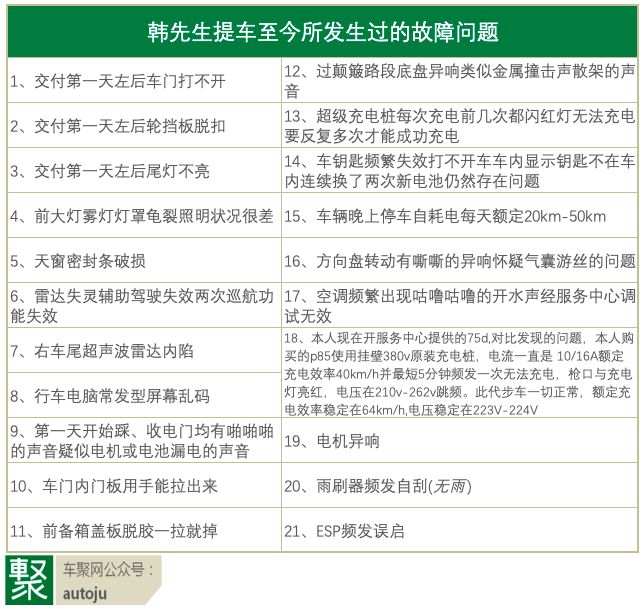
▲Faults experienced by Mr. Han since picking up the carInitially, Mr. Han thought that since the official used car enjoyed a two-year factory warranty, minor issues were not a problem, and he could just visit the service center for repairs.However, on the night of August 24, 2019, while driving at about 120 km/h on the highway exit, the car suddenly made a “bang” sound and displayed five fault codes. It then rolled to a stop, fortunately without causing a traffic accident that endangered life.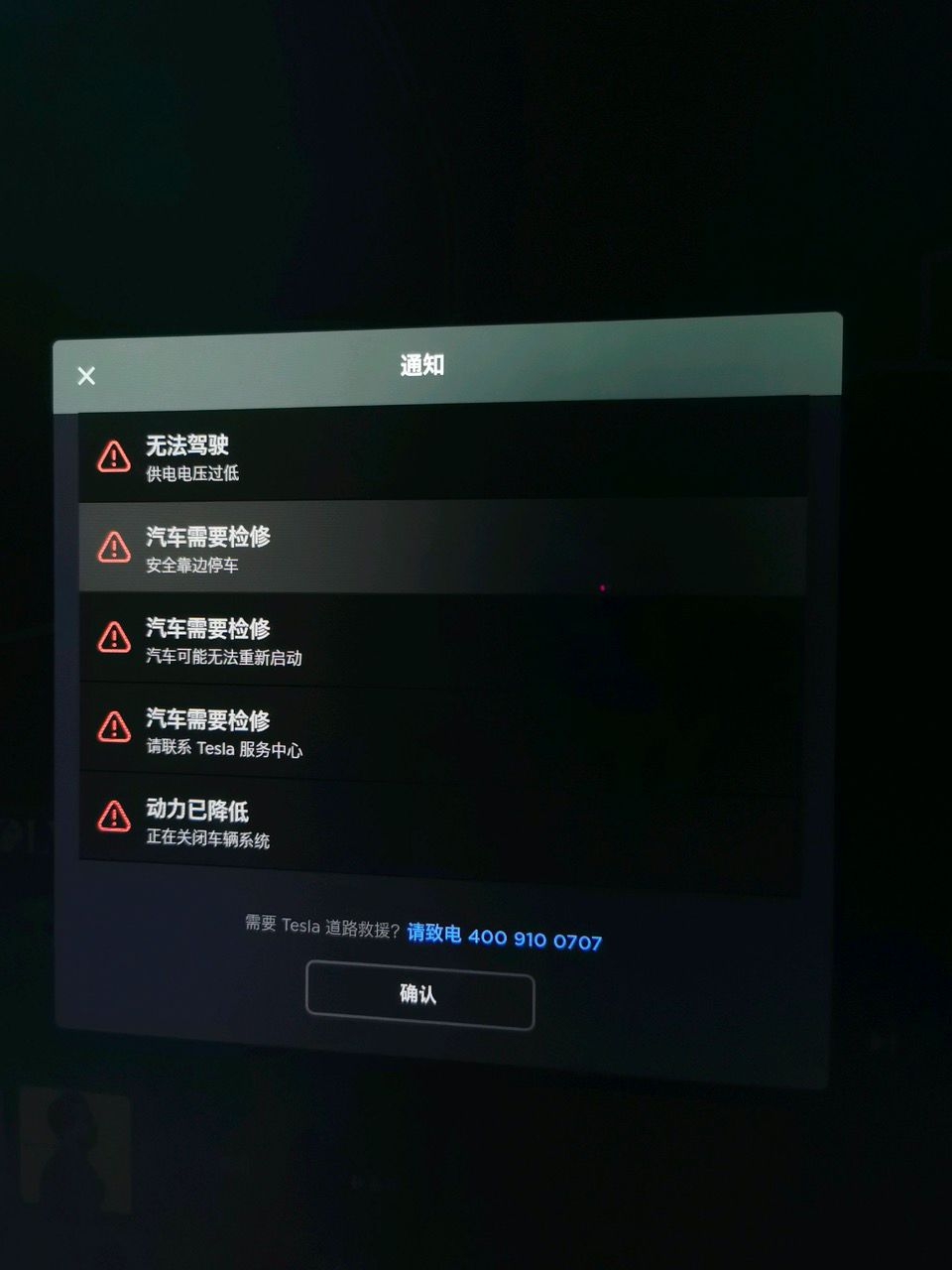 After the car was towed back to the Tesla service center for inspection, it was found that the battery valve, insurance, and other components were damaged and needed replacement.Why were there so many faults in just over two months of owning the used car? Mr. Han felt that the situation was not that simple.When Tesla informed him of the damage, Mr. Han sought a third-party appraisal agency—Tianjin Wanfeng Motor Vehicle Appraisal Co., Ltd.—to assess the vehicle and found that there were linear 45-degree repair marks from cutting and welding on the front part of the left rear wheel arch to the inner part of the left C-pillar, and there were obvious signs of repair at the junction of the rear wall and left rear wheel cover plate with the left C-pillar outer plate, indicating that the left C-pillar outer plate had multiple accident repair marks. The appraisal concluded that the car was an accident vehicle.However, the internal appraisal report provided by Tesla to the market regulatory bureau indicated that the car had no structural repair marks.
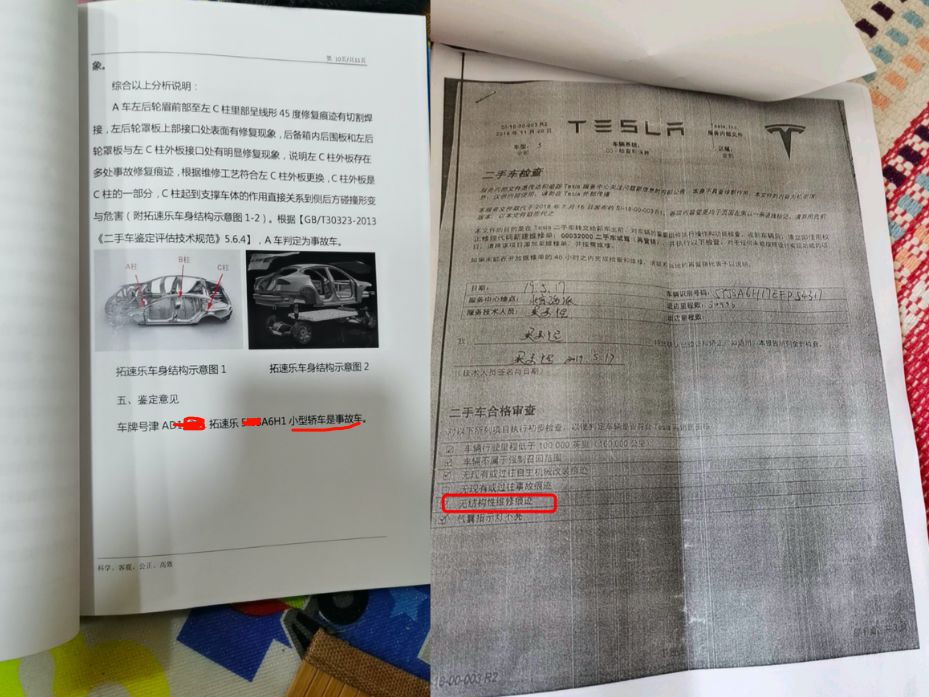 ▲ The left image shows the third-party appraisal result: the car is an accident vehicle; the right image shows Tesla’s internal appraisal result: no structural damageWas there no description of the vehicle condition and handling of accident vehicles in Tesla’s purchase contract?According to Mr. Han, before the purchase, the sales representative only “verbally” informed him that the Tesla certified used car had no major accidents, water damage, fire damage, or structural damage. The purchase contract signed was only a PDF version, which he printed, signed, and sent back to Tesla sales. The contract did not present a description of the vehicle condition and did not have Tesla’s official seal. Shouldn’t a vehicle condition description appear in a used car sales contract?
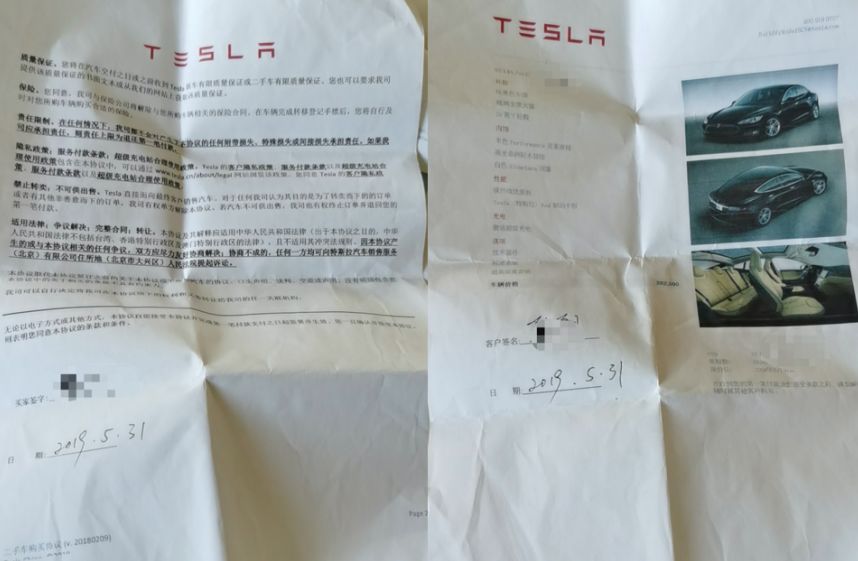 ▲Mr. Han’s purchase contractIn fact, when Mr. Han first learned that the car was an accident vehicle, he requested Tesla to replace it with a safe vehicle, but Tesla’s department refused and told Mr. Han that if he wanted to change cars, the current car would incur depreciation, and he would need to pay more to switch, as the company needed to make a profit. After various negotiations, Mr. Han was unable to reach an agreement with Tesla and is now pursuing legal action.2Challenging Rights Protection JourneyDuring this period, Mr. Han tried countless ways to protect his legal rights. He even tweeted @ElonMusk to express that he bought a Tesla certified used car in China that was an accident vehicle, hoping to draw official attention.In a court hearing at the Tianjin Hexi Court, Tesla’s defense regarding the vehicle’s structural damage stated:▎The previous owner of the vehicle had a very minor collision with another vehicle while changing lanes, which only slightly damaged the left rear fender and the edge of the bumper and wheel hub surface, without affecting the structural safety of the vehicle. This incident, based on the actual damage and industry practices, does not constitute a “major accident”.▎Regarding the issue of structural damage to the vehicle, Tesla defended that due to the vehicle having experienced a minor scrape with the previous owner, and because Tesla vehicles have an all-aluminum body, traditional “hammer-stretch restoration” bodywork techniques cannot be used for repairs. Therefore, according to Tesla’s production technical specifications and standards, the fender is considered a “covering part” and requires complete replacement, which must be done using “welding-riveting” techniques. This operation process, apart from replacing the fender (covering part), does not involve the vehicle’s frame or any other safety structure, only the replacement of the vehicle’s exterior covering parts.
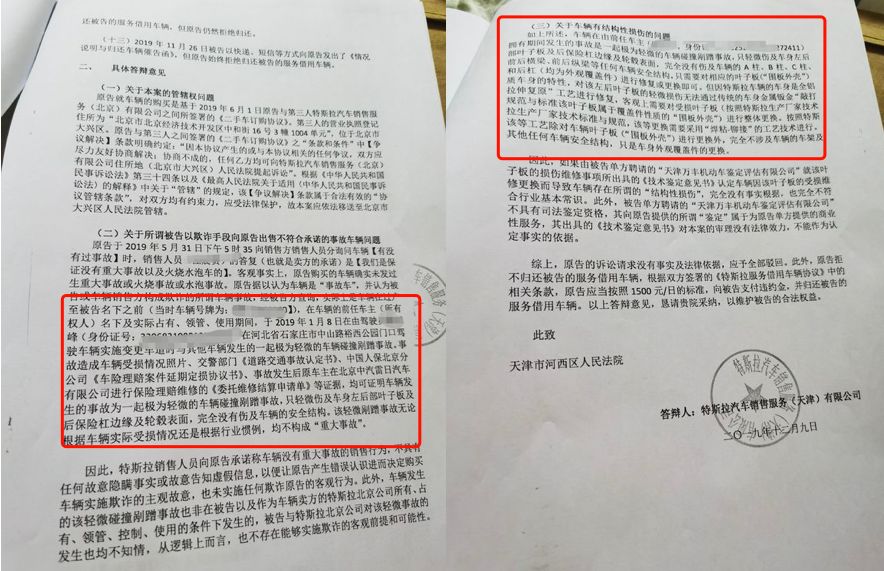 ▲ Tesla’s defense statementAfter reading Tesla’s defense statement, is this matter really as they say?3How Does the Official Handle Similar Repairs?The Car Gathering author consulted a friend working at a Tesla authorized service center:▎Q: If the left rear fender and rear bumper of the Model S have minor scrapes, will it be bodywork or will the covering parts be replaced?▎A: If it’s just paint damage, only repainting is needed. If there’s deformation, since the Model S has an aluminum body, the deformation cannot be repaired and must be replaced.▎Q: If the entire rear fender is replaced and cutting is involved, will it affect the C-pillar?▎A:For the left rear fender, the C-pillar will not be touched, but components like the charging port need to be removed, and computer calibration will be required, similar to that.
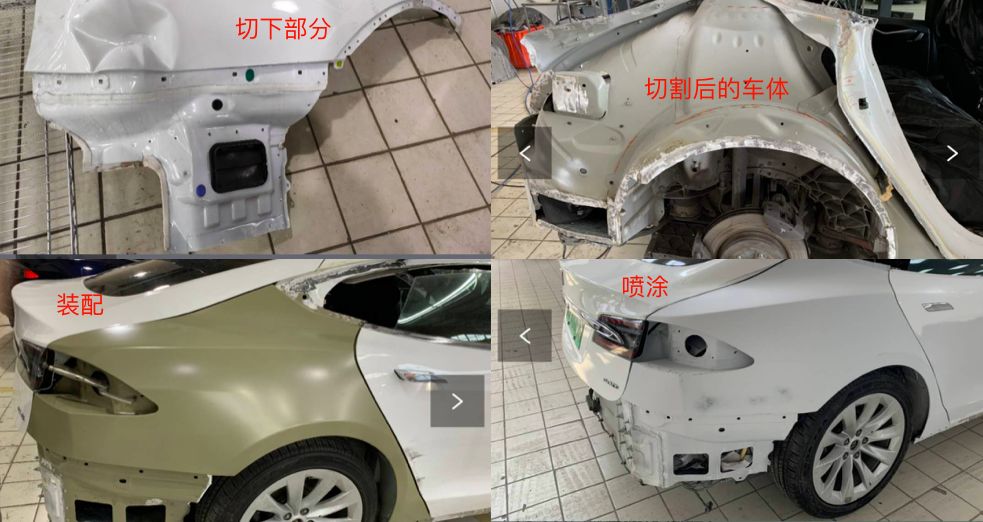 ▲ Model S rear fender repair case▎Q: After such a major repair, is it considered an accident vehicle?▎A:Yes, a professional can tell.Have you noticed the image of the cut vehicle body? It is said that the repair does not involve the C-pillar, but in the image, the aluminum skin at the edge of the C-pillar is already raised, which may be due to the repair technician’s personal habits and is not applicable to all vehicles.4Definition of Accident VehiclesHow is an accident vehicle defined in regulatory documents?
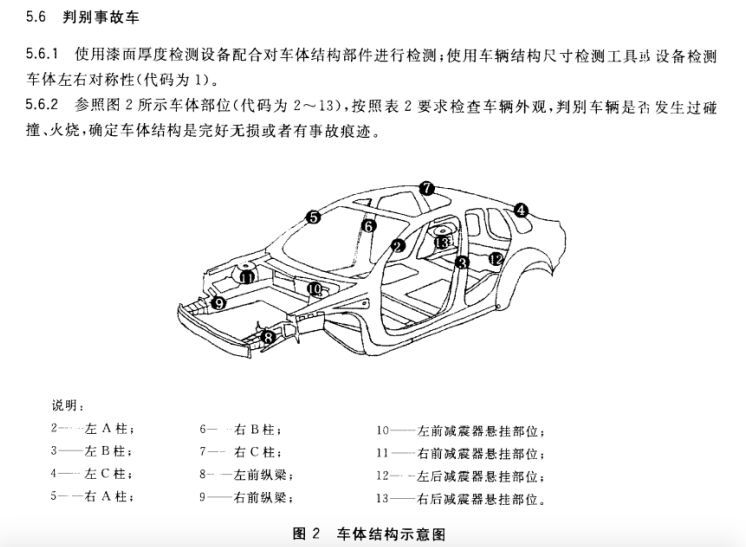 According to the “Technical Specifications for Appraisal and Evaluation of Used Cars – GB/T 30323-2013”, any deformation, twisting, replacement, welding, or wrinkling of the four beams, six pillars, and four suspension towers constitutes an accident vehicle.
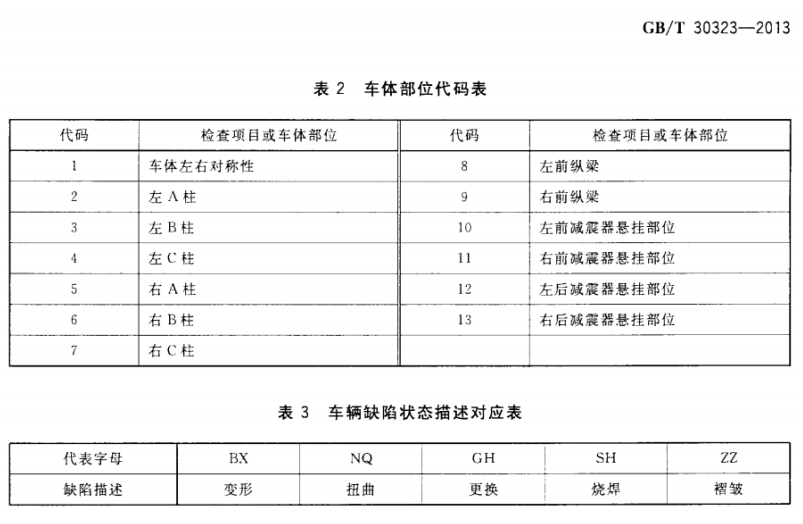 According to the “Technical Specifications for Appraisal and Evaluation of Used Cars – GB/T 30323-2013”, if Mr. Han’s car has deformation, twisting, replacement, welding, or wrinkling of the C-pillar, it would definitely be classified as an accident vehicle.
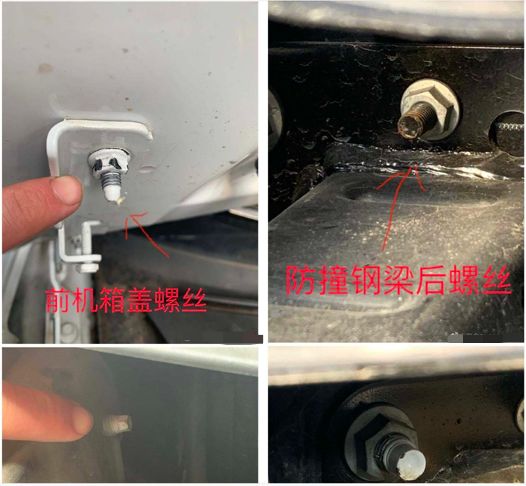
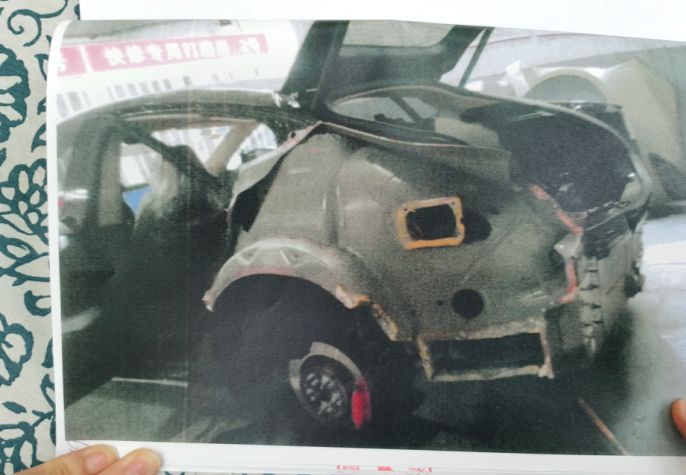 ▲ The original owner had repair photos of the car after it was previously “scraped”Currently, the latest development of this matter: due to various obstructions, Mr. Han has moved the case to a court in Beijing for processing.5CoincidentallyAnother Tesla owner seeking rights protection purchased a Tesla certified used Model S on the Tesla official website in January 2020. On the day of picking up the car, he found that the front trunk lid could not be opened, and the vehicle veered to the right while driving. Due to this veering, a minor accident occurred.After taking the car to the repair shop, it was found that the screws of the front hood and the anti-collision beam had signs of disassembly. The owner later took the car to the Tesla service center and had a preliminary inspection by a third-party testing agency, which found that the car had accident traces, the left headlight had been repaired, the anti-collision beam had been replaced and repainted, the front bumper had been repainted, and there was rust on the metal under the center console, while the Tesla sales personnel had informed the owner that the vehicle had only been repainted.
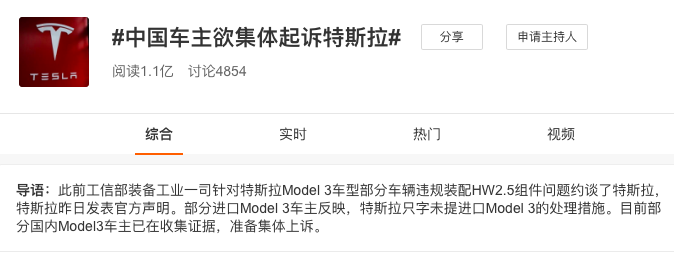
 Summary from Car GatheringAs of the time of writing, the topic of #Chinese car owners plan to collectively sue Tesla# has garnered 110 million views.
 In February, despite the pandemic, Tesla still sold 3,900 vehicles in the Chinese market, accounting for about 30% of the domestic new energy vehicle market. We hope Tesla remembers the goodwill of Chinese consumers and does not let them down.On March 10, the Ministry of Industry and Information Technology interviewed Tesla regarding the issue of some Model 3 vehicles being improperly equipped with HW2.5 components. This year’s 315 event was postponed, but what about justice?Welcome to join the Car Gathering Network reader WeChat group: please first add WeChat ID autoju1 and indicate “I want to join the group”, then we will add you to the group, or join the QQ group: 383683141.