Comparison and Analysis of Embedded System Communication Protocols
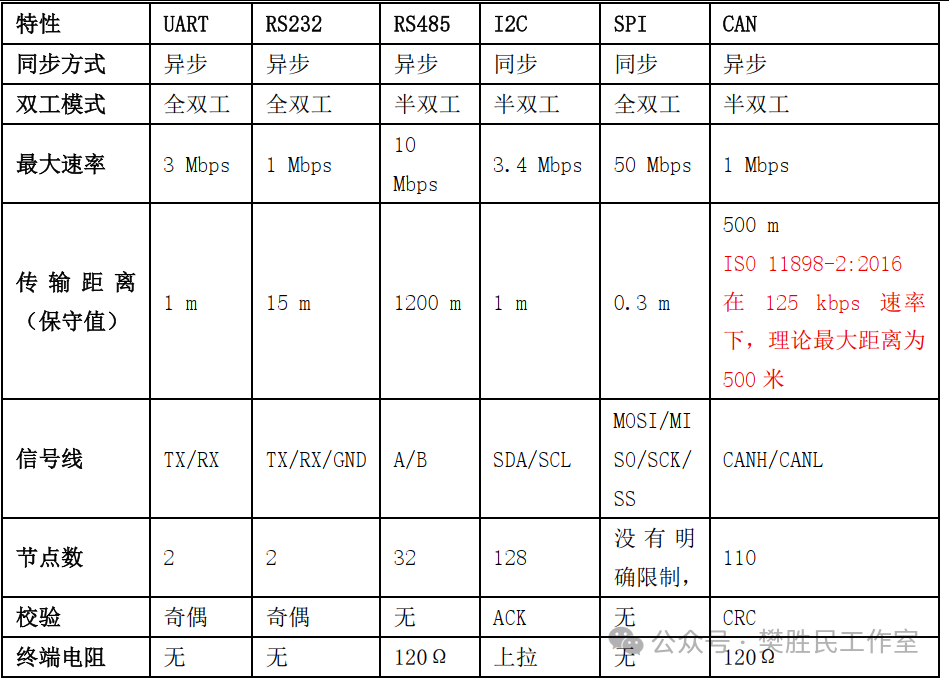
In embedded system development, these six major communication protocols each have their strengths: UART, with its simple and user-friendly characteristics, is often used for short-distance (1m) debugging communication between MCUs and sensors; RS232 achieves a stable 15m connection with host computers through level conversion chips, making it a classic interface for industrial control devices; RS485 shines in industrial environments, capable of constructing a reliable network of 32 nodes within a range of 1200m through 120Ω termination resistor matching; I2C, with its simple two-wire system, allows flexible networking between board-level devices, supporting up to 128 slave devices, making it particularly suitable for sensor arrays; SPI, with its high-speed full-duplex performance of 50Mbps, is the preferred choice for high-speed peripherals such as Flash memory and displays; while the CAN bus, with its strong anti-interference capability and comprehensive error detection mechanism, builds a reliable network of 110 nodes within a range of 500m in automotive electronics and industrial control, with strict 120Ω termination resistors ensuring signal integrity. Developers need to choose the most suitable communication solution based on key factors such as transmission distance, rate requirements, number of nodes, and anti-interference needs.