
There are many technologies available for reading water meters, mainly categorized into wired and wireless meter reading. Among various meter reading technologies, wireless meter reading is more readily accepted due to its lack of on-site wiring, easy installation, and simple maintenance and updates. However, some wireless technology solutions also face application issues and shortcomings, such as FSK’s short range, poor penetration, and unstable wireless signals, while GPRS, although having good network coverage, consumes too much power. The emergence of LoRa technology solves application issues related to transmission distance, network signal, and power consumption for meter reading applications. Here, we recommend a smart water management solution based on LoRaWAN.
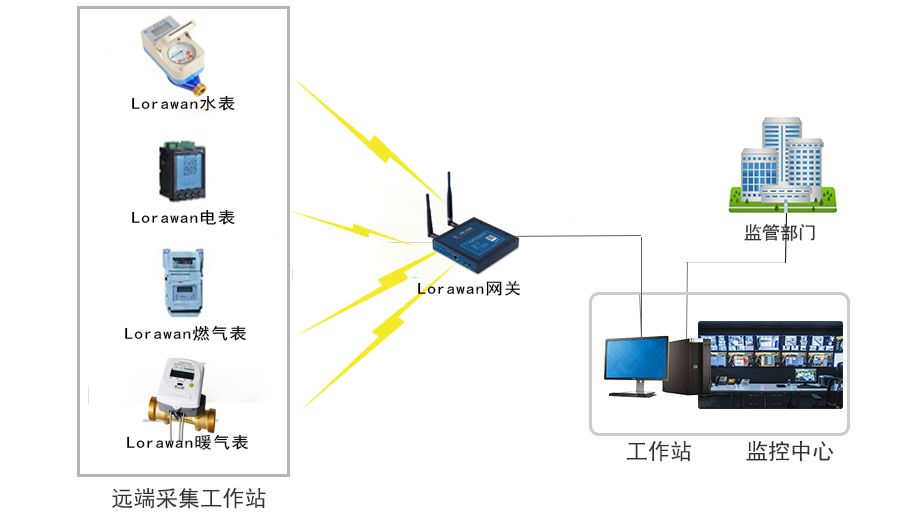
The solution adopts the standard architecture of the LoRaWAN network, achieving end-to-end data transmission. The traditional water meter terminal is designed as a LoRaWAN terminal, and the network server has optimized data reports based on the characteristics of water meter data services.
▌LoRa Smart Water Management Solution Network Architecture
Terminal Layer – A PCBA with LoRaWAN functionality is specially designed for water and gas meter applications, and the glue brushing process of the current water and gas meter PCBA has been optimized. It adopts a waterproof box design, facilitating maintenance and updates of the water and gas meter control system. The LoRaWAN antenna has been designed and optimized for the installation environment of the water meter, resulting in a PCB antenna that has shown good transmission and reception performance after professional matching and field testing.
Network Layer – The standard protocol based on LoRaWAN has been adopted and optimized for water meter data services. Low Power Wide Area (LPWA) technology provides excellent technical support for large-scale data collection systems. To address blind spots in LoRaWAN network signals, a low-cost LoRaWAN relay device has also been designed to solve network coverage issues. The results from pilot tests have been quite satisfactory.
Cloud Platform – The smart hardware cloud platform provides cluster deployment, protocol, and service management. The LoRaWAN Network Server (NS) can be deployed on a private cloud or public cloud, making project deployment more flexible.
Application Layer – The smart water management application platform is responsible for operation and maintenance management, data visualization, and other tasks.
▌LoRaWAN Water Meter Products
Main Features:
Ø Minimum -147dBm high link sensitivity
Ø Maximum 20 kilometers air-to-air communication distance
Ø 1.5~2.5 kilometers communication distance in urban dense areas
Ø Maximum 20 floors cross-floor communication capability
Ø Minimum 5uA ultra-low power design, ensuring a product lifespan of 6~10 years
Ø High precision pulse counting error: ±1 per year
Ø Low latency remote wake-up function
Ø Advanced anti-theft water feature, remote automatic alarm
Ø Supports external magnetic signal forced wake-up function
Ø Seamless integration with water meter device cloud and water supply plant management platform, ensuring data security
▌LoRaWAN Module
The main chip of the LoRaWAN module adopts ultra-low power consumption and operates in the frequency band suitable for China, 470-510MHz, supporting the LoRaWAN standard protocol.
Main Features:
Ø Built-in STM32L051C8 processor
Ø Supports LoRaWAN™ 1.0 protocol stack
Ø Supports LoRaWAN™ Class A, Class C
Ø Uses TCXO
Ø Maximum link budget can reach 168dB
Ø 127dB RSSI dynamic range
Ø 9.9mA low receive current, 200nA standby current
Ø Supports various security encryptions like AES128/SM4
Ø Supports FSK, GFSK, LoRa™ modulation methods
Ø Automatic radio frequency signal detection, CAD mode, and ultra-fast AFC
Various encryption technologies (AES128/SM4) ensure the security of the network and data.
▌LoRaWAN Gateway
The LoRaWAN gateway complies with the LoRaWAN protocol specification, supports multi-channel concurrency, POE power supply, and is equipped with GPS functionality, with backhaul using various links such as 3G/4G/WiFi. The LoRaWAN gateway has been optimized for anti-interference design to meet various environmental applications.
Main Features:
Ø Can simultaneously receive traffic on the same channel
Ø Easy to expand, increasing network capacity
Ø Can demodulate 2MHz bandwidth simultaneously
Ø Simple star network with no delay
Ø Adaptive link rate
Ø Simultaneous communication nodes 100,000 indicators
Ø Transmission power 27dBm
Ø Link sensitivity -157dBm
▌LoRaWAN Network Server
The LoRa network server can be deployed privately or on a public cloud, such as Alibaba Cloud.
Main Features:
Ø LoRaWAN MAC
Ø GW network management and configuration
Ø EN configuration and OTA
Ø Data interaction with application servers
Ø Based on source data, select the best downstream path
Ø RTCM high-precision positioning differential data broadcasting (optional)
Ø Scheduling downlink flow
Ø Number of GW access: 2000 units
Ø Number of EN access: >1 million
▌Cloud Platform and Application Platform
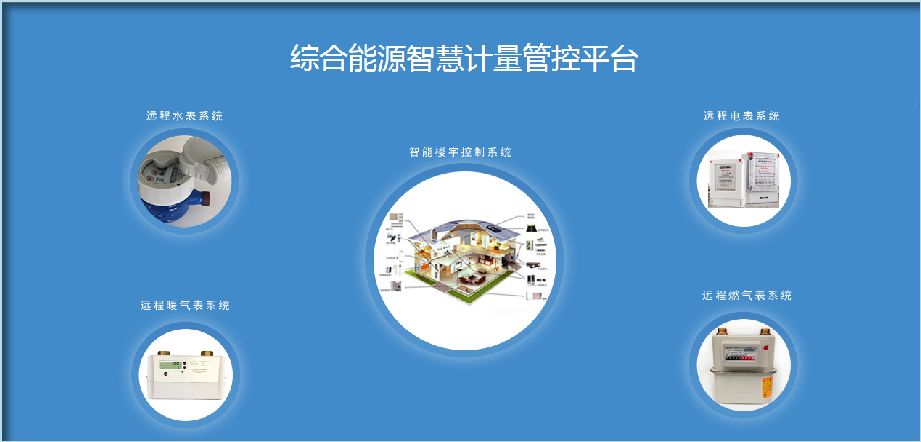
The Wuxi Taogold Comprehensive Energy Consumption Control Platform main functions:
Ø Meter reading management (settings, community, water plant management, etc.)
Ø Product lifecycle management (testing, installation, traceability)
Ø Operation management (monitoring, upgrading, recording, etc.)
Ø Data visualization (statistics, queries, charts, reports)
The smart hardware cloud platform main functions:
Ø Uses the Dubbo distributed framework to support high-capacity, high-concurrency requests
Ø Uses Docker container cluster deployment to save resources and time
Ø Supports OAuth2.0 protocol authentication and authorization
Ø Supports multi-protocol communication (HTTP, MQTT, TCP/UDP, etc.)
Ø Real-time request service governance and service monitoring
▌Conclusion
This solution is designed based on the standard LoRaWAN protocol, optimized for water meter data services. During the actual deployment of LoRaWAN networks, it is inevitable that signal blind spots will exist; thus, a low-cost LoRaWAN network blind spot relay has been specifically designed to achieve seamless coverage of LoRaWAN network signals. To facilitate maintenance and upgrades of water meters, an air upgrade tool has also been designed, allowing for MCU firmware upgrades without opening the meter casing, simplifying on-site maintenance and software updates.