Essential insights! Download the complete courseware of “Introduction to Intelligent Manufacturing” (405 pages)!
(Click the above blue text to obtain learning materials!)
 With the automation of surface mount technology (SMT) in electronic integrated circuits and the development of unmanned factories, the reliability and verification maintenance of visual inspection equipment have become increasingly crucial. The types of visual inspection are also growing, covering more industries. This article provides a brief analysis of how to achieve reliability verification for SMT-AOI visual inspection equipment.
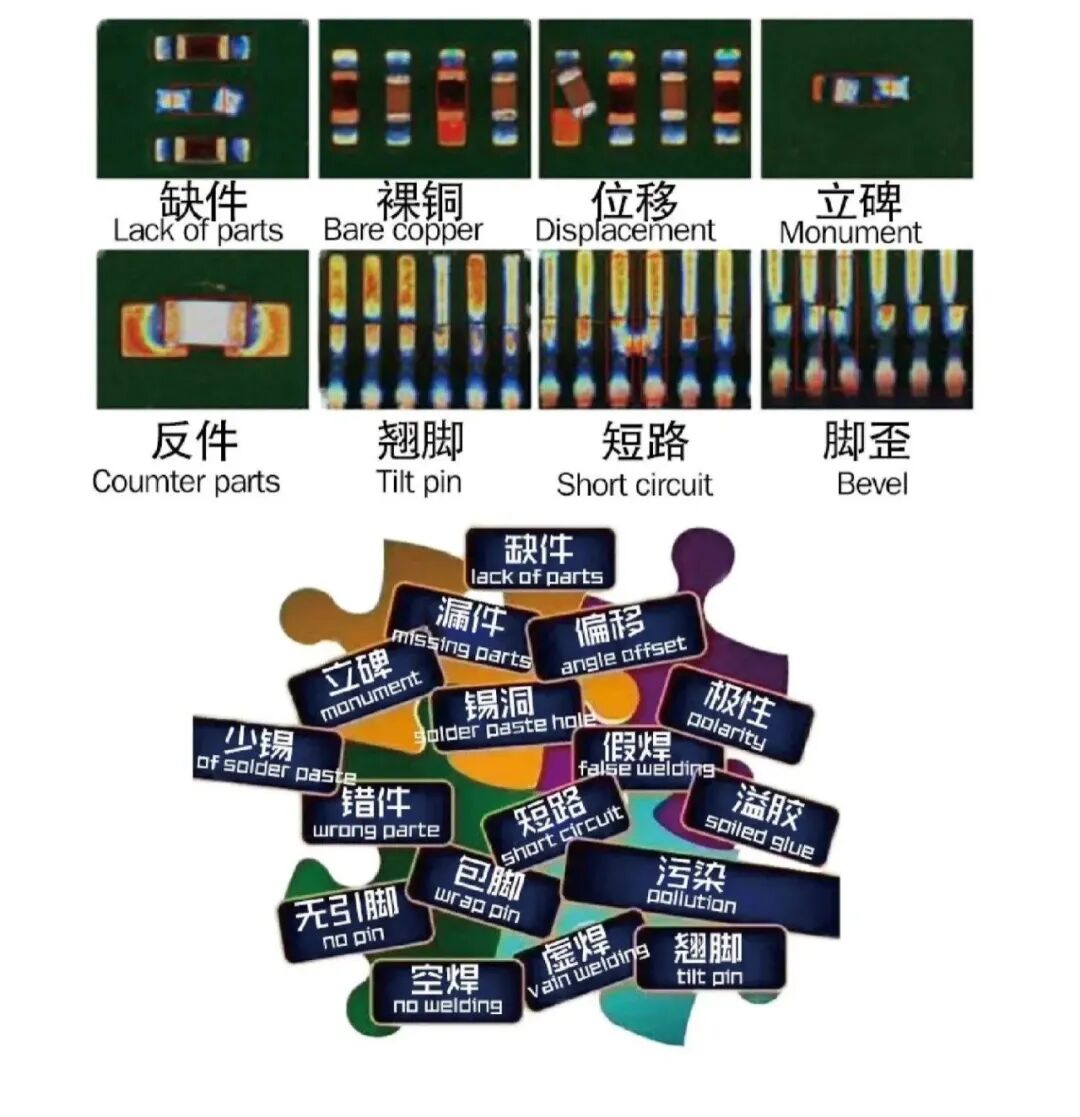 It is well known that in manufacturing, maintenance and CPK (Process Capability Index) checks are required periodically. Typically, this occurs in a constant temperature, humidity, and dust-free environment, where equipment must undergo CPK verification once a year to ensure stable and reliable production. If the environment does not meet these conditions, CPK checks should be performed quarterly. This rigorous quality control philosophy applies equally to AOI visual inspection equipment, which must also verify its detection capabilities and reliability.
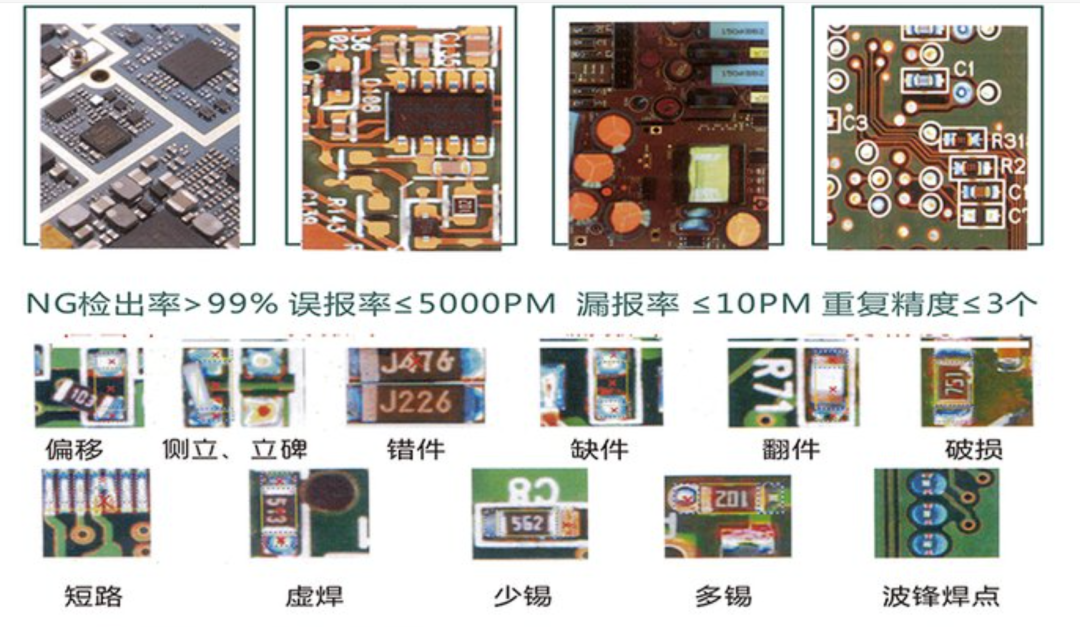 In the field of electronic integrated SMT manufacturing, Automatic Optical Inspection (AOI) equipment is a key link in ensuring product quality. To ensure the AOI system operates efficiently, it has now integrated AI edge computing capabilities to accurately identify various defects during the printing process, such as bridging, solder overflow, missed prints, and misalignment. SMT assembly plants need to adopt a series of comprehensive evaluation and optimization strategies rather than simply repeating the same steps. Now, let’s discuss how to verify that the optical inspection equipment can maintain stable detection performance over time, starting with the following methods:1. First, create a CPK-like inspection report, listing relevant projects by date and conducting actual verification for each item;
1.1, Algorithm Verification and Optimization: The primary task is to verify and continuously optimize the detection algorithms of the AOI equipment. By simulating and measuring various types of printing defects, the algorithm’s recognition capability is validated to ensure comprehensive coverage and accurate identification of potential issues.Use standard samples with known defects (such as poorly soldered PCBs) to verify defect detection rates and false positive rates.
1.2, Standard Defect Board Verification: Introduce standard test boards with clearly marked defects as a benchmark for evaluating the performance of the AOI system. Conduct 100 repeated tests on the standard test board in a CPK manner for data comparison. If the equipment has SPC (Statistical Process Control) functionality, observe and analyze SPC data or record and print it (SPC note: Real-time data analysis can identify abnormal fluctuations in the production process, statistically compiling defect data by time, product name, etc., generating pie charts and line graphs to help adjust parameters in a timely manner to maintain quality stability in a visual report.), this step not only tests whether the equipment can accurately detect known defects but also helps assess the system’s stability and reliability.
1.3, Consistency Verification Enhancement: Under constant conditions, SMT assembly plants need to perform multiple AOI scans on the same test board, focusing on the consistency of the detection results. This aims to reduce random errors and ensure that the AOI system’s detection results are stable and reliable under different times and operations, testing the detection effects of different specifications of products (such as component size and color differences) to verify generality.
1.4, Error Analysis and Adjustment: Conduct in-depth analysis of false positives (false alarms) and false negatives (missed detections) that occur during the AOI detection process. By adjusting equipment parameters or optimizing algorithms, strive to minimize the misjudgment rate, i.e., relaxing parameters, strictly controlling, and adjusting the phenomena that occur in the middle range to the most suitable parameters.
1.5, Human-Machine Comparison Verification: Cross-compare the AOI detection results with manual inspection results from experienced quality inspectors. This “human-machine battle” not only verifies the accuracy of the AOI system but also provides valuable feedback for subsequent system optimization.
1.6, On-Site Practical Testing: Directly test the AOI system on the actual production line, simulating various challenges in the real SMT assembly plant production environment to ensure it maintains high efficiency and accuracy in actual applications. If conditions allow, observe the detection performance under various environments such as vibration, high temperature, low temperature, vacuum, negative pressure, light, colored light, and no light. This verification can be adjusted based on one’s conditions, and it is not necessary to achieve all conditions.
1.7, Continuous Maintenance and Upgrades: Establish a regular maintenance and upgrade mechanism to ensure that the AOI equipment’s software and hardware are always in optimal condition. By timely introducing new technologies and algorithm improvements, continuously enhance detection efficiency and accuracy.
Data records should be kept for the above items as a basis for the next verification, facilitating observation of its lifespan and operational status;2. The above is the overall testing, where the main core of optical detection is the CCD camera, and the lifespan of the camera is also limited. Therefore, detailed testing should be conducted, which is primarily researched by the equipment maintenance team. Below are some simple groups for reference.
Mainly Hardware
-
Resolution Testing Use a standard resolution test card (such as ISO 12233 standard card) to check whether the camera can clearly identify the lines and text on the test card under different lighting conditions.。
-
Frame Rate and Exposure Testing
- Test frame rate stability with high-speed moving objects.1
- Adjust exposure time and gain parameters, observing image brightness and noise control.
Light Source Uniformity Check Use a uniformity test board to verify whether the light source has dark or bright areas and test the stability of long-term operation.。
Use time records and observations
Observe the lifespan and operational status of the camera lights, understanding that the lifespan of the main light source and auxiliary light source is different, so this aspect should also be given more attention.
3. Maintenance of AOI detection equipment must be performed on time, and the following details should be carried out according to daily, weekly, monthly, and other different cycles for systematic maintenance. Below is a comprehensive organized process:
1. Daily Maintenance (to be performed daily)
Equipment Surface Cleaning Use a lint-free cloth to wipe the equipment casing and control panel to avoid dust accumulation affecting heat dissipation.
-
Key Component Inspection
- Check whether the conveyor belt is damaged and whether the pulleys are loose.
- Verify the connection status and cleanliness of sensors.
2. Function Testing After powering on, execute the self-check program to confirm that motion control, image acquisition, and other modules are operating normally.
2. Weekly Maintenance (to be performed weekly)
-
Motion Component Maintenance
- Clean the X/Y/W axis ball screw and linear guide.
- Use specialized lubricants for lubrication, being careful to avoid over-lubrication.
Optical System Calibration Clean the camera lens and light source components, checking focus accuracy.
3. Monthly Maintenance (to be performed monthly)
-
Deep Cleaning
- Disassemble the fan protective cover, clean the blades, dust filter, and metal components.
- Clean the dust filter and cooling fan filter of the computer host.
System Maintenance
- Check the tightness of mechanical connections such as bearings and screws.
- Backup device parameters and execute calibration procedures.
Environmental Adaptation Check Confirm that the working environment’s temperature and humidity (5-40℃/35-80%RH) and dust conditions meet requirements.
Electrical Check
- Check whether the electrical harness connections are normal, re-plugging any loose connections.
- Check for dust on the drive shaft cooling fan, cleaning it with a vacuum if necessary.
- Observe whether the electrical components in each process start normally according to the distribution process, replacing any abnormal components.
Precautions
-
Before lubrication operations, power off and wear protective gloves.
-
Be cautious when cleaning with corrosive solvents (such as thinner).
-
In case of emergencies, immediately press the emergency stop button and contact professionals.
The above is for reference only, applicable to fully automatic AOI detection equipment. Semi-automatic AOI detection equipment and desktop AOI detection equipment may have different details, but the camera checks are similar. The longer the detection equipment is used, the stronger the awareness of equipment supervision should be. Otherwise, the equipment will become a mere substitute for manual inspection, leading to missed detections and unnecessary losses for the company’s products. Finally, I hope this information helps friends in managing and using AOI detection equipment.
The above information is compiled from the internet and actual sources, and the copyright belongs to the original author!

Recommended Reading

Decoding Foxconn IE
Practical Techniques of the Seven IE Methods
Introduction to Air Tightness Testing Technology
Classification and Application of Water-Based Cleaning Agents
IPC-A-610G Standard Training Materials

Electronic Encapsulation (Potting) Process Technology
Sharing Insights: Introduction to Vacuum Reflow Soldering Ovens

Specifications and Precautions for Conformal Coating on PCBs
Definition, Causes, and Determination of Cold Solder Joints! (Includes PPT)
Sharing Insights: Detection and Basic Determination Standards for Tin Whiskers
5 Common SMT Soldering Process Defects and Solutions
Sharing Insights: Detection and Basic Determination Standards for Tin Whiskers
[Video] IPC Hand Soldering Technology Training (Part 1)
[Video] IPC Hand Soldering Technology Training (Part 2)
Free Download | Detailed Explanation of Error-Proofing Methods (Poka-Yoke, Fool-Proofing)
Free Download | "On-Site Visualization and Team Board Design"
Sharing Insights: A New Technology to Replace Rubber Sealing Rings
It's the end of the year, how to write a year-end summary? The most comprehensive guide is here!
[Insights] Using Pre-formed Solder Pads to Reduce Voids in QFN and LGA Packages
Review of Common Methods for Identifying the Polarity of Electronic Components, Illustrated!
Analysis and Improvement Strategies for PCB Soldering Defects Caused by OSP Surface Treatment
Key Technologies for Huawei's High-End PCBA Circuit Board Heat Dissipation Design!
Assembling electronic products is just about tightening a screw, yet there is so much knowledge involved!

Sharing Insights: Layout Requirements for DIP Circuit Boards (Matching Requirements for Selective Wave Soldering)
The US Stops Supplying Chips, Russia Decides to Start from Scratch to Build Lithography Machines!

[Video] IPC Soldering Technology Training: Professional Terminology, Soldering Defects, and Repairs!
Hong Kong's "Chip Heist"! Reviewing Technologies and Products Crucial to China's Manufacturing Rise!
How serious is the chip shortage? The CEO of a lithography machine giant: Some companies are buying old washing machines to dismantle chips!
Automatic Soldering Technology Application Video
Pulse Heat Press Welding Technology Application Video


Laser Welding Technology Application Video

Pulse Plastic Hot Riveting Technology Application Video
Automatic Screw Locking Technology Application Video
Automatic Glue Dispensing Technology Application Video
Plasma Cleaning Technology Application Video

Air Tightness Testing Technology Application Video


If you need more related application technology information, please follow the public account below, search for relevant keywords in past content, or call 159-9580-6783 (WeChat/QQ) for detailed inquiries!
👇👇👇

☝☝☝