Apply for a variety of development boards for free to help your solutions quickly take shape. Click here to apply👉Free Development Board Event
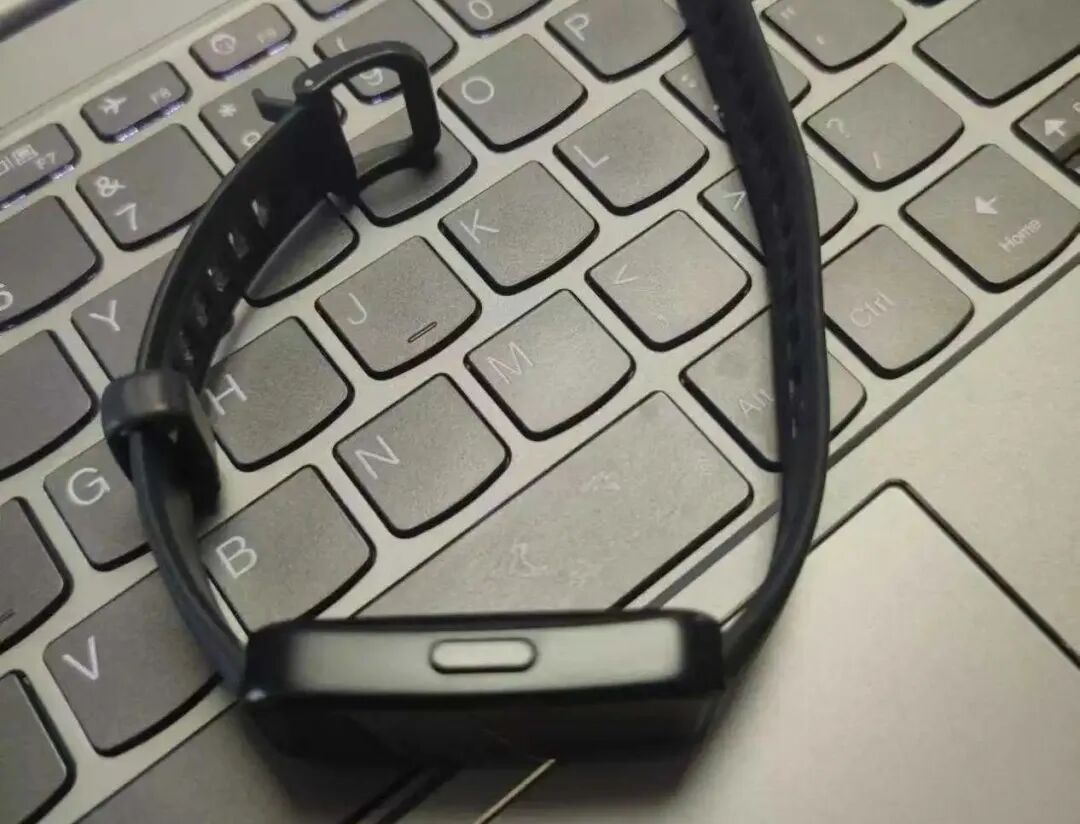
I previously received a Huawei band from the forum, and after using it for a while, I found it quite satisfactory. Personally, I think the most practical features are the WeChat and phone notifications, which ensure I don’t miss calls. However, I rarely use the other fitness functions. The version I received from the forum does not have NFC, so I cannot use it for access control, which is a significant drawback. Recently, I switched to a Huawei watch, leaving this band unused, so I decided to disassemble it and take a look. The one I have is black with a plastic strap, and there is a button on the side.
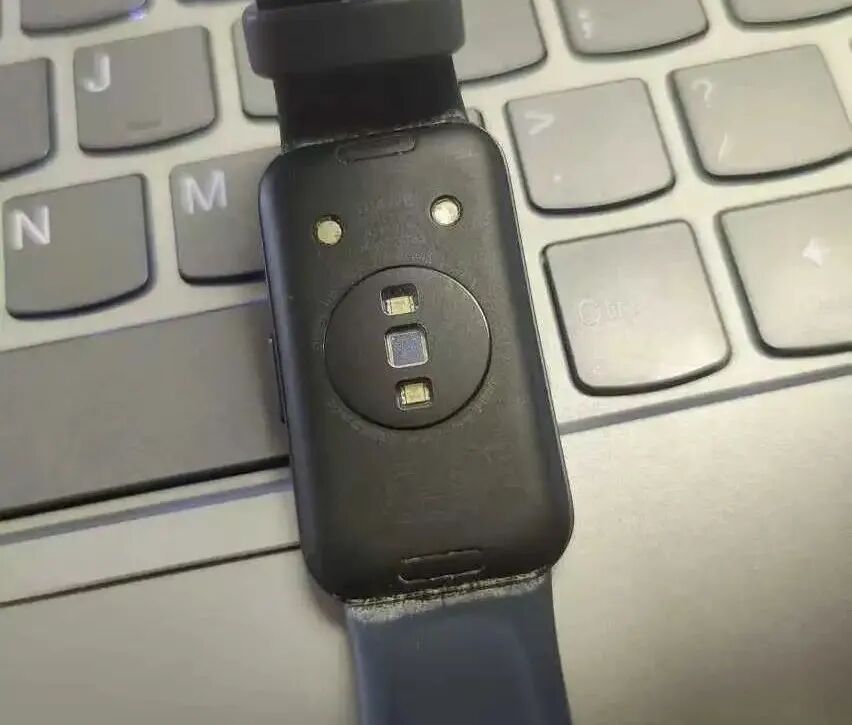
The back shows the charging contacts, flash, and heart rate sensor.
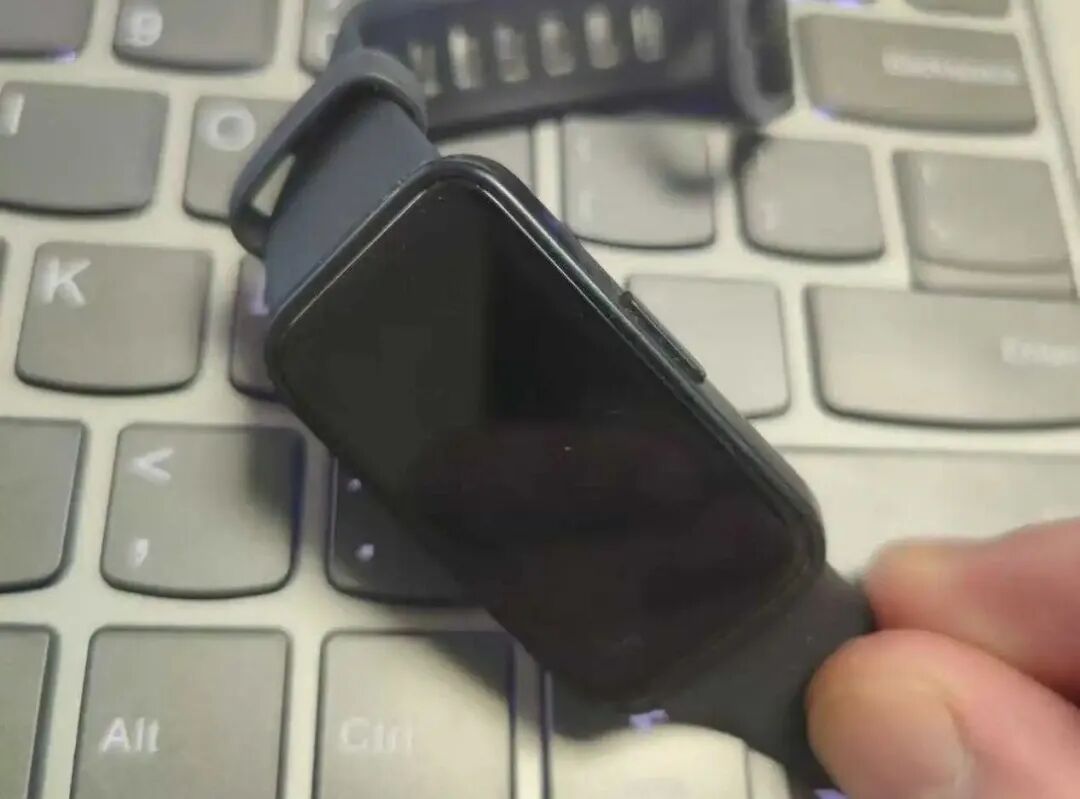
The screen has a certain curvature, complementing the overall design.
First, let’s disassemble the strap. The strap interface tends to accumulate dirt, and you can press the indicated area to remove the strap.
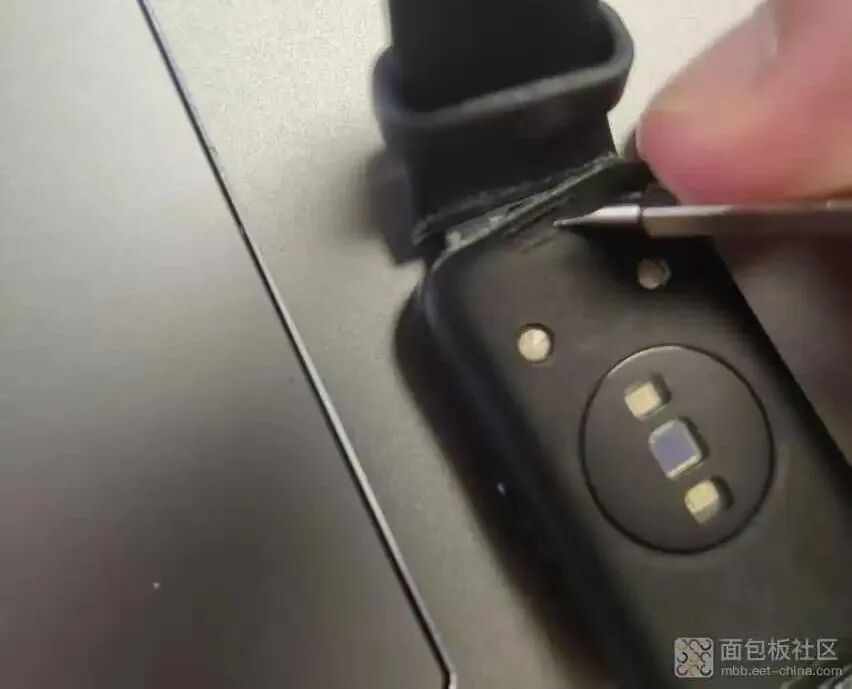
Strap removed.
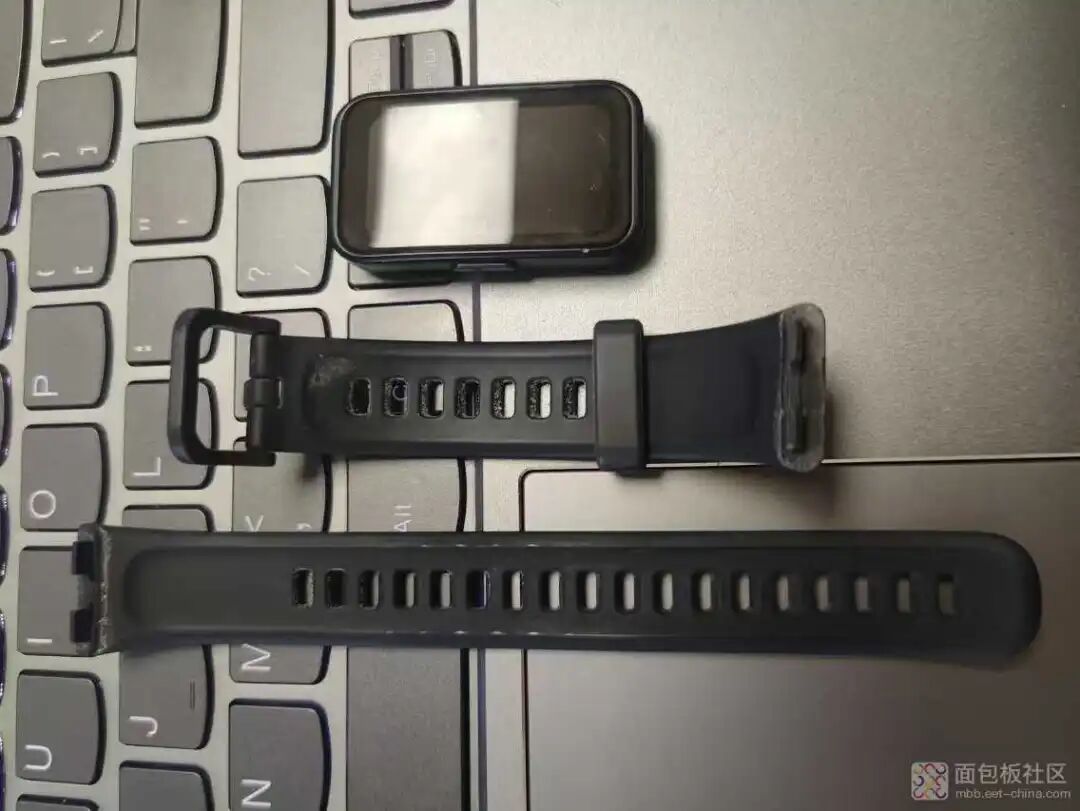
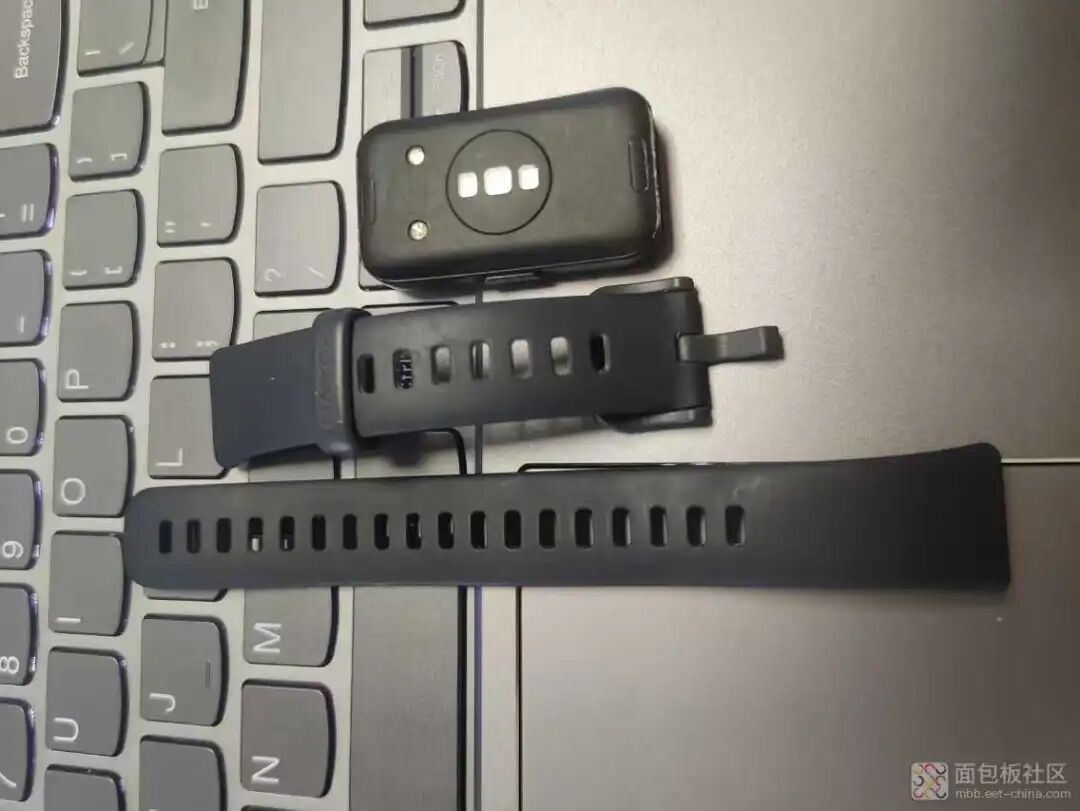
Strap buckle area.
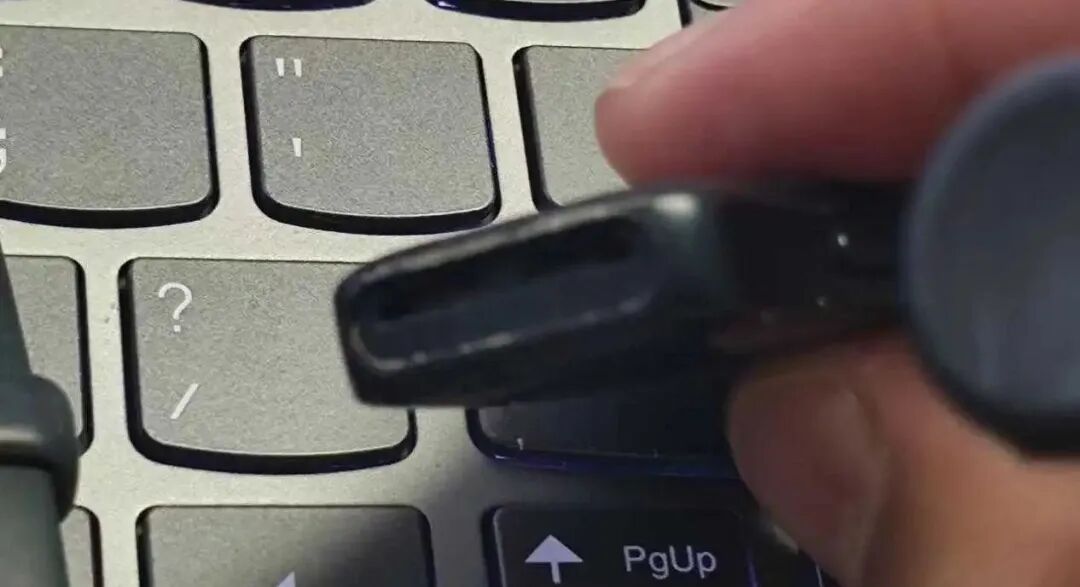
Now let’s remove the back cover. To ensure waterproofing, the entire shell is glued together, so I’ll use a heat gun to soften the adhesive first.
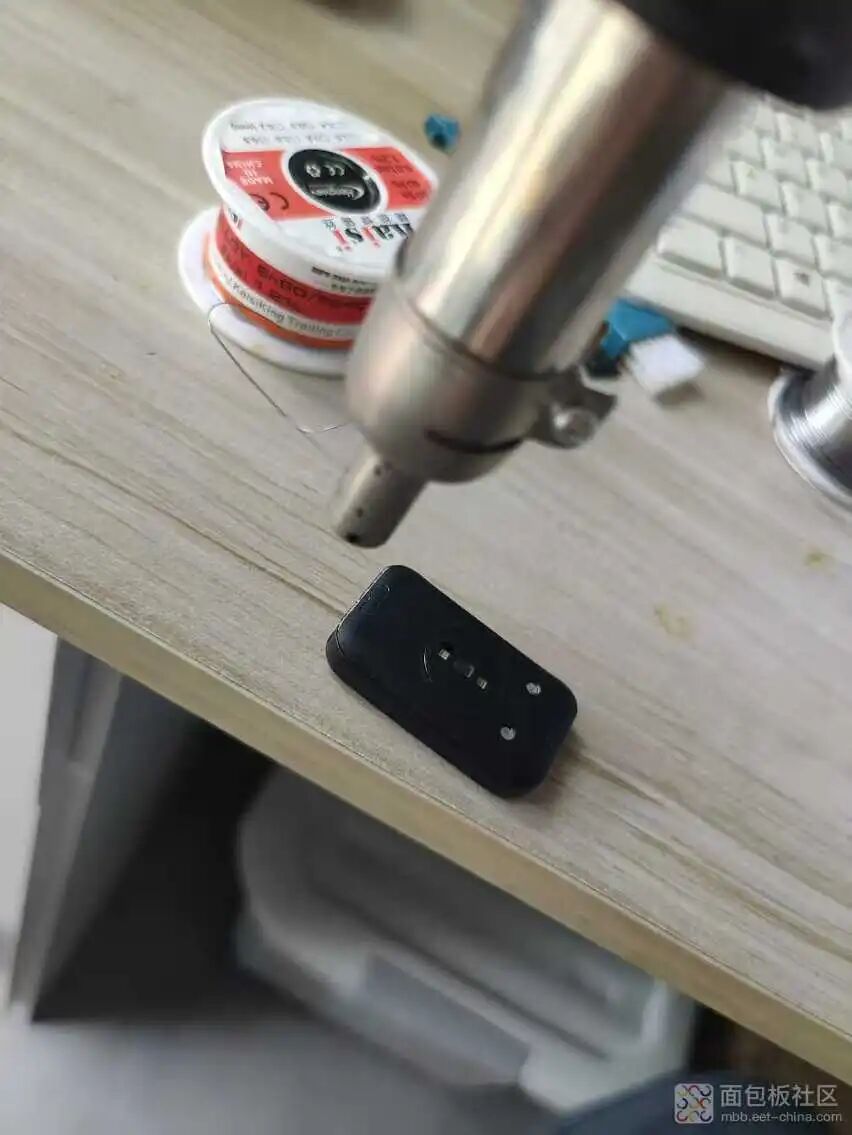
Using a pry tool, I don’t have one, so I’ll use flat tweezers to pry it open.
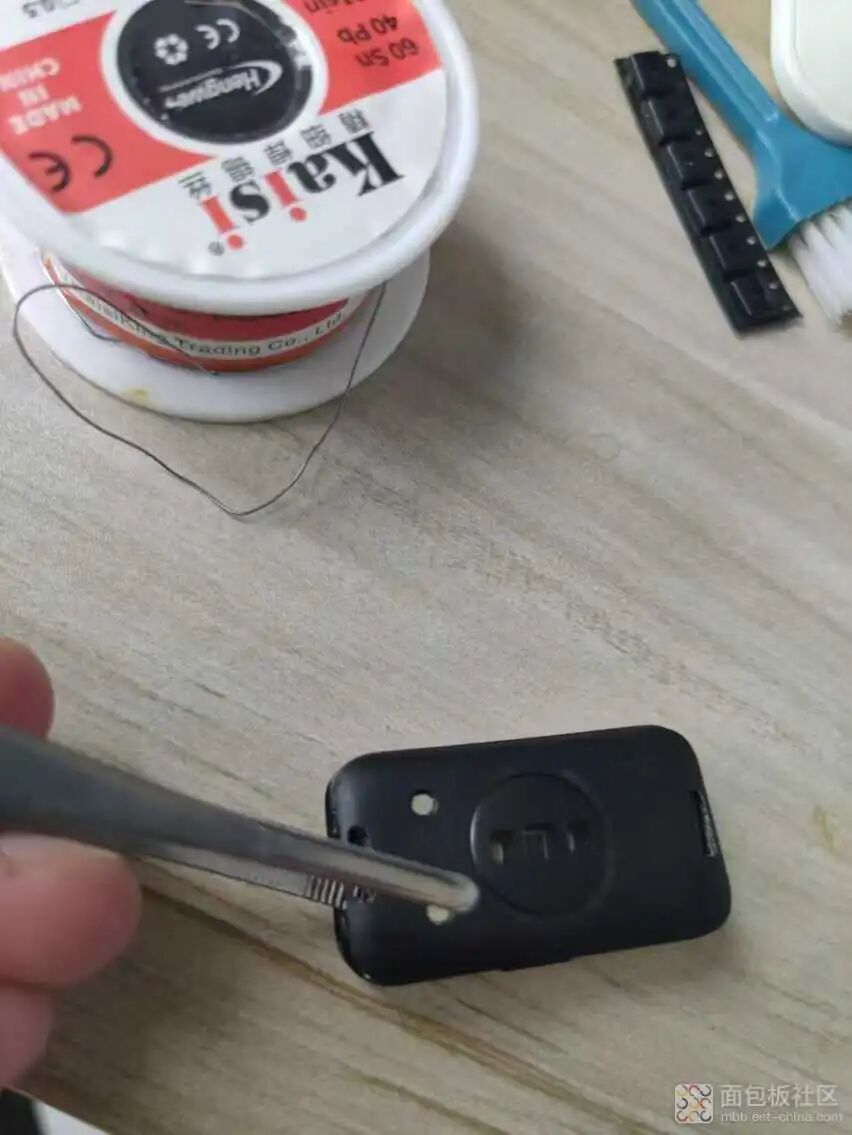
While prying, I noticed some damage, indicating that the repairability is not very good.
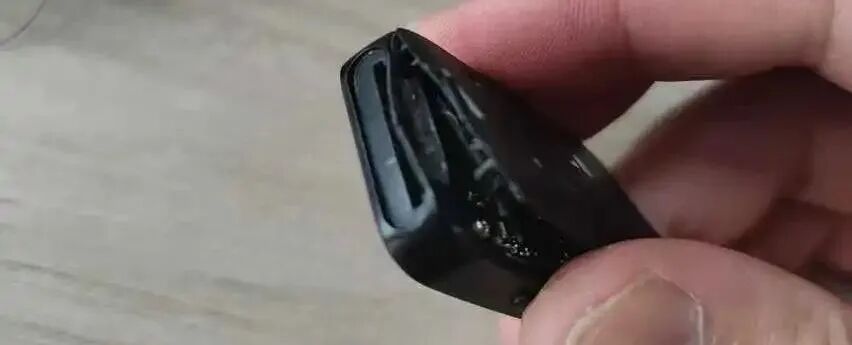
Sliding the tweezers around to pry open the edges.
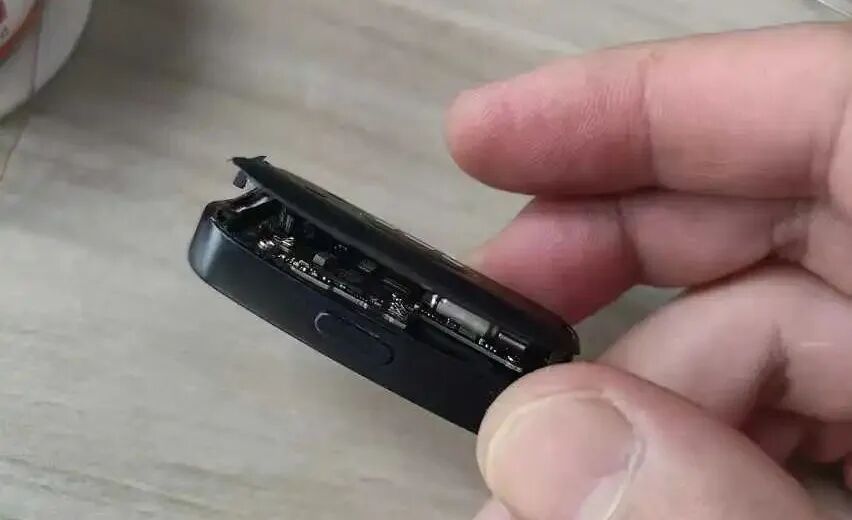
After opening the back cover, I can see the internal details.
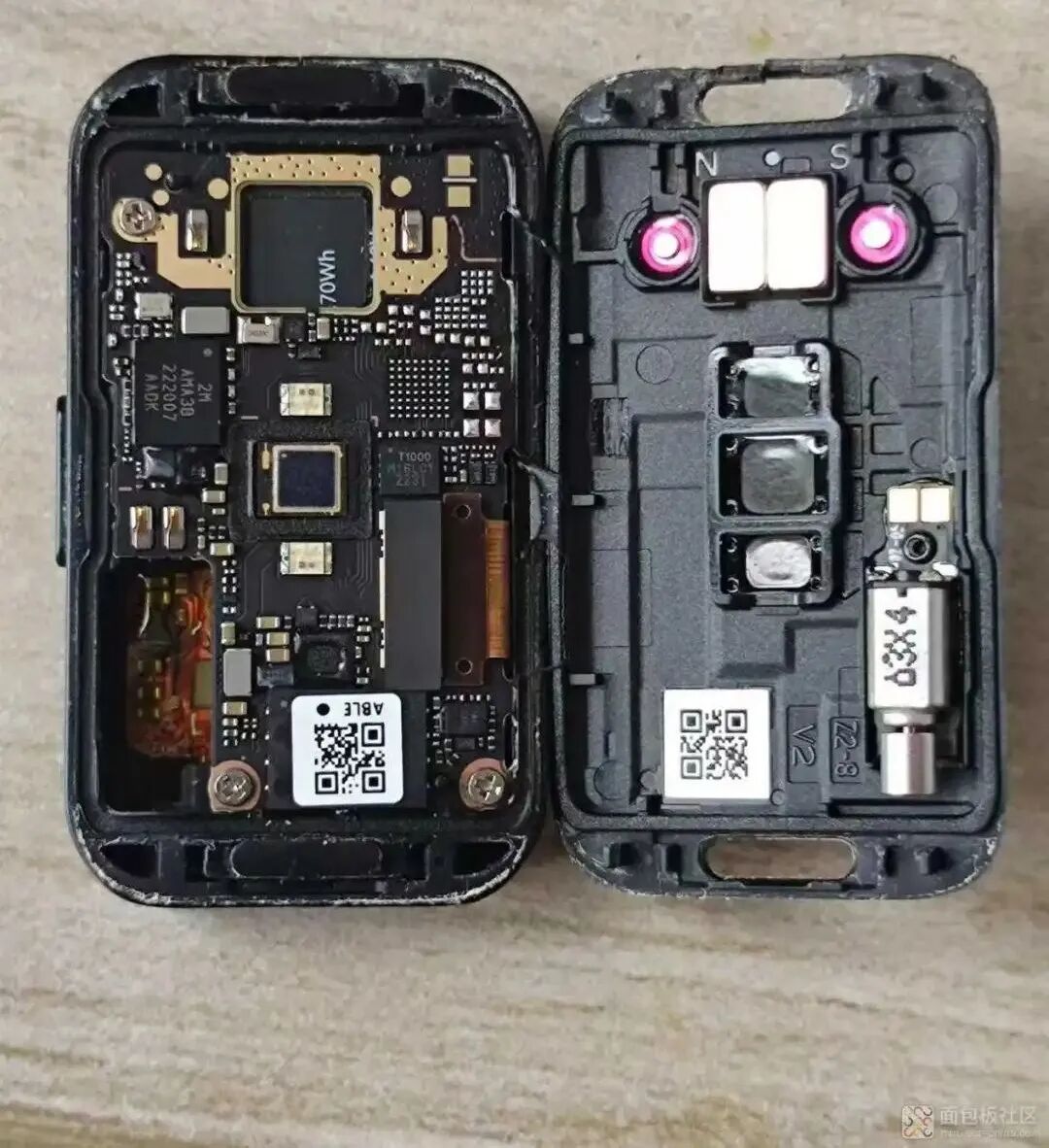
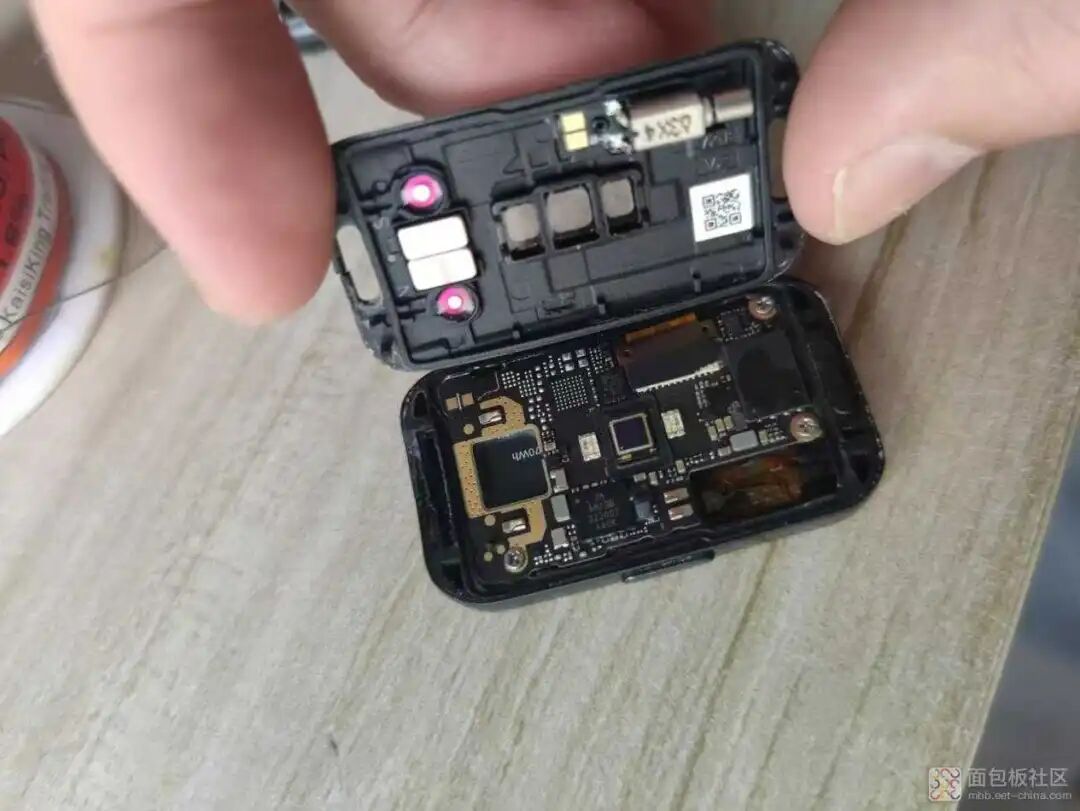
Here we see the vibration module, which contacts the PCB through spring contacts.
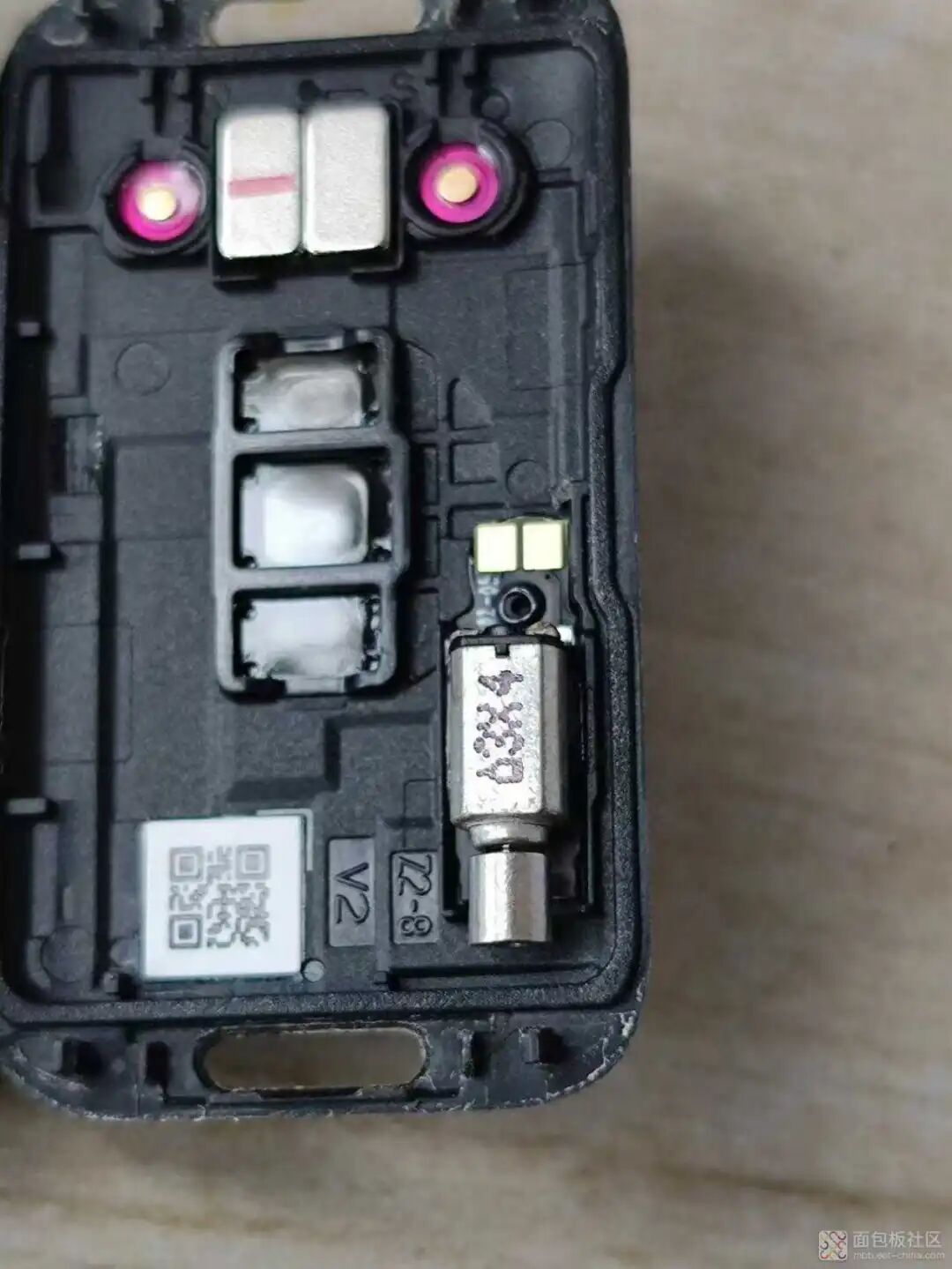
The middle section has a dust cover for the flash and sensor.
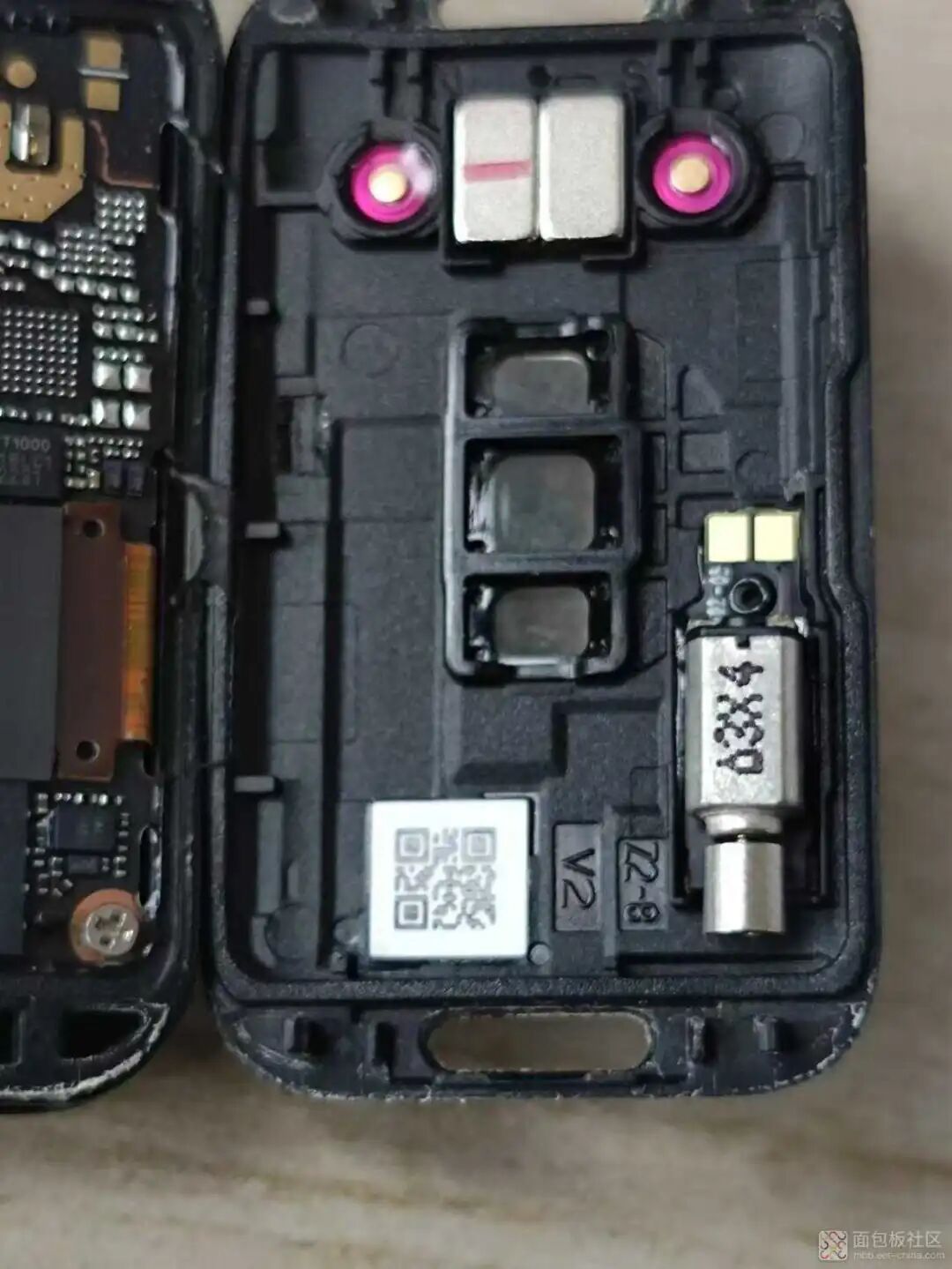
Charging contacts and magnets.
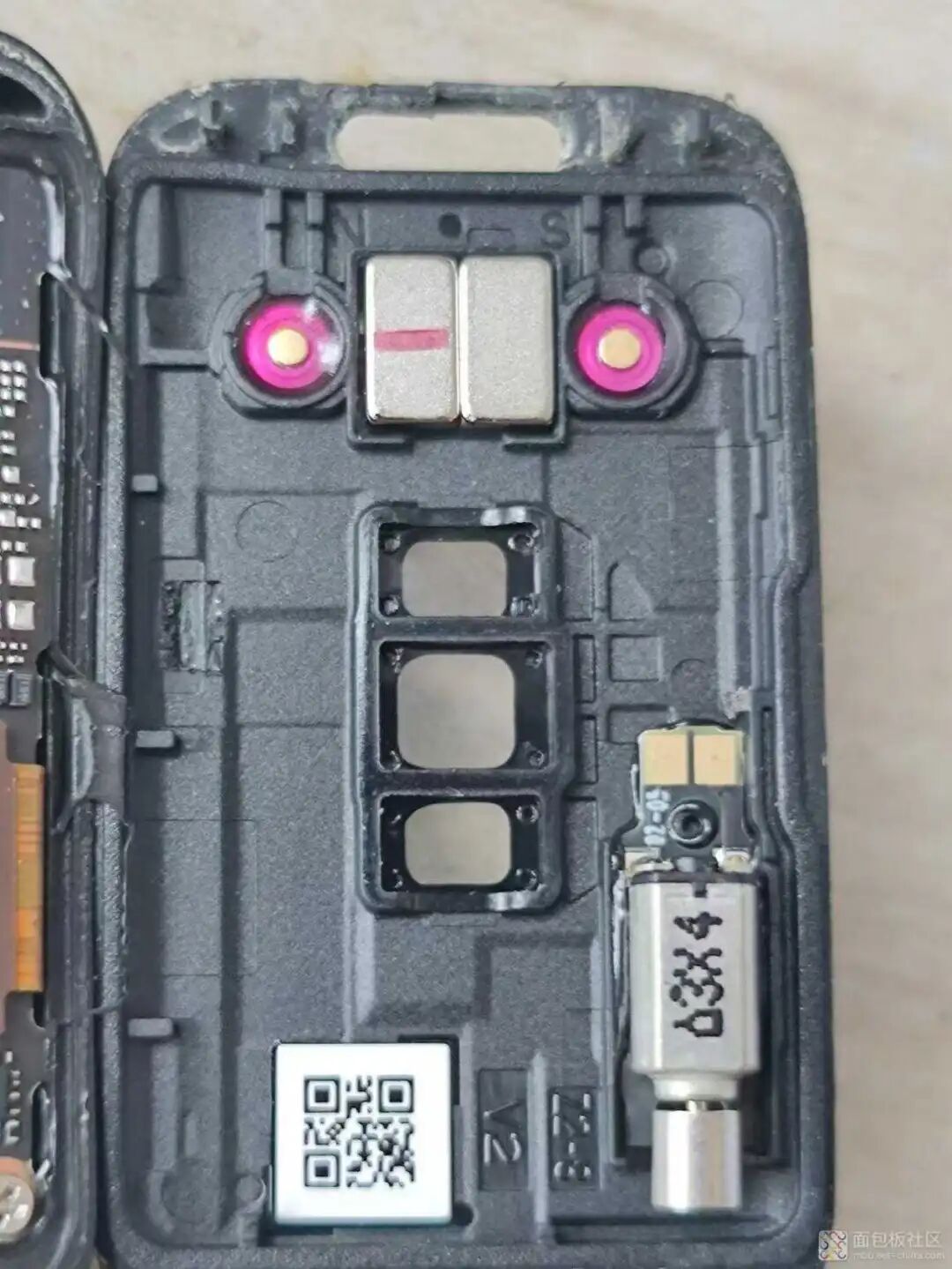
Here we see the strap’s buckle and spring.
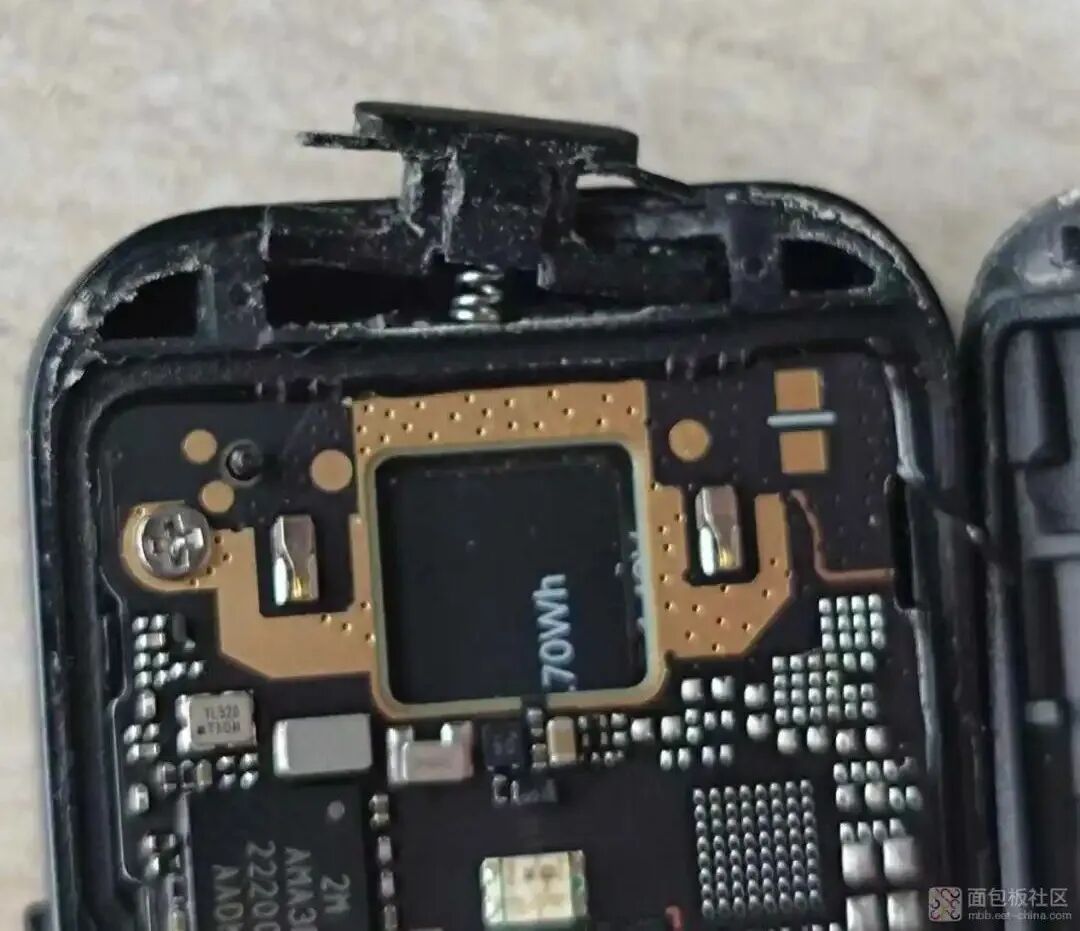
PCB section.
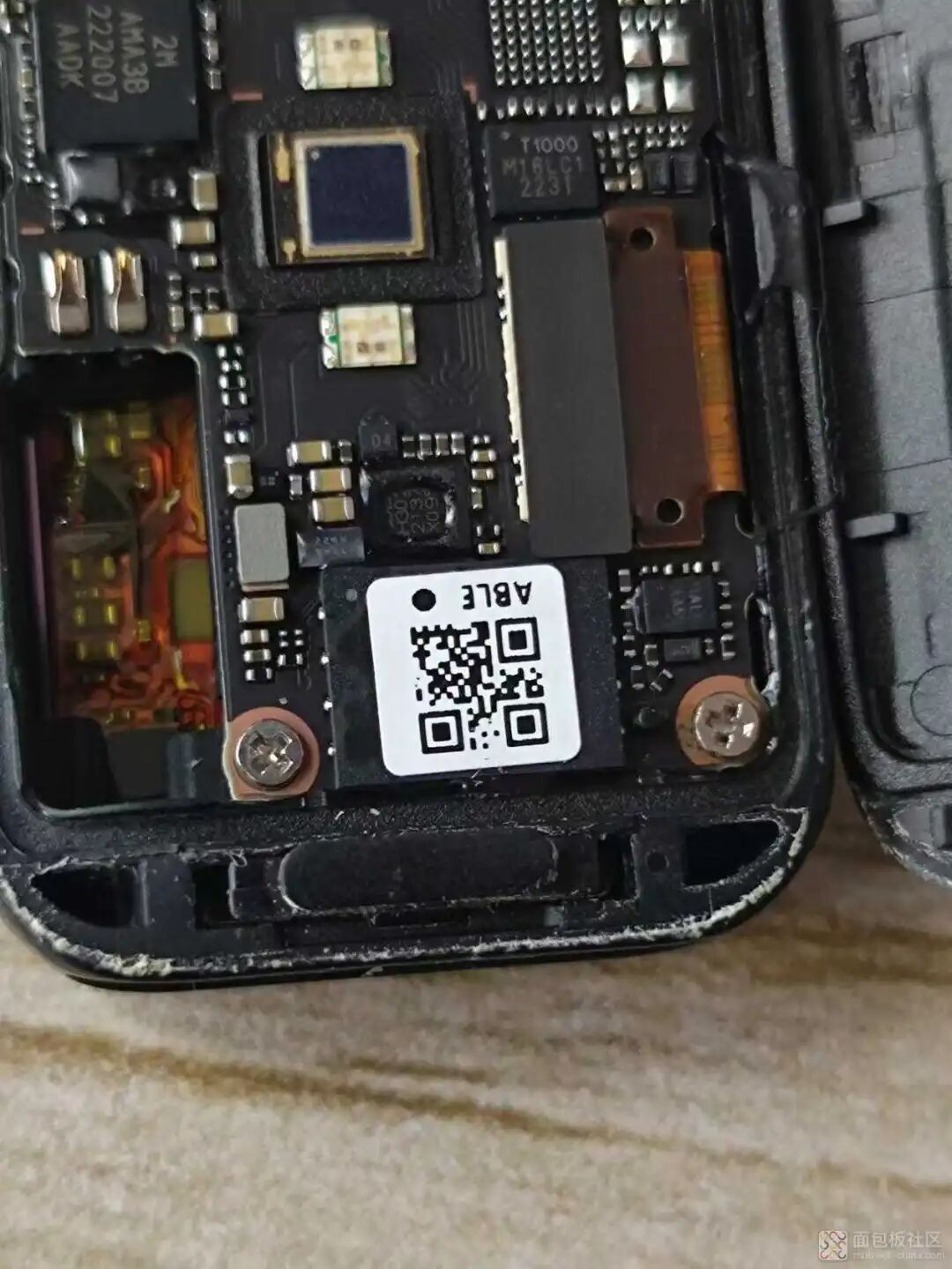
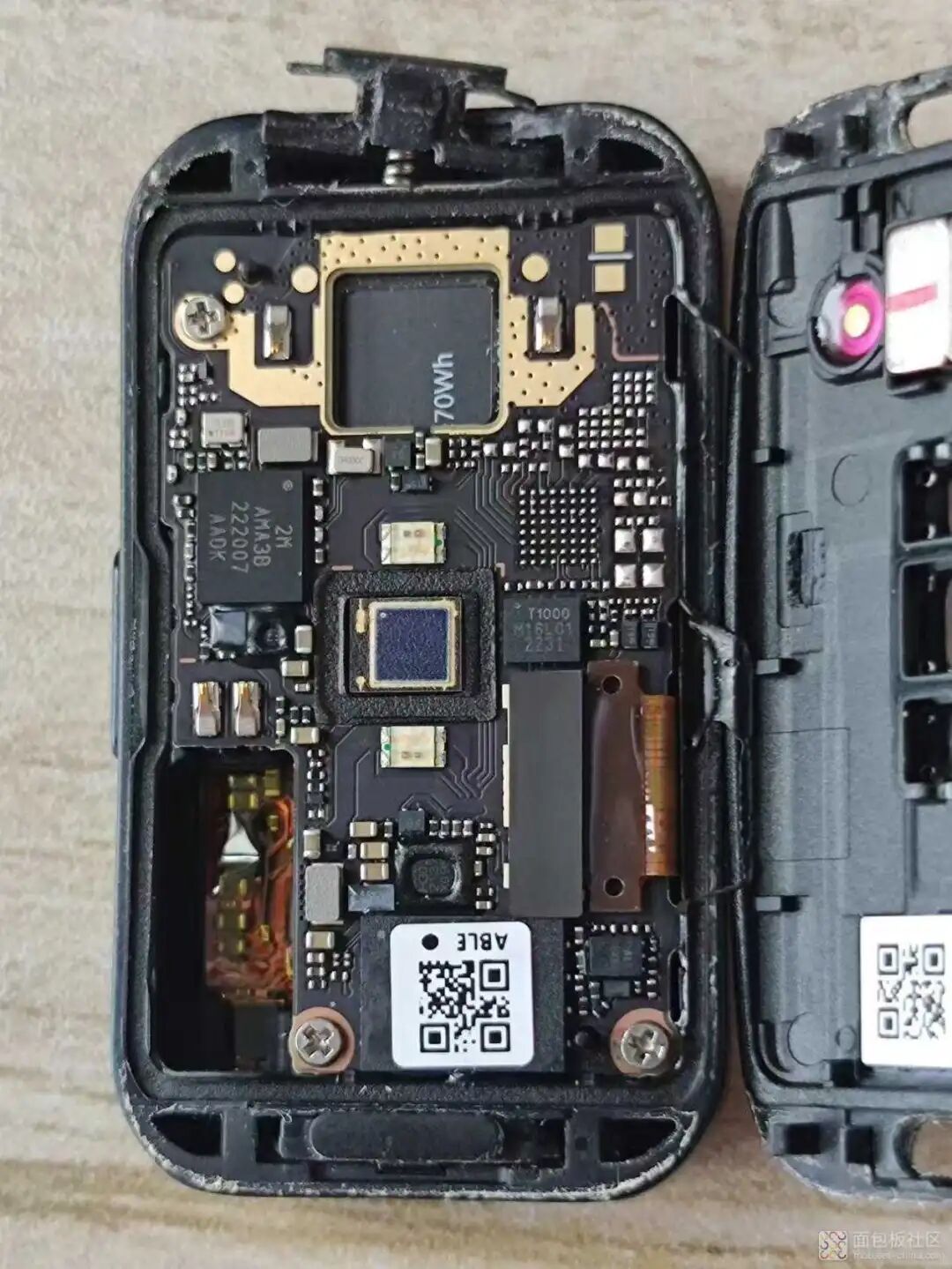
Overall PCB section, showing a compact package and dense layout.
LCD screen interface.
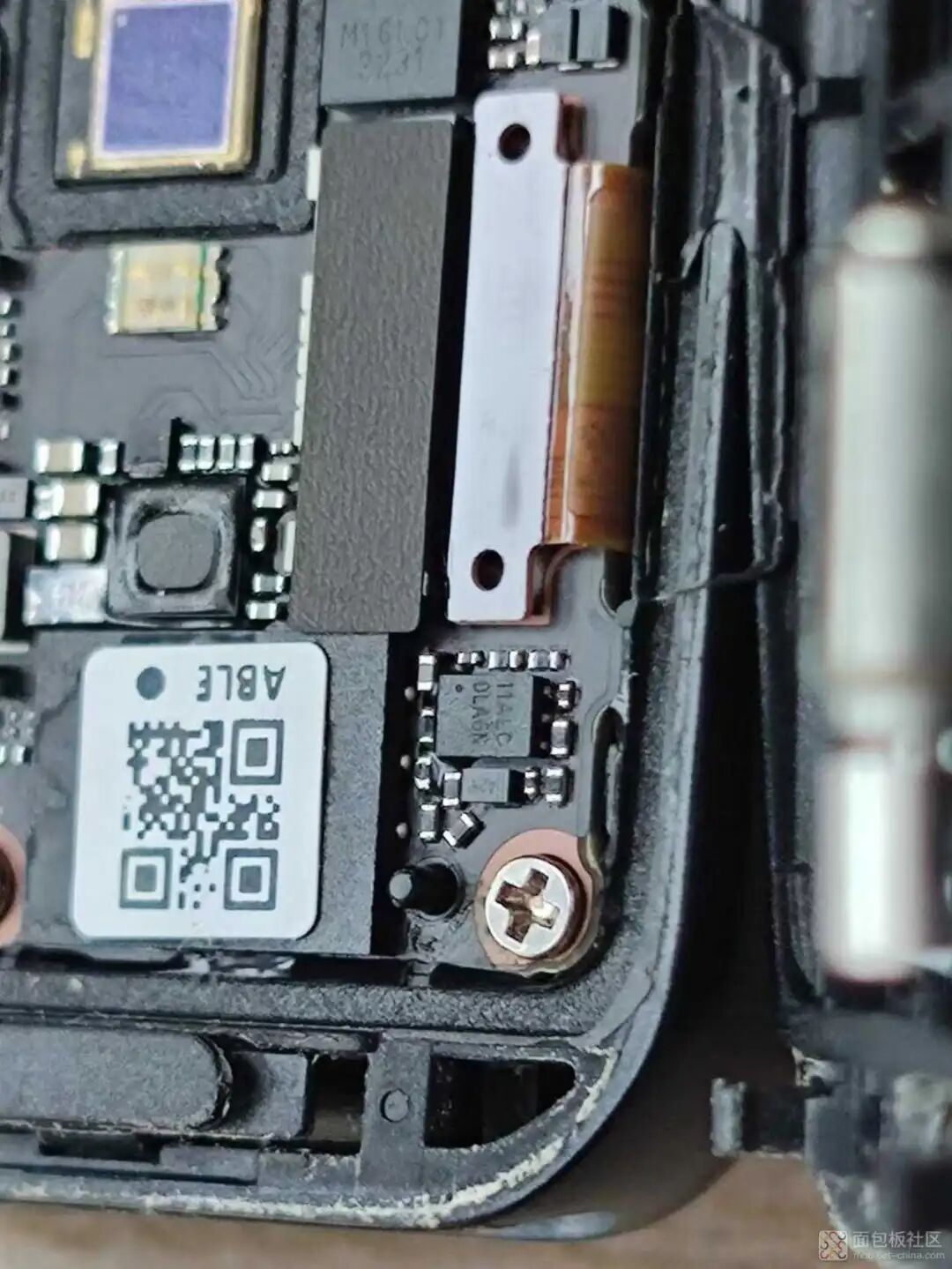
Silkscreen T1000 M16LC1.
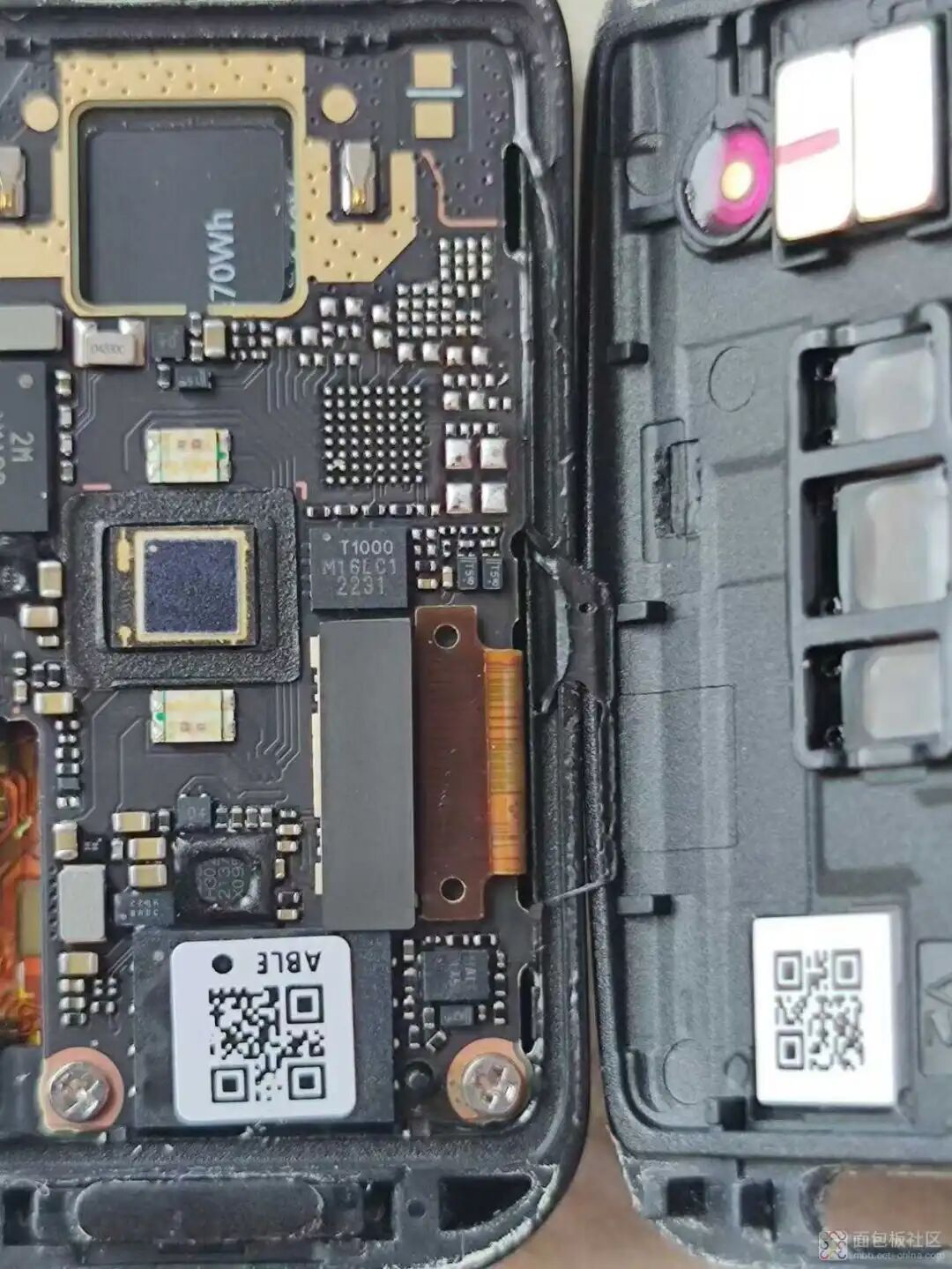
Sensor.
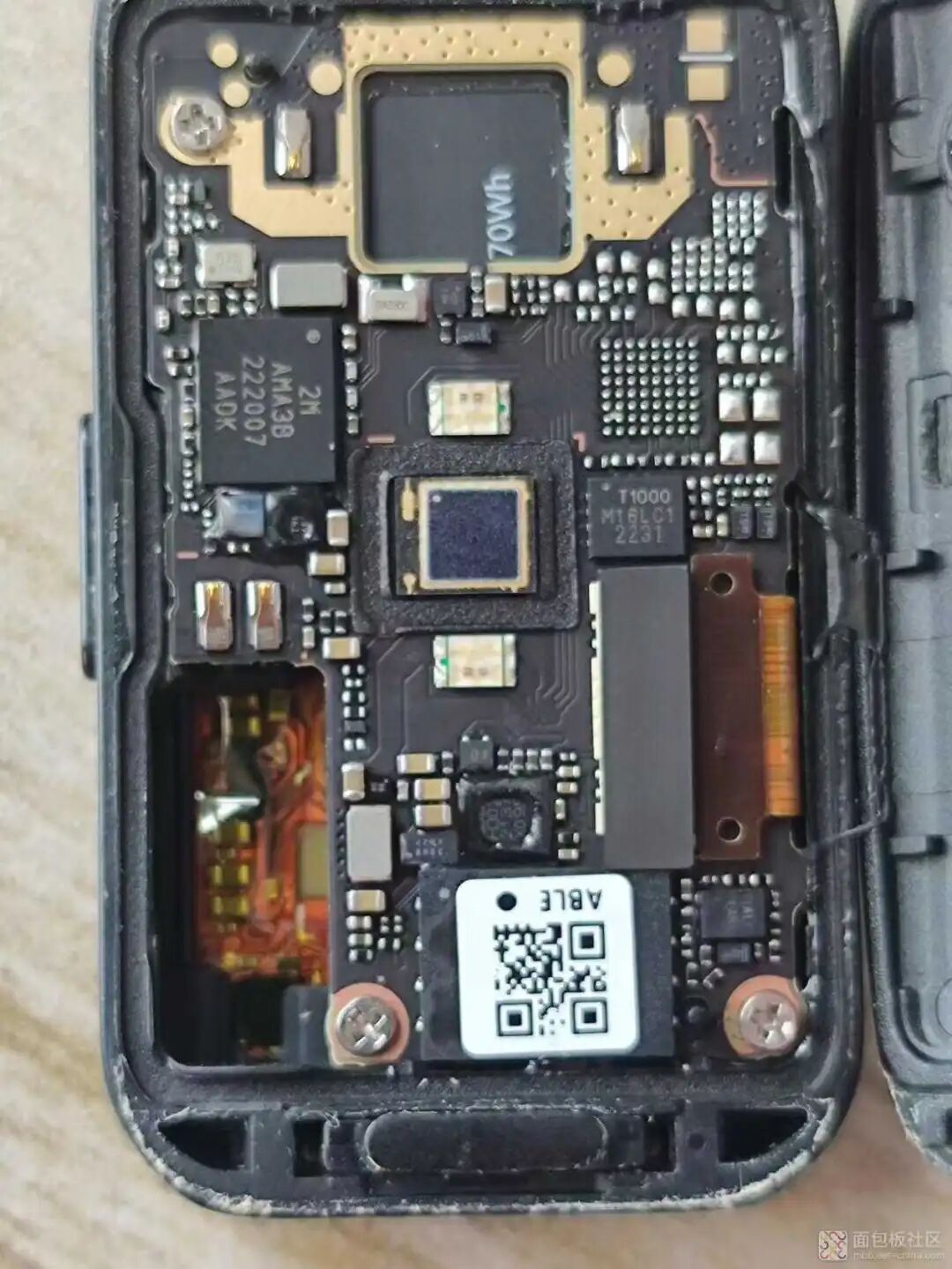
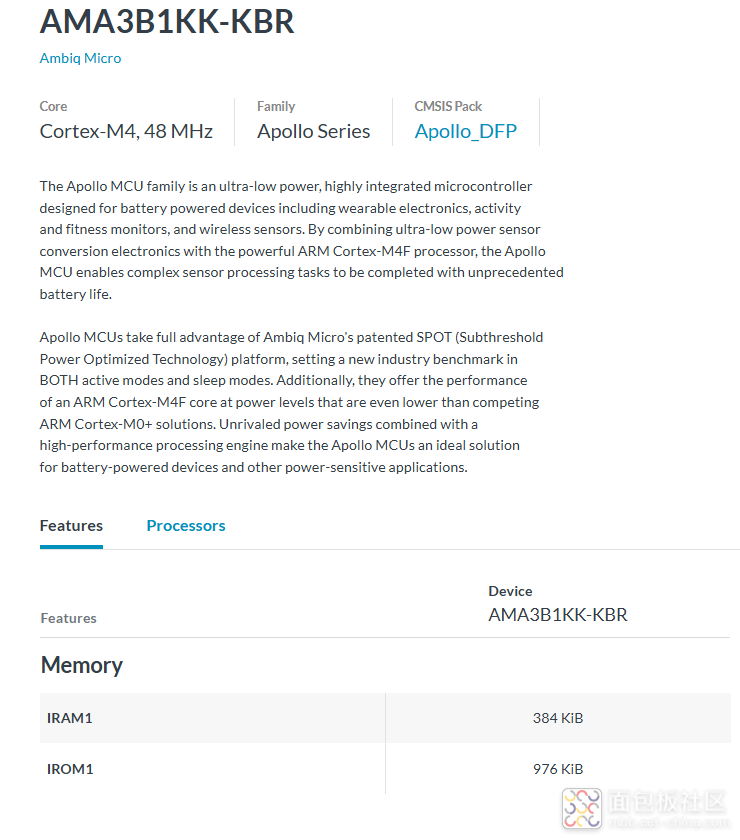
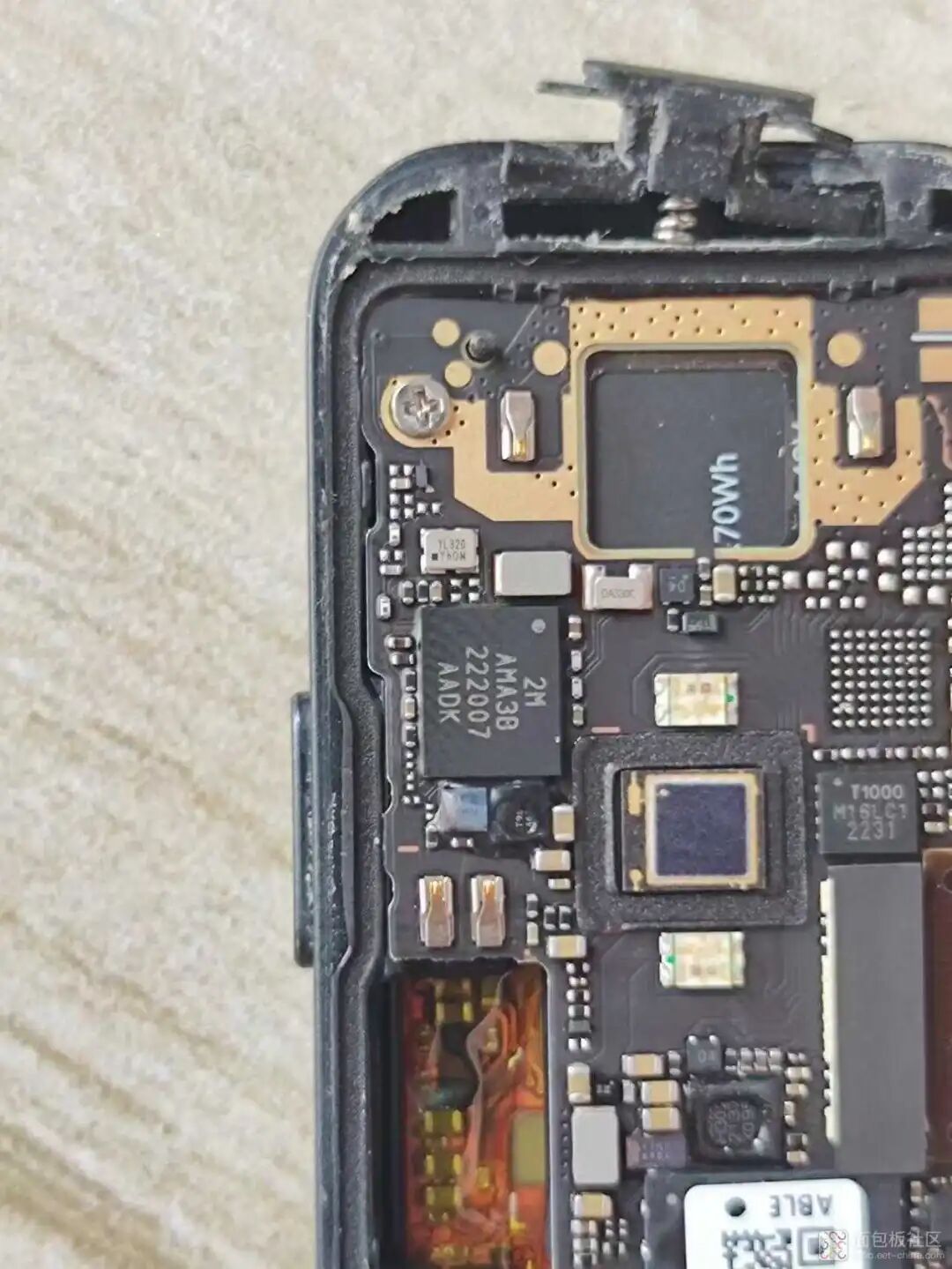
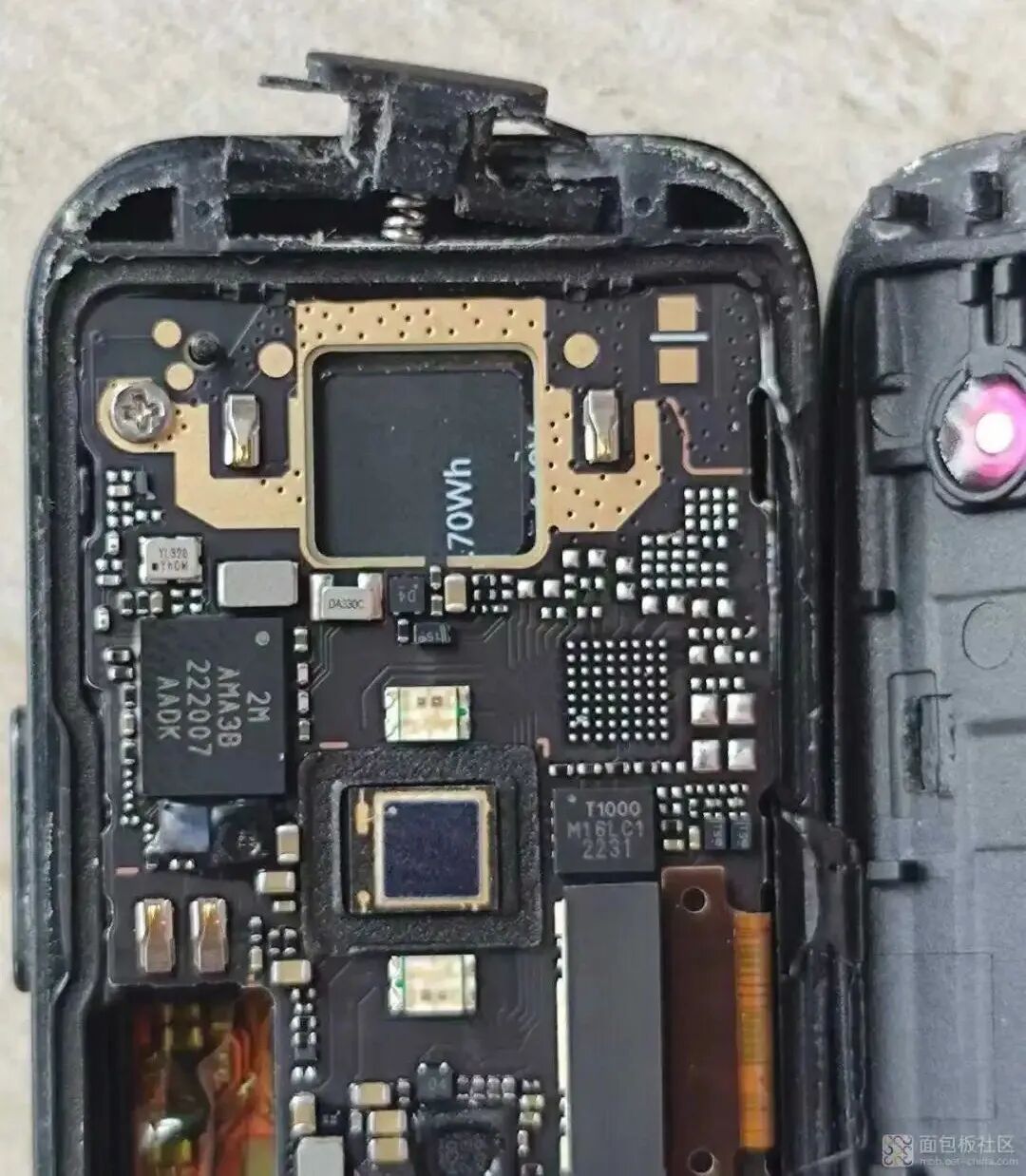
The main control chip is the Ambiq Micro AMA3B, a CORTEX-M4 MCU, with the un-soldered part likely being the NFC section.
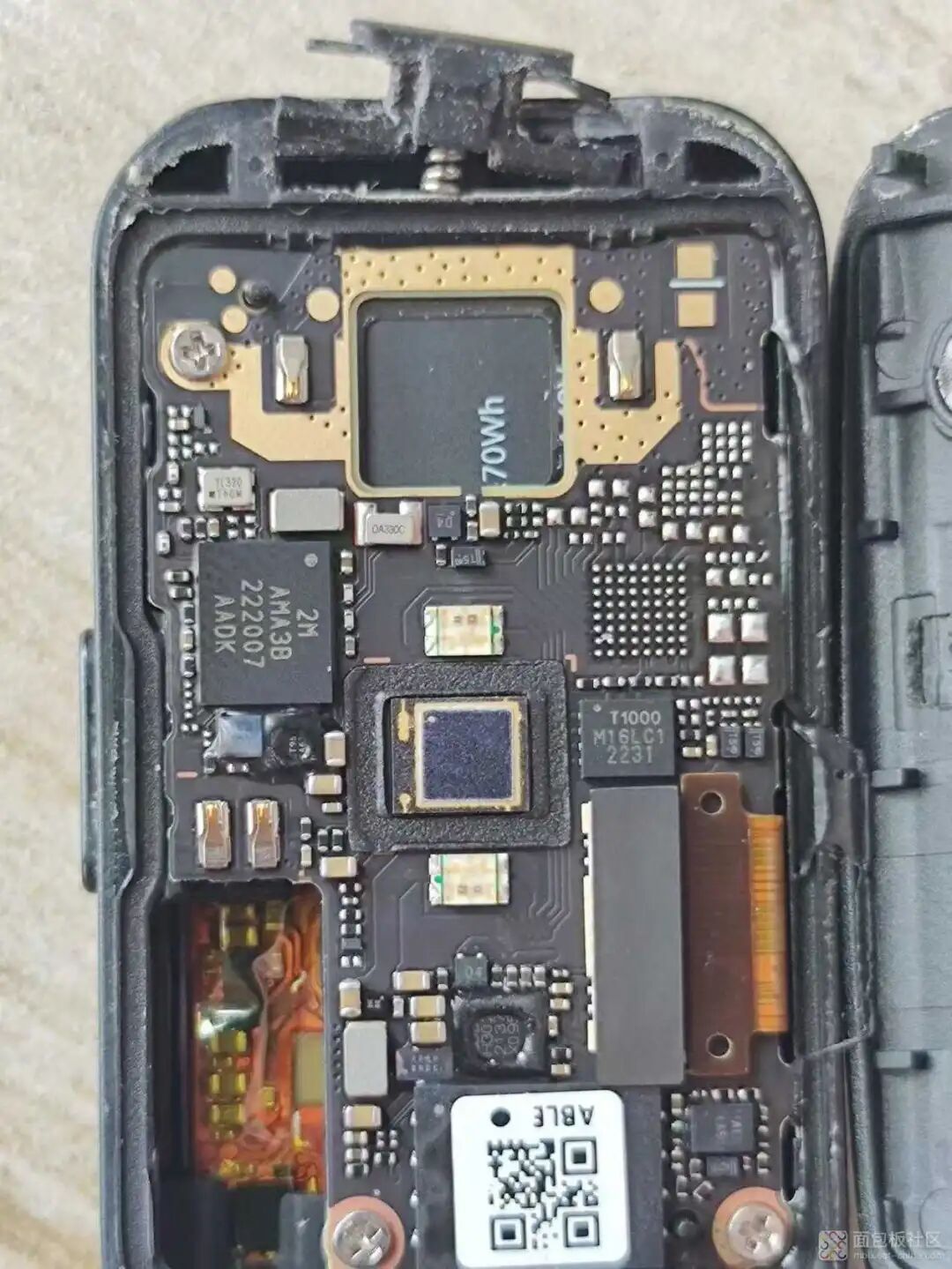
Battery contacts.
This should be a 1Gbit NAND chip.
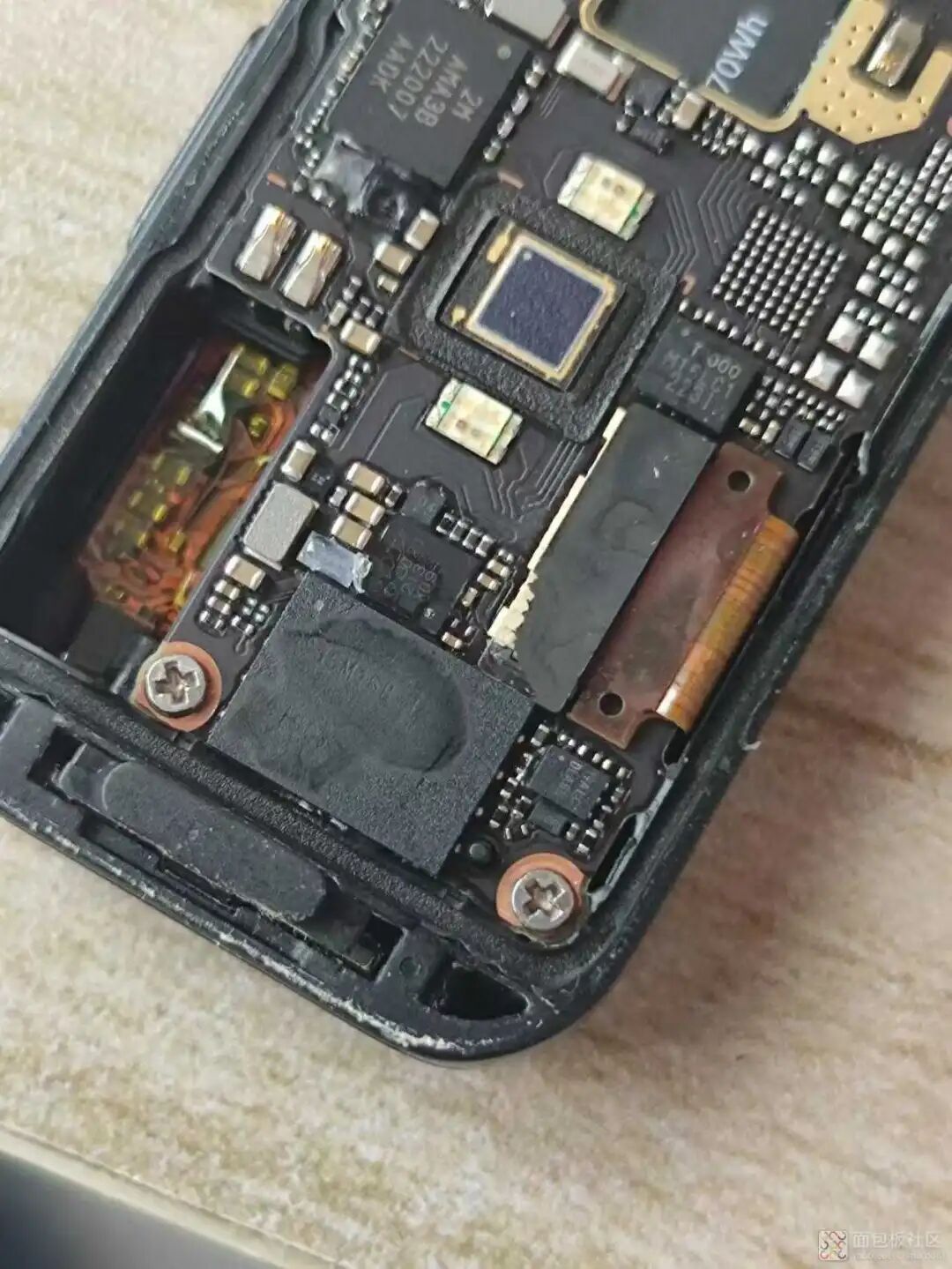
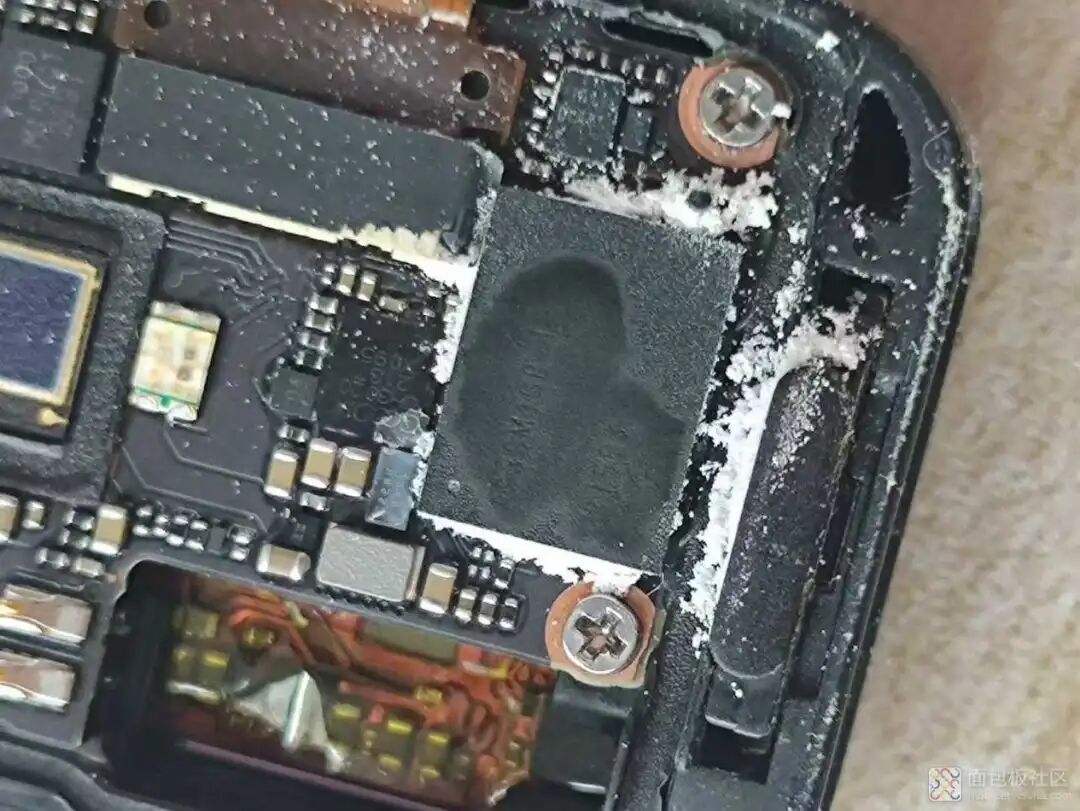
Next, let’s open the PCB.
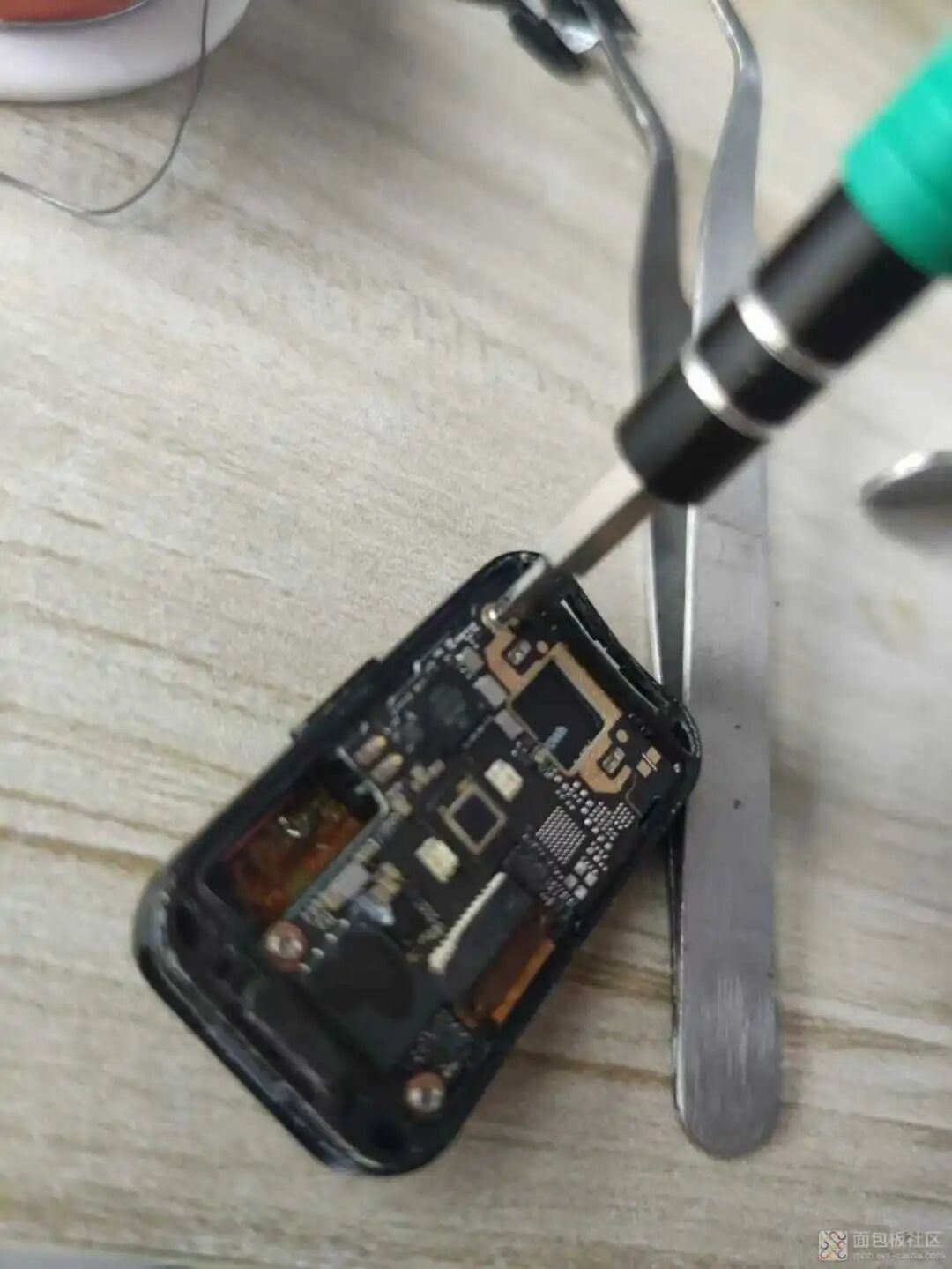
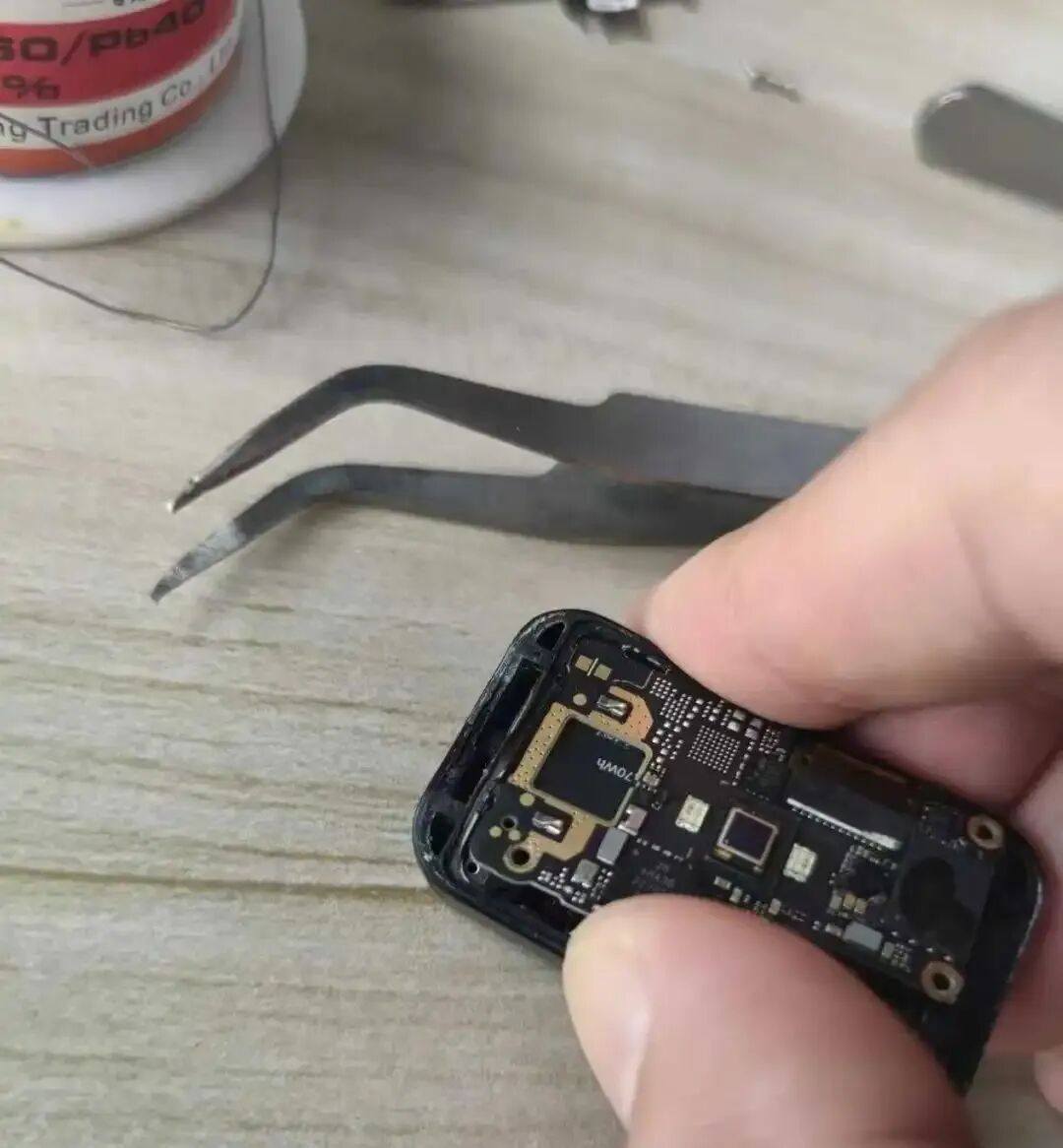
We can see that there is a lot of glue used.
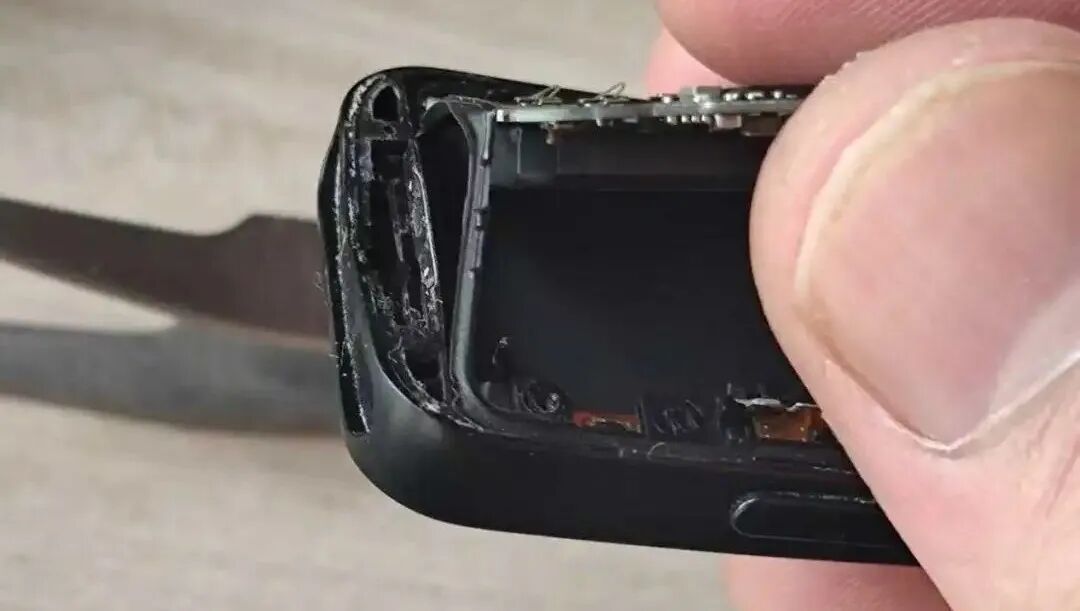
Flipping it over reveals the buttons and LCD interface, with buttons also using spring contacts.
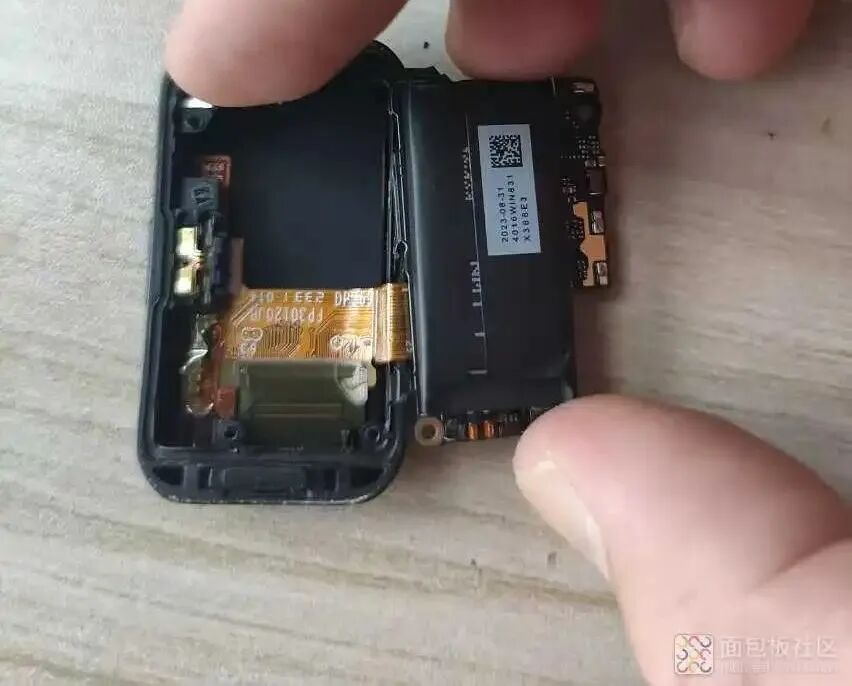
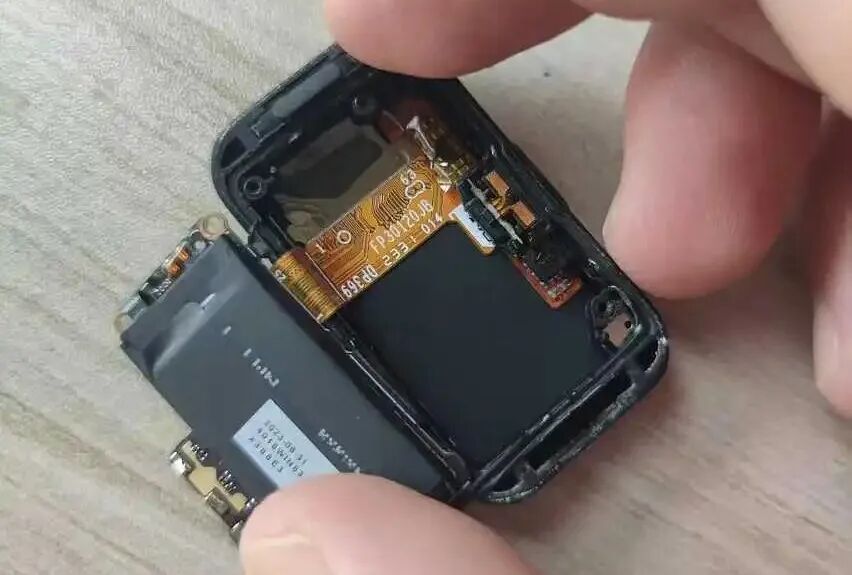
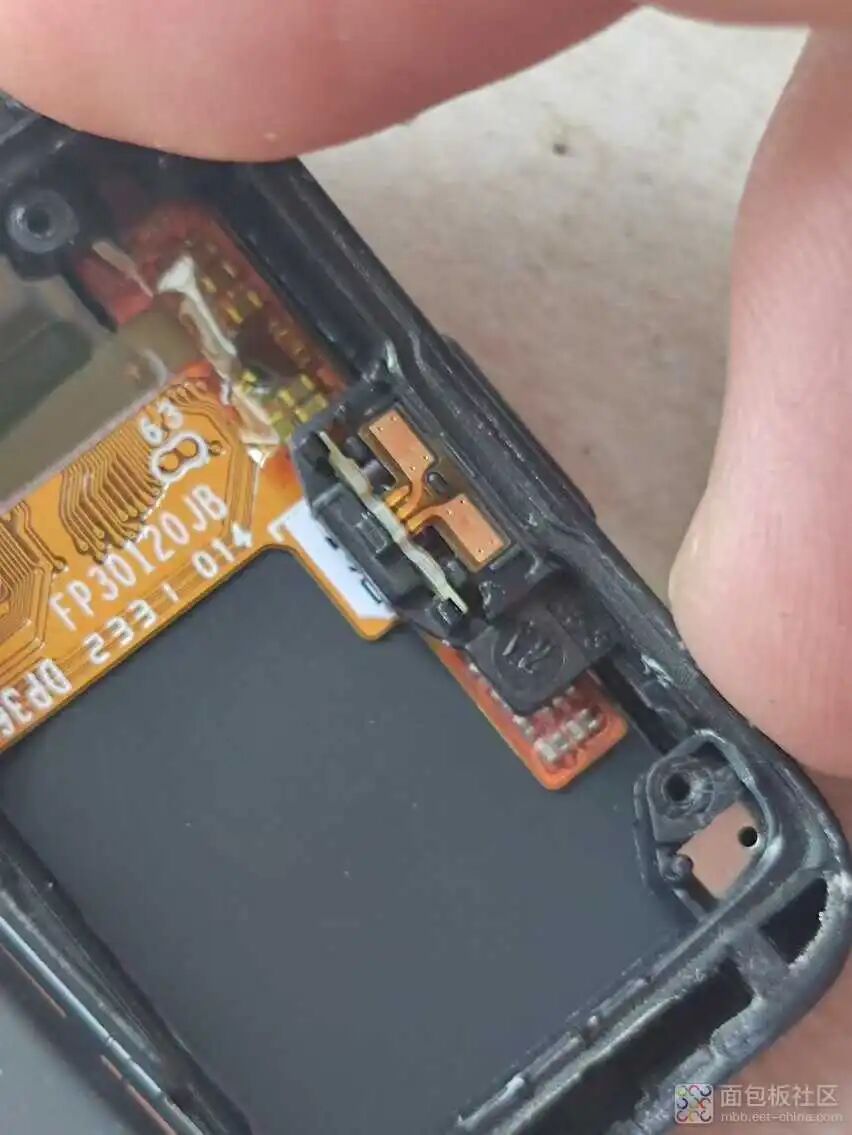
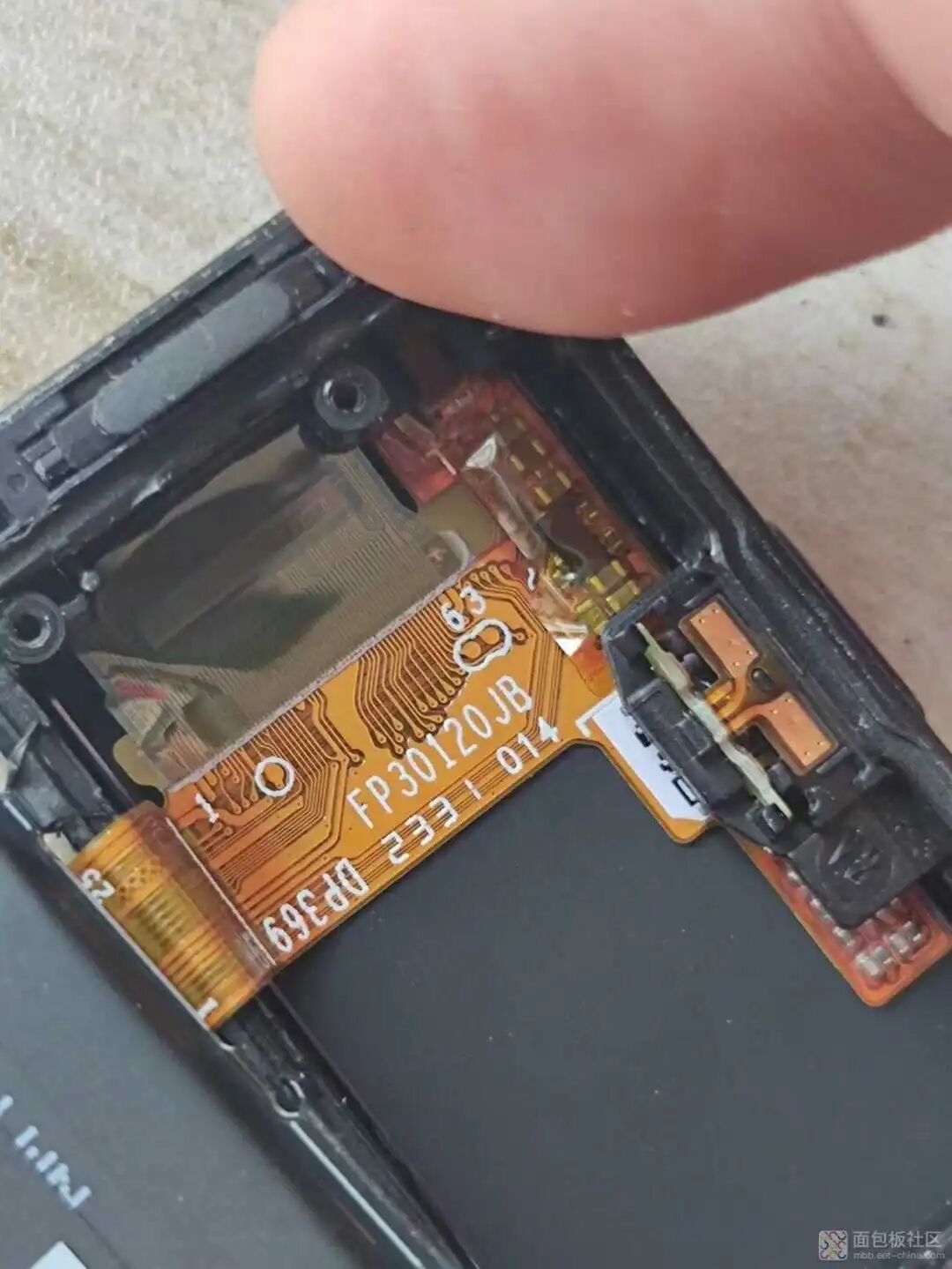
The PCB is relatively thin.
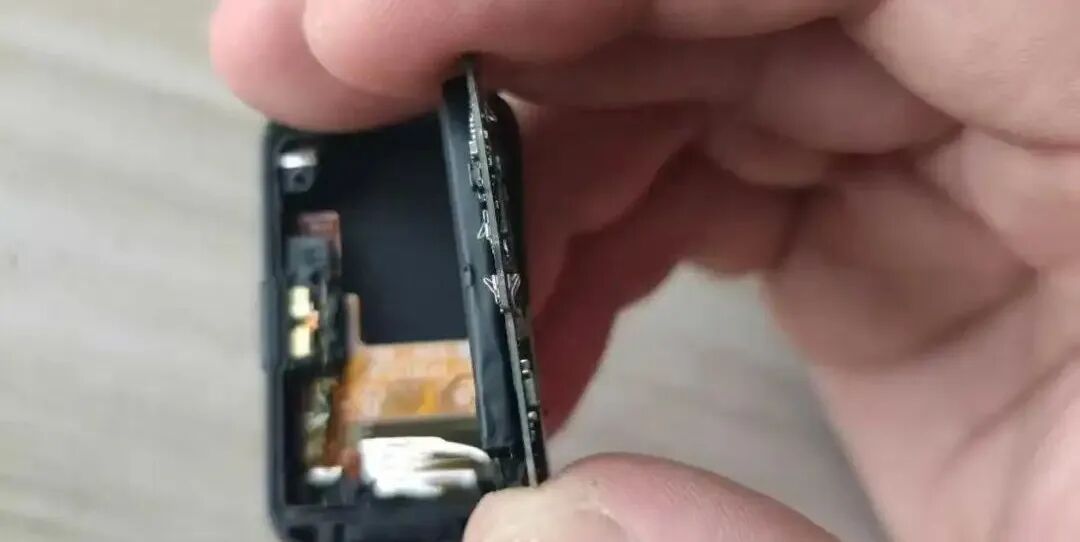
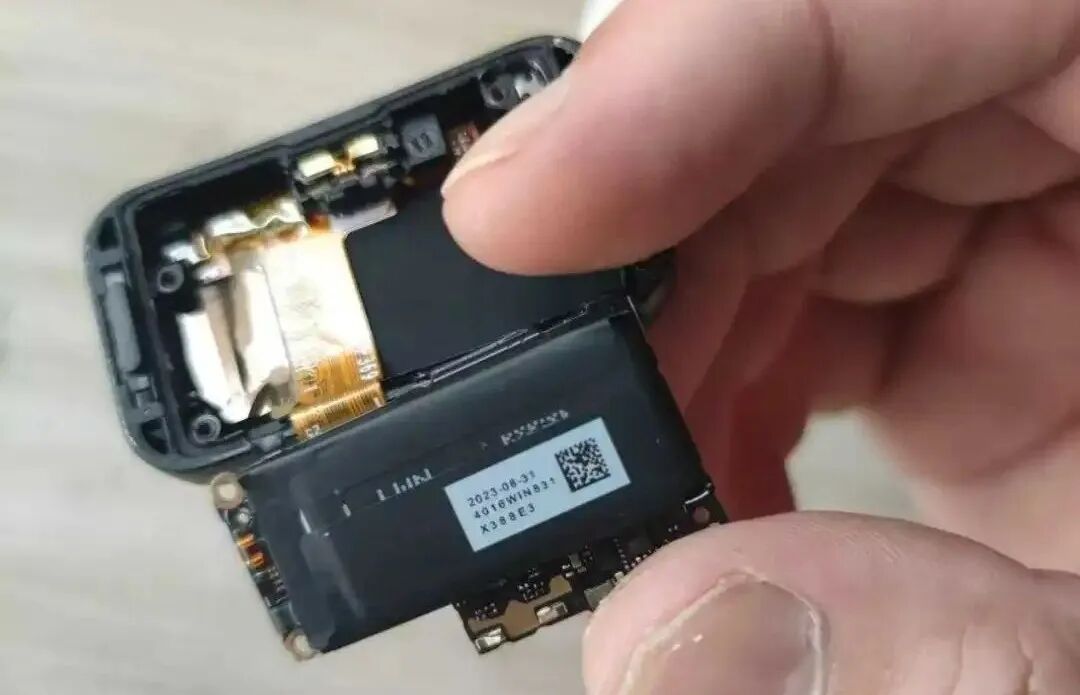
Battery capacity is 180mAh.
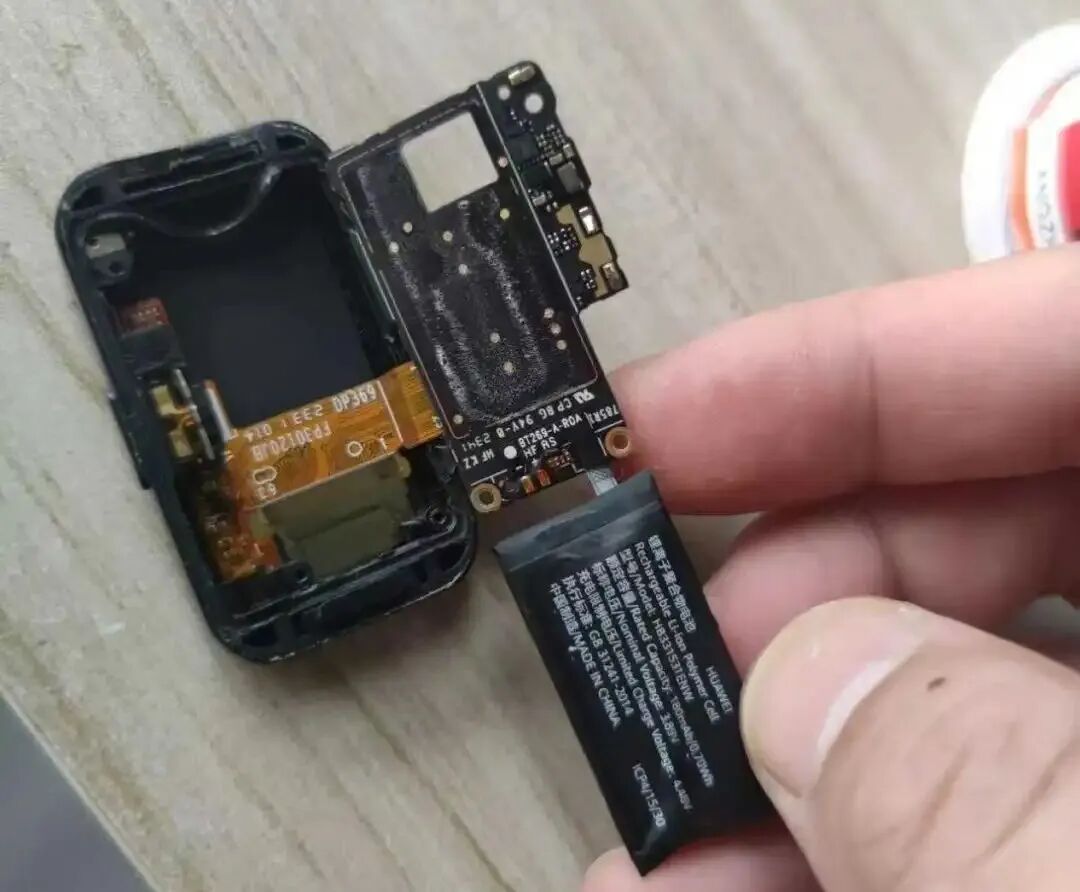
Crystal oscillator and others.
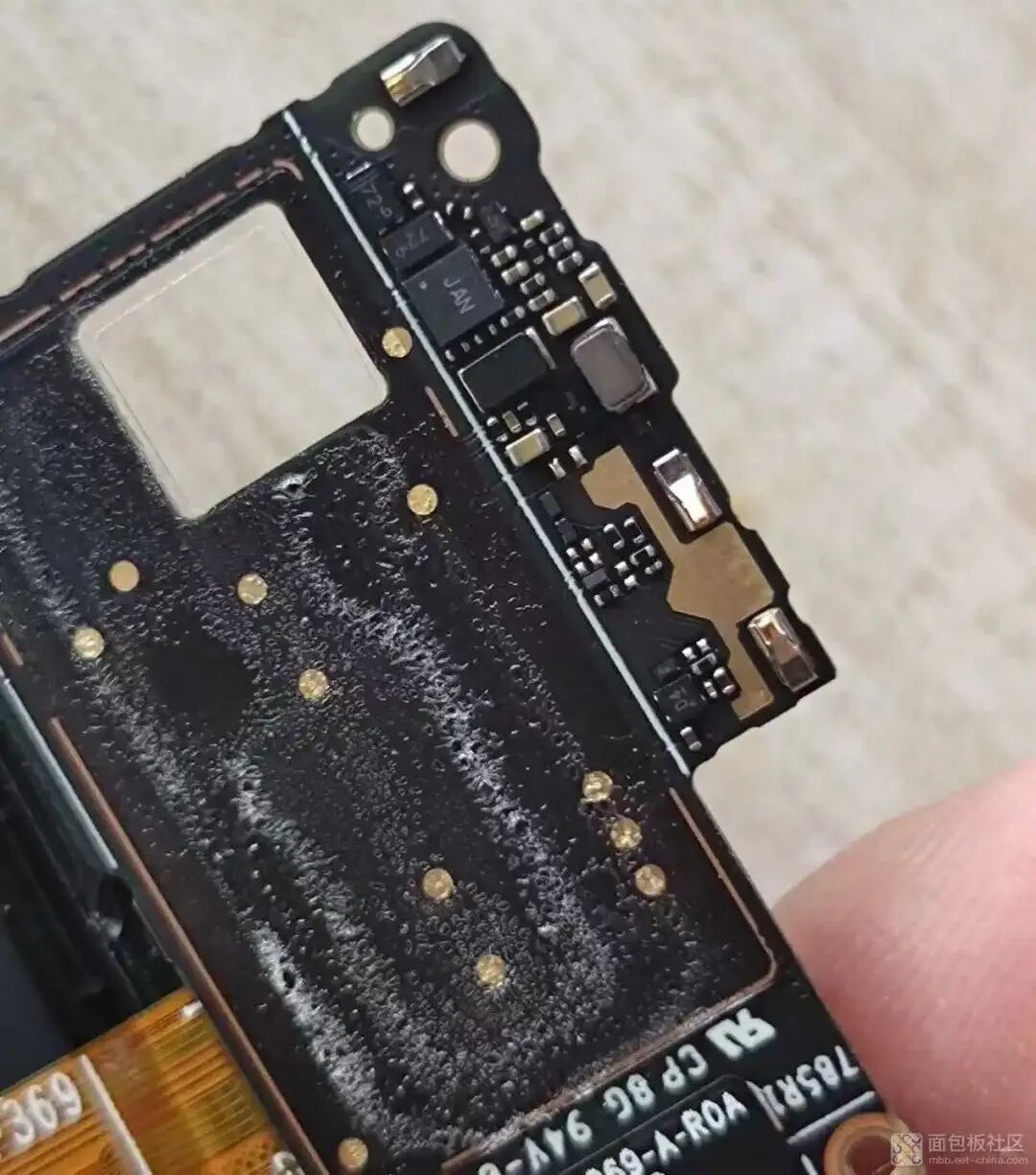
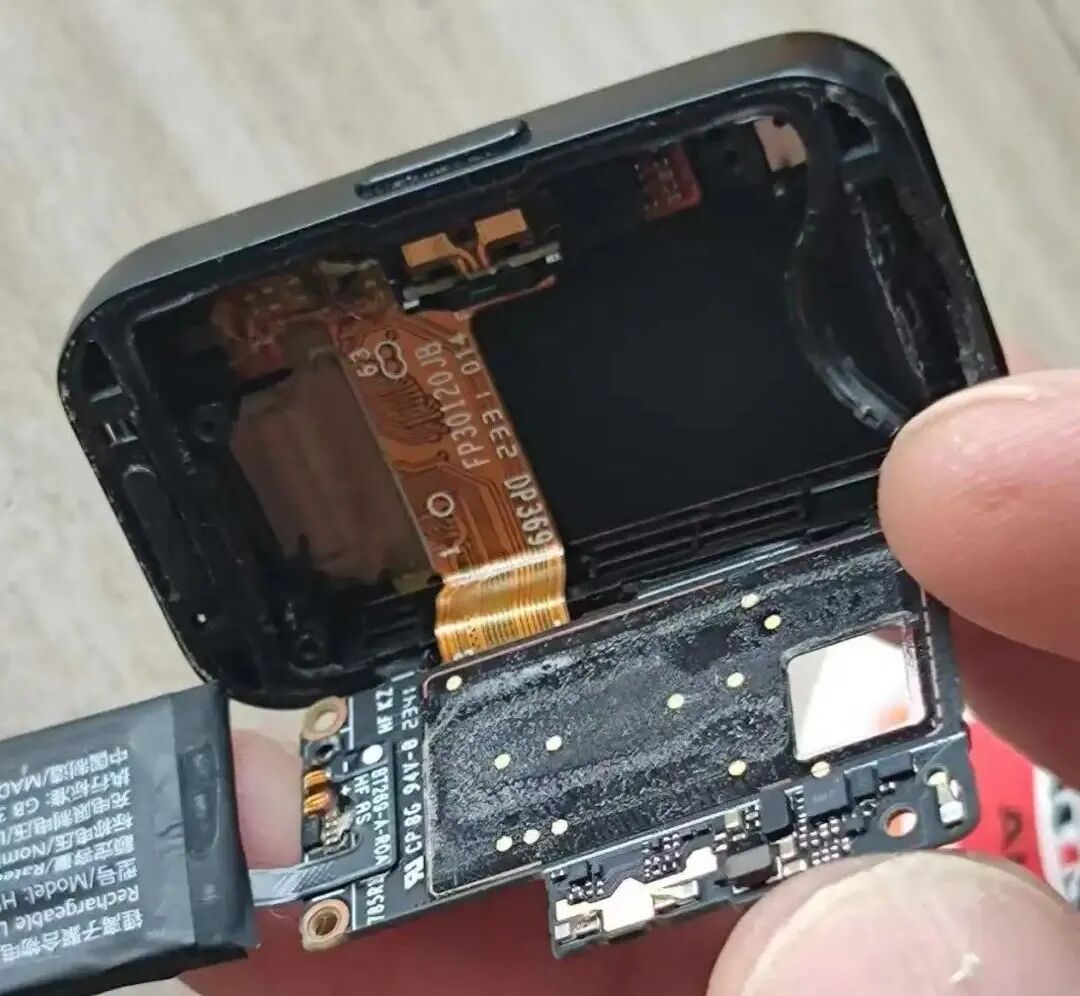
Summary: 1. To ensure waterproofing, the back cover and PCB are sealed with glue, making disassembly and repair inconvenient. 2. Due to limited space, spring contacts are predominantly used. 3. The MCU used is from Ambiq Micro rather than the STM32L4 series, likely due to the chip shortage and pricing issues.
Author: qinyunti, Source: Breadboard Community 【Write disassembly, send drone activity】