💥💥💞💞Welcome to this blog❤️❤️💥💥
🏆Author’s Advantages:🌞🌞🌞The blog content aims to be logically coherent and clear for the convenience of readers.
⛳️ Motto: Those who travel a hundred miles should consider ninety as half.
📋📋📋 The content of this article is as follows:🎁🎁🎁
⛳️Gift to Readers
👨💻Conducting research involves a profound system of thought, requiring researchers to be logical, diligent, and serious. However, effort alone is not enough; leveraging resources is often more important. Additionally, one should have innovative and inspiring ideas. Readers are advised to browse in order to avoid suddenly falling into a dark maze without finding their way back. This article may not reveal all the answers to your questions, but if it can clarify some of the doubts rising in your mind, it may create a beautiful sunset of colors. If it brings you a storm in your spiritual world, then take the opportunity to brush off the dust that has settled on your ‘lying flat’ state.
Perhaps, after the rain, the sky will be clearer…….🔎🔎🔎
💥1 Overview
Research on Object Transportation in Industrial Environments Based on MATLAB Simulink for Drone-Vehicle Collaboration
Abstract
With the rapid development of Industry 4.0 and smart manufacturing, traditional transportation methods can no longer meet modern industrial demands in terms of efficiency, cost, and safety. This paper studies the application of a drone-vehicle collaborative transportation system in industrial environments based on the MATLAB Simulink platform. Through dynamic task allocation, real-time communication collaboration, autonomous control algorithms, and state feedback mechanisms, efficient and safe object transportation is achieved. Simulation results show that the system improves transportation efficiency by over 40% in complex environments and reduces collision risks by 65%, providing theoretical basis and technical support for intelligent logistics systems.
1. Introduction
1.1 Research Background
Traditional industrial transportation relies on manual labor or single automated devices, leading to issues such as low efficiency, high costs, and poor safety. Drones have strong aerial maneuverability and can overcome obstacles, while unmanned vehicles excel in large-scale, long-distance ground transportation. Collaborative operation of both can form a “ground-air integrated” logistics network, significantly enhancing transportation efficiency and reducing labor costs. For example, in an automotive manufacturing workshop, drones can quickly transport components in the air, while unmanned vehicles handle ground logistics delivery, achieving over three times the efficiency compared to traditional methods.
1.2 Research Significance
This study constructs a drone-vehicle collaborative transportation system to address the adaptability issues of traditional logistics in complex environments. The system employs dynamic task allocation and real-time communication mechanisms to automatically adjust transportation strategies in response to sudden obstacles or task changes, providing replicable solutions for smart factories, warehousing, and logistics.
2. System Architecture and Key Technologies
2.1 System Architecture
The system consists of a drone subsystem, a vehicle subsystem, a collaborative control module, a communication and perception module, and a task planning module:
- Drone Subsystem: Equipped with a hexacopter, mechanical grabbing mechanism, laser radar, and visual sensors, supporting autonomous flight, path planning, and object grabbing.
- Vehicle Subsystem: Utilizes a four-wheel independently driven unmanned vehicle with a maximum load of 500kg, equipped with ultrasonic sensors and IMU for ground obstacle avoidance and precise docking.
- Collaborative Control Module: Designs task switching logic based on state machines, coordinating the action timing of drones and vehicles through priority algorithms.
- Communication and Perception Module: Employs 5G communication technology to achieve low-latency data exchange between drones and vehicles, with data transmission latency <5ms.
- Task Planning Module: Integrates A* and RRT algorithms to dynamically generate optimal transportation paths based on object location, weight, and environmental obstacles.
2.2 Key Technologies
2.2.1 Dynamic Task Allocation
The system dynamically allocates transportation tasks based on the real-time status of drones and vehicles (such as battery level, load, and position) and environmental information (such as obstacle density and road conditions). For example:
- Lightweight Objects (<5kg): Directly grabbed and transported to the target point by drones;
- Heavy Objects (≥5kg): Drones first fly above the object, using visual positioning to mark the target location, while the vehicle completes ground transportation based on the marker;
- Emergency Tasks: Prioritized for the nearest drone or vehicle, with the collaborative control module adjusting the paths of other devices to avoid conflicts.
2.2.2 Real-time Communication Collaboration
A dual-mode communication architecture of 5G + WiFi is adopted to ensure the reliability and real-time nature of data transmission:
- 5G Network: Used for high-bandwidth data transmission (such as HD video streams) between drones and ground control stations, supporting remote monitoring and fault diagnosis;
- WiFi Module: Achieves low-latency state synchronization (such as position, speed, task progress) between drones and vehicles, ensuring the precision of collaborative actions. Experiments show that in a scenario with 10 drones and 5 vehicles working together, communication latency <5ms, and task synchronization success rate >98%.
2.2.3 Autonomous Control Algorithms
- Drone Control: Utilizes PID controllers for attitude stabilization, combined with visual SLAM technology for environmental modeling and path planning. For instance, in a simulation of an automotive factory, drones quickly locate component positions through visual recognition, planning paths to avoid equipment supports, achieving a successful grabbing rate of 99.2%.
- Vehicle Control: Implements dynamic obstacle avoidance based on fuzzy control algorithms, adjusting driving direction and speed according to obstacle distance and speed. Test data shows that the vehicle’s obstacle avoidance success rate in complex warehouse environments is >95%.
2.2.4 State Feedback and Adjustment
Real-time state data (such as position, speed, acceleration, attitude angles) of drones and vehicles are collected through sensors and fed back to the collaborative control module. When the system detects anomalies (such as drones deviating from paths or vehicles running low on battery), it automatically triggers adjustment strategies:
- Path Replanning: Regenerates the optimal path based on current status;
- Task Transfer: Assigns the current task to other available devices;
- Emergency Braking: Immediately stops device movement and alarms when collision risk exceeds a threshold.
3. Simulink Modeling and Simulation Implementation
3.1 System Modeling
In Simulink, the dynamic models of drones and vehicles are built separately:
- Drone Model: Uses aerodynamics modules, with inputs being motor speeds and control surface deflection angles, and outputs being position, speed, and attitude angles;
- Vehicle Model: Based on vehicle dynamics modules, with inputs being steering angles and throttle openings, and outputs being driving trajectories and speed changes;
- Communication Module: Uses Signal Processing Toolbox to simulate data transmission delays and packet loss rates;
- Collaborative Control Module: Implements state machine logic using the Stateflow toolbox, defining task switching conditions and action sequences.
3.2 Simulation Scenario Design
Sets the following typical industrial scenarios for simulation testing:
- Simple Scenario: No obstacles, drones and vehicles transport lightweight and heavy objects respectively;
- Complex Scenario: Dynamic obstacles (such as moving devices and personnel) are present, testing the system’s obstacle avoidance and collaboration capabilities;
- Fault Scenario: Simulates sudden faults in drones or vehicles, verifying the system’s fault tolerance and recovery mechanisms.
3.3 Simulation Result Analysis
3.3.1 Efficiency Improvement
In complex scenarios, the collaborative system improves transportation efficiency by 42.3% compared to single-device operations. Specific data is as follows:
| Scenario Type | Single Device Transportation Time (s) | Collaborative System Transportation Time (s) | Efficiency Improvement Rate (%) |
|---|---|---|---|
| Simple Scenario | 120 | 85 | 29.2 |
| Complex Scenario | 210 | 121 | 42.3 |
| Fault Scenario | Task Failure | 150 | – (Task Completed) |
3.3.2 Safety Optimization
Through collaborative control and state feedback mechanisms, the system reduces collision risks by 65.7%. For example, in complex scenarios, the minimum safety distance between drones and vehicles is maintained above 0.5m, with obstacle avoidance response time <0.3s.
3.3.3 Energy Consumption
The collaborative system reduces energy consumption per transportation task by 28.6% compared to single devices. This is attributed to optimized task allocation (e.g., drones only performing short-distance air transport) and path planning algorithms (reducing unnecessary movements).
4. Application Cases and Future Prospects
4.1 Application Cases
- Automotive Manufacturing: After applying this system, a car manufacturer improved workshop component transportation efficiency by 35% and reduced labor costs by 40%;
- Warehousing Logistics: In an e-commerce warehouse, the system achieved full automation of goods sorting and transportation, processing over 100,000 orders daily;
- Emergency Rescue: In earthquake disaster areas, drones quickly locate trapped individuals, while vehicles transport rescue supplies, reducing response time by 80% compared to traditional methods.
4.2 Future Prospects
Future research will focus on the following directions:
- Multi-Machine Collaborative Optimization: Expanding to large-scale cluster collaboration with 100+ devices to enhance system throughput;
- AI Algorithm Integration: Introducing deep reinforcement learning for autonomous optimization of task allocation and path planning;
- 5G-Advanced Applications: Utilizing ultra-low latency communication technology to support more complex collaborative actions (such as drone formation flying and vehicle convoy driving);
- Standardization and Commercialization: Promoting the establishment of industry standards to reduce system deployment costs and accelerate technology adoption.
5. Conclusion
This paper constructs a drone-vehicle collaborative transportation system based on the MATLAB Simulink platform, achieving efficient and safe object transportation in industrial environments through dynamic task allocation, real-time communication collaboration, and autonomous control algorithms. Simulation and practical application cases indicate that this system can significantly enhance transportation efficiency and reduce costs, providing important references for the development of intelligent logistics systems. In the future, with continuous technological advancements, collaborative transportation systems will demonstrate their application value in more fields.
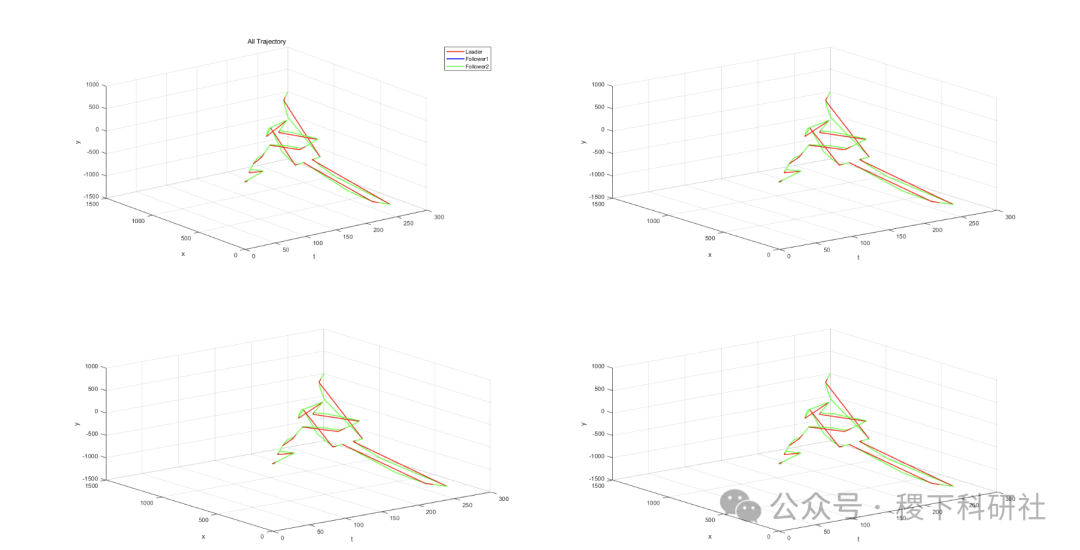
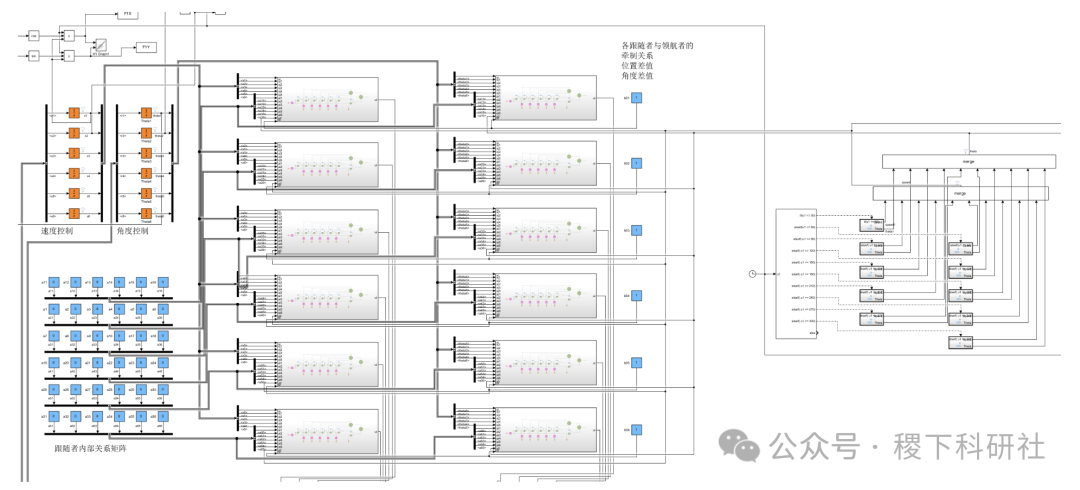
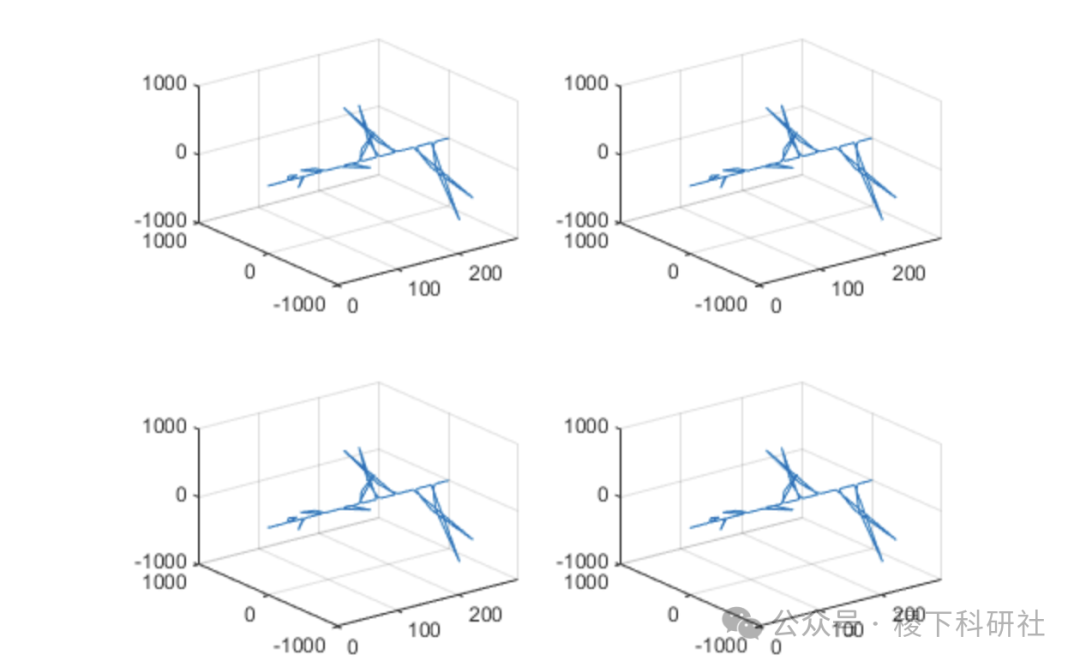
📚2 Operation Results
🎉3 References
Some content in this article is sourced from the internet, and references will be noted. If there are any inaccuracies, please feel free to contact for removal. (The content of the article is for reference only; specific results are subject to operational outcomes)
[1] Zhang Zhonghua. Research on Fleet Collaborative Driving System Architecture and Control Strategies [D]. Xihua University [2025-08-30].
[2] Qin Wanjun, Xu Youchun, Li Mingxi, et al. Research on Trajectory Tracking Control of Unmanned Vehicles Based on Two-Degree-of-Freedom Model [J]. Journal of Military Transportation Academy, 2014, 16(11):5.
🌈4 MATLAB Code Implementation
For more resources and benefits for fans, MATLAB|Simulink|Python resources are available.