University of Maryland Develops New Photonic Chip: A New Tool for Quantum Computing and High-Precision Measurement
University of Maryland Develops New Photonic Chip: A New Tool for Quantum Computing and High-Precision Measurement

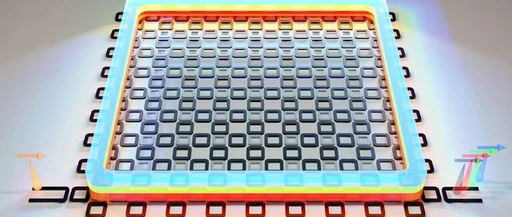
The research team at the University of Maryland has developed a new type of photonic chip. This photonic device can passively convert a monochromatic laser source into red, green, and blue light without any active control or repeated optimization, allowing it to operate stably. This breakthrough technology provides new tools for research in quantum computing, … Read more
Sensitivity Enhancement of Aggregation-Induced Emission Nonlinear Optical Signals

Sensitivity Enhancement of Aggregation-Induced Emission Nonlinear Optical Signals

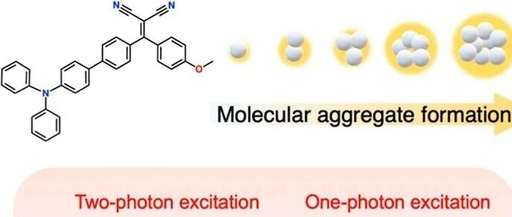
[University of Michigan, Ann ArborTheodore Goodson III]Published on 2025.9.9 Research Highlights Understanding how molecular aggregation affects nonlinear optical properties is crucial for advancing the development of organic fluorophores in imaging, sensing, and photonic applications. However, the relationship between molecular aggregation and the intensity of the nonlinear two-photon absorption cross-section remains underexplored. This paper systematically investigates … Read more

Research Progress on Ferroelectric Nematic Liquid Crystals

Research Progress on Ferroelectric Nematic Liquid Crystals

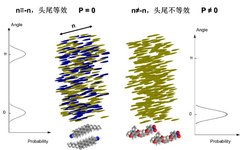
Banner | Promotion Ferroelectricity is a spontaneous polarization state exhibited by dielectrics, commonly found in materials with lower symmetry. Fluids or highly mobile soft materials typically exhibit high symmetry, thus conflicting with the requirements for ferroelectricity. Introducing strong polarity or ferroelectricity is a focus in the field of new liquid crystal materials, which is significant … Read more

Cascading Electron Transfer In D-π-A Graphene Nanoconjugates

Cascading Electron Transfer In D-π-A Graphene Nanoconjugates

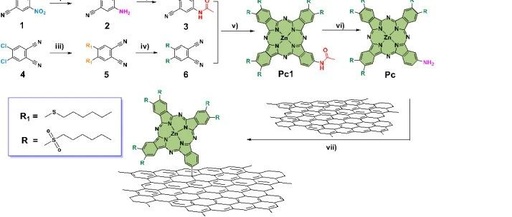
Background Introduction In 2004, Geim and Novoselov et al. first isolated a monolayer honeycomb network of graphene based on sp2-hybridized carbon atoms from graphite using mechanical exfoliation. Since then, due to its unprecedented physicochemical properties, such as high specific surface area (the theoretical specific surface area of monolayer graphene is 2630 m2 g-1), excellent thermal … Read more