💥💥💞💞Welcome to this blog❤️❤️💥💥
🏆Author’s Advantage: 🌞🌞🌞The blog content aims to be logically clear and coherent for the convenience of readers.
⛳️Motto: A journey of a hundred miles begins with a single step.
💥1 Overview
The research on the State of Charge (SOC) estimation of energy storage batteries based on Kalman filtering refers to the real-time estimation and prediction of the SOC of energy storage batteries using the Kalman filtering algorithm.
Energy storage batteries are devices that can store electrical energy and release it when needed. The SOC of a battery refers to the percentage of electrical energy currently stored in the battery, which is a quantitative indicator of the battery’s charging state. Accurately estimating the SOC of a battery is crucial for the proper management and operation of energy storage battery systems.
Kalman filtering is an optimal estimation method based on state-space models that integrates system models and measurement errors, allowing for the estimation of the current state using historical states and measurement data. In SOC estimation for energy storage batteries, Kalman filtering can combine measurement data such as battery voltage, current, and temperature, utilizing the battery’s characteristic model and dynamic equations to perform real-time SOC estimation.
Kalman filtering is a mathematical algorithm used to estimate system states and is widely applied in estimating the SOC of lithium batteries. The SOC of a lithium battery can be viewed as a system state variable, and by measuring parameters such as the voltage and current of the lithium battery, the system’s input can be obtained. The Kalman filtering algorithm fuses the information from the input and state variables using the system’s dynamic model and measurement data to achieve more accurate state estimation results.
To implement this algorithm, this paper is programmed and debugged based on the Matlab platform. The specific implementation steps include: first, establishing a mathematical model of the lithium battery, using parameters such as voltage and current as system input, and the SOC as the system state variable. Next, designing the parameters of the Kalman filtering algorithm, such as the state transition matrix, observation matrix, and the variances of system noise and observation noise. Then, using the Kalman filtering algorithm to estimate the SOC of the lithium battery. At each moment, based on the current measurement values and previous state estimates, the Kalman filtering algorithm updates the state estimate. Finally, based on the state estimate, the real-time SOC of the lithium battery can be obtained, allowing for battery management and control.
Through the above steps, we can accurately estimate the SOC of lithium batteries using the Kalman filtering algorithm, providing reliable data support for effective battery management and control. This technology has significant application prospects in fields such as electric vehicles, drones, and portable electronic devices, helping to improve the efficiency and extend the lifespan of lithium batteries.
Specifically, the SOC estimation research first requires establishing the battery characteristic model, which describes the relationship between the open-circuit voltage and SOC of the battery. Then, based on the battery characteristic model and dynamic equations, the Kalman filtering algorithm is used to iteratively update the state estimate. At each time step, by observing measurement data such as the battery’s voltage, current, and temperature, the estimated SOC value is updated.
The goal of this research is to improve the accuracy and stability of SOC estimation for energy storage batteries to support the intelligent management and optimized operation of energy storage battery systems. Accurate SOC estimation can help optimize the charging and discharging strategies of batteries, extend battery life, and enhance the performance and efficiency of energy storage systems.
Research on SOC estimation based on Kalman filtering
1. Research Background
Energy storage batteries are devices that can store electrical energy and release it when needed. The SOC (State of Charge) of a battery refers to the percentage of electrical energy currently stored in the battery, which is a quantitative indicator of the battery’s charging state. Accurately estimating the SOC of a battery is crucial for the proper management and operation of energy storage battery systems. Due to the high cost of lithium-ion batteries, accurate estimation of SOC is particularly important to ensure their safe and efficient operation.
2. Introduction to Kalman Filtering Algorithm
Kalman filtering is an optimal estimation method based on state-space models that integrates system models and measurement errors, allowing for the estimation of the current state using historical states and measurement data. The core of the Kalman filtering algorithm lies in its state transition equation and observation equation. By combining these two equations with the system’s dynamic model and measurement data, the optimal estimate of the system state can be obtained.
3. Research Objectives
This research aims to use the Kalman filtering algorithm to perform real-time estimation and prediction of the SOC of energy storage batteries, thereby enhancing the intelligent management and optimized operation of energy storage battery systems. Accurate SOC estimation can help optimize the charging and discharging strategies of batteries, extend battery life, and improve the performance and efficiency of energy storage systems.
4. Research Methods
Establishing the mathematical model of the battery:
Describing the relationship between the open-circuit voltage and SOC of the battery, i.e., the battery characteristic model.
Using the battery characteristic model and dynamic equations, combined with the Kalman filtering algorithm to iteratively update the state estimate.
Designing the parameters of the Kalman filtering algorithm:
State transition matrix: Describing the law of change of the system state over time.
Observation matrix: Describing the relationship between the system state and observation values.
Variances of system noise and observation noise: Used to describe the uncertainty of the system state and observation values.
Using the Kalman filtering algorithm to estimate the SOC of lithium batteries:
At each moment, based on the current measurement values and previous state estimates, the Kalman filtering algorithm updates the state estimate.
Observing measurement data such as the battery’s voltage, current, and temperature to update the estimated SOC value.
Programming and debugging on the Matlab platform:
Programming and debugging based on the Matlab platform to implement the battery characteristic analysis and state update process based on the mathematical model.
5. Research Results
Through this research, the SOC of lithium batteries was accurately estimated using the Kalman filtering algorithm. Experimental results indicate that the Kalman filtering algorithm can combine measurement data such as battery voltage, current, and temperature, utilizing the battery’s characteristic model and dynamic equations to perform real-time SOC estimation. This technology has significant application prospects in fields such as electric vehicles, drones, and portable electronic devices, helping to improve the efficiency and extend the lifespan of lithium batteries.
6. Conclusion and Outlook
This research utilized the Kalman filtering algorithm to perform real-time estimation and prediction of the SOC of energy storage batteries, achieving good results. However, the effectiveness of SOC estimation based on the Kalman filter is easily affected by factors such as filter parameter settings, measurement accuracy of voltage and current, and the accuracy of the battery model. Future research can further explore how to optimize the parameter settings of the Kalman filtering algorithm, improve the measurement accuracy of voltage and current, and establish more accurate battery models to enhance the accuracy and stability of SOC estimation.
📚2 Operation Results
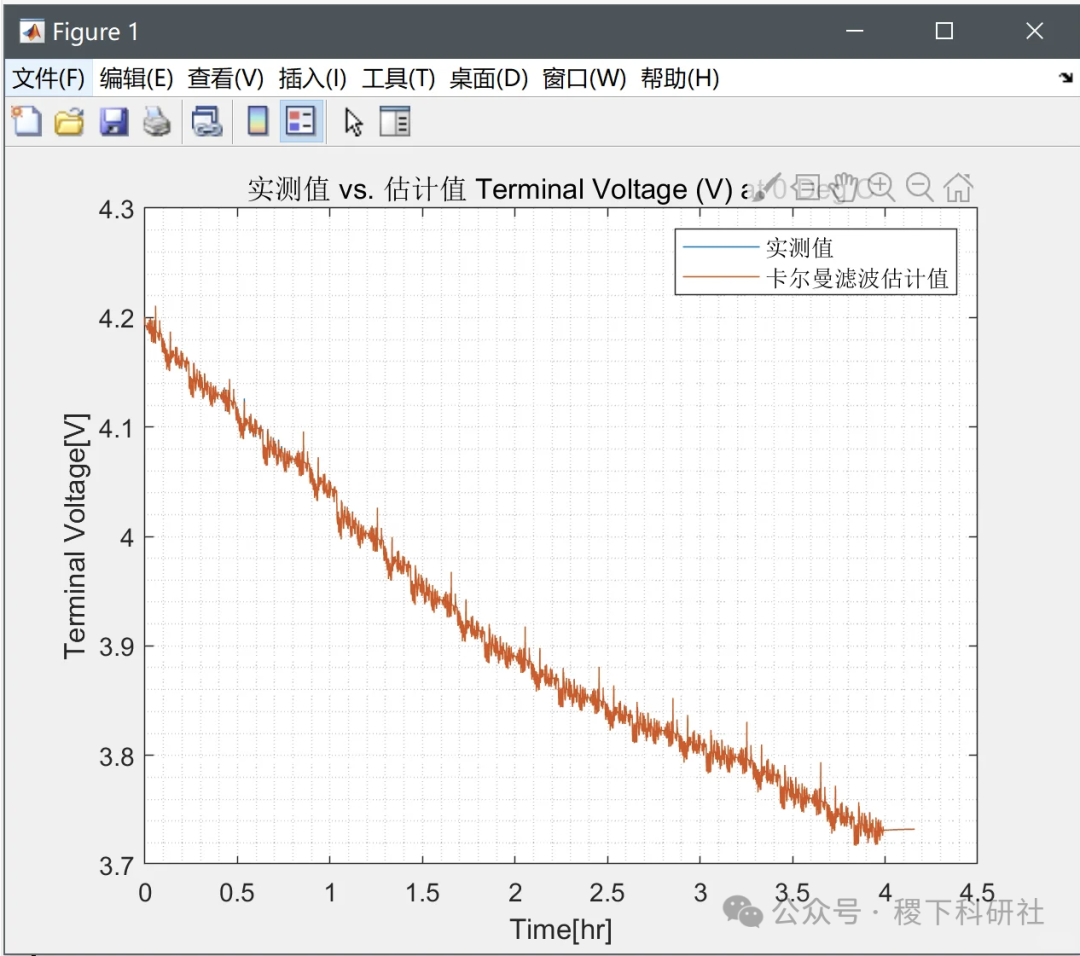

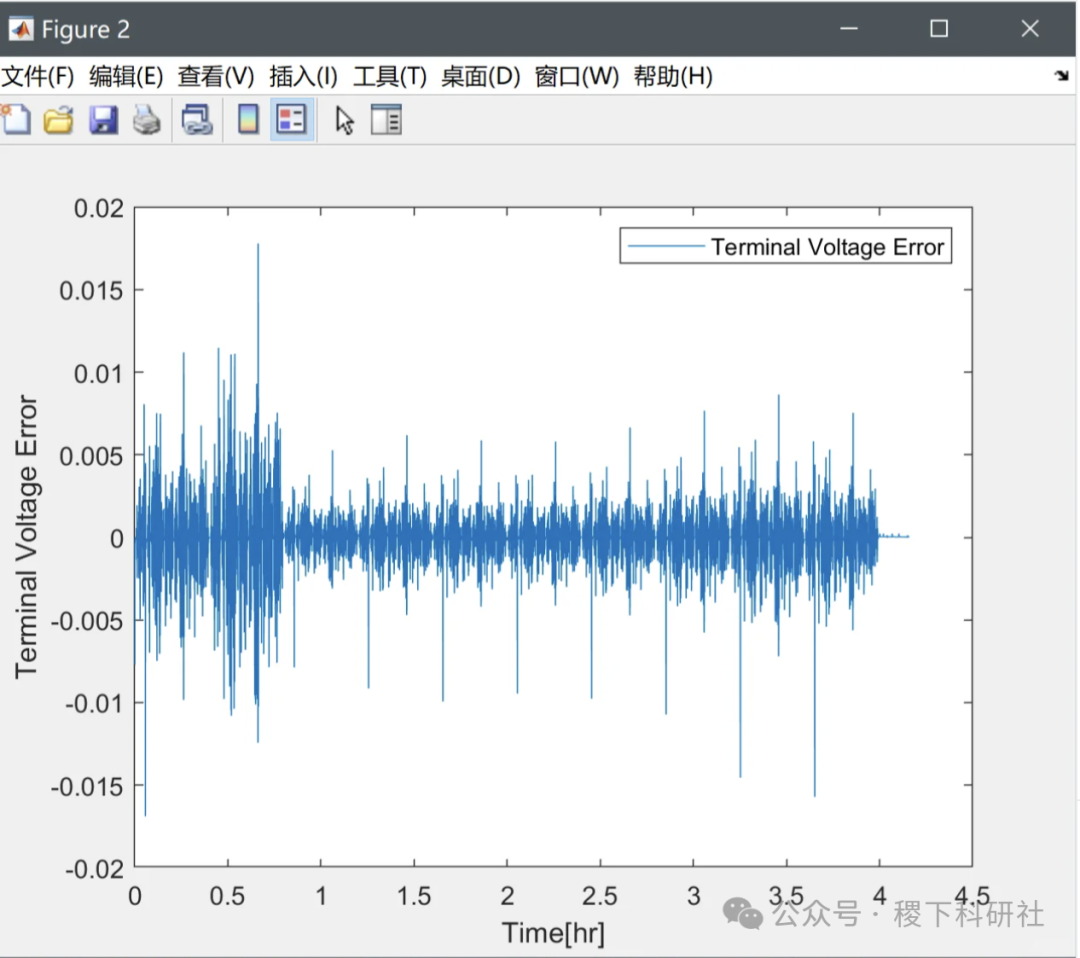

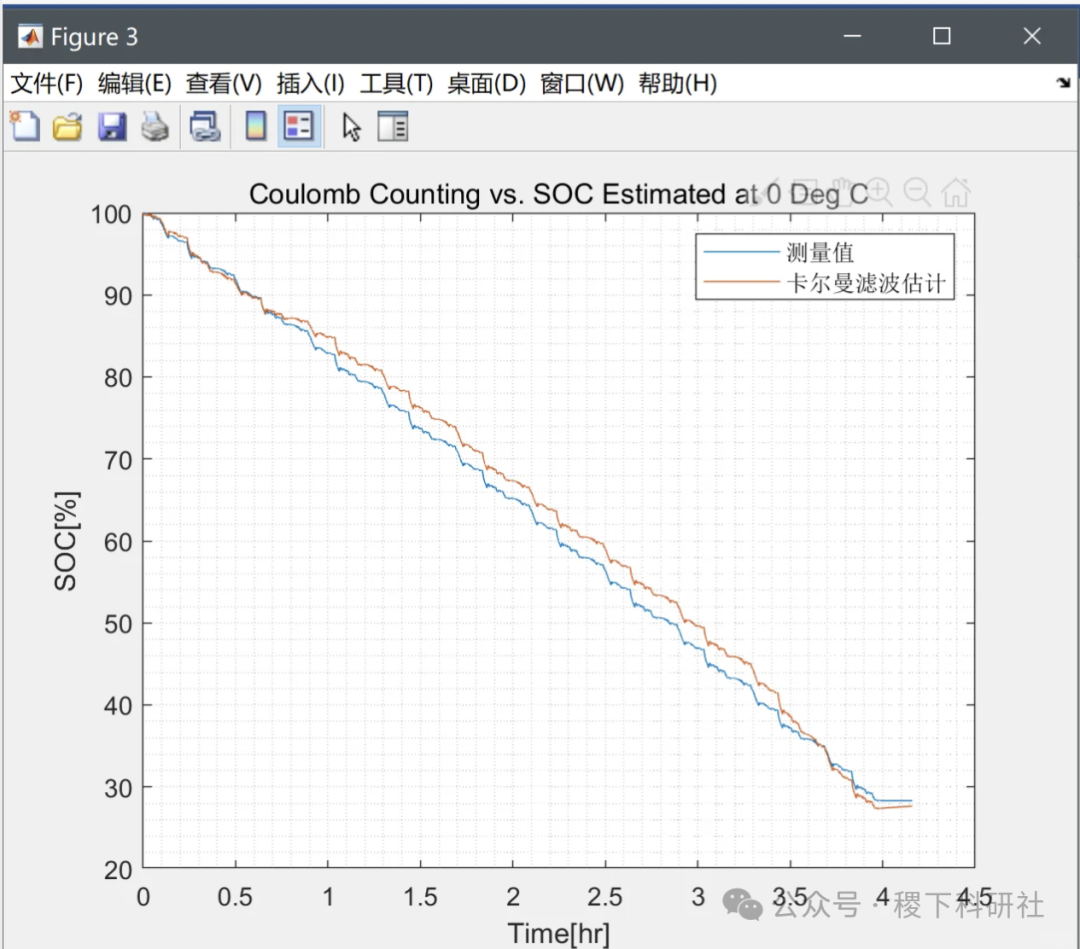

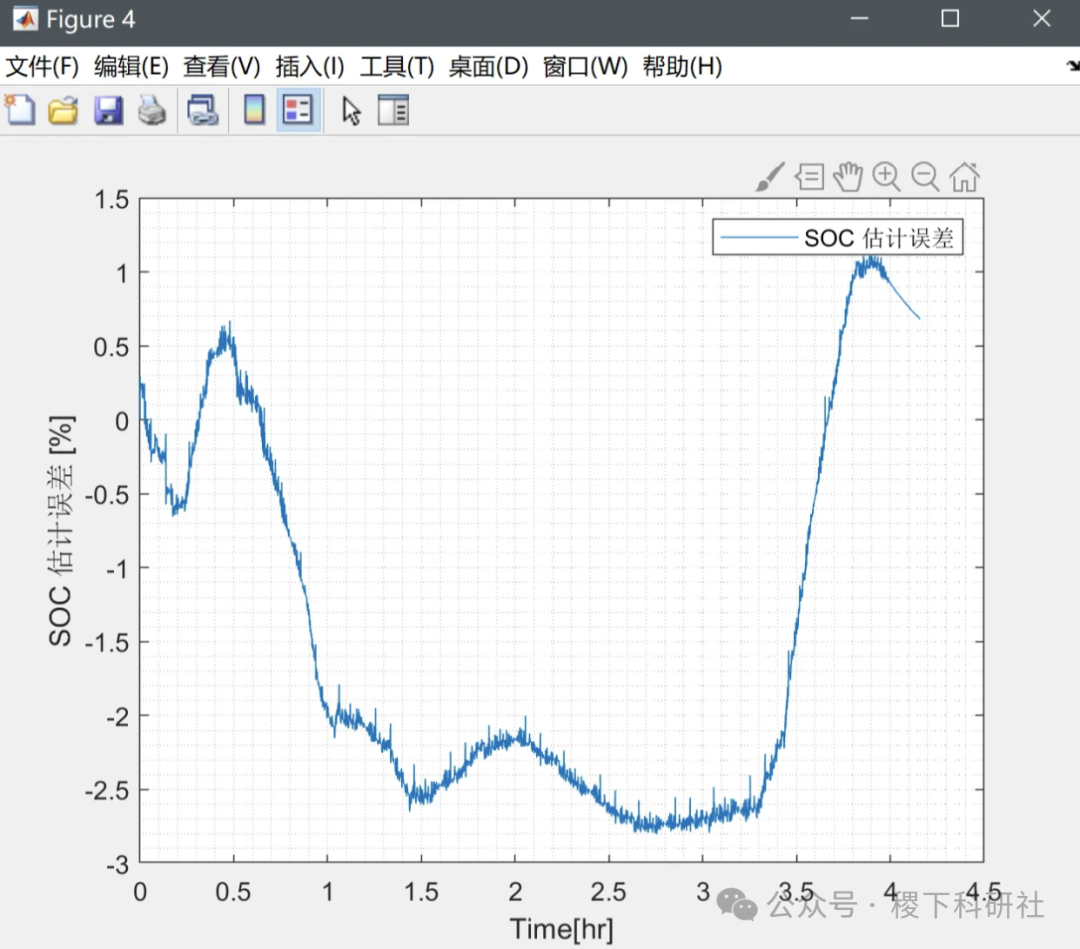

🎉3 References
Some content in this article is sourced from the internet, and references will be noted. If there are any inaccuracies, please feel free to contact us for removal.
[1] Pei Chao, Wang Dalei, Ran Mengbing, et al. Research on SOC Estimation of Energy Storage Batteries Based on Adaptive Extended Kalman Filtering Method [J]. Smart Power, 2019, 47(5):7. DOI: CNKI:SUN:XBDJ.0.2019-05-014.
[2] Cheng Yanqing, Gao Mingyu. SOC Estimation of Electric Vehicles Based on Kalman Filtering [C]// Proceedings of the 11th Academic Annual Meeting of the Zhejiang Power Supply Society and the Key Science and Technology Activity of the Provincial Association for Science and Technology “New Technologies for Efficient and Energy-Saving Power Electronics”. 2008. DOI: ConferenceArticle/5aa09614c095d7222078599e.
🌈4 Matlab Code Implementation