According to data from the Ministry of Industry and Information Technology, China has ranked first in the world in the production and sales of new energy vehicles for ten consecutive years. In 2024, the annual production and sales of new energy vehicles in China will reach over ten million units, with figures of 12.888 million and 12.866 million respectively, and products exported to over 70 countries and regions.
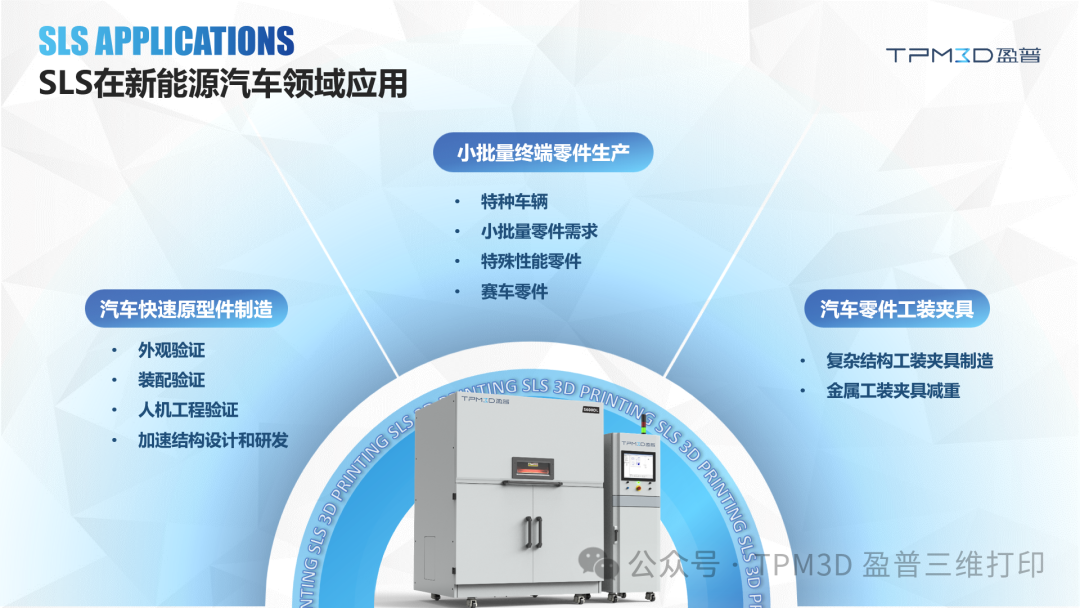
In this wave, additive manufacturing technology is becoming an important force driving innovation in the research and development and production of new energy vehicles. Yingpu’s SLS selective laser sintering 3D printing technology, with its unique advantages, is empowering the entire process from R&D to production in the new energy vehicle industry.
01
Rapid Prototyping
A Tool to Shorten R&D Cycles
During the R&D phase of new energy vehicles, rapid validation of appearance, assembly, and ergonomics directly affects project progress. Yingpu’s SLS 3D printing technology, characterized by high precision + fast delivery, provides an efficient solution for prototype manufacturing.
01
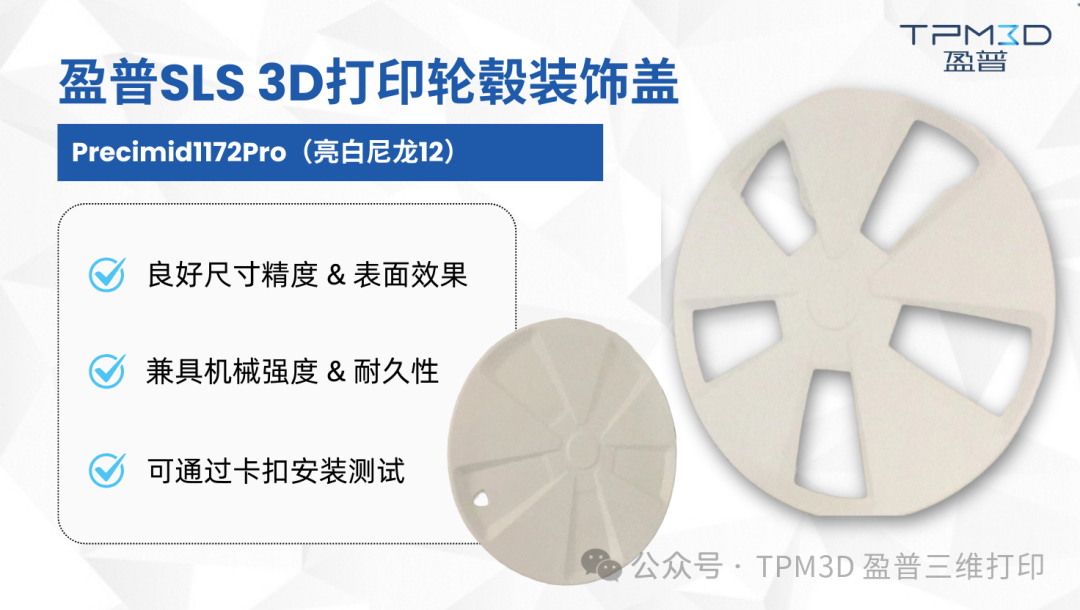
Wheel Hub Decorative Cover: One Print Meets Multi-Dimensional Needs
The wheel hub decorative cover printed with Precimid1172Pro bright white PA12 material has good dimensional accuracy and surface finish, combining mechanical strength and durability, and can be tested for installation via snap-fit. Additionally, the part supports post-processing techniques such as painting and electroplating, allowing it to 1:1 simulate the appearance of final mass-produced parts, facilitating faster validation of design solutions.
02
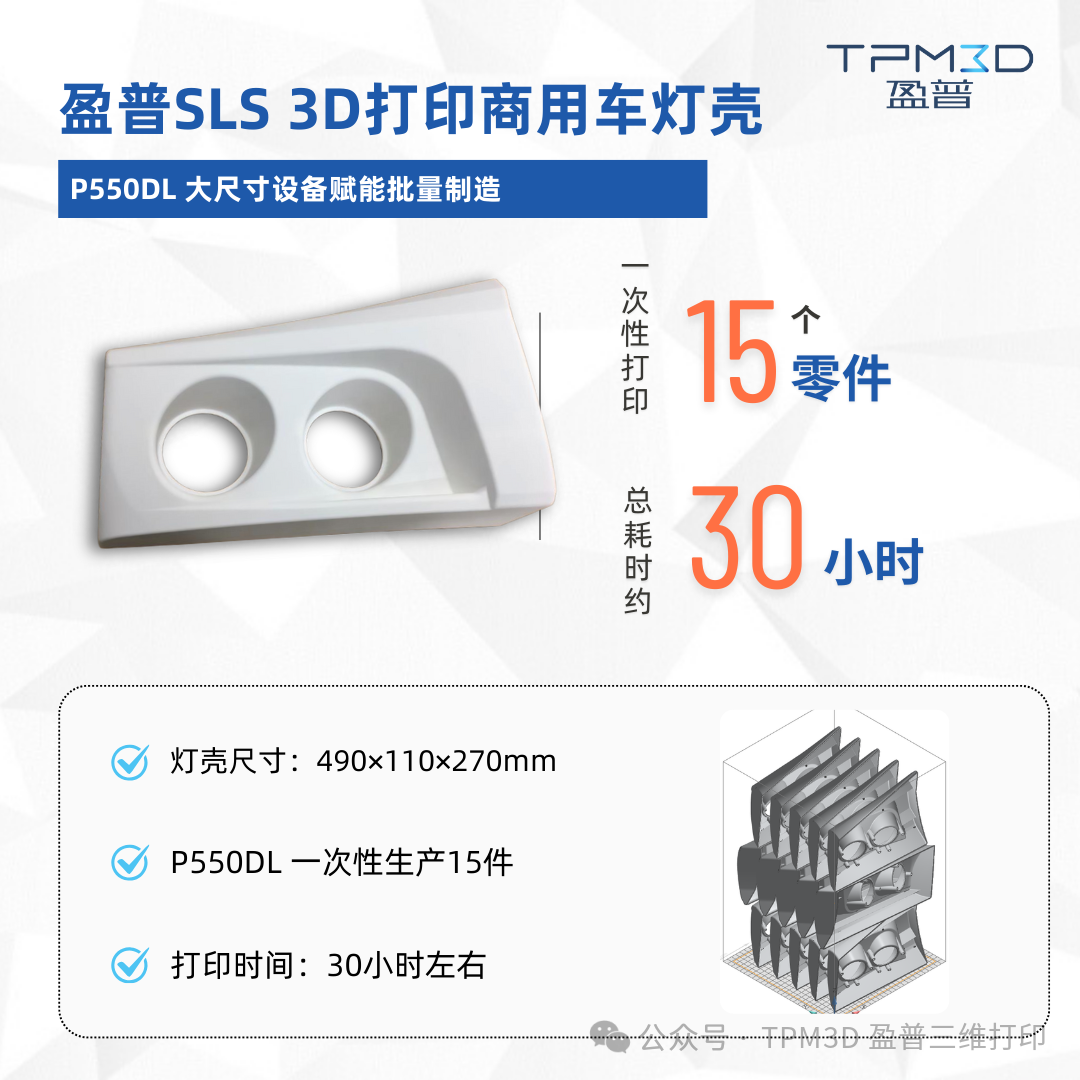
Commercial Vehicle Lamp Shell: 15 Parts Printed in 30 Hours
For the prototype manufacturing needs of commercial vehicle lamp shells, Yingpu’s P550DL device (forming cylinder size 550×550×850mm) demonstrates powerful mass production capabilities, printing 15 lamp shells in one go, taking only about 30 hours, significantly improving efficiency compared to traditional processes. The Precimid1172Pro white nylon 12 material used has excellent comprehensive performance, meeting the mechanical performance testing requirements for prototype parts.
02
Small Batch Production of Terminal Parts
Weight Reduction of Up to 82%, Safety Performance Reaching V0 Level
For “small batch, high demand” scenarios such as special vehicles, racing cars, and unmanned vehicles, Yingpu’s SLS 3D printing technology can achieve complex structure manufacturing while meeting lightweight and safety requirements through material innovation.
01
Beijing Institute of Technology “Triple Crown” Racing Car
36.7% Weight Reduction + V0 Flame Retardant, Optimizing Racing Parts Performance
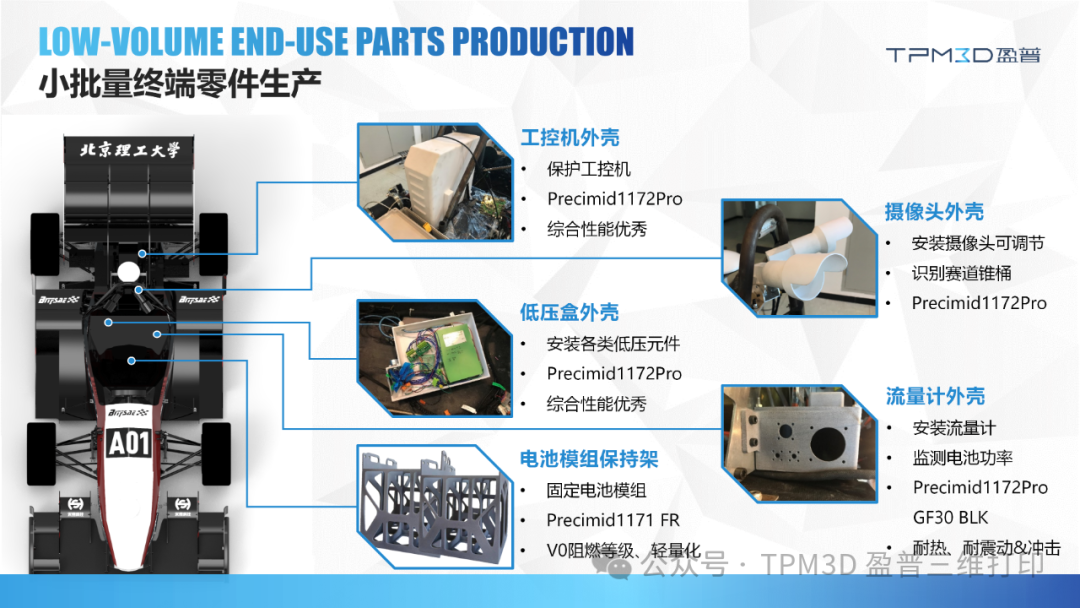
The “Gray Shark” series racing car, independently designed and manufactured by the student team of Beijing Institute of Technology, has won the national championship for the 2017, 2018, and 2020 seasons, making it the only “Triple Crown” team in China’s university formula racing events. Its core parts have been optimized using Yingpu’s SLS 3D printing technology, including industrial control machine enclosures, low-pressure box enclosures, camera enclosures, flow meter enclosures, etc., with the upgrade of the battery module holder being the most typical.
Traditional processes use fiberglass board bonding, with the battery module holder weighing 300g and lacking flame retardant properties. Yingpu’s SLS 3D printing solution uses Precimid1171 FR flame-retardant nylon material, reducing the part weight to only 190g, achieving a total frame weight reduction of 36.7%, and passing UL94-V0 fire certification, achieving a dual breakthrough of “lightweight + high safety” during the high-intensity operation of the racing car, providing good protection for the battery cells with high precision.
02
Tongji University Racing Car: 200 SLS Printed Parts Covering the Entire Car Body
During the production process of the racing car at Tongji University in 2020, Yingpu supported nearly 100 types of SLS 3D printed parts, with the number of printed parts reaching 200, covering categories such as battery modules, controller brackets, battery boxes, current sensors, dashboards, side wings, front wings, rear wings, motor water jackets, air ducts, rear louver, rear air ducts, and steering wheels.
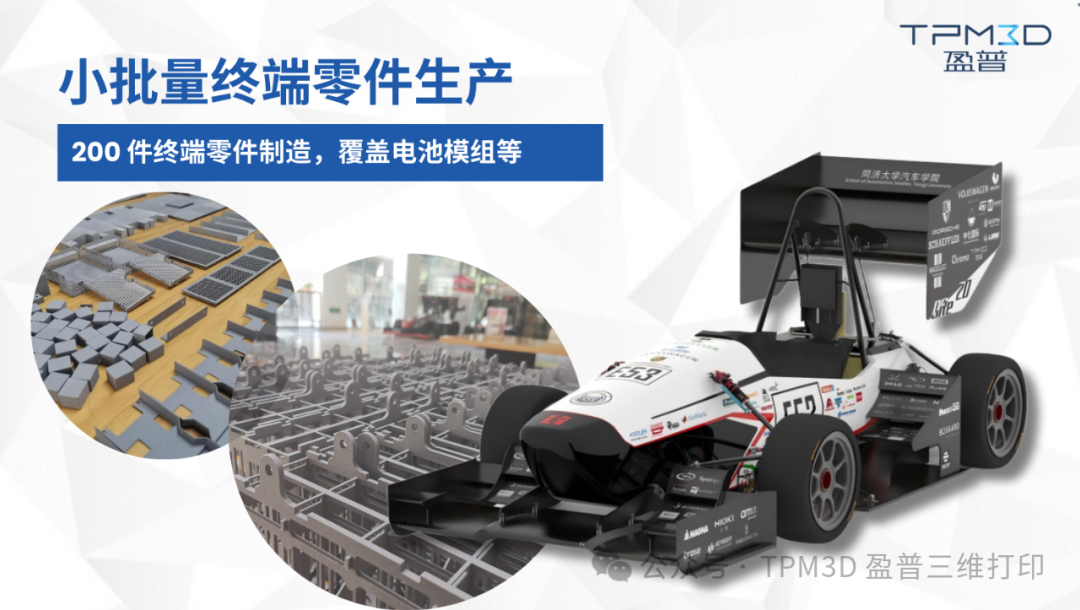
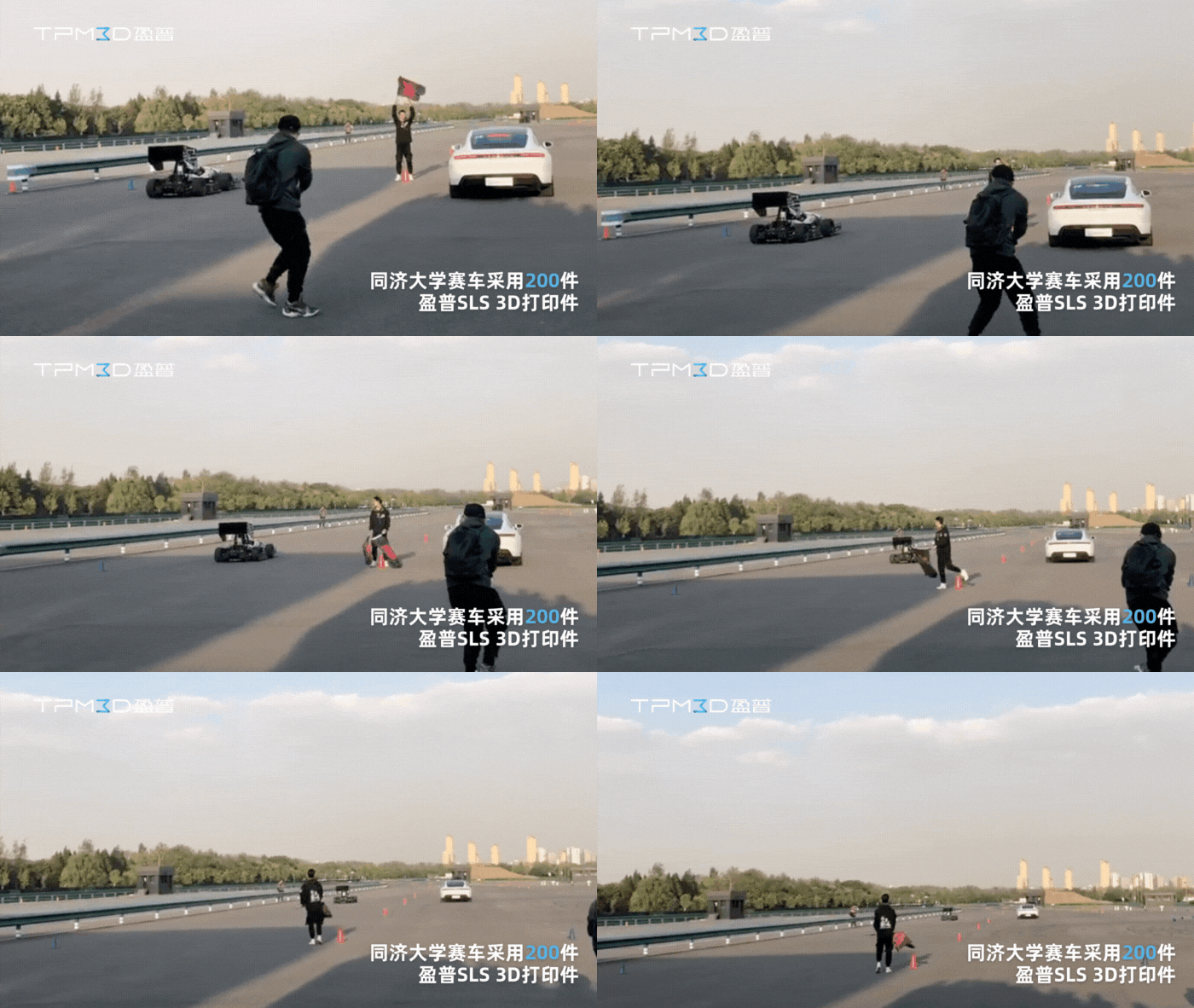
Among them, V0 grade flame-retardant nylon materials and PA12 materials have shown good application effects in internal parts of battery boxes, aerodynamic parts, and heat dissipation parts, helping the racing car achieve 195kg overall vehicle weight + 110km/h top speed + 3.6 seconds to 100km/h performance. The data on the process upgrades of multiple parts is particularly impressive:
· Battery Module Frame: From fiberglass board bonding to flame-retardant nylon SLS 3D printing, achieving an overall weight reduction of 1kg while reaching V0 level flame retardancy, providing good protection for the battery cells with high precision.
· Empty Frame: From wire cutting aluminum & threaded processing to nylon SLS 3D printing, achieving a 15% weight reduction for parts in the same location, facilitating the design of complex connection structures, with good mechanical and fatigue resistance performance and high processing precision.
· Motor Water Jacket: From resin 3D printing to nylon + fiberglass 3D printing, solving the design and manufacturing challenges of complex structure parts, lightweight, high processing precision, and good mechanical and fatigue resistance performance.
· Air Duct: Using SLS 3D printing, facilitating the design and manufacturing of complex structures, resulting in lighter weight and higher precision.
· Battery Box Front Compartment: From fiberglass board machining to flame-retardant nylon SLS 3D printing, achieving weight reduction for parts in the same location, facilitating the design of complex layout structures, with V0 level flame retardancy for enhanced safety, high precision, and good mechanical performance.
03
Dubai Unmanned Police Car: 2 Days Delivery + 82% Weight Reduction
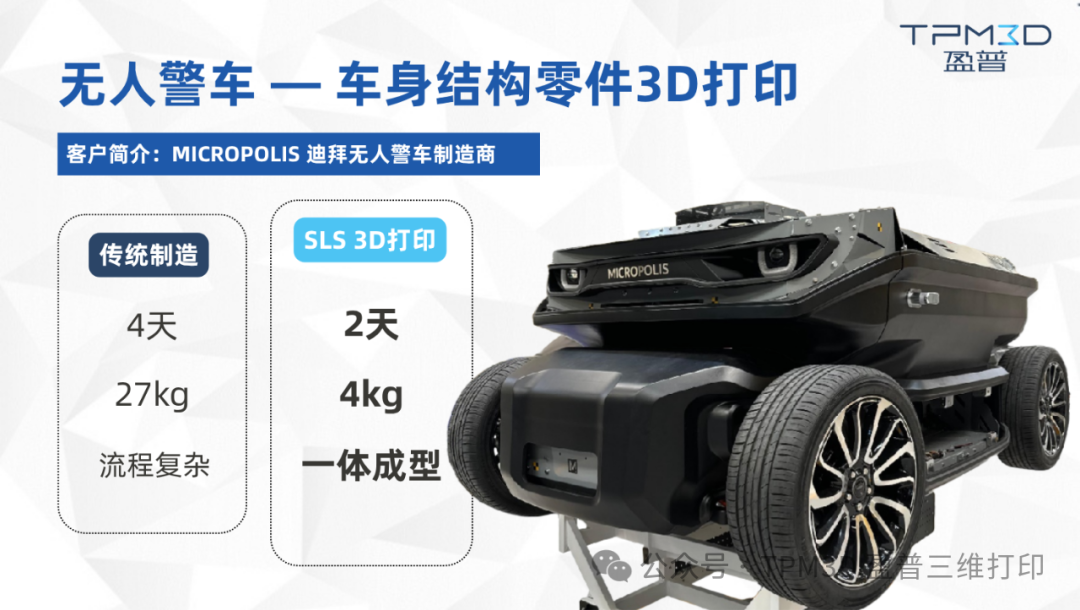
The manufacturer of the Dubai unmanned police car, MICROPOLIS, purchased Yingpu’s S600DL equipment, using Precimid1172Pro GF30 BLK fiberglass reinforced material to design and manufacture the unmanned police car (including body structure parts, etc.), with representative parts being large-sized front parts, effectively solving the pain points of traditional processes.
· Delivery Cycle: Traditional manufacturing requires 4 working days, while SLS 3D printing only takes 2 working days, improving efficiency by 50%;
· Part Weight: Traditional processed metal parts weigh 27kg, while SLS 3D printed parts are integrally formed, reducing weight to 4kg, achieving an 82% weight reduction, significantly lowering energy consumption for the unmanned vehicle;
· Production Process: Traditional manufacturing requires a series of processing equipment such as cutting machines, punching machines, bending machines, and welding equipment, while SLS 3D printing allows for direct printing after design, eliminating the need for other equipment and simplifying the process.
03
Manufacturing of Tooling and Fixtures
Cost Reduction of 73%, Production Cycle Shortened by 55%
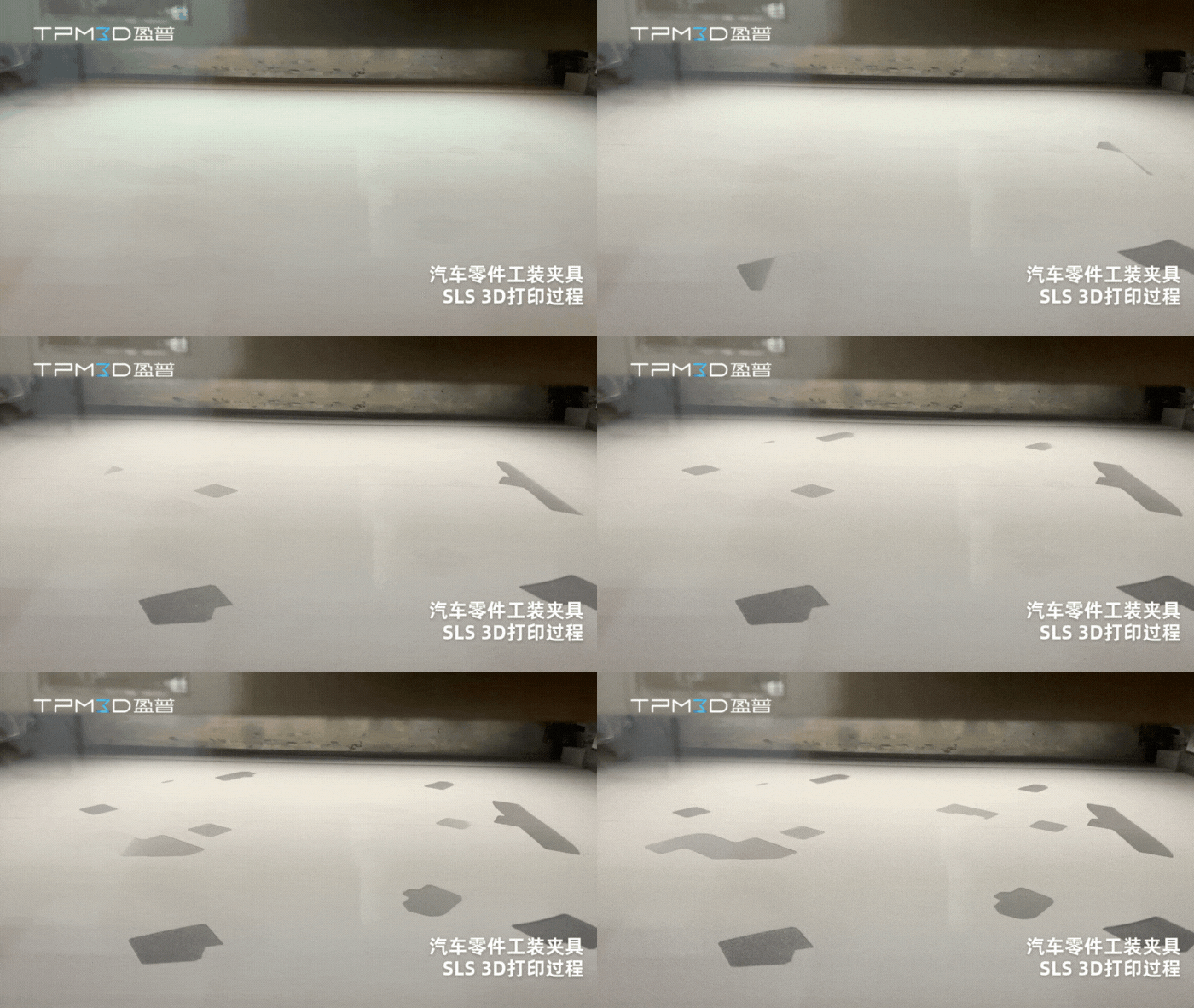
In the mass production phase of new energy vehicle parts, the stability and cost of tooling and fixtures directly affect production efficiency. Yingpu’s SLS 3D printing technology provides solutions for an automotive parts manufacturer, which purchased Yingpu’s S600DL equipment to produce automotive tools, fixtures, and gauges, supplying complete sets of fixtures to modern automotive global factories, helping optimize production processes and refreshing industry cost-performance ratios.
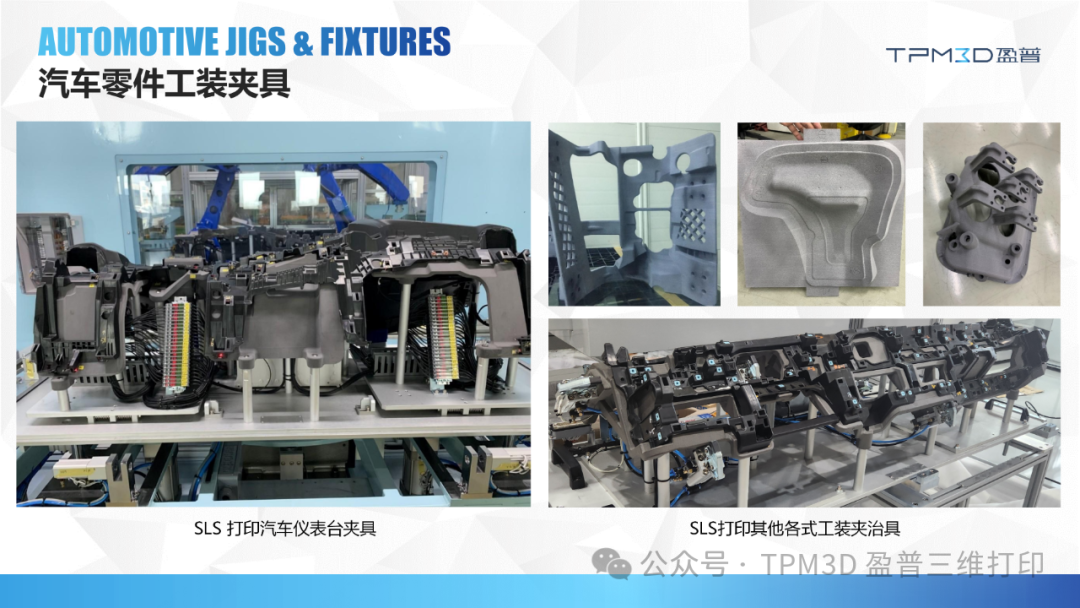
Comparing traditional sand casting aluminum processes with SLS nylon 3D printing processes:
· Production Cycle: Traditional sand casting aluminum takes about 5.5 days, while SLS nylon 3D printing only takes 2.5 days, improving efficiency by 55%;
· Manufacturing Cost: Traditional sand casting aluminum costs about 2060 USD per set, while SLS nylon 3D printing costs about 550 USD per set, reducing costs by 73%;
· Yield Rate: Traditional sand casting aluminum has a yield rate of about 75%, while SLS nylon 3D printing effectively improves the yield rate, reducing scrap caused by insufficient fixture precision.
SLS 3D Printing Technology Opens a “New Paradigm” for New Energy Vehicle Manufacturing
From rapid prototype validation in the R&D phase to breakthroughs in “lightweight + high safety” for small batch terminal parts, and to cost optimization of tooling and fixtures in the mass production phase, Yingpu’s SLS 3D printing technology demonstrates the empowering value of additive manufacturing in the new energy vehicle field with a series of hard data. In the future, with continuous upgrades in material performance and improvements in equipment efficiency, SLS technology will further support the development of new energy vehicles towards “lighter, faster, and safer” directions, injecting more vitality into industrial innovation.