
The goal is to become the third core device after the iPhone and MacBook.Compiled by | Wang Xinyi Edited by | Li Shuiqing
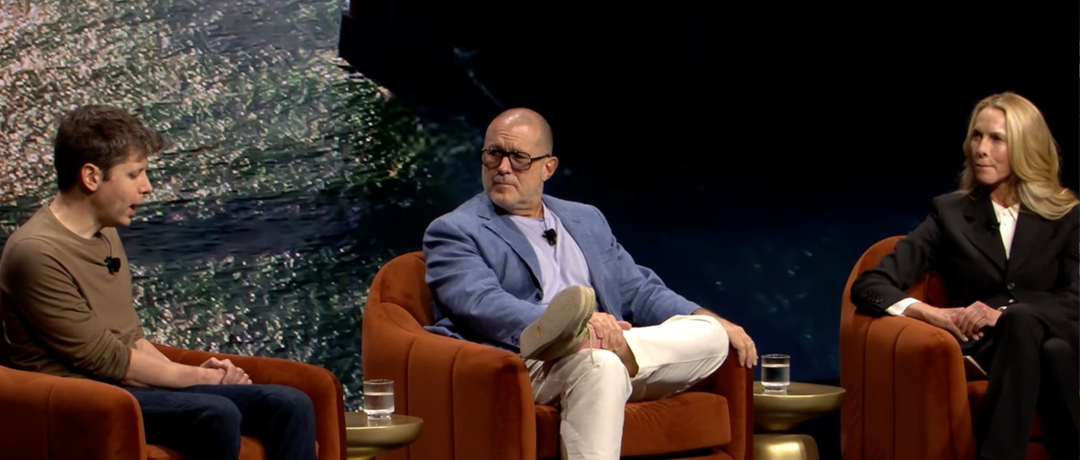
On November 25, Zhiyuan reported that on November 21, OpenAI co-founder and CEO Sam Altman and former Apple Chief Design Officer and co-founder of AI hardware startup io, Jony Ive, had a 32-minute interview. During the interview, they revealed that OpenAI’s AI hardwarehas completed its first batch of prototypes and the product is expected to be launched inless than two years.
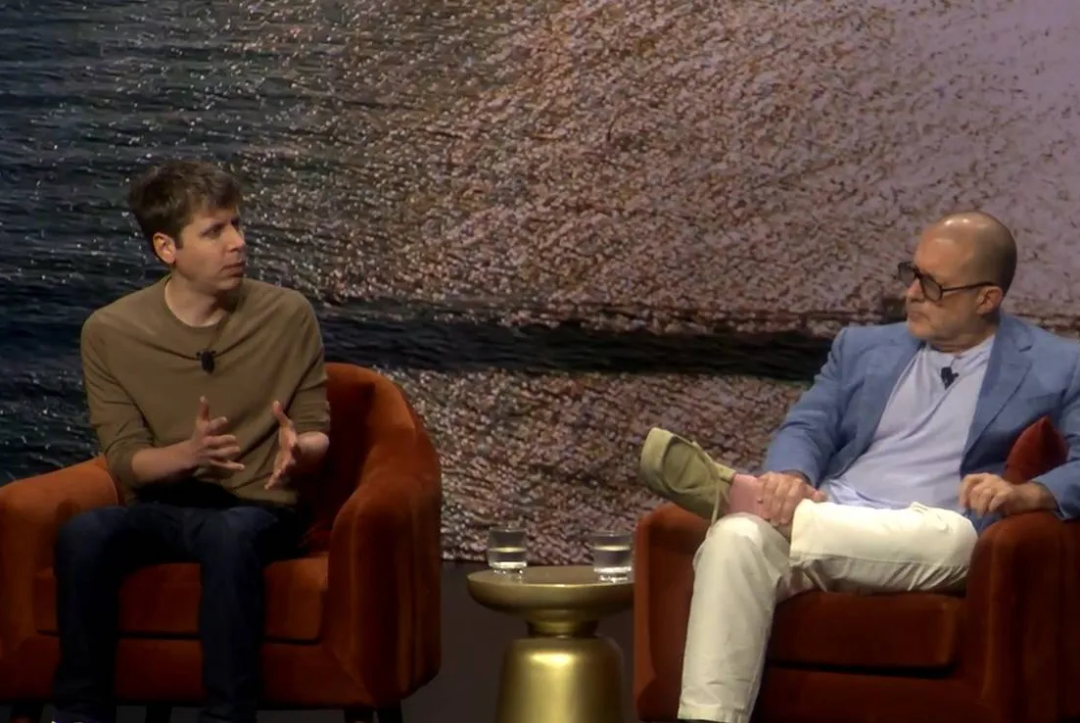
▲ Left: Altman, Right: Ive
In the interview, Ive expressed the design philosophy of the product: it must be aesthetically pleasing and sophisticated, not intimidating, and easy to use. He prefers extremely intelligent, refined products and simple solutions. Ive also mentioned that he is most eager to experiment with the material “ceramics” originating from China.
Altman stated that the fragmented experiences of notifications, pop-ups, and alert sounds from the iPhone continuously erode people’s focus, and the device they envision will change this situation. This device will deeply understand users’ life scenarios, take over tasks for extended periods, filter out irrelevant information, and present information at the right moment. The prototype provided by io is very simple and beautiful, reaching a level that makes one want to “lick it.”
MacRumors reported yesterday that the device being developed by io is ascreenless AI phone,aiming to become the third core device after the iPhone and MacBook. It is lightweight and portable, can fit in a pocket or sit on a desk, and is similar in size to an iPod Shuffle, allowing it to be worn around the neck. It is also equipped with a microphone and camera, capable of sensing users’ life situations.
OpenAI announced in May this year that it had spent $6.5 billion (approximately 46.12 billion RMB) to acquire the AI hardware company io founded by Ive, marking OpenAI’s largest acquisition to date. After the acquisition, OpenAI plans to develop a mysterious AI device.
The following is a compilation of the entire interview content (edited by Zhiyuan for an optimized reading experience without altering the original meaning):
01.Product design needs to be driven by learningFirst batch of AI hardware prototypes completed
Host: Why do you think San Francisco can give birth to so many world-changing things? Why did OpenAI, io, and LoveFrom all start in San Francisco?
Ive: I first came to San Francisco in 1989 when I was 21 years old. It was my first flight, and I was deeply moved on many levels. I moved here in 1992, and it has been over 30 years. I love this city. I grew up in London, which is too big, while I really like the geographical features of San Francisco as a peninsula, which somewhat limits the city’s expansion, thus creating a more concentrated density and diverse structure, greatly facilitating some serendipitous encounters and collaborations.
Altman: I grew up in the Midwest of the United States. I first visited San Francisco when I was three months old, and my mother brought me here for a trip, but I had no memory of it. I returned at 17 to visit colleges, and I immediately felt that “this is the place.”
It has the most free, creative, and quirky culture in the world. You can witness the birth of the “Burning Man Festival” and the emergence of AI.
It attracts those who have a specific feeling about the world. Growing up in a culture that interprets from east to west, I feel that San Francisco is the end of the frontier, and the weather here also makes thoughts clearer and ideas broader. The city is not large, and when you walk here, you really feel like you enter a completely different area every few blocks.
Host: In the process of conceiving products and exploring as a team, you temporarily set aside the question of “what is a product that is inherently suitable for AI” and instead explored the relationships between humans and nature, humans and animals, and humans with each other, the essence of intelligence and tools, how humans use tools in the world, as well as issues of values and human rights. Why did you choose to start in this way, and how did you ultimately develop the product?
Ive: A predetermined goal makes me feel lifeless because once you overly focus on a specific direction, you miss many possibilities.The foundation of creative practice is an insatiable curiosity.
My immediate resonance with Altman is largely due to this. We need to be driven by the desire to learn and explore, rather than pursuing the right answers, which also means you will truly listen to each other. I believe many healthy relationships share a common point: there is no need to say too much; you can quietly be together with each other to think and feel. This state contains intuition, as well as vulnerability, elusiveness, and exploratory qualities, ultimately supporting our rigorous research practice.
Host: Altman, did your team also participate in this?
Altman: Yes, I found Ive and his team and said we have a new technology. Computers are now becoming very intelligent, capable of thinking and understanding, which they could not do before. Ive led us to start this unprecedented work.
There are many ideas in Ive’s team that we had never thought of, and we hope to provide them with perspectives they do not have. We explored what it means to have such a computer that can know everything you have thought, read, and said, becoming a kind of positive participant that acts proactively in a non-annoying way. It is built around new functions that did not exist before.
Ultimately, we havethe first batch of prototype devices, and I can hardly imagine how stunning and exciting they are.
Ive: Large companies often place great importance on predictability, while the creative process itself is unpredictable. You can enjoy this unknown state, which is why I love the creative process.
Altman: The Ive team compiles research manuals during the design process, each set containing about ten books covering topics such as the evolution of shapes, camera design evolution, or the development of interpersonal relationships, each carefully edited and bound. These books contain many clues about the products.
02.Expected to be launched in less than two yearsIts design makes one want to “lick it”
Host: After such a long preparation, can you reveal the current progress and project information?
Ive: The research team at OpenAI is intimidating, but once you understand them deeply, you will find they possess extraordinary curiosity and creativity. When our teams began to merge, our solutions were not mature; they were just preliminary ideas about the essence of objects and human-computer interfaces, and we did not know whether this broad proposition could ultimately be transformed into a product.
Altman: The iPhone is undoubtedly the pinnacle of consumer electronics, yet the current fragmented experiences such as notifications, pop-ups, and alert sounds constitute continuous distractions that erode our focus.
Our envisioned device will change this situation. By incorporating intelligent and reliable AI, it can deeply understand users’ life scenarios, take over tasks for extended periods, filter out irrelevant information, and present information at the right moment. This capability based on full-scene perception is something existing AI technologies or devices cannot achieve.
Host: When will this product be launched? In five years or two years?
Ive: Possibly even sooner than two years.
I cannot stand products that claim to solve complex problems. I prefer simple solutions and extremely intelligent, refined products that do not overwhelm users and are chosen to be used actively. Tools are just tools; the key factor is the talent.
Altman: Behind the product is Ive’s team’s extreme attention to detail. I remember Ive once said that when you want to lick it or take a bite out of it, we know the design is in place. We previously did not have this instinctive impulse for an earlier prototype until its design became simple and beautiful, and we suddenly crossed that threshold.
Ive: There is no humor element in products in this field, but people hope not to take themselves too seriously even in this serious era. I think OpenAI, LoveFrom, and io are very creative.
Altman: Early in the project, Ive insisted on the idea of “we want to make people smile.” I am very glad that Ive insisted on this, as it is precisely what is most lacking in the current technology field.
03.The development of AI is akin to transistorsAltman claims the iPhone is transformative
Host: Next is a quick Q&A session. What items in daily life do you think have design flaws?
Ive: I think almost everything is poorly designed, from pencils to doorknobs.
Host: Are there any items with exceptionally good design?
Ive: A spoon, perhaps.
Host: What is your favorite product that you designed?
Ive: A zipper or a pocket.
Host: What material have you always wanted to try using?
Ive: Ceramics. I have used it for some functional reasons, such as using it as an insulator or utilizing its radio frequency transparency.
Host: Do you have any products that you frequently use and really like?
Altman: I choose the iPhone, although I just had some criticisms about it; however, it is the most transformative product in my life.
Host: What historical moments inspire you?
Altman: The invention of the transistor has had the greatest impact on me. I like to use the transistor as an analogy for AI; it is like discovering a new physical property. The scaling process of transistors, their economic position, and the economic status of transistor companies permeated the entire economic system and drove overall economic development. Therefore, this moment comes to my mind.
Conclusion:OpenAI is accelerating its layout in the smart hardware trackIn the field of AI hardware, interactive forms such as smart glasses, smart rings, and smart speakers are emerging one after another. Tech giants like Meta and Amazon are also accelerating their layout in the smart hardware track, and the market is continuously exploring new interaction methods.OpenAI’s hardware device has no screen, is equipped with a microphone and camera, can fit in a pocket, and is positioned as the third core device after the iPhone and MacBook, representing another exploration of a new interaction paradigm in smart hardware. The “iPhone moment” in the smart hardware field may be coming soon.Source: YouTube, MacRumors(This article is original content from NetEase News • NetEase account’s special content incentive program, 【Zhiyuan】. Unauthorized reproduction is prohibited.)