Industry Prediction: When Edge AI meets large models, the oil and gas industry will give birth to a new species – Autonomous Energy Systems (AES). In the future, oil wells will not only be able to ‘self-diagnose’ but also autonomously optimize oil extraction plans based on geological data. Shell engineers candidly state: ‘Edge intelligent agents are becoming the ‘second operator’ of oil fields.’
Oil Field ‘Edge Brain’: A Quiet Industrial Revolution
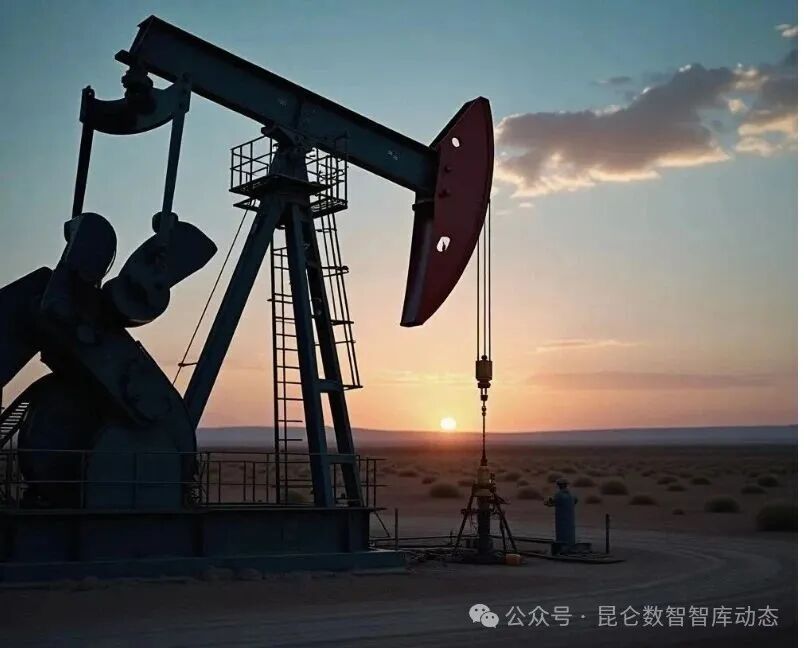
In the Gobi oil field of Kazakhstan, a pump suddenly stops. But before the engineers can rush to the site, the Edge AI box has autonomously diagnosed a sensor failure and triggered a maintenance work order – from the occurrence of the fault to the resumption of production, it took only 47 minutes.?
This is not a science fiction scenario, but the daily operation of Schlumberger’s Agora Edge AI system. As global oil and gas giants are betting on Edge AI, a revolution that disrupts traditional operating models is sweeping through oil fields, refineries, and oil depots…
 01 What is Edge AI?
Why the oil and gas industry cannot do without it
In recent years, with the emergence and popularization of new generation AI technologies such as large models, Edge AI technology has gained more development opportunities. In terms of computing power management, the expansion of edge-side computing power and the improvement of network communication capabilities work together to support the direct deployment of pre-trained large models on the edge, significantly reducing the time loss caused by cloud-to-edge transmission. In terms of scenario optimization, large models can replace the small models previously used on the edge for various tasks such as prediction, decision-making, judgment, and generation, enhancing scenario generalization capabilities and usage effectiveness, greatly improving return on investment.
Edge AI = Edge Computing + Artificial Intelligence, which means processing data directly on the device and making real-time decisions. Compared to traditional cloud AI, it has three major advantages:
⚡ Millisecond-level response: When oil well pressure suddenly rises, a 1-second delay could lead to a blowout.
⚡ Zero data transmission: Core assets such as exploration data and equipment parameters never leave the factory.
⚡ Usable even without a network: Network fluctuations in offshore platforms and desert oil fields are no longer a fatal flaw.
 02 Three Major Giants’ Practical Cases
Schlumberger · Shell · Sinopec

Schlumberger: Installing a ‘Digital Magic Box’ in Oil Fields
Pain Point: Traditional centralized solutions lead to unexpected downtime, with single losses exceeding $500,000.
Breakthrough: Launched the Agora Edge AI platform, with edge nodes diagnosing equipment health in real-time (e.g., abnormal vibration of electric submersible pumps), predictive maintenance reduced failure rates in Malaysian oil fields by 40%.
Key Move: Established a ‘Digital Magic Box’ organization, collaborating with external AI companies like Dataiku to build an ecosystem.
Schlumberger has specifically formed a ‘Company Digital Magic Box’ organization for smart oil fields, focusing on edge computing and Edge AI research, launching an open, secure, and scalable Agora Edge AI and IoT solution.
Agora can create multiple edge computing nodes using AI and data mining technologies, leveraging the advantages of industrial IoT and cloud computing to provide various real-time intelligent services to users, interconnecting various devices on oil and gas sites, completing data collection and transmission while possessing powerful computing capabilities from general logic to AI models, enabling the deployment of applications for specific workflows and algorithms, quickly and conveniently transforming on-site equipment (such as a pump, a compressor, or an entire production system) into intelligent devices, and securely transmitting all data generated by various devices to the DELFI environment or other digital ecosystems for processing, achieving true industrial IoT.
The Agora solution has been successfully implemented in multiple projects, such as remote visual analysis in offshore oil fields in Malaysia; monitoring rod pump optimization in India; real-time monitoring of oil well performance in the USA; improving production uptime and reducing carbon footprint in Ecuador; and enhancing production efficiency and safety for the Sirte Oil Company in Libya, significantly reducing on-site inspection frequency and labor costs.
Shell: The ‘Cloud-Edge Symphony’ Controlling 1.5 Million Devices Remotely
Revolutionary Achievement: Engineers control drilling robots in the Persian Gulf from an office in Houston, reducing equipment integration time from 12 months to 3 months, and cutting indirect costs by 70%.
Technical Combination: Edge AI real-time inference: Local analysis of data from 2 million sensors, digital twin mapping: Physical devices and virtual models synchronized in milliseconds.
Containerization Drive: New and old devices are plug-and-play.
Managing 1.5 million IoT terminals across Azure IoT and AWS IoT platforms presents numerous challenges. To optimize its IoT infrastructure, complex functions such as device access, connectivity, edge computing, and security need to be achieved. At the same time, the company is committed to reforming the efficiency of oil and gas exploration and production processes through advanced AI, data analysis, and remote operation technologies.
Shell integrates its Edge AI and remote operation platform with existing systems to ensure seamless data flow between edge devices, cloud infrastructure, and analytical tools. The Edge AI platform analyzes data from over 2 million sensors, generating real-time operational guidance and optimization suggestions to help engineers make intelligent decisions. Through AI analysis and decision support, engineers can remotely control devices and machinery from a central office, reducing the need for on-site personnel, significantly saving costs and enhancing safety. A digital twin model that maps to actual scenarios has been established, accurately locating devices in real scenarios using GPS data provided by sensors. With a plug-and-play device management solution, device drivers are automatically generated and deployed, reducing human configuration errors, and using Kubernetes-native IoT gateways to manage all heterogeneous IoT devices uniformly.
Based on the implementation of the above solutions, Shell engineers can now control robots and other devices from a central office, reducing the need for on-site operators to travel, improving operational efficiency and safety; equipment integration time has been shortened from years to months, reducing labor and indirect costs by 70%. Rapid decision-making based on AI-generated suggestions has also significantly reduced response times to operational issues.
Sinopec: The ‘AI Sentinel Program’ for 300 Oil Depots
Life-and-Death Challenge: Traditional manual inspections have a leak detection rate exceeding 30%, significantly increasing the risk of oil depot explosions.
Edge AI Solution: At the edge layer, over 200 sites deploy visual analysis boxes to detect smoke/fire/off-duty/safety helmets in real-time; at the provincial platform, 30 customized algorithm models improve detection rates to 98.7%; at the headquarters, a national risk heat map is monitored on a single screen.
Innovative Breakthrough: Established a three-level collaborative AI platform, with edge samples being sent back for provincial incremental training and headquarters model optimization.
Sinopec’s sales company has over 300 finished oil depots, with nearly 50 depots having an outflow of over 1 million tons, and nearly 100 depots with an outflow of 500,000 to 1 million tons, forming a three-tier organizational structure of group headquarters – provincial companies – oil depots. As the number of oil depots increases, the difficulty of safety production management significantly rises, facing multiple challenges such as safety hazards in traditional manual inspections, inability to monitor safety risks in real-time, and new requirements for data support from regulatory bodies. The intelligent oil depot visual AI monitoring and early warning solution using Edge AI ensures the safety of oil depots and strengthens the safety production defense line.
A three-tier regulatory disposal scenario model has been established for oil depots – provincial companies – group headquarters, adopting an event-centered monitoring and edge AI analysis deployment model to meet the security supervision goals of on-site hazard investigation and identification, centralized safety supervision by provincial companies, and real-time synchronization of group data.
At each oil depot site, visual AI edge analyzers are deployed to analyze the video stream using visual algorithms and report alarm events to the safety early warning platform. In the provincial company’s monitoring center, an industrial site visual AI analysis and safety early warning platform is deployed to manage alarms, equipment, algorithms, and algorithm training for the edge analysis devices deployed at each oil depot site, while also issuing work orders for alarm event handling. At the group dual prevention platform, customized interfaces collect alarm data from various provincial companies and achieve alarm cancellation linkage, meeting relevant compliance supervision requirements.
03 Five Golden Rules
A Must-Read for Oil and Gas Companies Implementing Edge AI
Strategic Positioning
Schlumberger lists edge computing as one of the three pillars of its digital strategy, laying a solid foundation for digital competition in oil and gas production; Shell is committed to reforming the energy production process, positioning Edge AI as key to building efficient IoT infrastructure; Sinopec integrates Edge AI into its business strategy, comprehensively deploying it from headquarters to grassroots oil depots, gas stations, and other business units.
Scenario Penetration
Schlumberger adopts the Agora solution to cover the entire equipment management process based on oil field production needs, significantly extending equipment life and increasing production while reducing costs in multiple regional projects; Shell focuses on energy industry needs, building cloud-edge-end collaboration to achieve remote precise control and data visualization management; Sinopec targets the ‘oil depot safety’ pain point by deploying Edge AI technology, achieving annual benefits exceeding 200 million yuan in a single scenario.
Cloud-Edge Collaboration
Schlumberger’s Agora solution achieves collaboration between edge and cloud data for oil and gas equipment, with real-time analysis and early warning at the edge; Shell uses K8s to achieve a second-level closed loop of ‘edge real-time control + cloud model iteration’, enabling efficient data recycling and intelligent production; Sinopec lays out a multi-level collaborative platform architecture, with edge sites collecting data, regional clouds preprocessing, and headquarters optimizing models and issuing them, achieving three-tier collaborative optimization.
Innovative Technical Combinations
Schlumberger’s Agora solution integrates multiple cutting-edge technologies such as edge computing, AI, IoT, and cloud computing for innovative intelligent management of oil and gas equipment; Shell deeply integrates Edge AI with remote operation, digital twins, multi-network redundancy, Kubernetes infrastructure, and containerization technology to enhance intelligence and scalability; Sinopec combines visual AI recognition, edge computing, and cloud platforms to achieve precise monitoring, early warning, and service upgrades.
Organizational Restructuring
Schlumberger accelerates the application and promotion of Edge AI in the oil and gas industry through internal integration of digital business and external collaborative R&D to build an innovative ecosystem; Shell emphasizes collaboration between internal departments to ensure tight connections between cloud, edge, and end, while actively collaborating with external equipment suppliers and technology service providers to jointly solve equipment integration and safety protection issues; Sinopec relies on a three-tier organizational structure of headquarters, provincial companies, and oil depots to establish a multi-level interactive management mechanism. Based on a unified platform, the multi-level organizational structure, departments, roles, personnel, and permissions are synchronized, achieving solidified management processes.
04 The Future is Here
The Seven ‘More’ Era of Edge AI
Looking ahead, as Edge AI technology continues to evolve, it will present seven new development trends that are more collaborative, lighter, more efficient, more multi-polar, more ubiquitous, and more twin-like. Considering the oil and gas industry, which is crucial to the national economy and people’s livelihood, and taking into account its dispersed, remote, and complex operating environments, numerous edge devices and data, high production safety and real-time requirements, and capital-intensive characteristics, Edge AI technology will showcase its capabilities, driving the industry towards greater intelligence and automation, playing a leading role in the digital transformation of the industry.
More Lightweight: Large models will integrate lightweight service capabilities into edge boxes.
More Collaborative: Autonomous collaboration across oil fields, pipelines, and refineries.
More Proactive: By 2025, the self-healing rate of faults will exceed 60%.
More Ubiquitous: AI sensors with low costs per well are about to become widespread.
More Twin-like: Digital twins will mirror physical oil fields in real-time.
More Secure: Federated learning will achieve data ‘usable but invisible.’
More Open: Edge application stores will foster an ‘AI ecosystem’ in oil and gas.
This article is an original piece from Kunlun Digital’s internal publication ‘Digital Intelligence Journal’
Editor: Zhao Xiaofang
Proofread by: Wu Weiming, Wang Xinyu, Yin Yuan